Time Off for Religious Holidays from Work and School
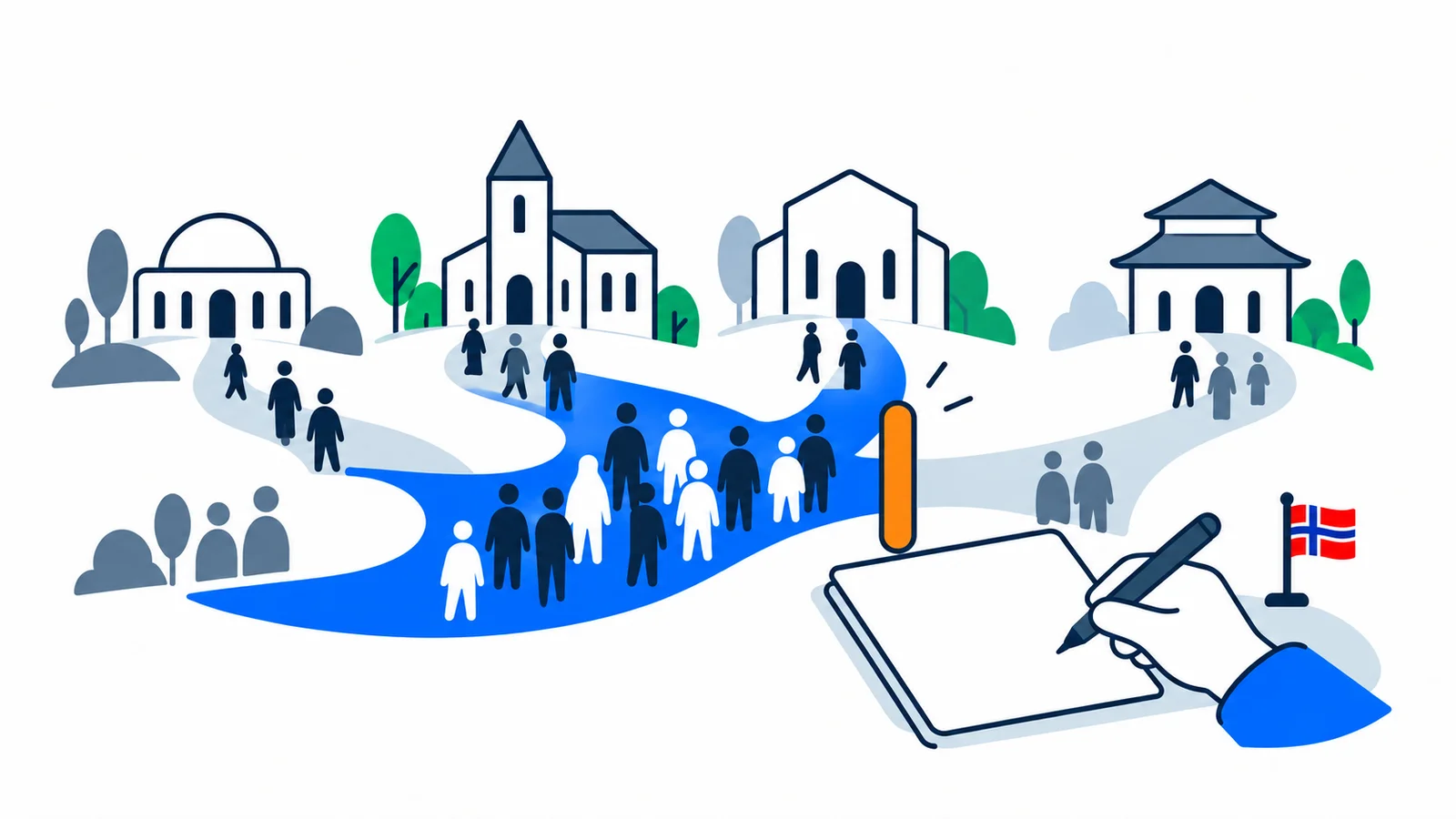
Do you have a religious holiday that is not a Norwegian public holiday? Then you have the right to up to two days off from work or school per year. Here is how you use this right.
Norwegian society, history, democracy and values — the test background.
Showing 1-50 of 50 articles

Do you have a religious holiday that is not a Norwegian public holiday? Then you have the right to up to two days off from work or school per year. Here is how you use this right.

Overview of the largest immigrant groups in Norway in 2026: their size, when they arrived, and why they chose Norway – with fresh data from Statistics Norway.

Norway is playing its first World Cup in 28 years and faces England in the quarter-finals on July 11. We present the players with an immigrant background in the World Cup squad.

Confirmation in Norway: the difference between religious and humanistic confirmation, age, registration and what the family should choose. Completely voluntary.

Everyday racism in Norway: what it is, that discrimination is forbidden, and what you can do – LDO, Discrimination Board and reporting hate crimes.

An overview of who has the right to free Norwegian lessons in Norway, and which free or affordable options exist if you have to pay yourself.

Guardianship in Norway is voluntary help to manage your finances and personal matters. You keep your rights, and the County Governor appoints a guardian.

How crime and punishment work in Norway: from reporting to conviction, the three courts, penalties, and your rights if suspected.

You can appeal decisions from government agencies. The appeal deadline is three weeks, you send the appeal to the agency that made the decision, and it is free. Here is how to do it, step by step.

The right to roam gives everyone in Norway the right to hike, camp, swim and pick berries in nature. Here are the rules for camping, fires, leash laws and cloudberry picking.

Immigration to Norway has a short history. From emigration to America, through labour immigration and the immigration stop in 1975, to today's multicultural society.

The Conflict Resolution Council in Norway is a free, government-run mediation service operating nationwide. Learn which cases it handles, how mediation works, and how to submit a case yourself.

People with disabilities have strong rights in Norway: protection against discrimination, free assistive devices from NAV, municipal services and financial support.

Multicultural Norway explained simply: why Norway became diverse, how many immigrants live here, and what integration means for you.

Learn about Norwegian food and food traditions: the daily packed lunch, early dinner, brown cheese and festive food like fårikål, ribbe and pinnekjøtt. Simply explained.

Free legal aid is free or low-cost legal help from the state. See which cases are free regardless of income, which are means-tested, and how to apply.

Friluftsliv in Norway means hiking, swimming, camping and berry picking. Learn the rules of allemannsretten (the right to roam) and how nature is an easy way into community.

Police in Norway protect you and help in everyday life. Learn when to call 112 and 02800, what rights you have, and why you can trust the police.

How gambling works in Norway: only Norsk Tipping and Norsk Rikstoto can offer gambling, the age limit is 18, foreign casinos are illegal, and help is free.

You have the right to an interpreter in Norway when language is a barrier. Learn who pays, what the Interpreter Act requires, and why you should never use children as interpreters.

The Constitution was adopted at Eidsvoll on May 17, 1814, and is the world's second-oldest constitution still in use. This is why May 17 is Norway's national day. Here we explain what happened, how the day is celebrated, and why it is a festival for everyone.

Norway in NATO and the UN explained simply: Norway was one of the founders of NATO in 1949 and the UN in 1945. Learn about Article 5, the border with Russia, aid and total defense.

Learn about Christmas in Norway: Christmas Eve 24 December, public holidays 25 and 26 December and 1 January, the period between Christmas and New Year, Norwegian traditions and what is open during the Christmas season.

Military conscription applies to both men and women born in 1997 and later. But most never show up for basic military service. Here's how the session, selection, pay and exemptions work in Norway.

Norway is not in the EU, but is closely linked to Europe through the EEA Agreement and Schengen. Here's how they connect, and what it means for you.

The Oil Fund is the common name for the Government Pension Fund Global (GPFG). Learn what the fund is, who manages it, its value, the fiscal rule, and ethical guidelines.

How press freedom works in Norway: Free media protected by the Constitution, NRK as an independent broadcaster, and simple tips to distinguish reliable news from fake news.

Norway's legal system is founded on three principles: an independent judiciary, the presumption of innocence, and the right to defence. Learn about the district court, the court of appeal, and the Supreme Court, and what they mean for you as an immigrant.

Norwegian alcohol policy is strict: Vinmonopolet holds the monopoly above 4.7 %, age limits are 18 and 20, shops close early and everything closes on public holidays. How to navigate the rules.

Negative social control limits freedom, safety and self-determination. In Norway you can get help with pressure, coercion, threats or honour-related violence.

Short explanation of Norway: geography, population, parliamentary democracy, constitutional monarchy, municipalities, welfare and values.

The Sámi are Norway’s Indigenous people. The state must support Sámi language, culture and community life, and Sametinget is elected.

All children in Norway have the right to free primary school, regardless of residence status. Learn about special language training and introduction programmes for newly arrived students.

A practical explanation of Norway’s constitutional monarchy, the King’s formal role, the Council of State, the opening of the Storting and what to know for the test.

What volunteering and dugnad mean in Norway: how you get involved, what rules apply to wages, tax and criminal records check, and why it gives you networks and language training.

Sustainability is more than the environment. In Norway it means climate, nature, economy, welfare, fair distribution and future responsibility.

Freedom of religion in Norway means the right to believe, not believe, change religion and practise belief within Norwegian law and others’ rights.

You can influence Norwegian politics through hearings, parties and voluntary work. You also have a duty to follow the law and give correct information.

Digital judgement is about source criticism, privacy, netiquette, fraud, artificial intelligence and responsible behaviour online.

Bokmål and Nynorsk are equal written standards of Norwegian. Sámi languages are Indigenous languages with special rights in Norway.

An overview of every Norwegian public holiday and "red day": Christmas, Easter, Pentecost, 1 and 17 May — and the rules for when shops are closed.

A practical guide to Norway’s state, county municipality and municipality: who decides, what they handle, and where to ask for help.

A practical overview of human rights in Norway, the Constitution, ECHR, free expression, anti-discrimination rules and where to complain.

A simple guide to Norway's welfare state: how tax and national insurance contributions fund health, school, pensions and NAV benefits through folketrygden.

How does democracy work in Norway? Separation of powers between the Storting, the government and the courts, parliamentarism, elections and the King's role.

How did Norway go from criminalising homosexuality until 1972 to same-sex marriage and strong legal protection? An overview of LGBTQ+ history, rights and acceptance.

Learn the most important dates in Norwegian history for Samfunnskunnskapsprøven (Social Studies Test). 17 May, 1814, 1905 and more – with memorisation tips for the exam.

Learn the key facts about Stortinget for the Social Studies Test: role, responsibilities, elections and how laws are passed.

Learn Norway's history for the knowledge of society test. From the Viking Age to the oil era — get an overview of the periods you need to know to pass the exam in 2026.

Learn about gender equality in Norway for the Samfunnskunnskapsprøven. Women's rights, LGBTQ+ rights and religion — everything you need to pass.