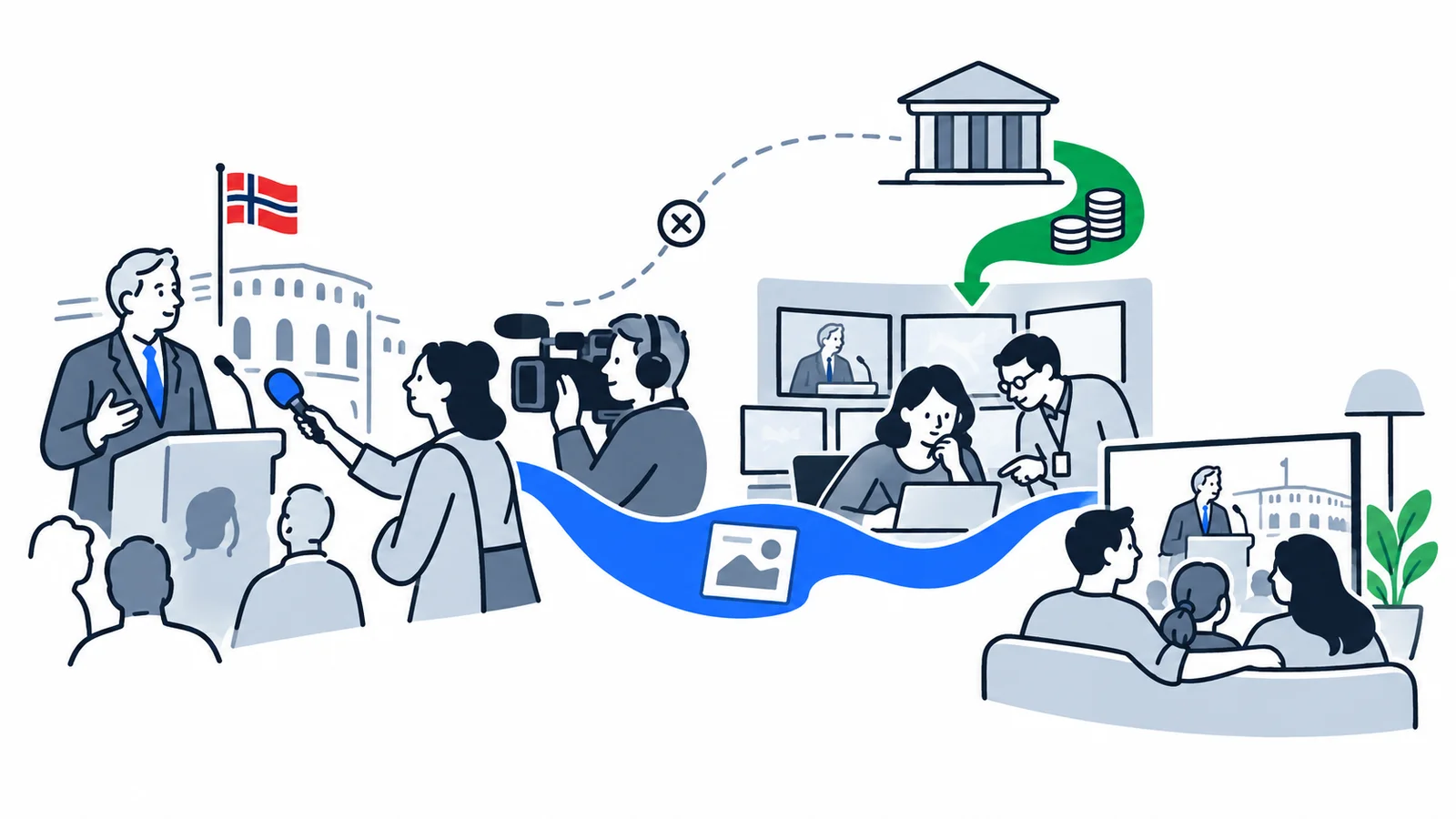

Press freedom in Norway is strong and protected by the Constitution § 100. The press is free and independent from the state, and Norway ranks at the top of the international press freedom index. You can trust reliable media and use source criticism to identify fake news.
Free media is a cornerstone of Norwegian democracy. In this country, newspapers, radio and TV can write about those in power without asking permission. This text explains how the system works, and how you yourself can find news you can trust.
What does press freedom mean in Norway?
Press freedom in Norway means that media can gather and publish news, opinions and criticism without the state deciding the content. This right is protected by the Constitution § 100, which protects freedom of expression and forbids prior censorship. This means that no government authority can read and stop an article before it is printed or published online.
This freedom is closely linked to freedom of expression in Norway, that is, your right to say and write what you think. Press freedom gives media extra protection so they can do their job: inform people and scrutinize those in power.
Therefore, many call the free press the fourth estate. The three official branches of power are the Storting, the government and the courts. The press is not a government branch, but it watches over the other three. Journalists ask critical questions, expose mistakes and let ordinary people know what is happening.
Why does Norway rank at the top of the press freedom index?
Norway ranks first in the press freedom index because journalists here work safely, freely and without pressure from the state. The organization Reporters Without Borders (RSF) makes a list every year about press freedom in the world. As of 2025, Norway is at the top, and the country has topped the list every year since 2017.
This is one of the clearest differences between Norway and many other countries. Free media in Norway can criticize the Prime Minister, the police and large companies without fear of imprisonment or shutdown. In some countries, journalists are threatened or arrested for this work. In Norway, it is a completely normal part of democracy.
You do not need to be afraid of the media. On the contrary, it is a tool that protects your rights. A free press makes it harder for those in power to hide mistakes or abuse.
Is NRK independent when the state pays for it?
Yes. NRK (Norwegian Broadcasting Corporation) is financed with public money, but is editorially independent. This means that politicians pay for NRK, but they do not decide what NRK should say in the news.
Since 2020, NRK is financed through taxes, no longer through the old TV license. You can read more about NRK financing in a separate article. The Storting decides the budget for several years at a time. This arrangement is designed to protect editorial freedom, so no government can punish NRK economically for critical stories.
NRK is a public broadcaster. The task is to create news, culture and content for the whole population, in several languages and for the entire country. The fact that NRK is independent is an important reason why many trust the channel.
Who makes sure the media behaves properly?
The media watch themselves through a voluntary ethical system, not through a state censor. This is called self-regulation. The core consists of two documents that Norwegian editor-controlled media have agreed on.
- Vær Varsom-plakaten: ethical rules for good press practice. It was first adopted in 1936 and has been updated several times, most recently in 2024.
- Redaktørplakaten: states that the editor is free and independent, and solely responsible for the content.
- PFU (Press Complaints Board): a complaints body under the Norwegian Press Association.
Do you feel unfairly treated by a newspaper or channel? Then you can file a complaint free of charge to PFU. The board reviews the case and says whether the media has violated good press practice. If the media is found at fault, it usually must publish the decision. This system keeps quality high without the state interfering in the content.
How do you recognize fake news?
You recognize fake news by checking who is behind it, and whether several reliable sources say the same thing. Free media does not mean everything you see online is true. On social media, there is a lot of misinformation and fake news that no editor has checked.
Here are some simple steps for good source criticism and critical thinking:
- Check the source. Is it a known editorial office with a responsible editor, or an anonymous account?
- Look for multiple sources. Are NRK, NTB and major newspapers reporting the same thing? Then the story is reliable.
- Read the full story. Headlines can exaggerate. The content tells you more.
- Check the date. Old stories are often shared as if they are new.
- Be skeptical of strong emotions. Content that is meant to make you angry or afraid may be designed to trick you.
Developing digital critical thinking helps you distinguish facts from rumors. For reliable Norwegian news you can safely use major media like NRK and established newspapers. If you want to check a reference, snl.no (Store norske leksikon) is a good place to start.
In short
Press freedom in Norway is a right that protects you, not something to fear. The Constitution protects the free media, NRK is independent, and the industry watches itself through PFU. Your task is to use source criticism, so you choose news you can trust.
Media, freedom of expression and democracy are also topics on the Citizenship Test. With SamfunnPrep you can practice exactly these kinds of questions in an easy way. SamfunnPrep explains Norwegian society step by step, so you both pass the test and understand everyday life better.
Ready to practice? Try SamfunnPrep for free.