

Money and tax5 min read
Basic amount (G) 2026: 136 549 kroner explained
The basic amount is 136 549 kroner from 1 May 2026. See what 0.5 G, 6 G and 7.1 G are in kroner, and why pensions use a different G value than your benefits.
Hlib Suslov
Tax, payslips, BankID, banking and personal finance in Norway.
Showing 1-28 of 28 articles
The basic amount is 136 549 kroner from 1 May 2026. See what 0.5 G, 6 G and 7.1 G are in kroner, and why pensions use a different G value than your benefits.
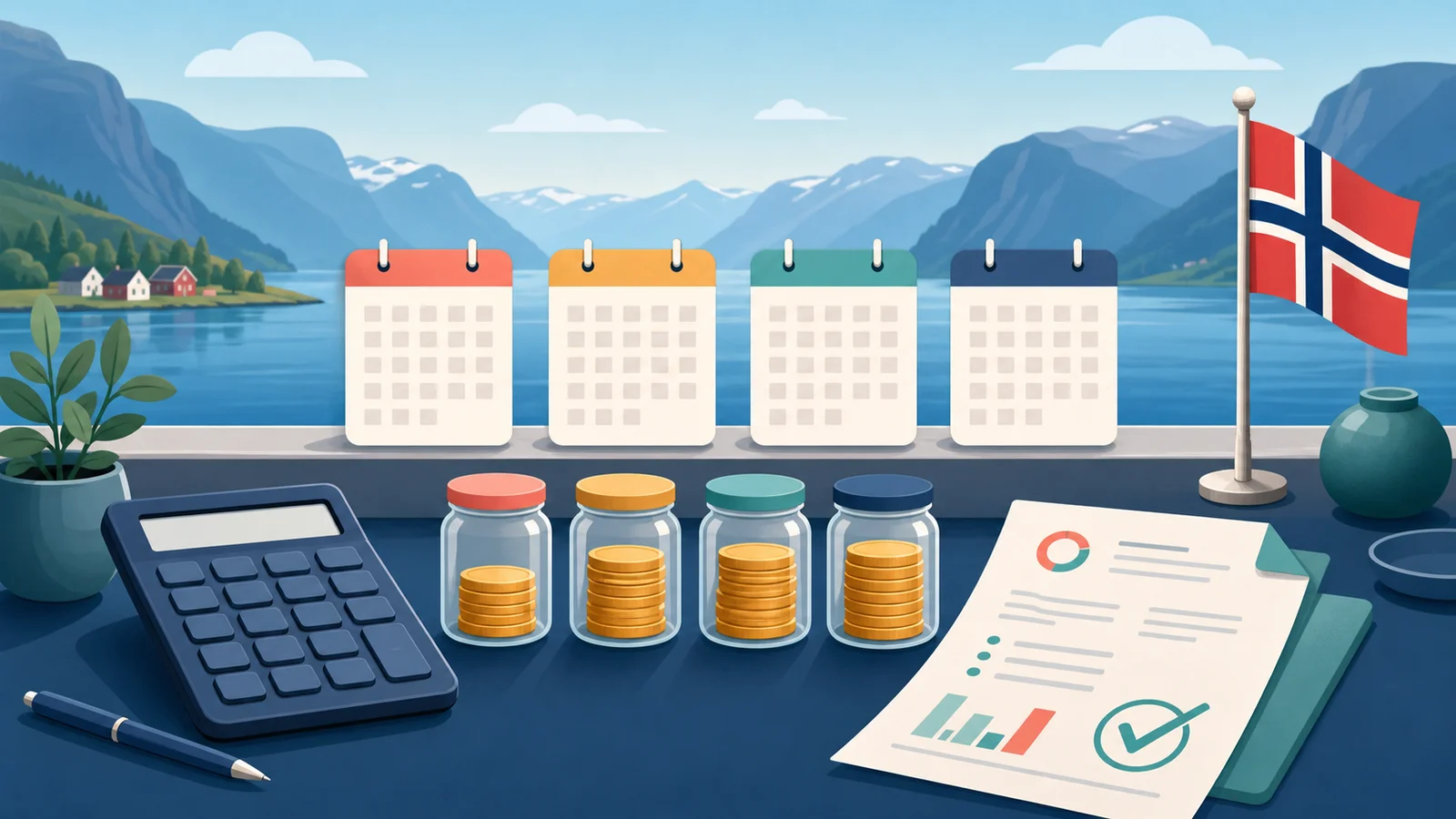
How to calculate, change and pay advance tax for a sole proprietorship. See the four deadlines and what happens if you pay late.

Your employer must save at least 2 percent of your salary for a pension. Here's how OTP, personal pension account, pension capital certificate, AFP and IPS work in Norway.

Do you work in Norway but have your family in another EEA country? Commuting deductions for travel, meals and accommodation can give you thousands back on your tax return. See the 2025 and 2026 rates and the two traps.

How cryptocurrency is taxed in Norway: 22 percent on gains, wealth tax on what you own, and crypto you must report yourself in the tax return. Simple guide.

Refinancing consolidates expensive small loans and credit cards into one loan with a lower interest rate. See when it's worth it, how to compare offers, and where to get free help.

BSU (youth housing savings) lets you save for housing and receive up to 2,750 kroner in annual tax deductions. See who can save, amounts and rules for 2026.

Sole proprietorships must register for VAT when turnover exceeds 50 000 kroner over twelve months. Learn the rates, the VAT return, and pitfalls to avoid.

Cannot pay your back taxes in 2026? Here are the deadlines, what happens if you miss the first invoice, and how to apply for a payment plan with Skatteetaten.

How to start saving in stock funds, what a share savings account (ASK) is, and how capital gains tax works in Norway.

Your first tax year in Norway: your employer deducts tax, remaining tax is due 20 August 2026, and amounts under 100 kroner are never collected. See deadlines and KID.

If you live in Norway, you must report foreign income and assets in your tax return. Learn how housing, bank accounts and rental income are taxed—without double taxation.

How to pay bills in Norway: KID number, eFaktura and AvtaleGiro explained simply — plus how to pay paper bills and what debt collection costs.

How to buy and sell secondhand safely in Norway: best marketplaces, checklist against fraud and tax rules — profit on your own things is tax-free.

How credit cards and consumer loans work in Norway: interest-free period, high effective interest rate, the Debt Register, right of withdrawal within 14 days and free help if debt grows.

Tax settlement 2026 explained: the difference from the tax return, when the money comes, how to check status and register your account number for payment.

Many receive higher pay in November or December. We explain what half tax means, why it's not extra money, and why it balances out over the year.

A practical guide to sending money home from Norway: what it actually costs, how to avoid fraud, and what rules apply to reporting and tax.

An overview of what housing, food, electricity, transport and taxes cost in Norway, and what you can expect to have left as take-home pay.

How to create a food budget and save money on food in Norway: discount chains, store brands (EMV), Too Good To Go, seasonal produce, and practical shopping tips – with data from SIFO and SSB.

Understand the difference between electricity and grid rent, how electricity support and Norgespris work in 2026, and how to read your bill and cut your costs.

The PAYE scheme (kildeskatt) gives foreign workers in Norway the opportunity to pay a flat tax rate of 25% instead of a standard tax return. This guide explains the threshold, advantages and disadvantages.

Practical guide to personal finance in Norway for newcomers: budget, fixed and variable expenses, current account, savings account, BSU and how to avoid expensive credit.

A simple introduction to how tax works in Norway: skattekort (tax card), what your taxes pay for, the building blocks of income tax, kildeskatt (PAYE), and skattemelding (tax return).

Your tax return is pre-filled, but you must check it yourself. The deadline is 30 April 2026 for salaried employees, 1 June for self-employed. Foreign accounts, loans, and deductions such as travel and commuting are often not filled in – you must enter these yourself.

Tax deductions 2026 explained for Norway: check work, commuting and union costs before submitting your tax return with confidence.
Tax deduction card 2026 explained for newcomers in Norway: check income, deductions and withholding before errors become back tax.

Tax exemption card 2026 explained for Norway: see the income limit, how employers use it, and when to switch to a tax card.