
The Conflict Resolution Council in Norway is a free, government service that helps you resolve conflicts through mediation. The service is available nationwide, voluntary and confidential, and can also be an alternative to punishment.
What is the Conflict Resolution Council in Norway?
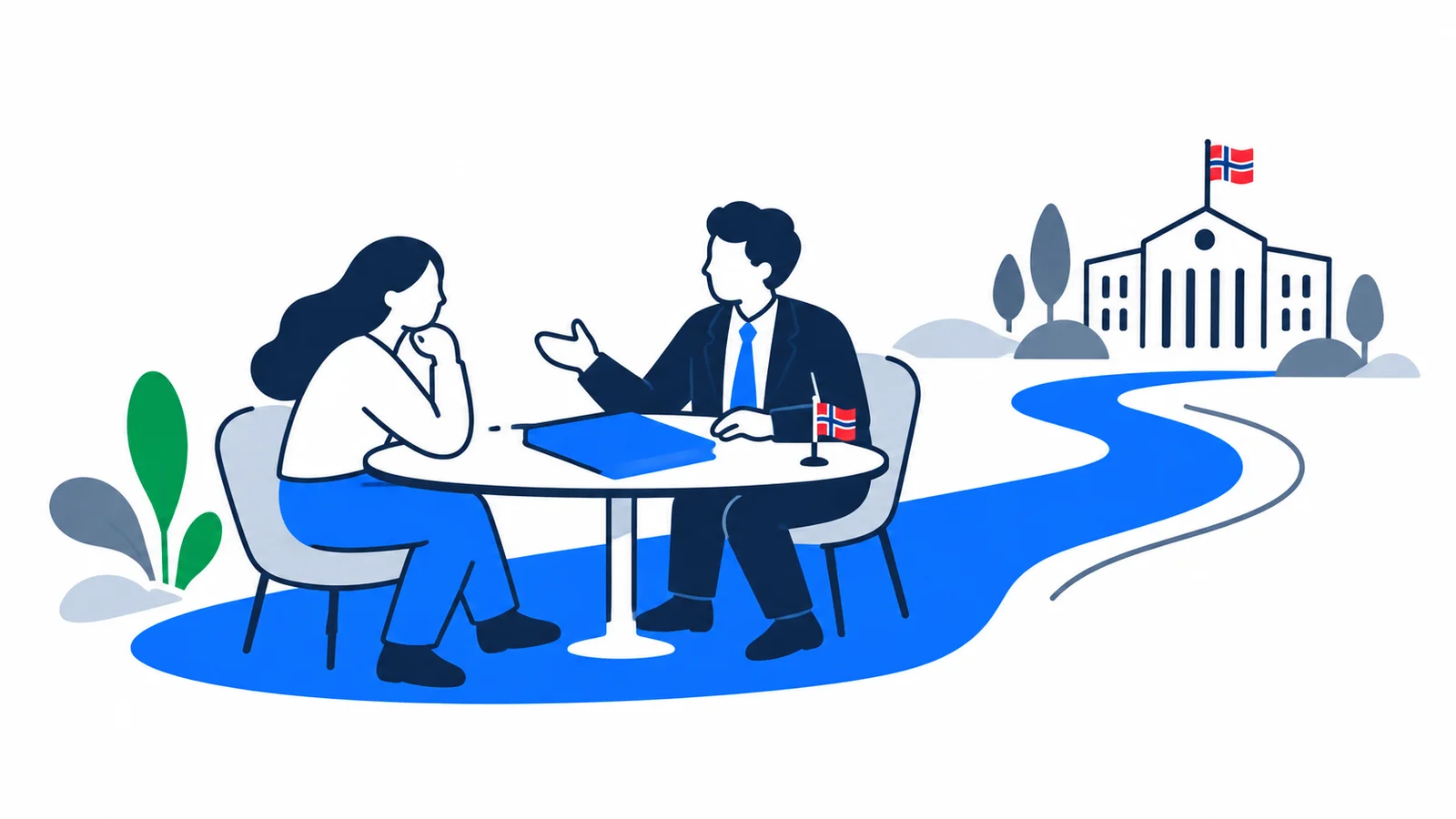
The Conflict Resolution Council in Norway is a free government service that helps people resolve conflicts. The service uses mediation: a neutral person helps the parties talk together and find a solution themselves.
The idea is simple. Instead of a long and expensive court case, the parties meet and talk together. Often it happens quickly, usually within a few weeks. You retain control over what the solution becomes.
The Conflict Resolution Council operates throughout the country. As of 2026, there are twelve conflict resolution councils that together cover all municipalities. They are governed by the Secretariat for the Conflict Resolution Councils under the Ministry of Justice and Public Security. The rules are in the Conflict Resolution Councils Act, which applies throughout Norway.
A mediator is a neutral person who leads the meeting. The mediator is impartial and does not decide who is right. There are approximately 430 mediators in the country, and they are ordinary people from their local communities. Everything they hear is confidential.
The Conflict Resolution Council is part of the Norwegian rule of law. If you want to understand how the courts and the law fit together, you can read more about the courts and the rule of law in Norway.
Which cases does the Conflict Resolution Council handle?
The Conflict Resolution Council handles both civil cases and criminal cases. This makes the service unique: the same mediation is used for both everyday conflicts and for legal violations.
Civil cases are disputes between ordinary people. Common examples include:
- conflict with a neighbor, for example about noise, hedges or parking
- disagreement in your family or between friends
- financial conflicts, for example about money or a purchase
- conflicts at work or in a housing cooperative
Criminal cases usually come from the police or the prosecution authority. This could be violence, threats, bullying, theft or vandalism. The police can send a case to the Conflict Resolution Council instead of regular punishment.
In 2023, the conflict resolution councils handled 8,034 cases. Of these, 3,050 were civil mediations and 1,879 were mediations in criminal cases. If the case involves pressure or control in the family, you can also read about negative social control.
How does mediation work?
Mediation is voluntary, and both parties must agree. No one is forced to meet. Here is how it works:
- You or the police submit the case.
- The Conflict Resolution Council asks the other party if they want to meet.
- Each party usually has a separate preliminary meeting first, with information.
- If both agree, the mediator arranges a time and place for the mediation meeting.
- In the meeting, everyone tells their side, and the mediator helps you find a solution.
- If you agree, you write an agreement together.
You decide the agreement yourselves. The mediator does not pressure any solution on you, and everything said in the meeting is confidential. If you do not agree, you are free to take the case further in other ways. You do not lose any rights by trying mediation first.
Restorative justice instead of punishment
The Conflict Resolution Council is based on restorative justice. This means the goal is to repair damage and restore the relationship, not just to punish.
In a criminal case, the parties can meet face to face. The person affected can explain how the event felt. The person who did something wrong can take responsibility and apologize.
Research shows that many people experience such a process as more fair than ordinary punishment. The person affected is heard, and the young person or adult who did something wrong better understands the consequences of their action.
If you complete an agreement in a criminal case, the person usually does not appear in a regular criminal record. It can appear in an extended record for two years.
The Conflict Resolution Council is not a court. If you prefer to report a legal violation to the police, you can read how to report to the police.
Youth sentence and youth follow-up: an alternative to prison
The Conflict Resolution Council in Norway is also responsible for two criminal sanctions for young people: youth sentence and youth follow-up. Both are alternatives to prison.
They apply to young people between 15 and 18 years old who have committed a crime. Instead of prison, the young person receives a plan and follow-up over time. A special meeting, called a youth assembly meeting, brings together the young person, their family, and others who can help. The young person must agree and take responsibility for what has happened.
Youth sentence is used for more serious crimes and lasts longer. Youth follow-up is used for less serious cases. In 2023, the conflict resolution councils had 59 cases with youth sentences and 464 with youth follow-ups.
The goal is to help young people get back on the right track without prison. The rights of children and young people are also protected by human rights in Norway.
How do I submit a case myself?
You can submit a civil case on your own, and it is free. You do not need a lawyer.
Here is how you do it:
- Go to konfliktraadet.no and find your local conflict resolution council.
- Submit your case, or make contact by phone.
- The Conflict Resolution Council asks the other party if they want to meet.
If the case is a criminal case, it usually goes through the police. Then the police or the prosecution authority can refer the case to the Conflict Resolution Council. Schools, child welfare services, or other public offices can also send a case on. You can always call your local conflict resolution council and ask if your case is suitable.
Understanding your rights makes you more secure when dealing with Norwegian society. At SamfunnPrep, you practice this very topic, which is part of the curriculum for the Citizenship Test.
The rules about the rule of law and society are something you need to know for the test. With SamfunnPrep, you can practice real test questions and understand how Norway works.
Ready to practice? Try SamfunnPrep for free.