
Norway's welfare state rests on a simple deal: you pay tax and national insurance contributions, and you get access to health care, schooling, pensions and financial support when you need it. Folketrygden (the National Insurance Scheme) is the backbone, and almost everyone who lives or works legally in Norway is a member.
What the welfare state is – in short
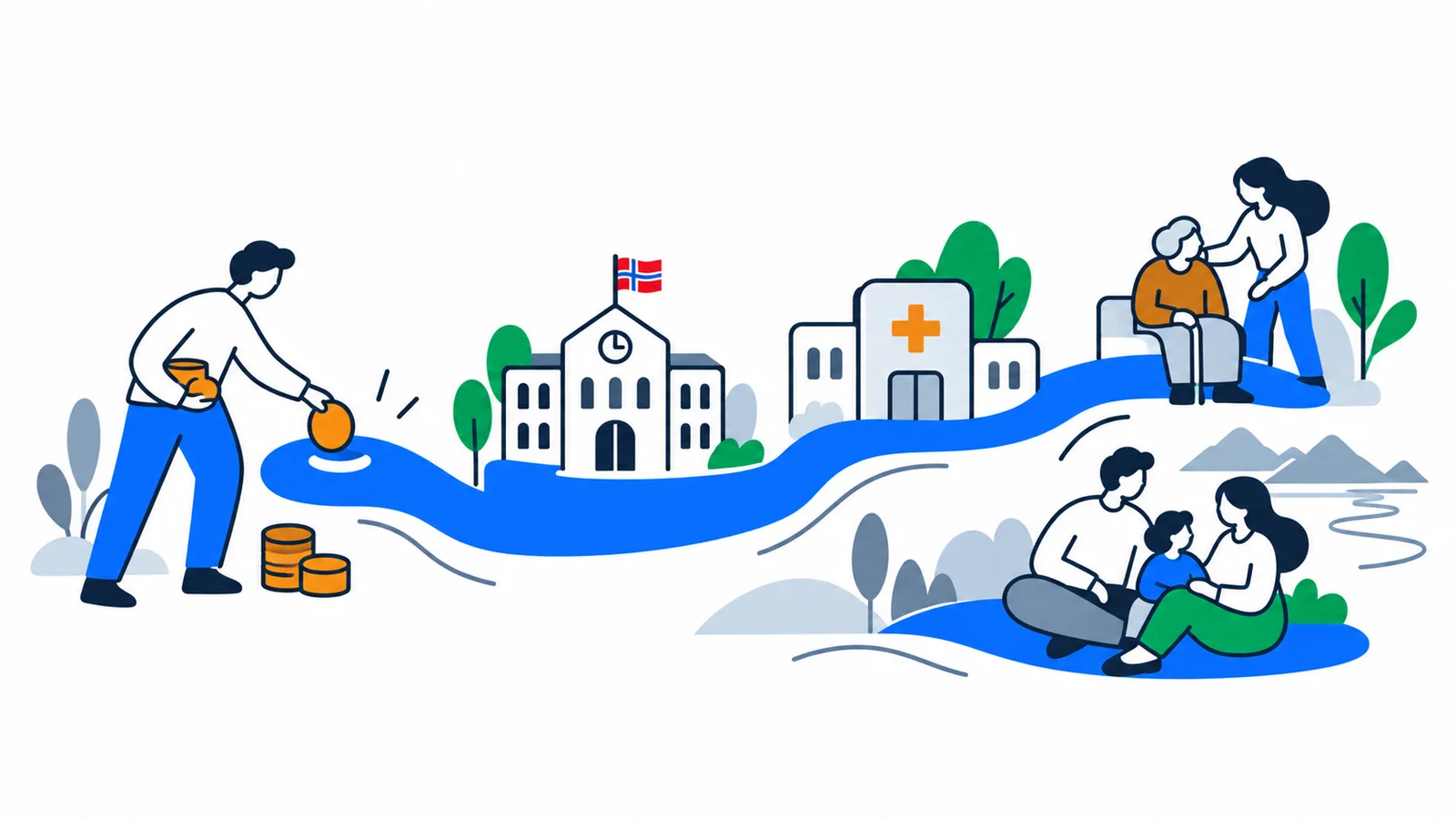
The welfare state is how Norway shares security. The idea is simple: the community, not the individual alone, picks up the bill when someone becomes ill, old, unemployed or has children. The money comes mainly from taxes and duties, and most services are universal – in principle they apply to everyone living legally in the country, not only those on low incomes.
This means a hospital stay, a place in a public school or an old-age pension does not depend on how rich you are. You pay according to ability through tax, and get help according to need. The result is small differences between people and a safety net most can rely on. This way of organising society is often called "the Norwegian model", and it resembles the systems in the other Nordic countries.
Why do people accept such high taxes? Much of it comes down to trust. The vast majority feel they actually get something back – free schooling, affordable health care and a pension they can count on – and that the money is largely managed honestly. When you know that your neighbour, your boss and the prime minister are all part of the same shared effort, it becomes easier to contribute. This trust is perhaps the most important, but also the most fragile, part of the whole system.
Folketrygden: the backbone of the system
Folketrygden is the statutory insurance scheme that gives you the right to benefits from NAV. It was introduced in 1967 and is the key to most of the welfare.
You usually become a member in one of two ways (as of 2026):
- As a resident: your stay in Norway lasts, or is intended to last, at least 12 months.
- As an employee: you work legally in Norway – then you are a member even before you have lived here a full year.
Membership works as an insurance that gives you health and pension rights, and can give the right to cash benefits. As a member you generally pay national insurance contributions on your income. Folketrygden covers, among other things:
- Sickness benefit (sykepenger) when you are ill and cannot work
- Unemployment benefit (dagpenger) if you lose your job
- Parental benefit (foreldrepenger) for birth and adoption
- Old-age pension (alderspensjon) when you retire
- Disability benefit (uføretrygd) if illness permanently reduces your ability to work
- health services through your regular GP, hospitals and the exemption-card scheme
Many of the amounts are calculated from the basic amount (G, grunnbeløpet), which is adjusted on 1 May each year. From 1 May 2026, 1 G = 136,549 kroner, an increase of 4.91 percent on the year before. The longer you live and work in Norway, the more you usually build up – for example, residence time and earnings count towards your future pension.
To learn how to deal with the agency in practice, see NAV for immigrants.
What your tax pays for
Welfare is tax-financed – there is no separate "welfare account", and no private bill that appears when you fall ill. Three main sources fill the common purse:
| What | Who pays | Rate 2026 |
|---|---|---|
| Income tax | you, on wages and income | progressive, rises with income |
| National insurance contribution | you, deducted from wages | 7.6% of wage income |
| Employer's contribution | your employer | 14.1% in zone 1 |
The national insurance contribution (trygdeavgift) goes straight to folketrygden. On ordinary wages it is 7.6 percent in 2026 (5.1 percent on pensions and 10.8 percent on business income). If you earn under 99,650 kroner a year, you pay no national insurance contribution at all.
In addition, your employer pays an employer's contribution (arbeidsgiveravgift) – 14.1 percent of wages in the most central areas, and lower rates in rural districts as a regional-policy tool. You rarely see this charge yourself, but it is a large part of the financing.
Income tax is progressive: you pay a low share on a low income and a higher share when you earn a lot. That way those with the most contribute the most. You can see what you have actually paid and received in the annual tax return.
The Norwegian model: tax and tripartite cooperation
"The Norwegian model" is more than tax. It stands on two legs:
- Tax-financed, universal welfare – everyone contributes, and everyone is covered.
- Tripartite cooperation – the state, the employers (such as NHO) and the employees (such as LO) negotiate together on pay, working life and reforms.
This interplay is meant to give small pay differences, high employment and predictability for both businesses and workers. That many people are in work and pay tax is the very precondition for the model to hold together: the more people work, the more there is to share.
The model is not set in stone, however. It rests on a very high share of people being in work – including women, who in Norway take part in working life to a far greater degree than in many other countries. Good arrangements for parental leave and kindergarten are a deliberate part of this: they make it possible to combine work and family. If employment falls, or there come to be far more recipients than contributors, the model comes under pressure.
What you get back – throughout life
The welfare state follows you from birth to old age. Some of the most important benefits have their own guides:
- Child benefit – monthly support for everyone with children under 18.
- Unemployment benefit after dismissal – income while you look for a new job.
- Health care, public schooling and affordable kindergarten – services you use without paying the full price.
Folketrygden is by far Norway's largest expense. In the 2026 state budget, around 40 billion kroner more than the year before goes to folketrygden. Old-age pension alone costs about 352 billion kroner – and the costs are growing, mainly because the population is ageing and more people are retiring. That is one reason politicians keep debating how welfare should be financed in the future.
What this means for you as a newcomer to Norway
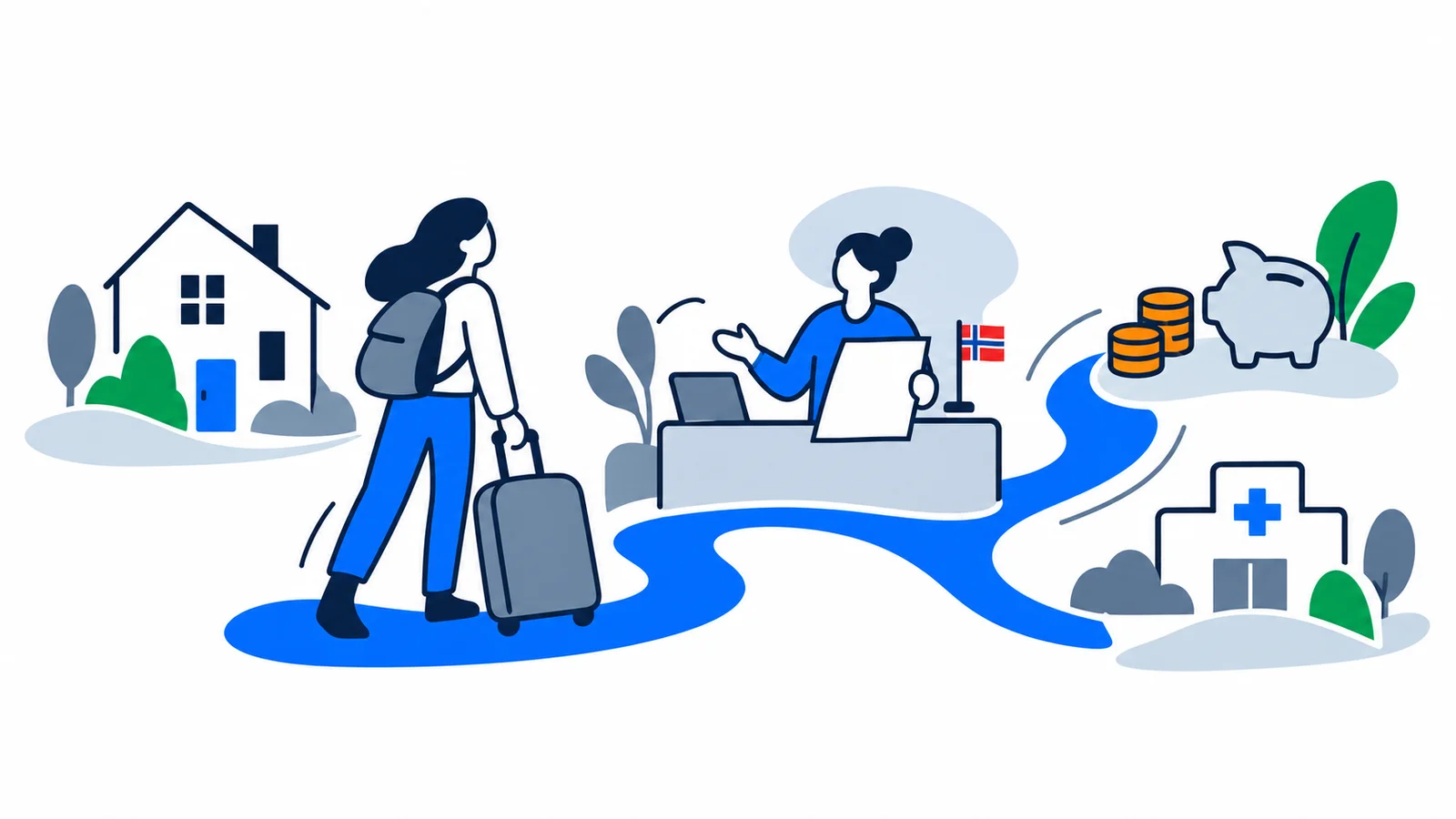
As a newcomer, you usually become part of the system fairly automatically: you register, get a national identity number, obtain a tax card and start working. You pay tax from your first wage, and at the same time build up rights.
The most important things to remember:
- Report any move and stay registered. Membership of folketrygden is tied to living and working legally in Norway.
- Check your tax card so you pay the right tax from the start and avoid surprises.
- Keep documentation of work and income – it decides how much you get in sickness benefit, unemployment benefit and pension later.
The welfare state is no free lunch, but a shared insurance: you pay in when you can, and get help when you need it. Understand that deal, and you understand a lot about how Norway holds together.