
Volunteering and dugnad mean that people work for free for the community, for example in sports clubs, housing cooperatives and organizations like the Red Cross. It gives you networks, language training and a path into working life. Voluntary work is always voluntary, never a public duty.
What do volunteering and dugnad mean in Norway?
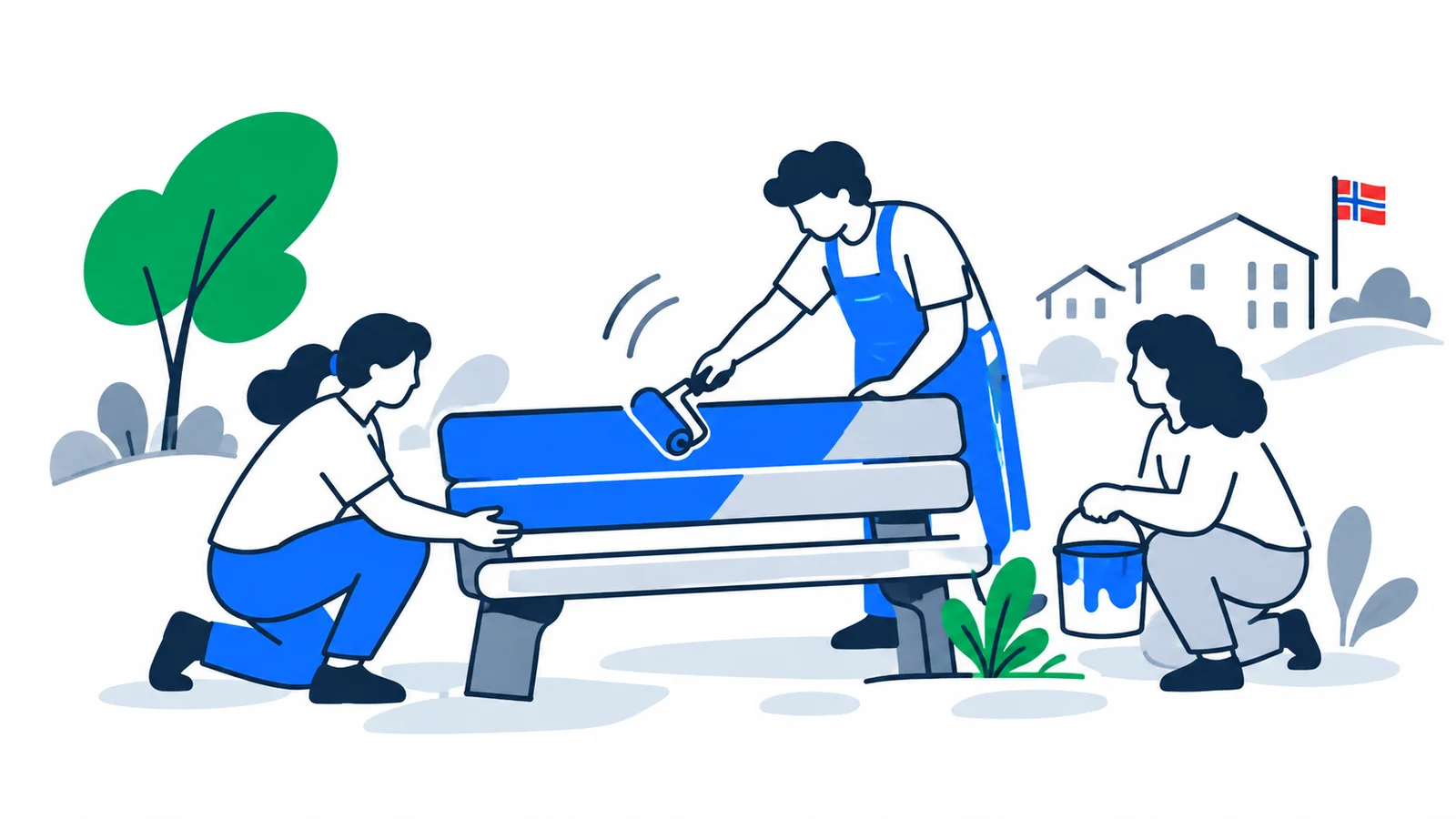
Voluntary work is effort you put in without regular pay for clubs, associations, neighbourhoods or the local community. Dugnad is the practical side of this: people meet and solve a specific task together. You can paint a club house, tidy up the housing cooperative, sell coffee at a tournament or drive children to a match.
Dugnad is a word most people in Norway know from childhood. It describes how many local communities actually work. The idea is simple: when many contribute a little, big tasks become small. This dugnad spirit is a strong part of Norwegian culture and an important part of Norwegian society.
Volunteerism is not just good will. Statistics Norway (SSB) has calculated that unpaid voluntary work had a value of a total of 194 billion kroner in 2022 and 2023. This shows how much society gains from the effort, even though no one gets paid.
Which voluntary organizations exist?
There are thousands of voluntary organizations in Norway. Frivillighet Norge is the umbrella organization for over 300 of them, with many thousands of local clubs and associations under it. Here are some common places where you can contribute:
- Sports clubs need coaches, parent contacts, kiosk staff and people for dugnad.
- Housing cooperatives and neighbourhood associations have dugnad to tidy and decorate common areas.
- Humanitarian organizations like the Red Cross run visitor services, tutoring and disaster preparedness.
- Cultural associations and bands need people for ticket sales, stage, sound and lighting.
- Volunteer centres connect people who want to contribute with local needs in the municipality.
Many of these services exist only because volunteers step up. Without voluntary effort, children would have fewer leisure activities, and many elderly and lonely people would have less contact with others.
Why is voluntary work important for integration?
Voluntary work is one of the easiest ways into Norwegian society. When you are part of a club or organization, you meet people, practice Norwegian in a natural setting and build networks. This can later help you find a job.
Many employers view voluntary experience positively. You can show that you are active, that you cooperate well, and that you know Norwegian working methods. Volunteering also gives you references and an environment where you can ask for advice.
Voluntary work is also a form of democratic participation. You are involved in deciding and creating something where you live. In this way you become part of the local community, not just a spectator.
How do you find and get involved in voluntary work?
The easiest place to start is frivillig.no. The website is run by the voluntary organizations themselves through Frivillighet Norge. You search by where you live, see available tasks and fill out a simple form. After that the organization will contact you. The service is free to use.
You can also contact a volunteer centre. In 2024 there were around 571 volunteer centres distributed across 337 municipalities. They help you find a task that suits you, whether you want to do a little or a lot. For many, it is easier to start with one specific task than to sign up for something big and confusing.
A good tip is to start small. Join one dugnad, one event or one shift. That way you can try it out without committing yourself to much at once.
What rules and rights apply to volunteers?
Voluntary work is unpaid, but there are still clear rules. The most important ones are about tax, criminal records check and insurance.
| Topic | What applies |
|---|---|
| Wages | Voluntary work is as a rule unpaid. |
| Tax | You can receive up to 10 000 kr per year tax-free from one tax-exempt organization (as of 2026). |
| Criminal records check | Required for tasks with responsibility for children, young people or people with disabilities. |
| Insurance | Many organizations insure their volunteers – ask before you start. |
The tax rules are worth noting. The Norwegian Tax Authority states that if you receive money from a tax-exempt organization, up to 10 000 kroner per year is tax-free. But if you earn more than the limit from one organization in the course of a year, the entire amount becomes taxable, not just the amount above.
If you are to have tasks with responsibility for children and young people, you often need to show a criminal records check. This is a certificate from the police showing whether you have been convicted of certain crimes. The requirement follows from the police register regulation and applies for example to coaches in sports clubs. The certificate is free for volunteers.
Also remember that voluntary work should not look like regular work without pay. Good volunteering respects time, capacity and life situation. It is based on trust, not coercion. You are allowed to say no, and you are allowed to set boundaries.
How does dugnad work in housing cooperatives?
If you live in a housing cooperative or co-ownership, you will often experience dugnad. Neighbours then meet to tidy, plant, paint or do other maintenance of common areas. The purpose is to keep costs down and build good neighbourly relations.
Dugnad in the housing cooperative is a strong social norm, but not a legal duty. You cannot be forced to participate, and as a rule you cannot be fined for not taking part. At the same time it is appreciated when you show up. Participating in dugnad is an easy way to get to know your neighbours.
Volunteerism in the neighbourhood is part of the broad dugnad culture that also carries the Norwegian welfare state. The public sector provides basic services, while volunteers make the community richer and more lively.
What should you remember for the citizenship test?
For the citizenship test you should be able to explain that dugnad is voluntary community work for a specific purpose, and that voluntary work is unpaid effort for the community. Volunteering is not a public duty, but a strong social norm in many settings.
Remember the essence: volunteering works best when people know what they are saying yes to, when the work is well organized, and when the effort is appreciated. It gives networks, language training and community – and it is a safe way into Norwegian society.
This topic is part of the curriculum for the citizenship test. You can practise for free on SamfunnPrep, and the first steps in Norwegian everyday life are found in SamfunnPrep's guide to the first week.