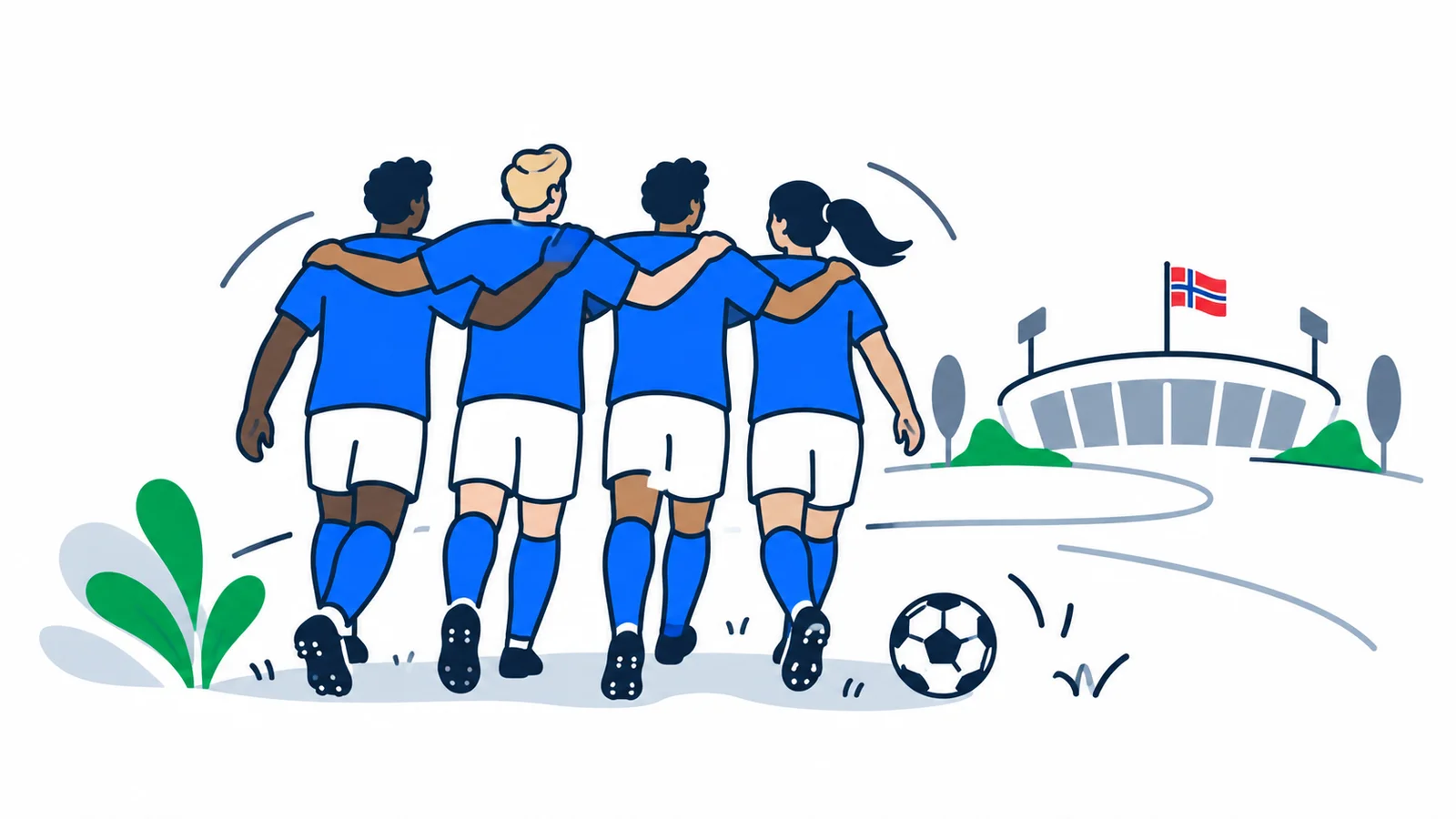

Norway is playing the quarter-finals of the 2026 World Cup against England on Saturday, July 11 at 23.00 Norwegian time – the country's first World Cup in 28 years. Two players in the squad have an immigrant background: Antonio Nusa and Oscar Bobb. In addition, both Erling Haaland and Thelo Aasgaard were born in England.
How has Norway performed at the 2026 World Cup?
Norway has reached the quarter-finals of the 2026 World Cup – the best Norwegian result in a World Cup ever. The team won two of three group matches and has beaten both Ivory Coast and Brazil in the knockout rounds.
- 16 June: Norway – Iraq 4–1 (two goals by Haaland)
- 22 June: Norway – Senegal 3–2
- 26 June: Norway – France 1–4
- 30 June, round of 16: Norway – Ivory Coast 2–1
- 5 July, quarter-finals: Norway – Brazil 2–1
The victory over Ivory Coast was Norway's first in a World Cup knockout round ever, and Antonio Nusa scored the opening goal. Against Brazil, Erling Haaland decided it with two goals, while goalkeeper Ørjan Nyland saved a penalty. Haaland has seven goals in four matches as of 11 July 2026 (he was spared against France) – only Lionel Messi and Kylian Mbappé have more in the tournament.
The squad of 26 players was presented on 21 May 2026, and the names were read out by King Harald in a pre-recorded video message.
Who in the World Cup squad has an immigrant background?
Two of the 26 players have a parent who immigrated to Norway – both were themselves born and raised here.
Antonio Nusa (21) grew up in Langhus in Nordre Follo. His father comes from Nigeria and played football himself in Norwegian lower divisions; his mother is Norwegian. Nusa started in Langhus IL and currently plays for German RB Leipzig. As of 5 July 2026, he has nine goals in 29 international matches. He scored against Italy in both qualifying matches – and thus against Ivory Coast in the World Cup.
Oscar Bobb (22) was born in Oslo and grew up on Tåsen. His father comes from Gambia, his mother is Norwegian. Bobb started in Lyn and went on to Vålerenga before Manchester City signed him; since January 2026 he has played for Fulham. He turns 23 the day after the quarter-final.
Two players were also born in England. Erling Haaland was born in Leeds when his father Alf-Inge was playing for Leeds United, and moved to Bryne at age three. Thelo Aasgaard was born and raised in Liverpool with a Norwegian father and French mother – he scored Norway's only goal against France. In the quarter-final, both meet the country they were born in.
What does «immigrant background» actually mean?
SSB (Statistics Norway) uses a precise definition: immigrants are persons who have themselves immigrated to Norway, and Norwegian-born persons with immigrant parents have two parents born abroad. As of 1 January 2026, the two groups together make up approximately 21.7 percent of the population – over 1.2 million people.
According to this strict definition, none of the 26 in the squad have an immigrant background: Nusa and Bobb were born in Norway with one Norwegian parent, while Haaland and Aasgaard were born abroad with a Norwegian father. In everyday language, the term is used more broadly, often about anyone with family roots in other countries. Such definitions and statistics are part of the curriculum for the civics exam, and on SamfunnPrep you can practice for free on questions about exactly this.
Players who chose another country
To play for Norway you must have Norwegian citizenship – FIFA requires it. You can find the requirements in the guide on becoming a Norwegian citizen. Since 2020, Norway has also allowed dual citizenship, and players with a family background from multiple countries can therefore often choose between several national teams.
Some choose a country other than Norway. Osame Sahraoui, born in Oslo with Moroccan parents, played one A international for Norway before choosing Morocco in 2024. The same week, Oslo-born Christos Zafeiris chose to play for Greece. National team coach Ståle Solbakken said at the time that he had too much respect for Moroccan football and culture to say anything disparaging about the choice. You can find more rules and guides on the topic page about Norwegian citizenship.
If Norway wins against England, a semi-final awaits on 15 July in Atlanta. Regardless of the result, the 2026 World Cup is already historic – both in sporting terms and as a picture of a changing Norway. Do you want to understand the society behind the team better? On SamfunnPrep you will find articles and practice questions about Norwegian society.