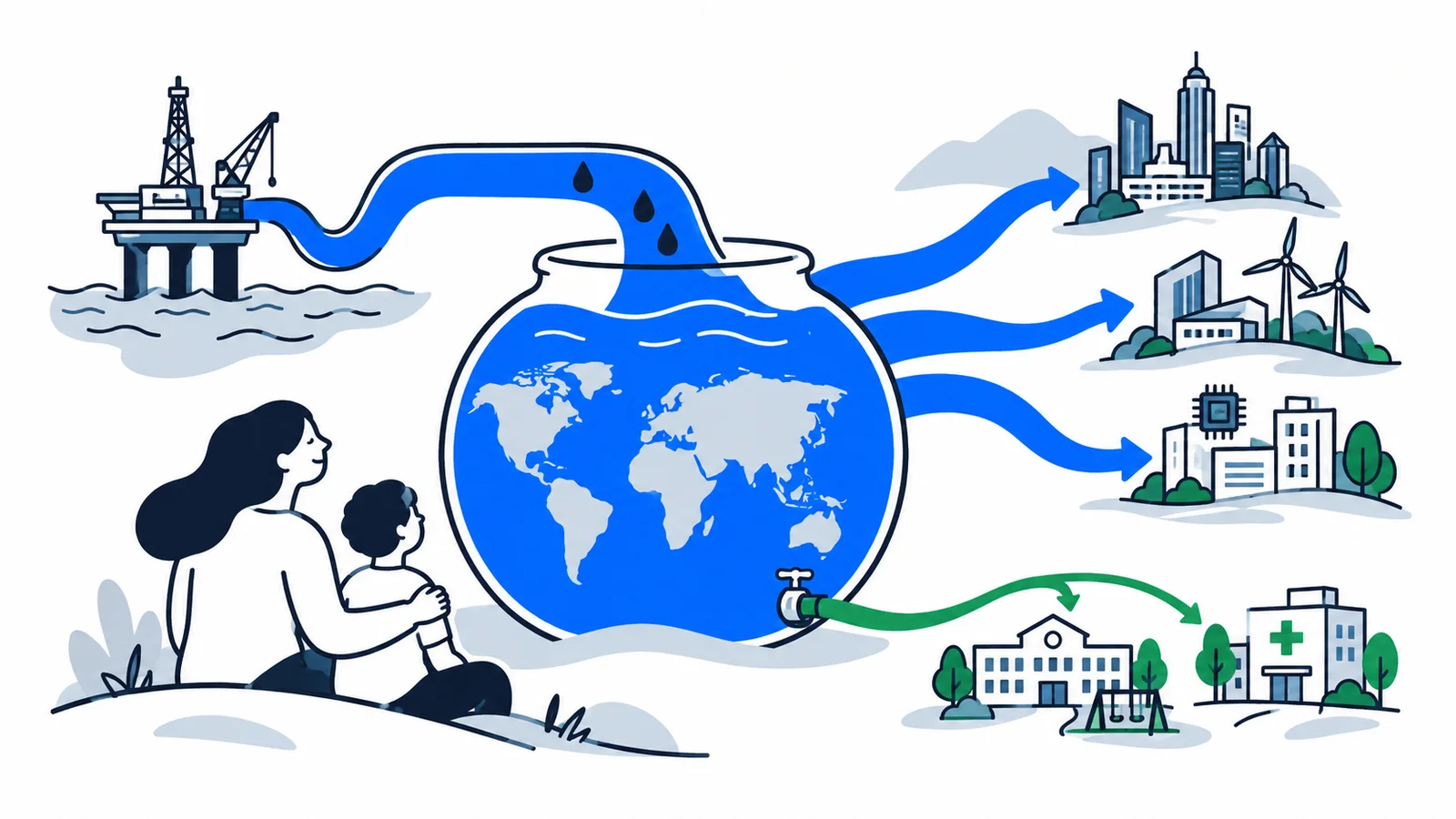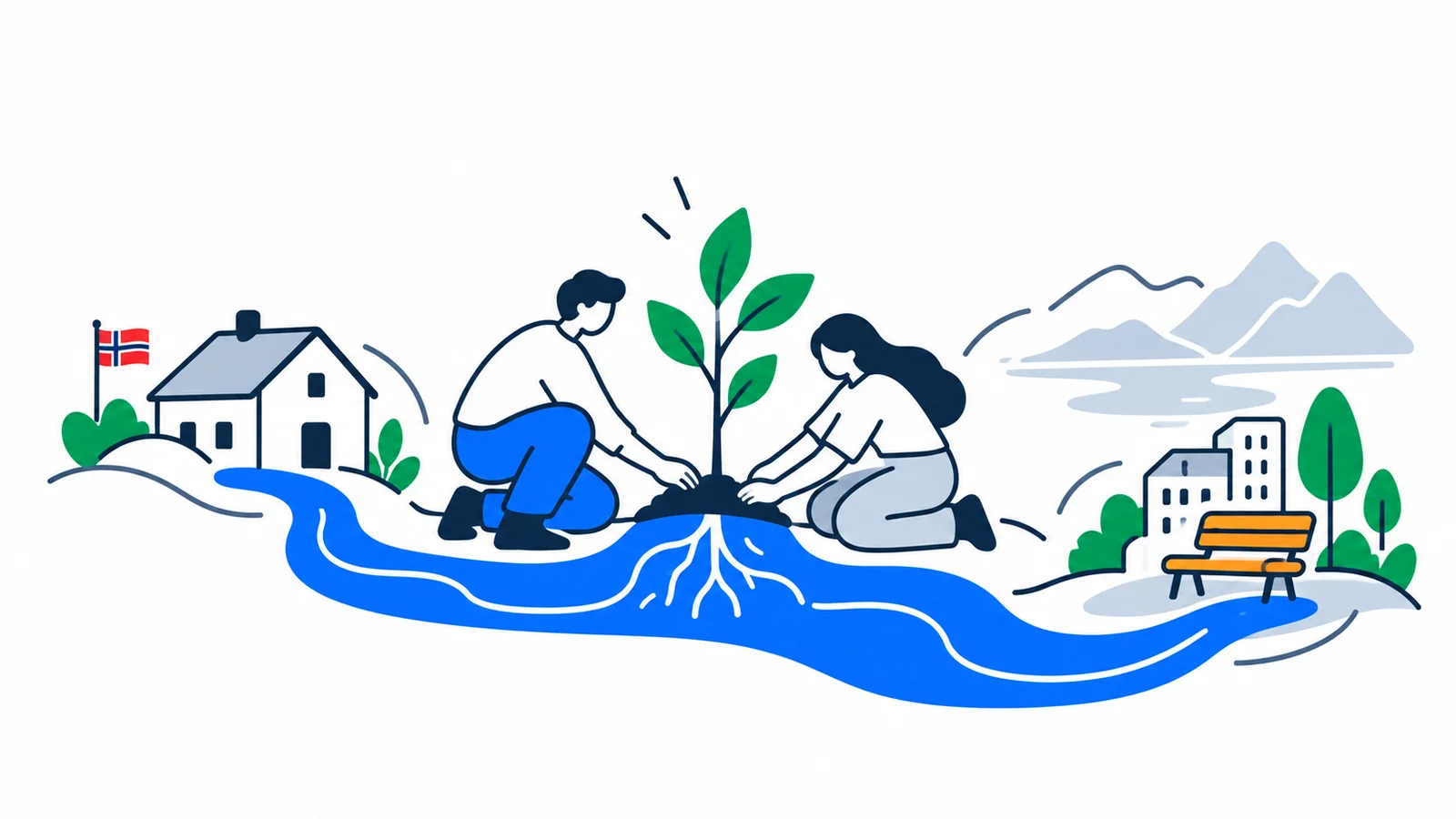


Sustainability means meeting our needs today without destroying the opportunities of those who come after us. In Norway, sustainability is about more than climate. It is also about nature, the economy, health, housing, education, consumption, and the fair distribution of resources. A sustainable solution must work over time, not just look good in the short term.
What is sustainable development?
Sustainable development is built on three dimensions that must be seen together: environment, social conditions, and economy. A measure is not sustainable just because it is cheap, green, or popular. It also has to be fair, practical, and lasting. If we solve one problem by creating a new problem somewhere else, or pass the costs on to future generations, the solution is not really sustainable.
The idea of sustainable development was clearly defined internationally through the UN. In 2015, the world's countries adopted Agenda 2030 with 17 Sustainable Development Goals and 169 targets. The goals apply to all countries, not only poor countries or developing countries. The Norwegian government describes them as a shared action plan toward 2030. The principle that no one should be left behind means that vulnerable groups must also be included in development.
The goals in Norway
Norway has many strengths. We have high trust, a relatively strong economy, free primary education, a broad health system, and high participation in working life. At the same time, Norway has clear challenges. Emissions must go down, nature must be better protected, and differences in living conditions can grow if we do not pay attention. High consumption and strong pressure on land mean that Norway cannot only point to good intentions. We also have to deliver in practice.
Statistics Norway publishes national indicators for the Sustainable Development Goals. They show how Norway is doing on topics such as poverty, health, education, energy, work, inequality, climate, nature, and international cooperation. These numbers make sustainability concrete. They show that sustainability is not an abstract ideal, but something that can be measured, compared, and improved.
Who is responsible?
Sustainability is not only a question for the UN or Parliament. Municipalities make many decisions through land-use planning, housing, waste, transport, schools, and emergency preparedness. Businesses influence sustainability through production, pay, working conditions, emissions, and resource use. Individuals influence sustainability through transport choices, electricity use, food, clothing, consumption, and voting.
That does not mean responsibility is evenly distributed. Larger structures matter most. Authorities and businesses set the framework for what is possible in everyday life. At the same time, our own choices shape signals and demand. Sustainability in Norway is therefore about the interaction between politics, the economy, and daily life.
Sustainability in practice
In practice, sustainability can mean repairing things instead of throwing them away, using public transport when possible, sorting waste, saving electricity, sharing and reusing resources, and buying less that is unnecessary. It can also mean taking part in the local community, using your vote in elections, and supporting measures that create long-term results. Many small choices can have a large combined effect.
At the same time, we have to be realistic. Individual choices alone cannot solve the climate crisis or the loss of nature. Emissions, pollution, and land use conflicts also have to be handled through laws, regulation, technology, investment, and planning. Sustainability is therefore both personal and political.
What should you remember for the exam?
For the social studies exam, you should be able to explain that sustainability means balancing environment, social conditions, and economy so that today's needs are met without destroying future opportunities. You should also know that Agenda 2030 applies to all countries, that Norway has its own challenges even though it is a rich country, and that sustainability requires effort from authorities, businesses, municipalities, and residents.
This is connected to the welfare state in Norway, democratic participation, and personal finance. Sustainability is not just environmental policy. It is a way of organizing society.
What can you do in everyday life?
Many people ask what sustainability means in practice when they live a normal life. The answer is that sustainability does not require perfection, but good habits. You can think about what you buy, how often you replace things, how you travel to work or school, and how you use energy at home. Choosing something more durable, repairable, or shared can often be better than buying something new right away.
It is also sustainable to take part in community life. When you join a sports club, a neighborhood group, an environmental group, or a volunteer project, you contribute to social sustainability. Societies with high trust and good meeting places often handle change better. That is why environment, economy, and social life are closely connected. Sustainability is not a side project; it is part of how society works.