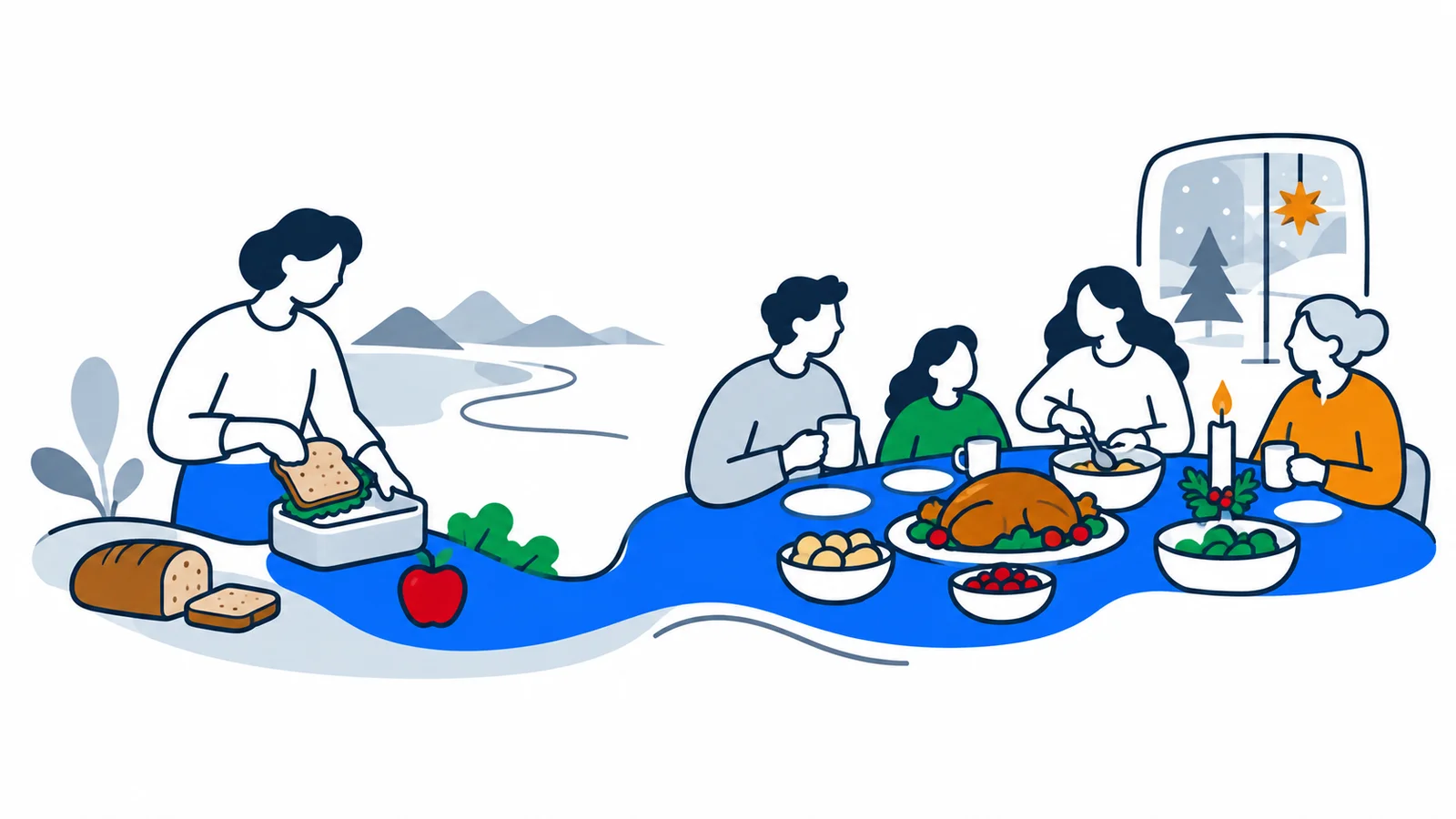

Norwegian food and food traditions are built on simple bread meals in everyday life and slightly fancier food for celebrations. You often eat a packed lunch for lunch, have an early dinner and eat dishes like fårikål and ribbe for special occasions.
What is typical Norwegian food and food traditions?
Norwegian food and food traditions are mostly about simple and filling food. Everyday life is characterized by bread, fish, potatoes and milk. For celebrations, there are slightly larger dishes on the table.
The food is closely linked to the seasons and to Norwegian holidays and commemorations. You do not need to be able to cook everything yourself. The most important thing is to know the customs, so you understand what is happening around you. You can read more about the country in the article this is Norway (facts).
What is the meal rhythm in Norway?
Most people in Norway eat four meals a day. The meals are often simple, and dinner comes early compared to many other countries.
| Meal | When | What |
|---|---|---|
| Breakfast | Around 07 | Bread, oat porridge or yogurt |
| Lunch | Around 11–12 | Packed lunch, bread slices with toppings |
| Dinner | Around 16–17 | Hot meal, the main meal of the day |
| Evening meal | Around 20–21 | Some bread or fruit |
Dinner is the largest meal of the day and often the only hot meal. That people eat dinner so early surprises many who are new to Norway. The reason is simple: many finish work around 4 pm and eat when they get home.
Packed lunch and bread meals
A packed lunch is the most common lunch in Norway. A packed lunch is a few slices of bread with toppings, wrapped in paper or in a box, that you bring from home.
Children bring packed lunch to school, and adults bring it to work. This is called a bread meal: bread with toppings like cheese, ham or caviar. The bread meal is also common for breakfast and evening meals.
This habit saves time and money. It is also connected to a value about being self-reliant. You can read more about such habits in Norwegian values and unwritten rules.
Everyday food: fish, potatoes, bread and brown cheese
Typical Norwegian everyday food is simple and is based on a few ingredients. Fish is prominent, because Norway has a long coastline.
Typical everyday dishes and toppings are:
- Fish such as cod, salmon and fish cakes
- Potatoes, which often come with dinner
- Meatballs in brown sauce
- Bread, often whole grain
- Brown cheese (brunost), a sweet, brown cheese you slice thinly
Brown cheese (brunost) is perhaps the most well-known Norwegian topping. It is brown and slightly sweet, and many put it on bread or waffles. The taste is unusual for many newcomers, but it is worth trying. Porridge, such as oat porridge and rice porridge, is also common, especially for breakfast or on weekends. For lunch you often see crisp bread and open-faced sandwiches, which is a slice of bread with toppings on top.
National dish and festive food
Norway's national dish is fårikål, a stew with lamb, cabbage and whole pepper. Norwegians voted fårikål as the national dish in both 1972 and 2014. In the 2014 vote, fårikål received around 45 percent of the votes, ahead of meatballs and pinnekjøtt. The dish even has its own day: the last Thursday in September.
Holidays have their own food. Here are the most common dishes:
| Holiday | Typical food |
|---|---|
| Christmas | Ribbe, pinnekjøtt, lutefisk |
| 17th of May | Sausage and ice cream |
| Easter | Lamb, eggs and oranges |
For Christmas there are large differences across the country. In Eastern Norway, many eat ribbe (pork), while 70–80 percent in Western Norway eat pinnekjøtt (salted and dried lamb meat). Lutefisk (fish treated with lye) is strongest in Trøndelag and Møre. All variants are "correct" — it is about where the family is from.
17th of May is Norway's national day and is often called children's day. On this day children parade, and many eat sausage and ice cream several times during the day. For Easter, lamb, boiled eggs and oranges are common, often at the cabin or on a trip in the mountains.
Coffee, cake and shopping for food
Coffee is a big part of Norwegian culture. Norwegians are among those who drink the most coffee in the world, and it is quite normal to be invited home for "a cup of coffee". Sitting together with coffee and something nice is often called "cosy" (kos).
Cake often goes with the coffee. "Bringing cake" is a nice habit when you visit, celebrate something at work or contribute to a dugnad (common voluntary work). In kindergarten it is also common to bring some fruit or cake when a child has a birthday.
You buy ordinary food at the grocery store. But beer over 4.7 percent, wine and spirits can only be bought at Vinmonopolet, a separate state-run shop. This is to limit the harms of alcohol. Vinmonopolet has its own opening hours and is closed on Sundays and holidays. Read more in Vinmonopolet and alcohol regulations.
A food culture for everyone
Norwegian food culture is becoming increasingly multicultural. Today people in Norway also eat pizza, tacos, kebab and dishes from all over the world.
You are welcome to share your own food tradition. Bringing a dish from home to a party or a dugnad is a nice way to get to know your neighbors. Nobody expects you to replace your own food culture — it becomes part of the new Norway.
Norwegian culture and holidays are part of the curriculum for the citizenship test — practice for free on SamfunnPrep. On SamfunnPrep you find tasks about culture, values and everyday life in Norway, so you feel more confident about the test.