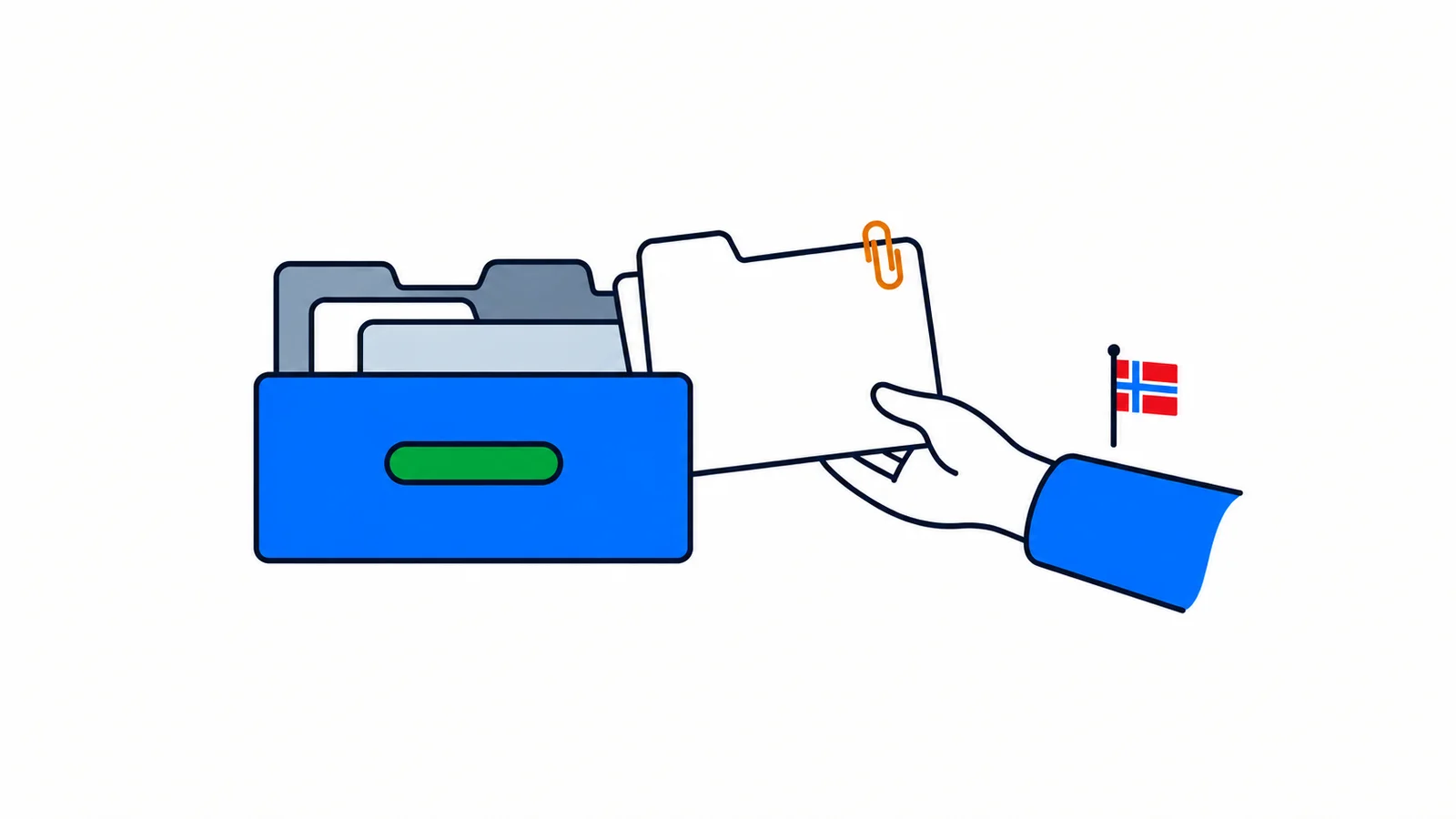
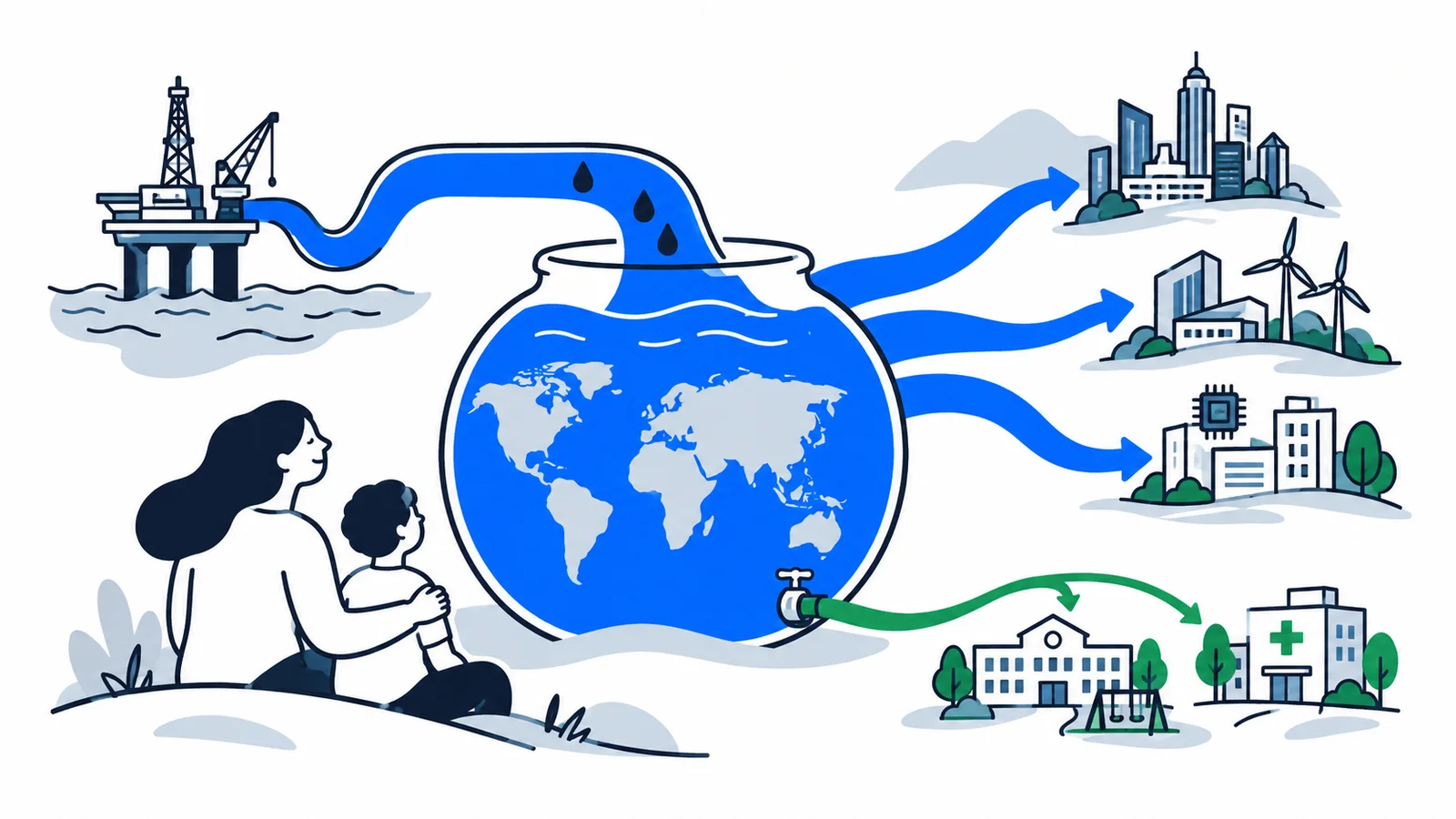

The Oil Fund is the common name for the Government Pension Fund Global (GPFG). The fund saves Norway's income from oil and gas, and invests the money in companies and securities abroad. At the end of 2025, the fund was worth approximately 21 268 billion kroner.
This is one of the world's largest funds, and it belongs to the entire Norwegian people – not to individuals. In this guide, we explain what the Oil Fund is, who owns and manages it, how much it is worth, what the fiscal rule means, and why it is not a personal pension you can withdraw. The sources are Norges Bank Investment Management (NBIM), the Ministry of Finance, and Encyclopaedia Britannica.
What is the Oil Fund?
The Oil Fund is the state's savings account for oil and gas revenues, with the official name Government Pension Fund Global (GPFG). The fund was established by law in 1990, and the first transfer of money came in 1996.
The idea is simple. Oil and gas are resources that will eventually run out. Instead of spending all the income at once, Norway saves it for the future. This way, future generations will also benefit from these values. The Oil Fund is an important part of what makes Norway a safe country to live in – you can read more in our overview of facts about Norway and Norwegian society.
Since 2012, the GPFG has been the world's largest state-owned fund. The name can be confusing: although it is called a "pension fund," it is not linked to your own pension. More about that later. The fund is also a topic you encounter when practising for the test in social studies (Samfunnskunnskapsprøven) on SamfunnPrep.
Why does the Oil Fund invest only abroad?
The Oil Fund invests only abroad, never in Norway. The reason is to prevent the Norwegian economy from becoming "overheated." If all the oil billions were spent or invested at home, prices and wages would rise too quickly, and the Norwegian krone could become too strong.
By placing the money abroad, the fund also spreads the risk. The values are distributed across thousands of companies in many countries and industries. If things go badly in one region, they may go better in another. This provides safer and more stable savings over time.
Who owns and manages the Oil Fund?
The Oil Fund is owned by the Norwegian state, that is, by the public. The Ministry of Finance has formal responsibility and sets the rules for how the money should be managed.
The actual management is done by Norges Bank Investment Management (NBIM), a part of Norges Bank (the central bank). NBIM buys and sells shares and securities on behalf of the state, within the framework set by the Ministry of Finance and the Storting (Parliament). The Storting follows up and approves the major decisions.
What is the fiscal rule?
The fiscal rule is the rule for how much of the Oil Fund politicians can spend through the state budget each year. The main principle is that the state over time should only spend the expected annual return (value increase), not the capital itself.
The Storting approved the fiscal rule in spring 2001. At that time, the expected real return was estimated at 4 percent per year. In 2017, the estimate was lowered to 3 percent because lower returns were expected in the coming years.
This means in practice:
- The state should let the fund itself remain and grow.
- Only the return is spent, on average around 3 percent per year.
- Some years more is spent, other years less, depending on the economy.
- In this way, the fund lasts "forever" and also benefits future generations.
The oil revenues used each year go directly into the state budget. They help finance schools, hospitals, and social security – that is, the Norwegian welfare state.
How much is the Oil Fund worth, and what is it invested in?
At the end of 2025, the Oil Fund was worth 21 268 billion kroner (as of 31.12.2025). This equals over 3.8 million kroner per resident in Norway. In 2025, the fund achieved a return of 15.1 percent, which is 2 362 billion kroner.
The fund owns small portions of a very large number of companies – approximately 8 500 companies in about 70 countries. In total, the Oil Fund owns almost 1.5 percent of all listed shares in the world. The money is distributed as follows (as of 31.12.2025):
| Type of investment | Share of the fund |
|---|---|
| Equities | 71.3 % |
| Fixed income (bonds) | 26.5 % |
| Real estate | 1.7 % |
| Renewable infrastructure | 0.4 % |
Most of it is shares in large, well-known companies around the world. A smaller part is loans to states and companies, real estate, and renewable energy such as wind farms.
Does the Oil Fund have ethical rules?
Yes. The Oil Fund should not make money from just anything. There are ethical guidelines that exclude certain companies. A separate Ethics Council (established in 2004), appointed by the Ministry of Finance, evaluates which companies violate the rules.
Companies can be excluded because of what they produce or how they behave. Fixed product-based exclusions include:
- Production of tobacco
- Production of coal or coal-based energy
- Production of nuclear weapons and cluster munitions
- Production of cannabis
Companies can also be excluded for serious violations of human rights, child labour, or serious environmental damage. Climate and environment are an increasing part of the work, which is linked to Norway's commitment to sustainability and the green transition.
Is the Oil Fund my personal pension?
No. This is a common misunderstanding. Although the fund is called a "pension fund," it is not a personal pension account. You cannot withdraw money from the Oil Fund, and you have no personal share that you can claim to be paid out.
The Oil Fund is common savings for the entire country. Your own old-age pension comes instead from the National Insurance Scheme (the state social insurance system) and any pension from your employer. If you want to understand your own finances and pension better, see the guide on personal finance in Norway.
The fact that the fund is common property is precisely the point: it gives the state a buffer in difficult times and secures welfare for everyone living in Norway.
In short
- Oil Fund = Government Pension Fund Global (GPFG), established in 1990 with the first deposit in 1996.
- The fund was worth 21 268 billion kroner as of 31.12.2025, managed by NBIM for the Ministry of Finance, and invests only abroad.
- The fiscal rule states that the state over time should only spend around 3 percent per year (lowered from 4 percent in 2017), so that the fund lasts for future generations.
- It is not a personal pension you can withdraw – it is common savings for all of Norway.
The Oil Fund and the welfare state are part of the curriculum for the test in social studies. If you want to become more confident about how Norwegian society works from the very beginning, you can use SamfunnPrep's First Week Checklist and practise for free on SamfunnPrep.