
Immigration to Norway has a short history. Before the 20th century, Norwegians moved out – around 800,000 went to America. After 1945, workers, refugees, and EEA citizens came. At the start of 2026, 17.5 percent of the population were immigrants (SSB).
Immigration to Norway: history from emigration to diversity
Immigration to Norway is the story of a country that turned around. For over a hundred years, more people left than arrived. After World War II (1945), this changed slowly, and from the 1970s, Norway became a country people moved to.
This article follows the major waves: labour immigration, refugees, and free movement in Europe. If you want to see the full timeline, you can read about important dates in Norwegian history.
Norway was long an emigration country
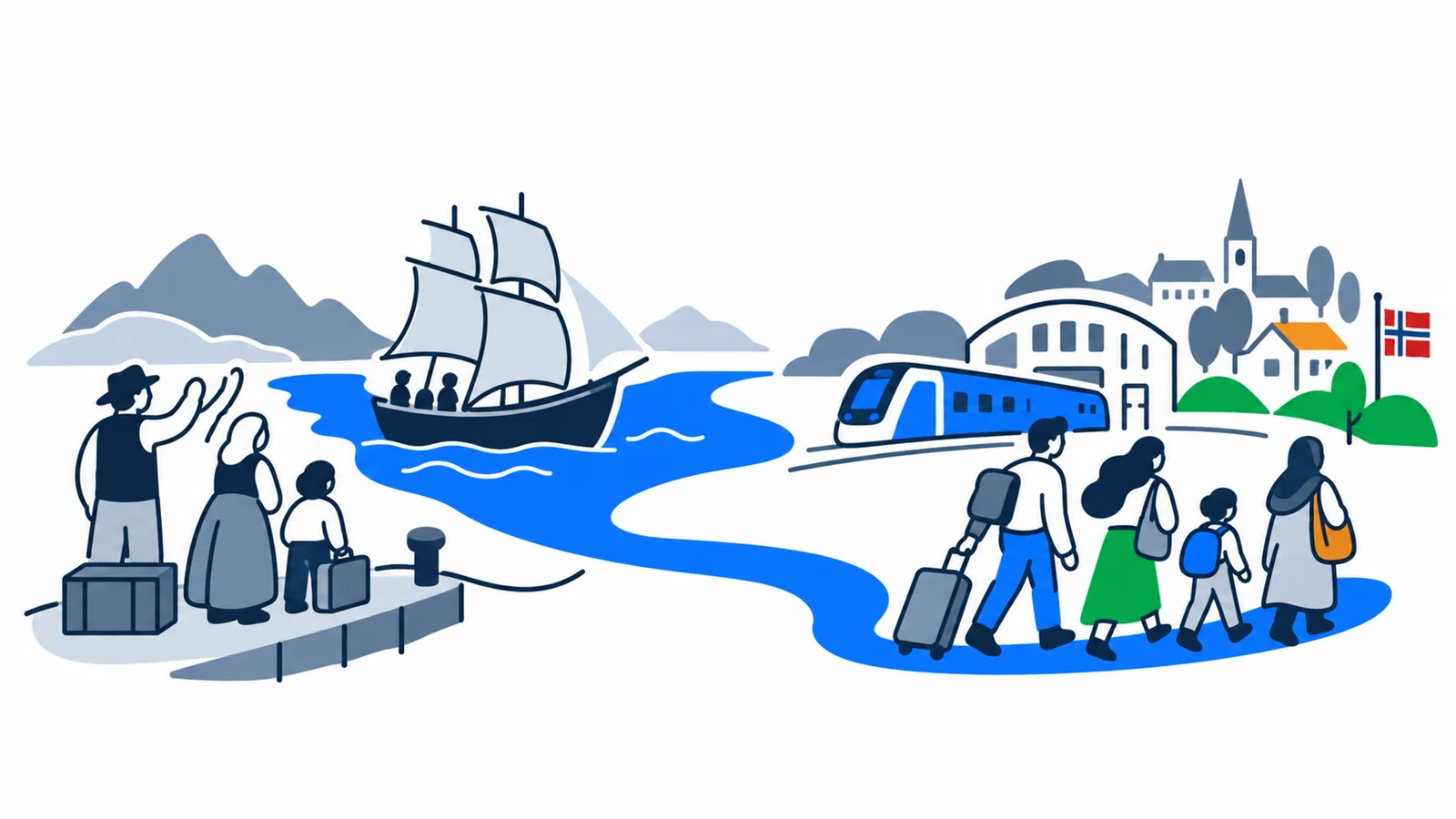
For a long time, Norway was a poor country that people left from, not came to. Between 1825 and 1930, around 800,000 Norwegians emigrated, most to the USA.
The first emigrant ship, "Restauration," sailed from Stavanger in 1825. The peak year was 1882, when nearly 29,000 people left. Relative to the population, this was one of Europe's largest emigrations.
Why did so many leave? Norway was poor, and there was little land and work for everyone. In America, people hoped for a better life. About one in four later returned to Norway.
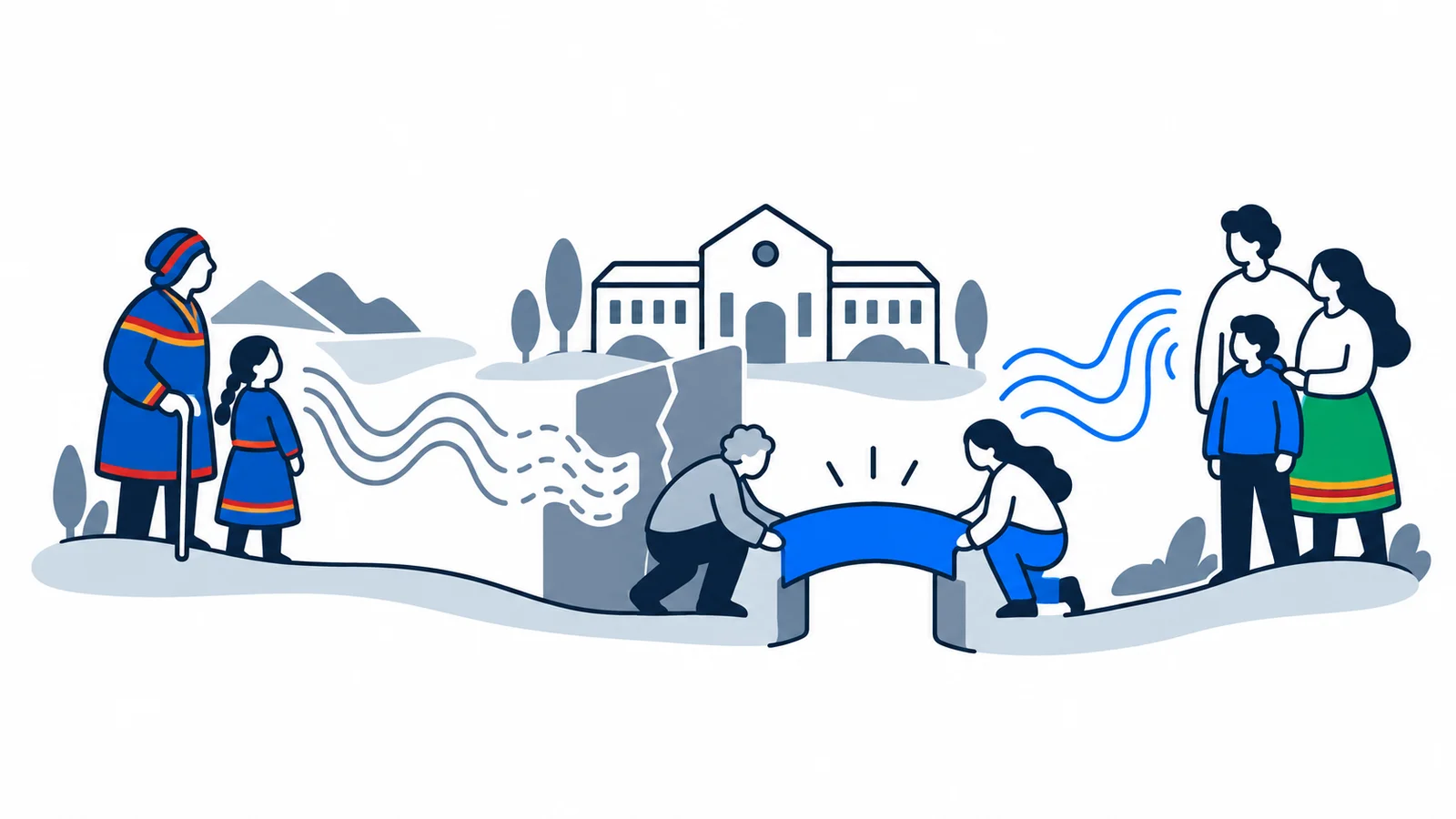
At the same time, some groups have lived in Norway for a very long time. The Sámi are not immigrants, but Norway's indigenous people. You can read more about the Sámi, Norway's indigenous people.
Labour immigration in the 1960s and 1970s
Modern immigration to Norway began with workers in the late 1960s. After World War II, Norway needed workers for industry and work. The country rebuilt itself, industry grew, and there was a shortage of labour in many professions.
From 1967 to 1975, over 5,000 foreign workers, as they were called back then, arrived. Many came from Pakistan, Turkey, and former Yugoslavia. Most settled in the Oslo area. This was the start of a more diverse Norway.
Why did the immigration stop come in 1975?
The immigration stop in 1975 came because the state wanted better control and to build up welfare and integration. The oil crisis in 1973 brought worse economic times.
On February 1, 1975, Parliament passed a temporary stop for labour immigration. It was meant to last one year, but was extended several times. The stop lasted until the new immigration law in 1991.
The stop did not stop all immigration, however. Family reunification and refugees continued to come. The number of men who came to work went down, while more women and children came through family reunification.
Refugees to Norway – decade by decade
From the 1970s, many came to Norway as refugees, not as workers. War and persecution in the world shaped who came. In the 1970s, refugees came from Chile after the military coup in 1973, and later Vietnamese "boat refugees."
| Period | Background |
|---|---|
| 1970s | Refugees from Chile and Vietnam ("boat refugees") |
| 1980–90s | Iran, Iraq, and Somalia |
| 1990s | Wars in the Balkans, including Bosnia (1993) and Kosovo (1999) |
| 2015 | Record number of asylum seekers, especially from Syria and Afghanistan |
| 2022– | Refugees from Ukraine after Russia's invasion |
Refugees seek protection from UDI (the Directorate of Immigration). IMDi (the Directorate of Integration and Diversity) is responsible for helping new residents get started in Norway. Many have since become a permanent part of Norwegian society.
The EEA Agreement and labour immigration from Eastern Europe
The EEA Agreement from 1994 opened up free movement of labour in Europe. EEA means the European Economic Area, and the agreement ties Norway to the EU's internal market. Citizens of the EEA can travel to Norway to work.
Norway is not an EU member. People voted no in two referendums, in 1972 and 1994. Through the EEA Agreement, Norway is still closely tied to EU rules and the labour market.
When the EU expanded eastward in 2004 and 2007, many labour immigrants came. Poland and Lithuania quickly became large groups. Today, Poles are the largest immigrant group in the country.
How many immigrants live in Norway today?
At the start of 2026, 987,100 immigrants lived in Norway. That was 17.5 percent of the population, according to SSB (Statistics Norway).
In addition, about 4 percent are Norwegian-born with immigrant parents. Together, around 21 percent of the population has an immigrant background.
The largest groups of immigrants in 2026 were:
- Poland – 111,700 people
- Ukraine – 85,500 people
- Lithuania – 43,100 people
- Syria – 42,000 people
- Sweden – 37,700 people
Ukraine quickly became one of the largest groups after the war from 2022. Among Norwegian-born with immigrant parents, the largest groups are from Pakistan, Poland, and Somalia. SSB expects that the share of immigrants will increase to just over 22 percent by 2050.
How Norway became a multicultural society
In about 60 years, Norway went from an emigration country to a multicultural society. People now live in Norway with backgrounds from large parts of the world. Immigration is now a permanent part of Norwegian working life, social life, and politics. It has given the country new languages, new food, and new traditions, and integration has become an important task for both the state and the individual.
Opinions about immigration are divided. You can read more about attitudes towards immigrants.
Norwegian immigration history is also part of the curriculum for the civic knowledge exam. On SamfunnPrep you practice precisely these kinds of topics with questions and explanations. If you want to understand the big picture, see how Norwegian history comes into the exam.
The history shows that Norway has changed rapidly. Knowing it makes it easier to understand Norway today – and to answer correctly on the exam. With SamfunnPrep you can practice as much as you want.
Ready to practice? Try SamfunnPrep for free.