
Norway and EEA are closely connected. Norway is not an EU member, but is linked to the internal market through the EEA Agreement from 1994. Norway is in EFTA and Schengen, but stands outside the EU.
Many believe Norway is in the EU. That's not true. Norway said no to EU membership twice, in 1972 and in 1994. Still, the country is closely linked to Europe. This topic is part of the Samfunnskunnskapsprøven, and it is useful to understand if you are to live and work here. Want to know more about the test itself? See about Samfunnskunnskapsprøven.
What does Norway and EEA mean?
Norway and EEA means that Norway is part of the European internal market without being an EU member. EEA (European Economic Area) is an agreement between the EU countries and three countries outside the EU: Norway, Iceland and Liechtenstein.
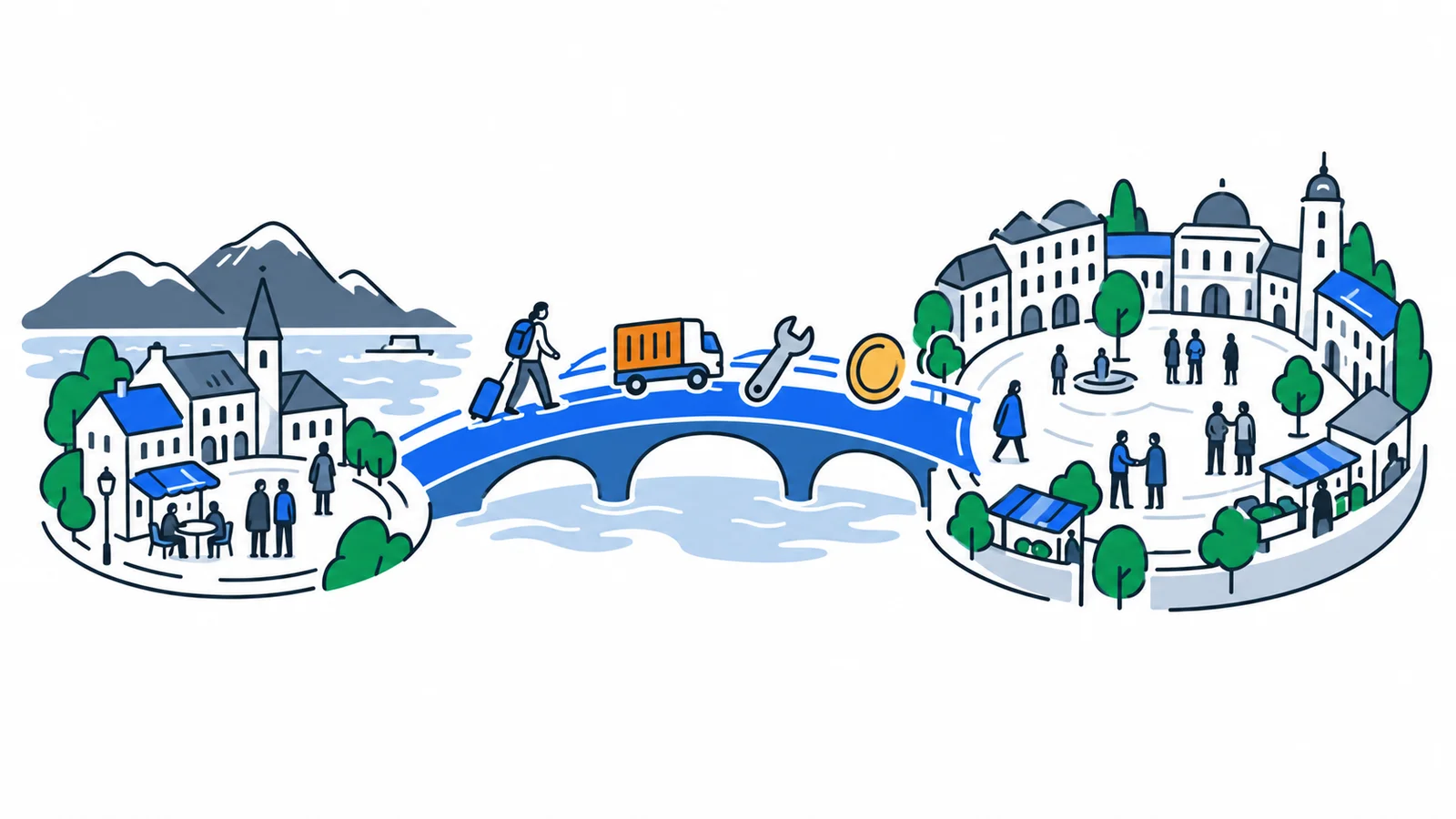
The EEA Agreement was signed in 1992 and came into force on January 1, 1994. The agreement gives Norway access to the internal market in Europe. The internal market is a large common market where goods, services, money and people can move freely.
Through EEA, Norway must follow many of the same rules as EU countries. Large parts of EU law therefore also apply in Norway. In this way, Norway is the country outside the EU that is most closely linked to the union.
Each year, many new EU rules enter the EEA. Norway, Iceland and Liechtenstein must consider several hundred new rules per year (as of 2024). Most are incorporated into Norwegian law.
Why is Norway not in the EU?
Norway is not in the EU because the people said no twice. The question of membership is among the most controversial in Norwegian politics.
The first referendum was in 1972. Then 53.5 percent voted no to membership in the EEC, the predecessor to the EU (as of 1972). The second referendum was November 28, 1994. Then 52.2 percent voted no again (as of 1994).
The results were thus very similar both times. After the no in 1994, the government chose instead to use the EEA Agreement. In this way, Norway gained access to the market without becoming a member. How such decisions are made, you can read about in the article how democracy works.
The question of the EU divides people to this day. Some parties want membership, while others want to keep the EEA or terminate it. There has been no new referendum since 1994.
What does the EEA Agreement give you?
The EEA Agreement is built on the four freedoms. These are freedom of movement for goods, services, capital and persons. These four freedoms are the core of the entire agreement.
For you, freedom of movement for persons means a lot in practice. Citizens from EU and EEA countries can travel to Norway to work, study or live. They do not need a regular work permit in the same way as others.
Norway is also part of EFTA (European Free Trade Association). EFTA is a group of countries outside the EU. Today, Norway, Iceland, Liechtenstein and Switzerland are members. Norway, Iceland and Liechtenstein use EFTA as their part of the EEA cooperation.
The table shows what EEA gives and what it does not give:
| What EEA gives Norway | What EEA does not give Norway |
|---|---|
| Access to the internal market | Voting rights in the EU |
| The four freedoms | Membership in the EU's customs union |
| Common trade rules | Common agricultural policy |
| Freedom of movement for persons | Common fisheries policy |
If you are an EEA citizen, there are special rules for residence. You can read about registration certificate for EEA citizens and about permanent residence rights in EEA.
Is Norway in Schengen?
Yes, Norway is part of Schengen. Schengen is a cooperation on common borders in Europe. Norway has been part of Schengen since 2001.
Schengen means you can travel between many European countries without passport control at the border. The countries have instead common control of the outer border. They also cooperate against crime across national borders.
This applies even though Norway is not in the EU. Norway, Iceland, Liechtenstein and Switzerland are all part of Schengen. Free travel makes everyday life easier for many immigrants and for people who work in several countries.
What is Norway not part of?
Norway is outside several important parts of the EU. The country is not part of the EU's customs union, common agricultural policy or common fisheries policy. These areas Norway governs itself.
Norway also has no voting rights in the EU. The country is not present when new rules are decided in Brussels. Still, Norway often must incorporate the rules into Norwegian law through EEA.
This has created a debate about so-called "fax democracy". Critics argue that Norway only receives rules without influencing them. Others believe the EEA Agreement serves Norway well. The debate is reported objectively in Norwegian public discourse.
Norway also pays EEA funds. These are funds Norway gives to poorer countries in Europe. The amount is several billion kroner per year (as of 2024). In return, Norway gains access to the market.
What does this mean for you as an immigrant?
For you, Norway and EEA means that the rules depend on where you come from. If you are from an EU or EEA country, you have freedom of movement. Then you can more easily work and live in Norway.
If you come from a country outside the EEA, different rules apply. Then you usually need a residence permit in the usual way. It is therefore important to know which group you belong to.
Freedom of movement also brings obligations. You must follow Norwegian laws and rules while you live here. Your rights as an EEA citizen apply as long as you meet the conditions for residence.
This topic is part of "Norway and the world" in the Samfunnskunnskapsprøven. With SamfunnPrep you can practice such questions in a simple way. Then it becomes easier to understand how Norway and EEA are connected.
Ready to practice? Try SamfunnPrep free.