
Norway is organised into three administrative levels: the state, the county municipality and the municipality. All are led by elected politicians, but they have different tasks, from defence and laws to upper secondary school and waste collection.
Three levels, one democracy
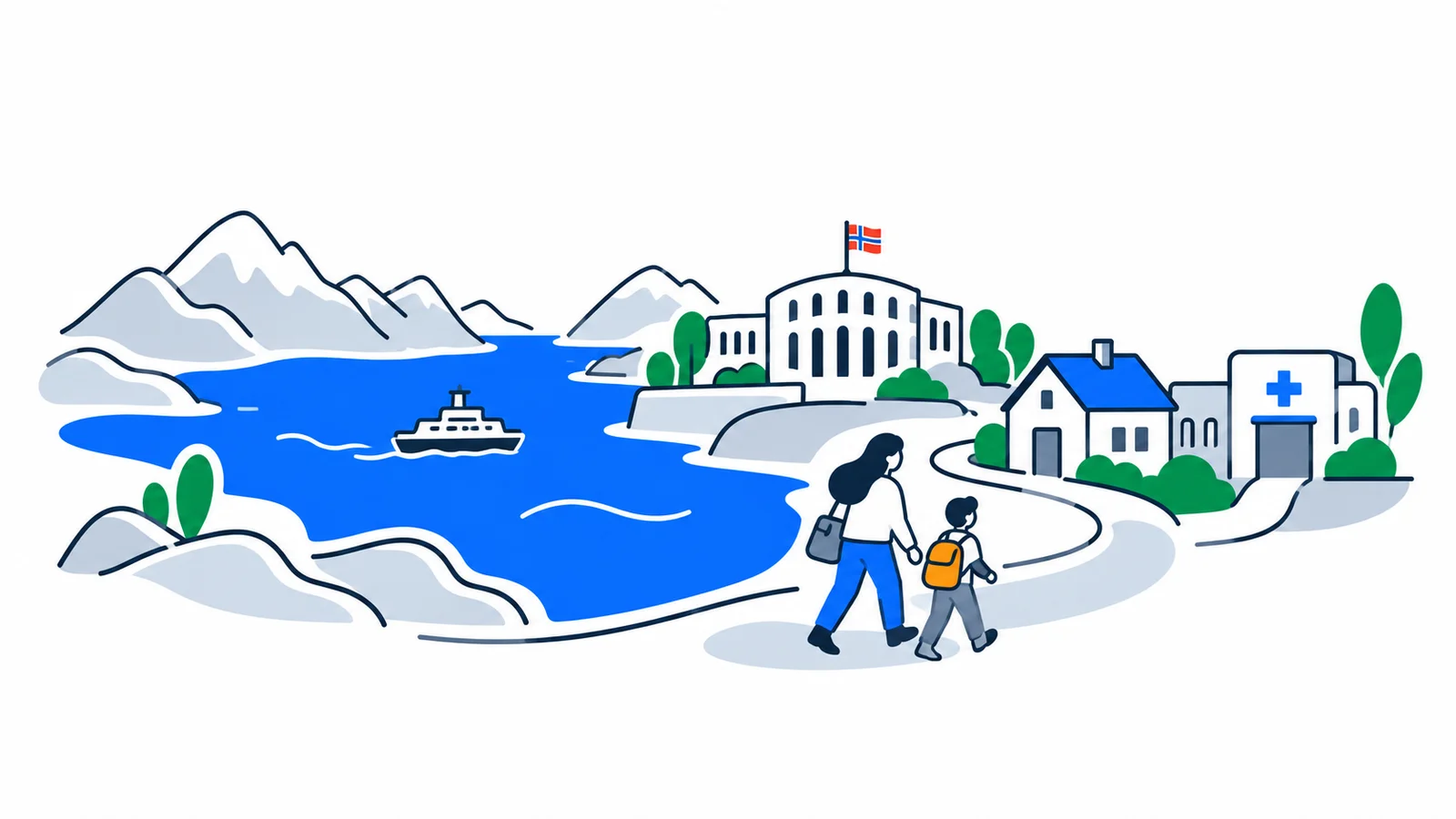
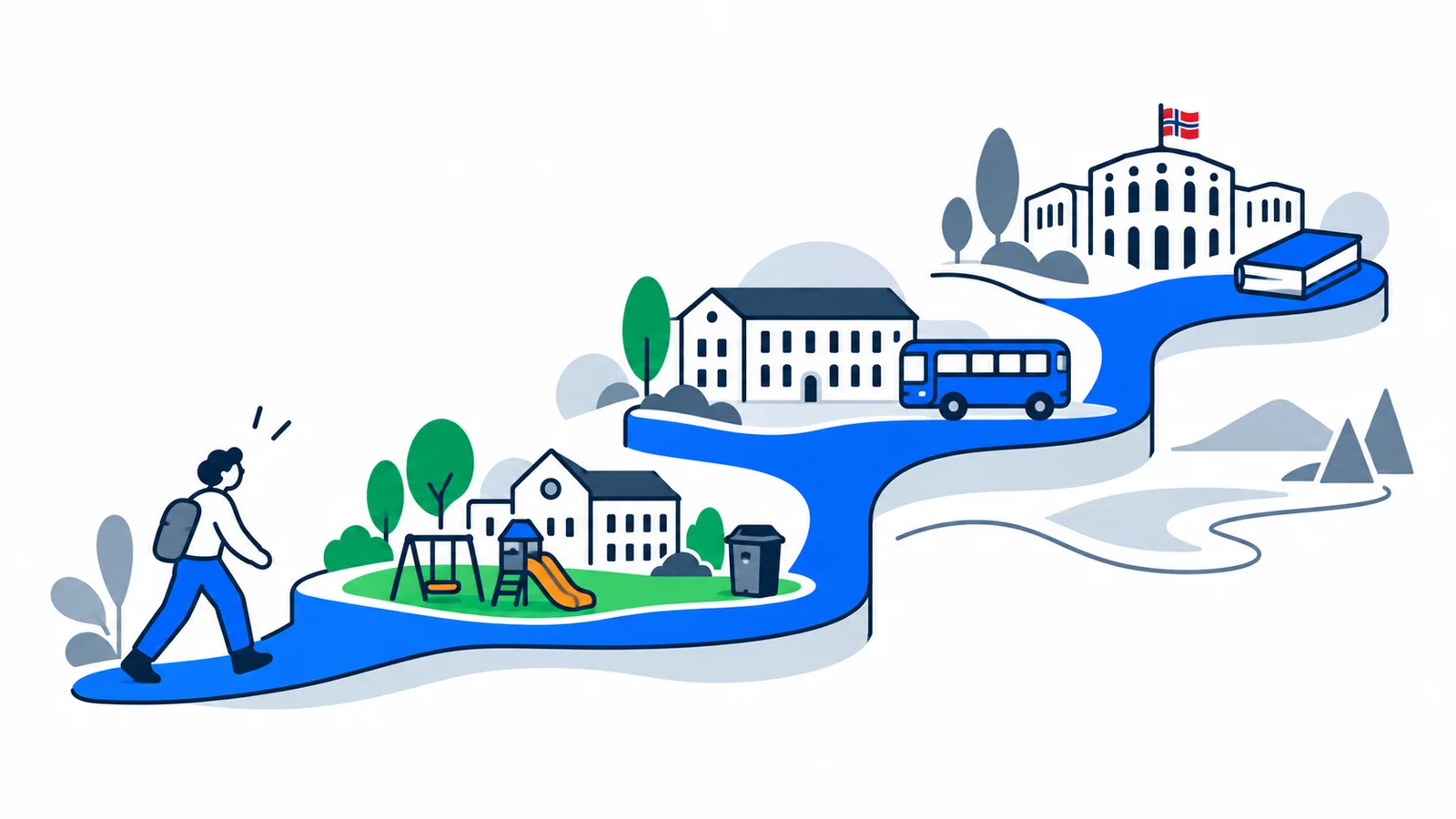
In Norway, political decisions are made at three levels. The state is the national level. The county municipality is the regional level. The municipality is the local level, closest to residents.
The key exam point is this: the state, county municipalities and municipalities are all governed by elected politicians. People vote in elections, and politicians adopt policies and budgets. Employees in ministries, directorates, county municipalities, municipalities and agencies carry out the decisions in practice. This is democracy in Norway at three levels.
As of 28 June 2026, Norway has 356 municipalities, 15 counties/county municipalities and one state. The county structure changed on 1 January 2024, when several previously merged counties were split again.
| Level | Elected body | Typical matters |
|---|---|---|
| State | Stortinget | Laws, state budget, defence, foreign policy |
| County municipality | County council | Upper secondary education, public transport, dental health |
| Municipality | Municipal council | Kindergarten, primary/lower secondary school, water, sewage, waste collection |
When preparing for the test, separate who makes the rules, who owns the service, and whom you meet in everyday life. The state makes many rules. County municipalities and municipalities run many services. For residents, the contact point is often the most important part.
The state: the national level
The state makes decisions for the whole country. Stortinget passes laws and the state budget. The government and state administration implement the policy. When you read that Stortinget passes laws, it means the framework is often national, even when services are delivered locally.
The state is responsible for defence and foreign policy, police and courts, national laws and school curricula, citizenship and immigration administration including UDI, Skatteetaten and the tax system, large parts of benefits and pensions through NAV, railways and many national transport issues.
A useful rule is that the state handles national rules and matters that must be the same across the country, or that concern Norway’s relations with other countries.
The county municipality: the regional level
The county municipality sits between the state and the municipality. It handles tasks that are too large or regional for each municipality to solve alone, but still need knowledge of local conditions.
Important county municipality tasks include upper secondary education, regional public transport such as bus, boat and ferry, county roads, dental health services for children, young people and some older or vulnerable groups, regional development, culture and planning.
A common trap is upper secondary school. Upper secondary education is the county municipality’s responsibility, not the municipality’s and not the state’s. Utdanningsdirektoratet explains that the county municipality where you live is responsible for fulfilling the right to upper secondary education for pupils and adults.
The county council is the highest elected body in the county municipality. It adopts budgets and priorities for public transport and upper secondary education in the county.
The municipality: closest to residents
The municipality is the level you usually meet in everyday life. It is responsible for many services connected to children, families, health, housing, local roads and technical services.
Municipal tasks include kindergarten, primary and lower secondary school, the regular GP scheme, health clinics, home nursing, nursing homes and local care services, municipal child welfare, financial social assistance and other social services through the NAV office, water, sewage and waste collection, local planning, building cases and some municipal roads.
For the social studies test, this is especially important: waste collection, water and sewage are municipal responsibilities, not state responsibilities. If rubbish is not collected, or you have questions about water and sewage fees, the municipality is the right level.
The municipal council is the highest elected body in the municipality. The municipality is financed through tax income, fees and state transfers. Some services are nationally regulated, but the municipality organises much of the practical work. Read more about social assistance and NAV if you need financial help or guidance.
The tasks can still be connected. The state may set a law, the municipality may be responsible for the service, and Statsforvalteren may supervise or handle some complaints. For example, a right can be set in national law while the municipality provides the service where you live. So you may sometimes be told to contact another level even if you started in the right place.
A municipality may also cooperate with private providers or inter-municipal companies. That usually does not change who is responsible. If waste collection is carried out by a company, it is still a municipal task. If a regular GP runs a private office, the GP scheme is still a municipal service. As a rule, start with the municipality or the service it points you to.
How politicians are elected
All three levels have elected politicians, but elections are not held every year. Stortinget has 169 representatives. They are elected in parliamentary elections every four years. According to Valgdirektoratet, parliamentary elections are held in September every four years; the next one is in September 2029.
Municipal councils and county councils are elected in local elections. Local elections are also held every four years, but two years apart from parliamentary elections. The last local election was in 2023, and the next ordinary municipal and county council election is in 2027.
At all levels, politicians adopt budgets and priorities. Employees, often called bureaucrats or administration, prepare cases, give advice and implement decisions. The useful distinction is: politicians set the direction, the administration does the daily work under laws and decisions.
Finding the right level when you need help
When you are new in Norway, it can be hard to know whom to contact. Start with the problem itself:
- Kindergarten, school up to grade 10, health clinic, waste collection, water or sewage: contact the municipality.
- Upper secondary school, school travel card or regional bus/ferry: contact the county municipality.
- Passport, police certificate or reporting a crime: contact the police, which is state-run.
- Tax card or tax return: contact Skatteetaten, which is state-run.
- Residence permit, citizenship or family immigration: contact UDI, which is state-run.
- Benefits, unemployment benefit or pension: contact NAV; some NAV services are state services, while social services are municipal.
A practical search tip is to write your municipality’s name plus the service, for example “Bergen kommune barnehage”. For upper secondary school, search for the county municipality’s name. For state matters, regjeringen.no, nav.no, politiet.no, skatteetaten.no and udi.no are good starting points.
Many services require cooperation between levels. For example, the introduction programme is municipal in practice, but based on national rules and state funding. Still, the main rule helps: the state for national rules, the county municipality for regional tasks, and the municipality for the closest everyday services.