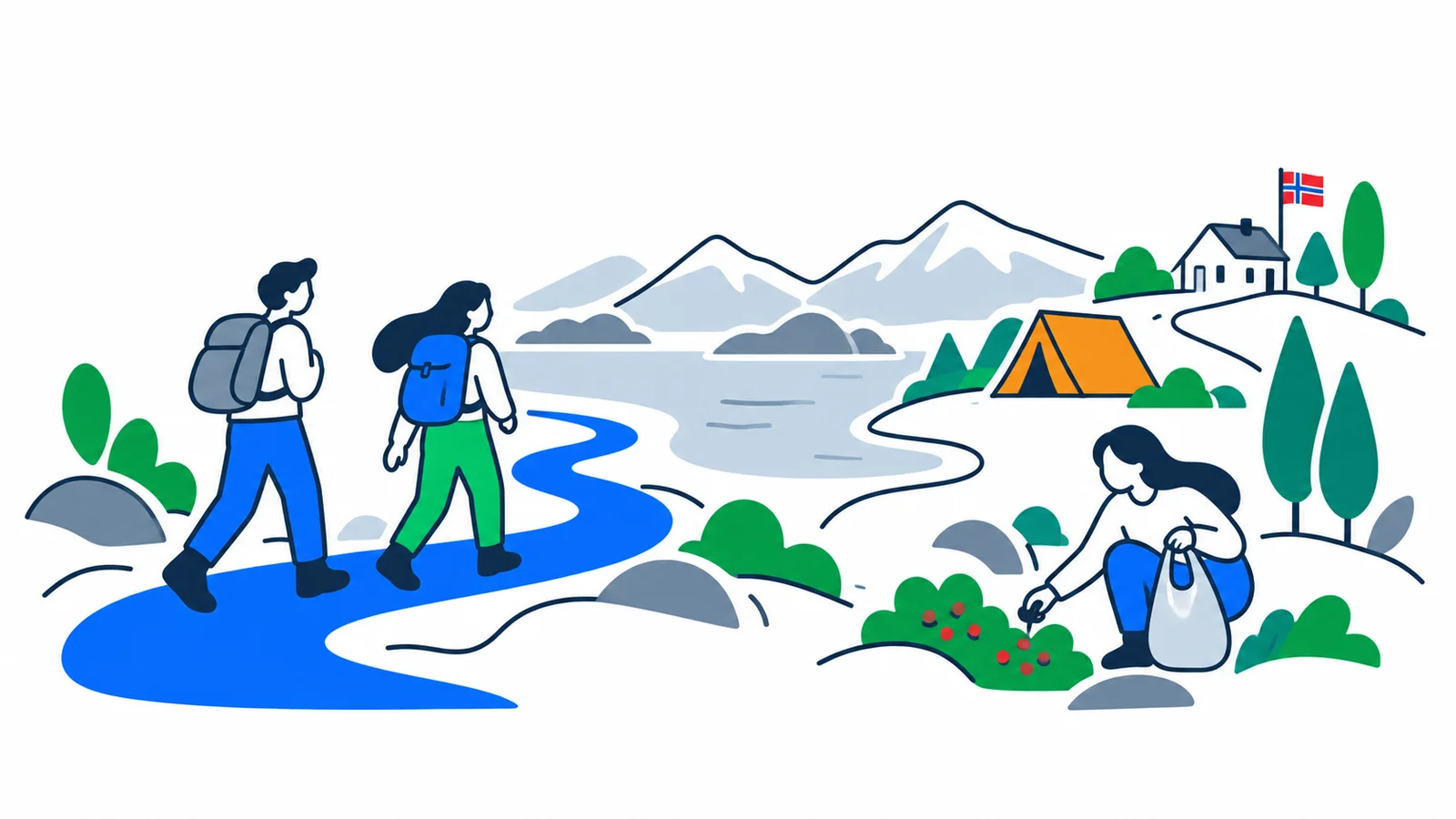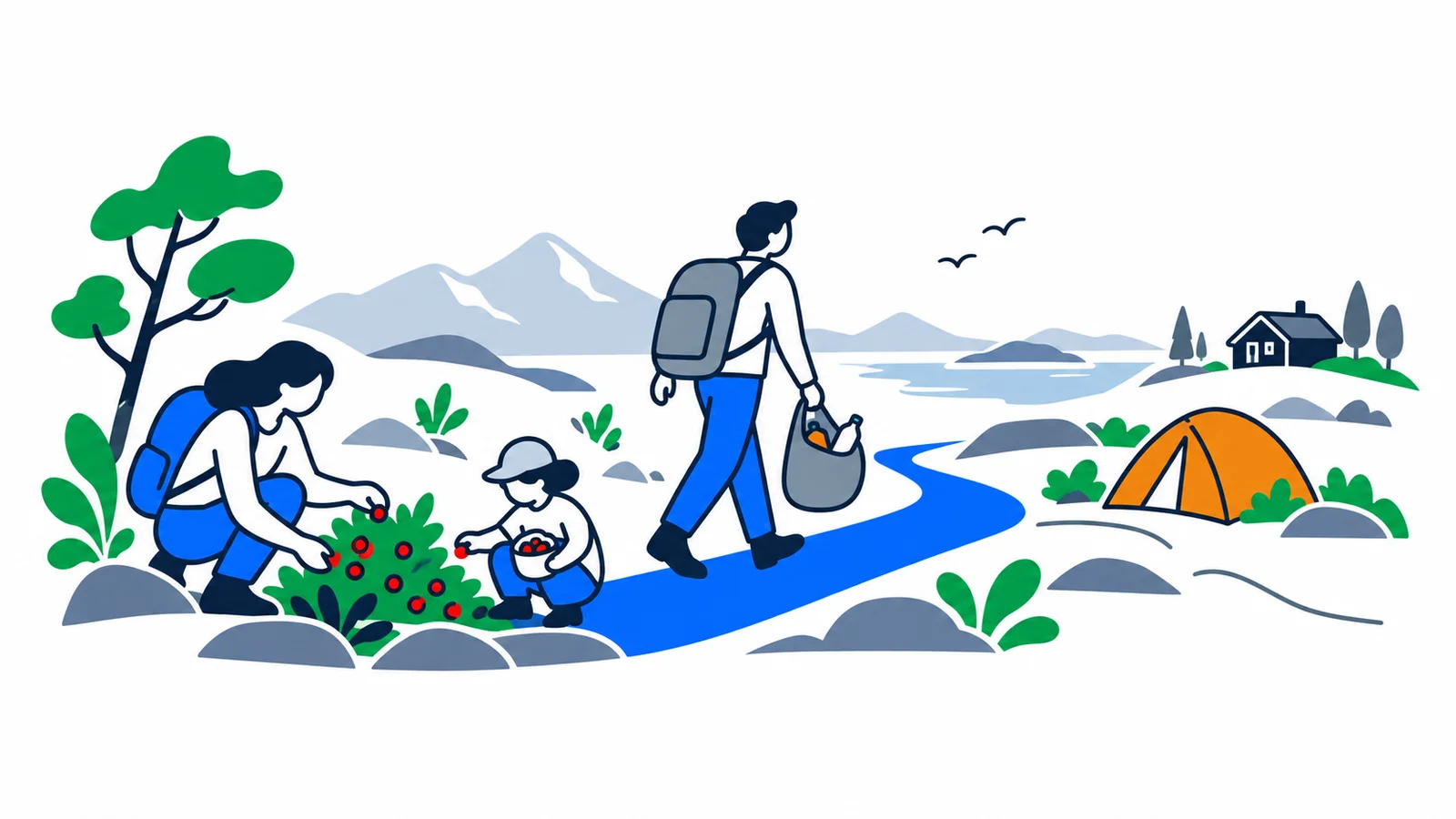

The right to roam gives everyone in Norway the right to move freely on foot in nature, camp, swim and pick berries. The right is free and applies regardless of nationality. The main duty is simple: you must not cause damage or create a nuisance.
Many newcomers think they need permission to go hiking or set up a tent. This is not true. The right to roam is one of the most valued aspects of living in Norway, and it is governed by the Freedom of Roaming Act from 1957. This article explains what you are allowed to do, where the limits are, and what few rules you need to remember.
What is the right to roam?
The right to roam gives everyone the right to move freely on foot and stay in nature, regardless of who owns the land. The right is managed by the municipality and the Environment Directorate, and the rules are set out in the Freedom of Roaming Act.
The right is free. The landowner cannot keep you out from lawful outdoor recreation, and you need no permit to hike, ski, swim or rest. In return, you have one basic duty: you must act considerately and carefully so that you do not cause damage or create a nuisance for others.
The right to roam is an important part of the Norwegian view of nature and community. It is connected to the idea of sustainability in Norway: nature is shared, and everyone has both a right and a responsibility.
Where can you go – wilderness or cultivated land?
The answer lies in two words: wilderness and cultivated land. In wilderness you can roam freely. In cultivated land you must be more considerate.
Wilderness is most forest, mountain, bog, shore and water that is not cultivated. Here anyone can hike and ski freely, all year round.
Cultivated land is farmland, gardens, farmyards and the area around houses and cabins. Here, free access is generally not permitted in summer. In winter there is an exception: you can walk over cultivated land from 15 October to 29 April if the land is frozen or snow-covered.
Bikes and horses require a developed path or trail. In short: walk where you do not damage the landowner's land, and stay away from farmyards and cultivated land during the growing season.
Can you camp anywhere?
You can camp freely in wilderness, but the tent must be at least 150 metres from the nearest occupied house or cabin. You can camp for up to two nights in the same place without asking.
If you want to stay longer than two nights in the same place, you must ask the landowner for permission. The exception is if you are in high mountains or far from people – then you need no permission. In cultivated land you can only camp if the landowner or user has agreed.
Here are the main rules for camping and hammocks:
| Rule | What applies |
|---|---|
| Distance from occupied house/cabin | At least 150 metres |
| Number of nights in same place | Up to 2 without permission |
| Longer stay | Ask landowner (not necessary in high mountains) |
| Camping in cultivated land | Only with permission from landowner |
Some areas have special local rules, for example popular hiking destinations. Check signs and municipal websites if you are in doubt.
Is there a fire ban in summer?
Yes. It is forbidden to light a fire in or near forest and other wilderness from 15 April to 15 September. The ban applies every year and is intended to prevent forest fires during the driest period.
You can still cook safely. Use a gas stove or a designated fire site, and keep a safe distance from forest and heather. If it is obvious that there is no fire risk, for example on a snow-covered or wet spot, you can light a fire – but you always have responsibility if something happens. Always extinguish the fire completely before you leave.
Can you pick berries, mushrooms and flowers for free?
Yes. In wilderness you can freely pick wild berries, mushrooms and flowers, as long as the population is not threatened. This is one of the finest aspects of the right to roam, and it costs nothing.
There is one important exception: cloudberries. The rules are stricter in the north:
- Finnmark: you can pick cloudberries, but only for your own use.
- Nordland and Troms: in places where the landowner has forbidden it with a sign, you can only eat the cloudberries on site – you cannot take them home.
- The rest of the country: cloudberries can be picked freely.
You must also ask the landowner before you take stone, moss, lichen, peat or bark. And you should not pick berries right up to houses and farmyards where people live. Pick with consideration, so there is enough left for everyone.
Can you fish, hunt and use a boat?
Movement on water is part of the right to roam. You can swim, row and use a boat freely in the sea and in most waters, and you can land and rest along shores in wilderness.
Fishing and hunting, however, are not part of the right to roam. Fishing in freshwater and all hunting require a permit: you must usually buy a fishing licence, and for hunting you need a hunter's exam and permission from the landowner. In saltwater most people can fish for free with a rod for their own use. Electric bikes and motor vehicles also fall outside the right in wilderness.
How do you take care of nature and wildlife?
The basic rule is always to go carefully and clean up after yourself. Take all rubbish home, and leave nature as you found it.
This also applies to your dog. From 1 April to 20 August there is a leash requirement throughout the country. Your dog must be kept on a leash to protect wildlife and grazing animals during the vulnerable time with young and lambs. Many municipalities have their own, longer leash requirements – if you break them, you can be fined.
What you carry in your backpack, you take home again. Handling waste correctly is part of outdoor culture, just as bottle returns and recycling is part of everyday life. Respect for nature is a value many associate with facts about Norway.
How to get out on a hike
You need little to use the right to roam: good shoes, clothes for the weather and some food. Many hiking destinations are near the city, and you can often get to the trailhead with public transport.
Start simple. Go for a short hike in the nearest forest, pick some blueberries, and get to know the nature where you live. If you need help finding your way in your first weeks in Norway, you can use the First Week tool from SamfunnPrep.
The right to roam and outdoor life are part of the curriculum for the Samfunnskunnskapsprøven. You can practise for free on SamfunnPrep and learn more about the rights and rules that apply in Norway.