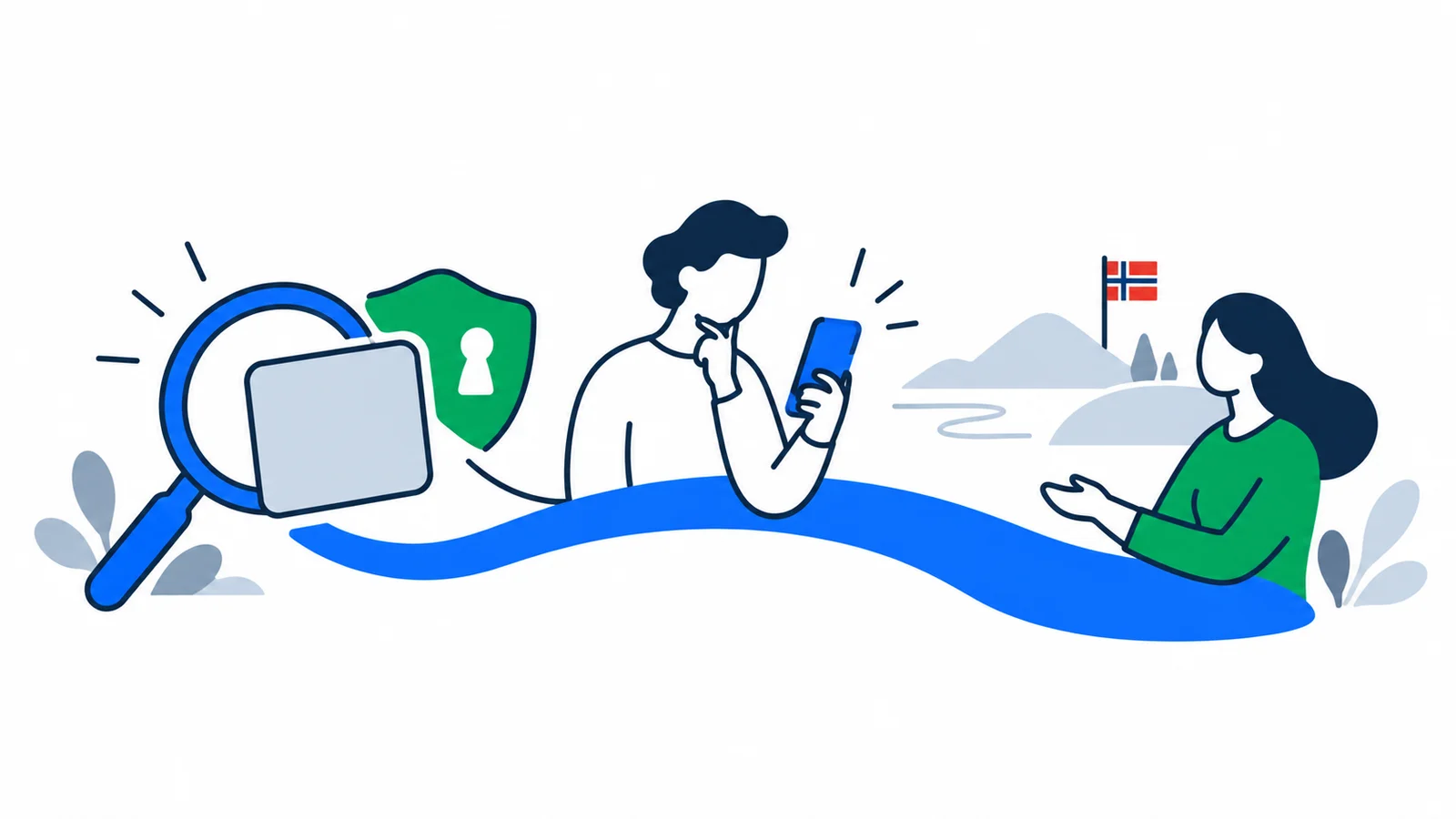


Digital judgment means using digital services in a safe, critical, and responsible way. It is about understanding who stands behind information, what traces you leave behind, what you share about yourself and others, and how words, images, and videos can affect people.
More than technical skills
Being able to use a phone, a tablet, or an app is not the same as digital judgment. You also have to judge what is true, what is advertising, what is rumor, and what is manipulation. Udir and the Norwegian Data Protection Authority stress that digital judgment is not only about source criticism, but also about online safety, privacy, copyright, and ethics.
That means you should ask: Who is saying this? Why is it being said now? Is it a trustworthy source? Could the content be made to get you to click, share, or get angry? Digital judgment is therefore a mix of knowledge, habits, and self-control.
Sources, advertising, and artificial intelligence
On social media, advertising can look like ordinary posts. News can be edited in ways that create a false impression. Artificial intelligence can create text, images, audio, and video that seem real even when they are not. That is why it is important to check the date, the sender, the language, the use of images, and whether several independent sources say the same thing.
On the social studies exam, you may get questions where the correct answer is to use official sources, not just the first result in a search. NAV, UDI, the Tax Administration, Helsenorge, the police, and the municipality are examples of places you should check directly when the issue concerns rights, duties, or safety.
Privacy and digital traces
Personal data is information that can be linked to a person, such as name, image, address, national identity number, health information, location, or username. Digital judgment means thinking before sharing such information. You should also use strong passwords, two-factor authentication, and updated apps, and be careful with links and attachments.
Children and young people need special protection. Parents should guide without monitoring unnecessarily. Schools have a responsibility for safe digital practice, and students should learn how to handle unwanted incidents, online bullying, and risk in a calm and concrete way.
Behavior online
Freedom of speech also applies online, but it does not give a right to threats, harassment, or sharing private photos without consent. Digital bullying can have serious consequences. Ask yourself whether you would say the same thing face to face, and whether you have permission to share the image or information. The digital world is not a separate zone without rules. The same basic norms of respect apply there too.
What should you do if you are scammed?
If you meet fraud, stop at once. Do not send money, do not click further, take screenshots, and change passwords if you think someone has gained access. If the scam is financial, contact your bank quickly. Serious incidents can be reported to the police or other relevant services. The sooner you react, the less damage can happen.
Why is this important for democracy?
Digital judgment is not only about protecting yourself. It is also about being able to take part in society in an informed way. When you can distinguish between good and bad sources, it becomes easier to participate in debate, understand politics, and avoid spreading misinformation. That is why digital judgment is a democratic skill.
What should you remember for the exam?
For the exam, you should be able to explain that digital judgment means critically evaluating content, protecting personal data, using the internet responsibly, and handling scams and pressure safely. Also remember that digital choices can have real consequences. What you share, what you believe, and what you forward can affect both you and others.
A simple checklist
Before you share something, stop and check three things: Is the source known and trustworthy? Does anyone else really need this information? Could the content harm you or someone else if it spreads further? This matters especially for photos, school tasks, private conversations and posts that are meant as jokes but could be misunderstood.
It is also worth remembering that digital judgment does not mean distrusting everything. The goal is balanced use of the internet. You can trust good sources, but you should still check when the issue is important, new or sensitive. When in doubt, it is better to take a little extra time than to share something that turns out to be wrong.
Digital boundaries at home and at school
Parents and teachers may set rules about screen time, passwords, apps and internet use. Such rules can be reasonable when they are about safety, age and responsibility. It becomes a problem if the control becomes so broad that a person loses privacy or does not get to learn how to make their own choices. Good digital upbringing is about guidance, not only control.
At school, digital judgment can be part of the class culture. That means showing respect, not spreading rumours, not sharing other people's photos without permission and not using the internet to pressure or humiliate anyone. When many people make small good choices, the digital environment becomes safer for everyone.
Short reminder
Think, check, protect and ask. Think before you share. Check the sender and the information. Protect your personal data. Ask a trusted adult or a reliable service if you are unsure.
Final point
Digital judgment improves with practice. Nobody knows everything, but everyone can learn to stop, think and check before they press share or reply.
Why it is worth the effort
When you use the internet well, you save time, avoid mistakes and protect both yourself and others. It is a skill that stays useful for life.
At work and at school
Digital judgment also matters when you apply for jobs, send email or use learning platforms. A screenshot, comment or link can have consequences long after you post it. Think about who may still see the content later and whether it fits a professional setting. Many employers and teachers expect you to use the internet in an orderly and respectful way.
When someone needs help
If someone is tricked online, they often need calm support and concrete steps. You can help by avoiding blame, collecting evidence, reporting the problem and explaining what is happening in simple terms. The main thing is to stop the harm early and use the channels that are meant for the case.