

Norway is a Nordic country in Northern Europe with around 5.6 million inhabitants. It has a long coastline, many fjords, large mountain areas, and great distances between north and south. Norway is a democracy, a rule-of-law state, and a constitutional monarchy. That means the country is governed through laws, elected institutions, and independent courts, while the king is the head of state.
Geography and population
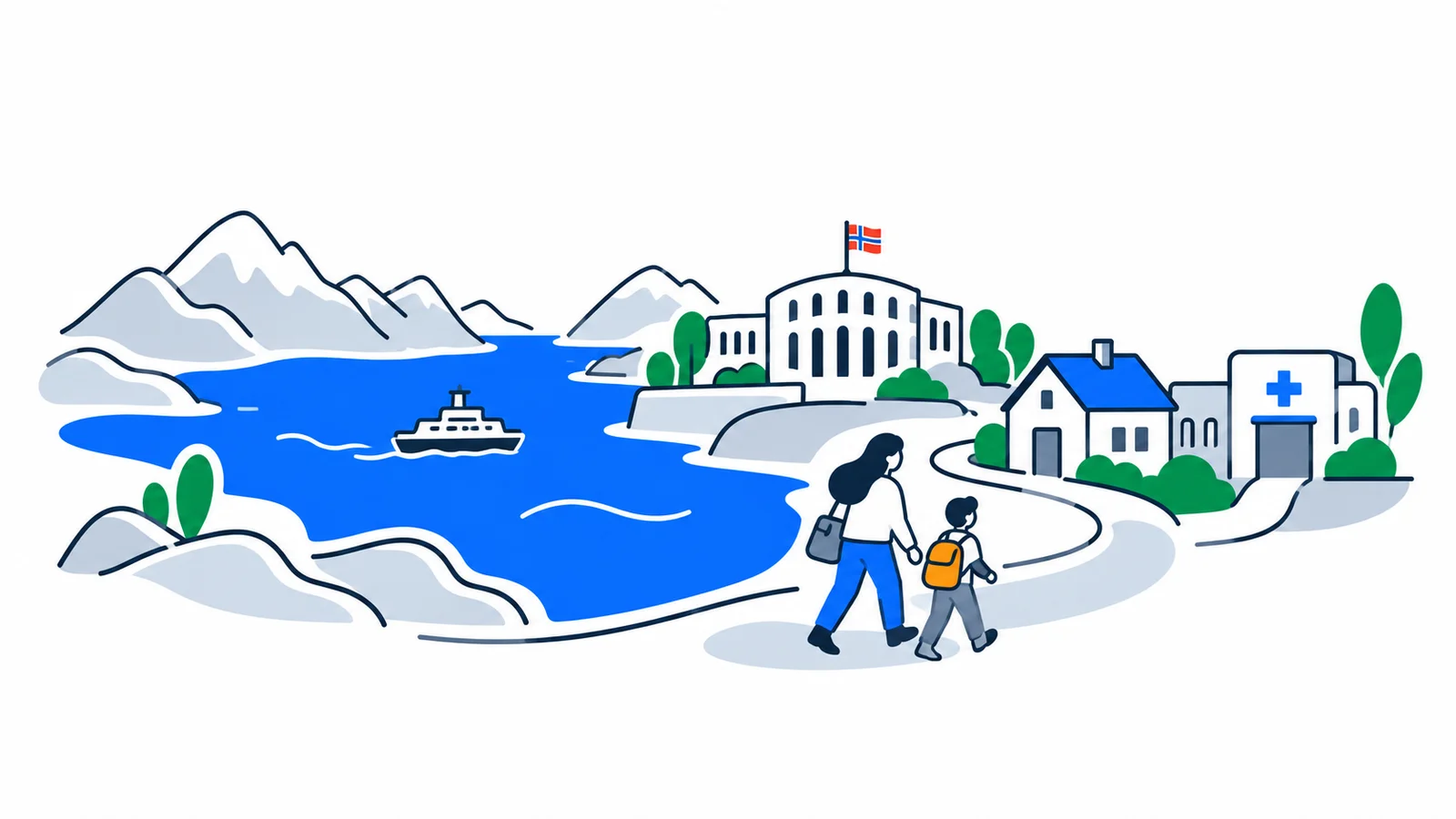
Norway lies on the Scandinavian Peninsula and borders Sweden, Finland, and Russia. The sea has always been important for work, transport, food, and trade. The country includes mainland, islands, fjords, mountains, valleys, and large sea areas. Many people live in or near cities, but Norway also has scattered settlement and small communities. The climate varies a lot from south to north and from the coast to the inland areas.
Statistics Norway is the main source for updated numbers about population, municipalities, towns, immigration, work, and the economy. The population changes all the time because of births, deaths, immigration, and emigration. That is why you should always check exact numbers at Statistics Norway when you need a fresh answer.
State, democracy, and monarchy
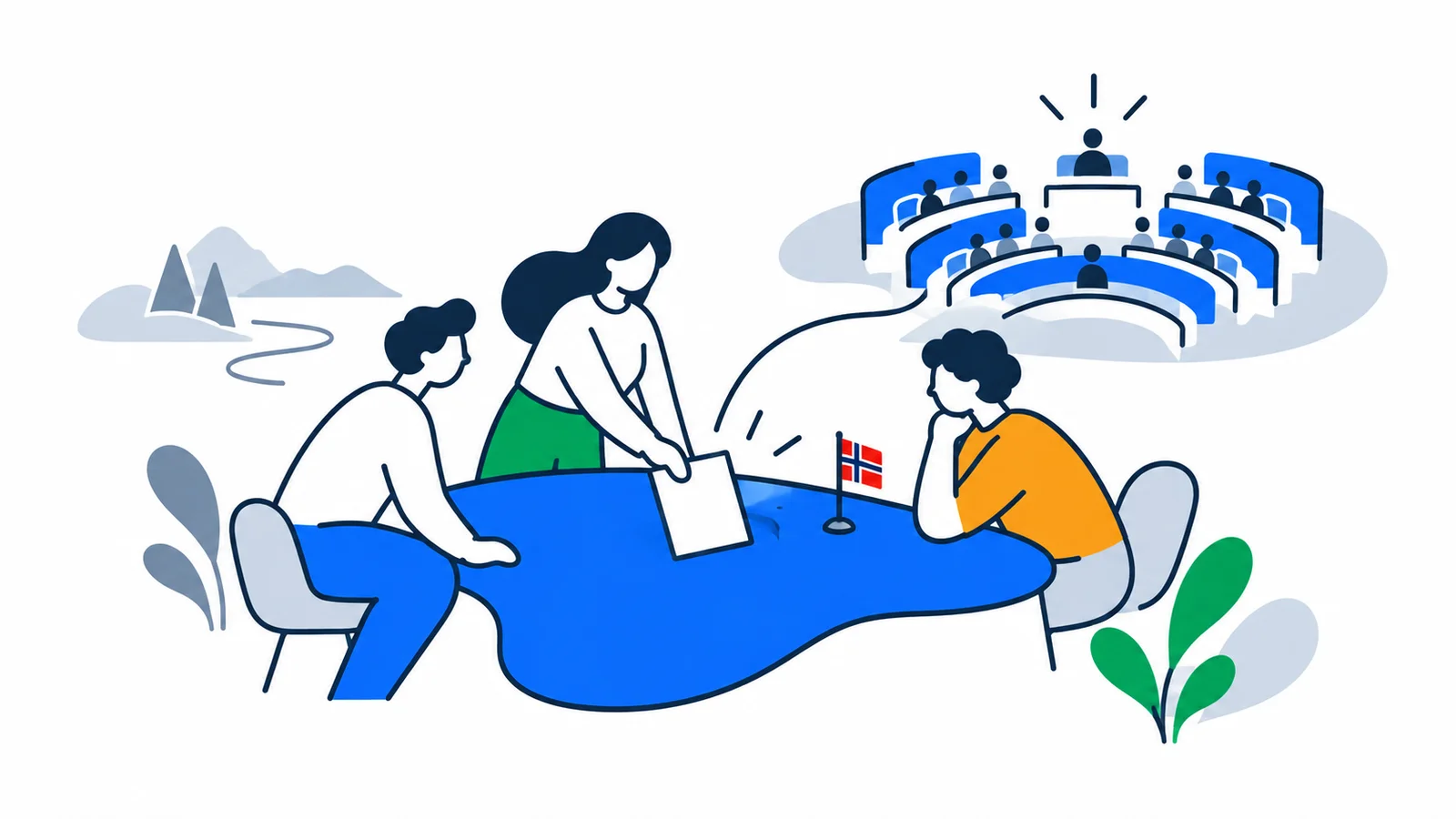
Norway is a parliamentary democracy. That means the government must have the confidence of Parliament in order to govern. Parliament makes laws and adopts the national budget. The government runs the country within the laws and the budget. The courts decide cases and must be independent.
Norway is also a constitutional monarchy. The king is the head of state, but political power lies with elected bodies and the government. This is connected to Parliament, democracy in Norway, and the election system. You do not need every detail, but you should understand the roles in the system.
Municipalities and welfare
Everyday life in Norway is not run only from Oslo. Municipalities are responsible for many services: kindergartens, primary school, elderly care, parts of health and social services, water, waste, and local planning. The state is responsible for large systems such as the National Insurance Scheme, hospitals, police, courts, taxes, and national laws. Many of the most important meetings between people and the public sector therefore happen in the municipality.
Norway has a welfare state financed through taxes and fees. The goal is that residents should have security in case of illness, unemployment, old age, and need for help. At the same time, residents have duties: paying tax, following laws, giving correct information, and participating responsibly. The welfare model works best when people trust the system and contribute according to their ability.
Symbols and community
Many people associate Norway with the flag, Constitution Day on 17 May, skiing, nature, and the royal family. Such symbols are not just decoration. They say something about history and about how people feel belonging. 17 May marks the Constitution and is celebrated as the children's and people's day. The flag is used on the national day, in official ceremonies, and in many private settings.
Norway is also more than symbols. The country includes different regions, language varieties, dialects, and living conditions. Sámi languages and culture are part of Norway, and the country is home to city communities, rural communities, coastal communities, and inland areas. That means Norway is diverse even though it is one country.
Values in society
Important values in Norway are democracy, equality, freedom of speech, freedom of religion, legal certainty, trust, and respect for privacy. Some of the values are written into laws, while others are norms you meet in everyday life: punctuality, dugnad, independence, direct communication, and respect for queues and agreements. The values affect school, work life, and neighborhoods alike.
Norway is not a perfect society. There is disagreement, poverty, discrimination, loneliness, pressure on the health system, and political conflict. Social studies is therefore not about memorizing a glossy picture, but about understanding how the system works and how residents can take part. It is normal to see strengths and challenges at the same time.
What should you remember for the exam?
For the exam, you should be able to explain that Norway is a democratic rule-of-law state with parliamentarism, a welfare state, municipal self-government, and a constitutional monarchy. You should also know that official facts and figures should be checked with Statistics Norway, Parliament, the government, and other public sources. For the exam, understanding the connections matters more than memorizing every number.
In short: Norway is a modern country with strong institutions, a high level of trust, and large geographical differences. The country works through cooperation between the state, the municipality, and the residents, and the same basic rules apply to everyone.