
The Sámi are Norway's Indigenous people. They have a historical connection to the northern parts of the country long before today's borders were drawn. In Norway, the state has a special duty to help the Sámi preserve and develop their language, culture, and social life. That duty is not only symbolic. It is written into the Constitution and the Sami Act, and it shapes how public authorities should handle Sámi issues today.
What does Indigenous mean?
An Indigenous people is a group with roots in an area from before the modern state and the majority society were established. For the Sámi, that means continuity, language, traditions, and a deep connection to land and water in the north. The Sámi are therefore not an immigrant group in Norway. They are a distinct people with rights that come from history, law, and international agreements.
This does not mean that all Sámi live in the same way or have the same background. Sámi identity can be strong even if some people speak fluent Sámi and others know the culture mainly through family, names, places, or traditions. Indigenous status is about collective history, not about fitting everyone into one fixed way of life.
A diverse history
Sámi history is long and varied. Sámi communities have lived in inland areas, fjords, coastal zones, and mountain regions. Some have practiced reindeer herding, while others have lived from fishing, hunting, small-scale farming, trade, or a combination of several livelihoods. That is why it is wrong to reduce Sámi culture to reindeer herding alone, even though reindeer herding is very important for many people.
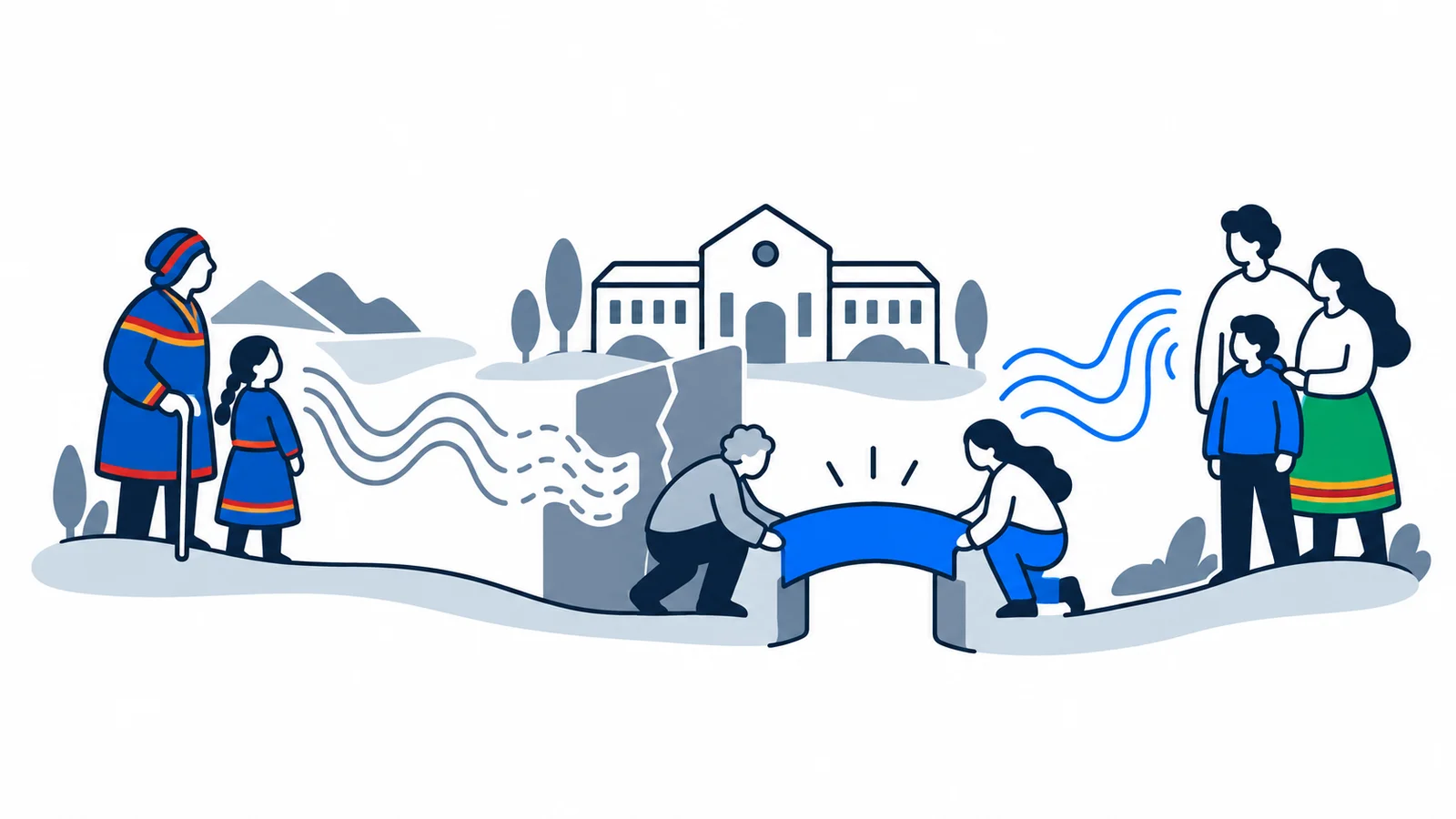
For several hundred years, the state tried to shape the Sámi according to the majority language and norms. The policy of Norwegianization caused many people to lose language, feel shame, or hide their Sámi background. That history still matters, because it explains why language and cultural protection are such central topics today.
Language and culture
There are several Sámi languages. North Sámi is the largest, but Lule Sámi and South Sámi are also important in Norway. Language is more than a way to communicate; it carries knowledge, place names, stories, and ways of seeing the world. When a language weakens, a society also loses a large part of its cultural heritage.
Sámi culture appears in joik, duodji, stories, clothing, names, food traditions, and social community. Some grow up with Sámi at home, while others learn it later at school or as adults. Public institutions, kindergartens, schools, and media therefore have an important role in making Sámi language and culture visible and alive. That is part of providing equal services.
Rights in law and international rules
Section 108 of the Constitution says that state authorities must create conditions so that the Sámi people can secure and develop their language, culture, and social life. The Sami Act builds on this and regulates the Sami Parliament and Sámi languages. Norway has also ratified ILO Convention No. 169 on Indigenous and tribal peoples, which obliges the state to take Indigenous rights seriously.
Another important point is consultation. When authorities plan measures that may affect Sámi interests, Sámi bodies and affected communities must be heard. This is especially true in matters involving land use, nature interventions, energy, reindeer herding, language, and education. Rights are therefore not only about symbols, but about real influence in decisions that affect livelihoods.
The Sami Parliament and democracy
The Sami Parliament is the Sámi people's elected body in Norway. Representatives are elected by those registered in the Sami parliamentary electoral roll, and the parliament works on matters related to language, culture, business, education, and social life. It is important to understand that the Sami Parliament is not a separate state and does not make all Norwegian laws. Even so, it has a clear role in democracy through advice, budget work, and consultations with the state.
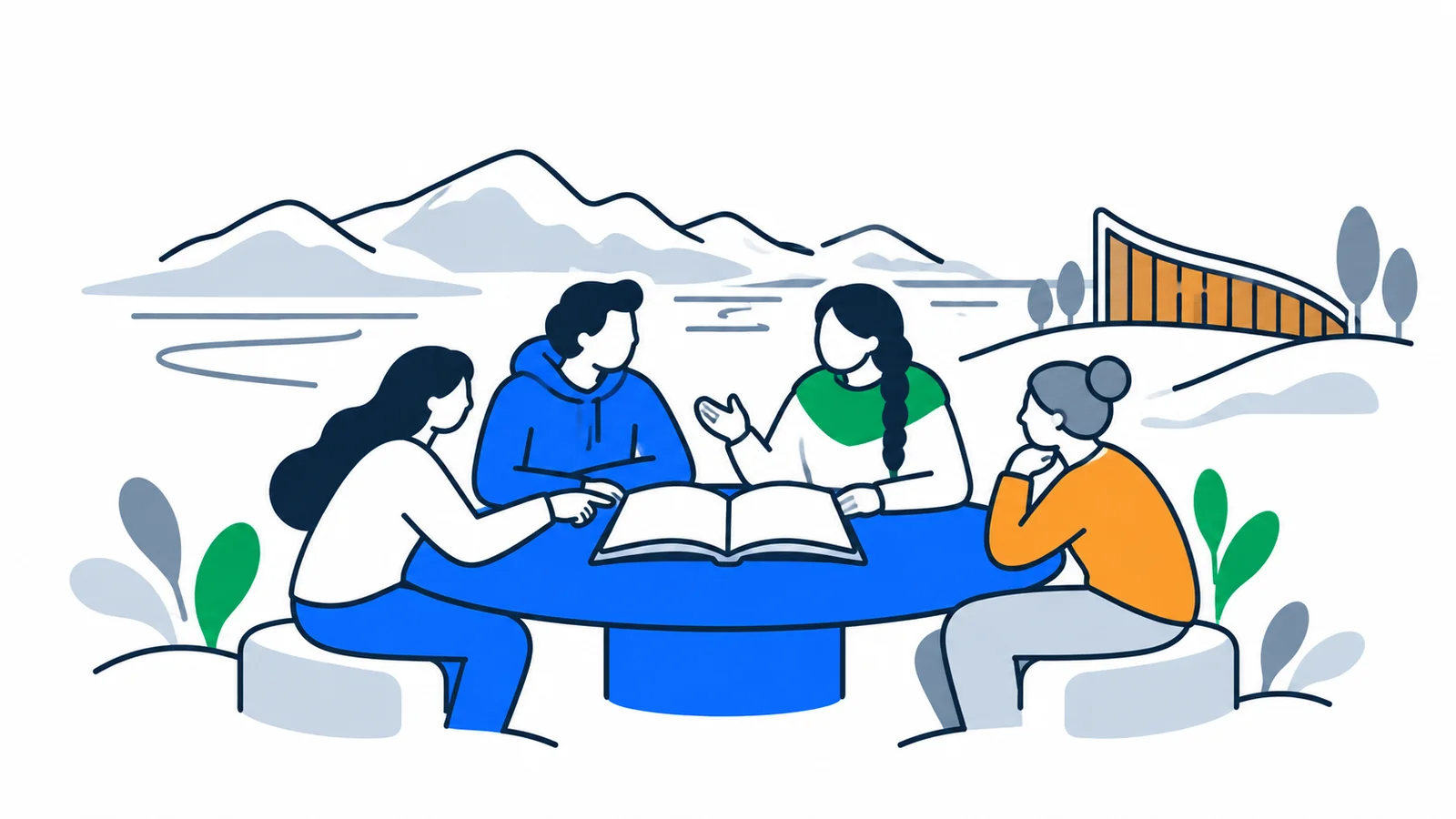
The Sami Parliament also makes Sámi issues more visible in public debate. It creates space for different voices within the Sámi community, because the Sámi are not a uniform group. Some prioritize language, others culture, school, health, land management, or business development. Democracy works best when several perspectives are included.
Sámi today
Today, Sámi people live in cities, towns, and rural areas. Many are fully part of Norwegian working life and work as teachers, nurses, fishers, researchers, artists, politicians, and craftspeople. Sámi identity is therefore not tied to one specific place or one specific job. It is a living and modern identity that can look different from family to family.
At the same time, land use often creates conflict. Questions about wind power, power lines, mining, roads, cabin building, tourism, and nature protection can affect Sámi rights and livelihoods. That is why authorities and developers must assess consequences early and listen to those who are affected. Knowledge about Sámi affairs is part of responsible governance.
What should you remember for the exam?
The most important thing is to explain three points. First: the Sámi are Norway's Indigenous people. Second: the state has a legal duty to support Sámi language, culture, and social life. Third: the Sami Parliament is the elected body for the Sámi, but the Sámi are not a separate state.
Also remember that Sámi society is diverse. Not all Sámi speak Sámi, and not all work with reindeer herding. Norway also does not keep an official ethnic register, so there is no exact public number for how many Sámi live in the country. The most important thing when dealing with Sámi history and the present is to show respect, use the correct names, and understand that Indigenous rights are about history, identity, and democracy.
Sámi life, school, and everyday respect
Many people first meet Sámi language in school, on road signs, in museums, in the media, or when they travel in the north. That matters because visibility makes the language feel normal in everyday life. A correctly written name, a sign in Sámi, or a museum that tells local history can help children and young people see that Sámi belongs to Norway, not only to the past. For adults, it can also be a way back to language or family history.
Respect in everyday life also means understanding that identity is personal. Some Sámi are very visible as Sámi, while others live more quietly with a background that is not always visible from the outside. That is normal. After Norwegianization, families often have different language experiences. That is why you should listen before you assume, and use the names and terms people prefer themselves.
Common misunderstandings
A common misunderstanding is that all Sámi work with reindeer herding or live far in the north. In reality, Sámi people live all over Norway, and most have ordinary jobs and daily lives like everyone else. Another misunderstanding is that Sámi culture is static and old-fashioned. It is both traditional and modern at the same time. Sámi youth use social media, make art, study, start businesses, and take part in politics. That mix of continuity and renewal is part of what makes Sámi life in Norway so important.
How to show respect
When you meet Sámi issues in everyday life, the best approach is to be curious and listen carefully. Use the names people use for themselves, do not turn culture into a joke, and remember that Sámi rights are not a special demand but part of Norway's history and democracy. That is a good rule both for exams and for real life.
How to show respect
When you meet Sámi issues in everyday life, the best approach is to be curious and listen carefully. Use the names people use for themselves, do not turn culture into a joke, and remember that Sámi rights are not a special demand but part of Norway's history and democracy. That is a good rule both for exams and for real life.