
The King and the monarchy in Norway
Norway is a democracy and a constitutional monarchy. This means that the country has a king as head of state, but political power belongs to the people, the Storting and the Government. For the social studies test, it is important to understand this difference: the King is not a president, and he does not govern politics on his own. He represents the state, follows the Constitution and performs formal duties on behalf of the country.
In practice, Norway is a parliamentary democracy. Voters elect representatives to the Storting. The Storting passes laws, decides the state budget and supervises the Government. The Government leads day-to-day politics and must have the confidence of the Storting. The courts decide cases according to the laws. This separation of powers is central to Norwegian democracy. The King's role must be understood inside this system.
What does constitutional monarchy mean?
A constitutional monarchy is a monarchy where the monarch's power is limited by the Constitution and democratic rules. In Norway, the Constitution formally says that executive power rests with the King, but in modern practice this means the King in Council, that is, the King together with the Government. Ministers carry political responsibility. A royal decision must normally be handled in the Council of State and countersigned by a minister to be valid.
This is why people often say that the King reigns, but does not rule. He takes part in ceremonies, signs formal decisions and acts as a unifying symbol, but party politics is decided by elected bodies. If the Government proposes a policy, the Government and the parties in the Storting are politically accountable for it, not the King.
King Harald and the line of succession
Norway's king is Harald V. He became king on 17 January 1991 after the death of King Olav V. Queen Sonja is Norway's queen. Crown Prince Haakon is heir to the throne. In Norway, the throne is inherited according to the rules of the Constitution. After constitutional changes, equal inheritance rights apply for women and men under the relevant rules, so the eldest child in the line of succession can inherit the throne regardless of gender.
The King must profess the Evangelical-Lutheran religion. This is a historical provision in the Constitution. At the same time, Norway has freedom of religion, and the state is based on democracy, human rights and the rule of law. For the test, the point is not to memorise every detail of succession law, but to know that Norway does not elect its king. The monarch inherits the position, while political power comes from elections.
Council of State at the Palace
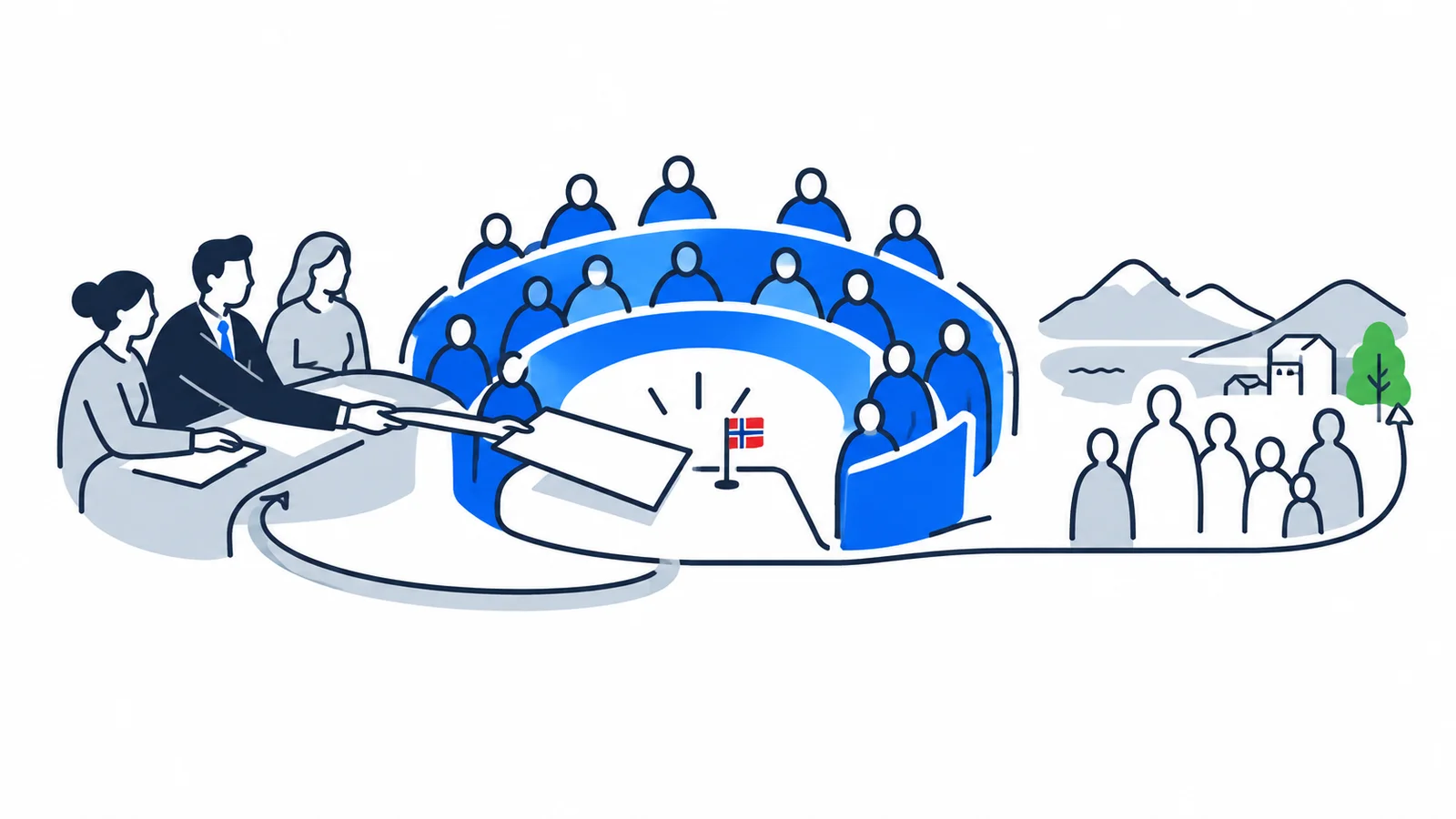
One important formal duty is the Council of State. The Council of State is a meeting between the King and the Government. It is usually held at the Royal Palace on Fridays at 11:00. Matters that, under the Constitution or legislation, must be decided by the King in Council are handled there. Examples can include royal assent to laws, appointments, regulations and other formal decisions.
When the King has approved a matter in the Council of State, the decision is made. But this does not mean that the King personally chose the policy. The matter has been prepared by the Government, and the ministers are responsible. If the King is ill or away, the Crown Prince may act as regent. The system secures continuity: the state must always be able to make formal decisions.
The opening of the Storting
Every autumn, the King formally opens the Storting. This is a solemn ceremony with roots in the Constitution. The King reads the Speech from the Throne, but the speech is the Government's programme for the coming year. Afterwards, a member of the Government reads the report on the state of the realm. The Storting later debates the Speech from the Throne.
This clearly shows the difference between symbol and political responsibility. The King reads the speech, but the Government stands behind the content. Students often confuse this in the test. The correct understanding is: the King carries out the constitutional and ceremonial role, while the Government has political responsibility.
Change of government
A change of government happens when one government resigns and a new one is appointed. Formally, the appointment is made by the King in Council. In practice, it is based on parliamentarianism: the new government must be able to get support, or at least avoid a majority against it, in the Storting. The King therefore does not choose freely according to personal opinion. He follows the parliamentary situation and advice from the outgoing prime minister and political leaders.
Norway should not be without a government. The old government normally continues as a caretaker government until the new one is appointed. This is practical because the state must function all the time. For the test, remember that the King has a formal role in a change of government, but the election result, parties and confidence in the Storting decide who can govern.
The King as a unifying symbol
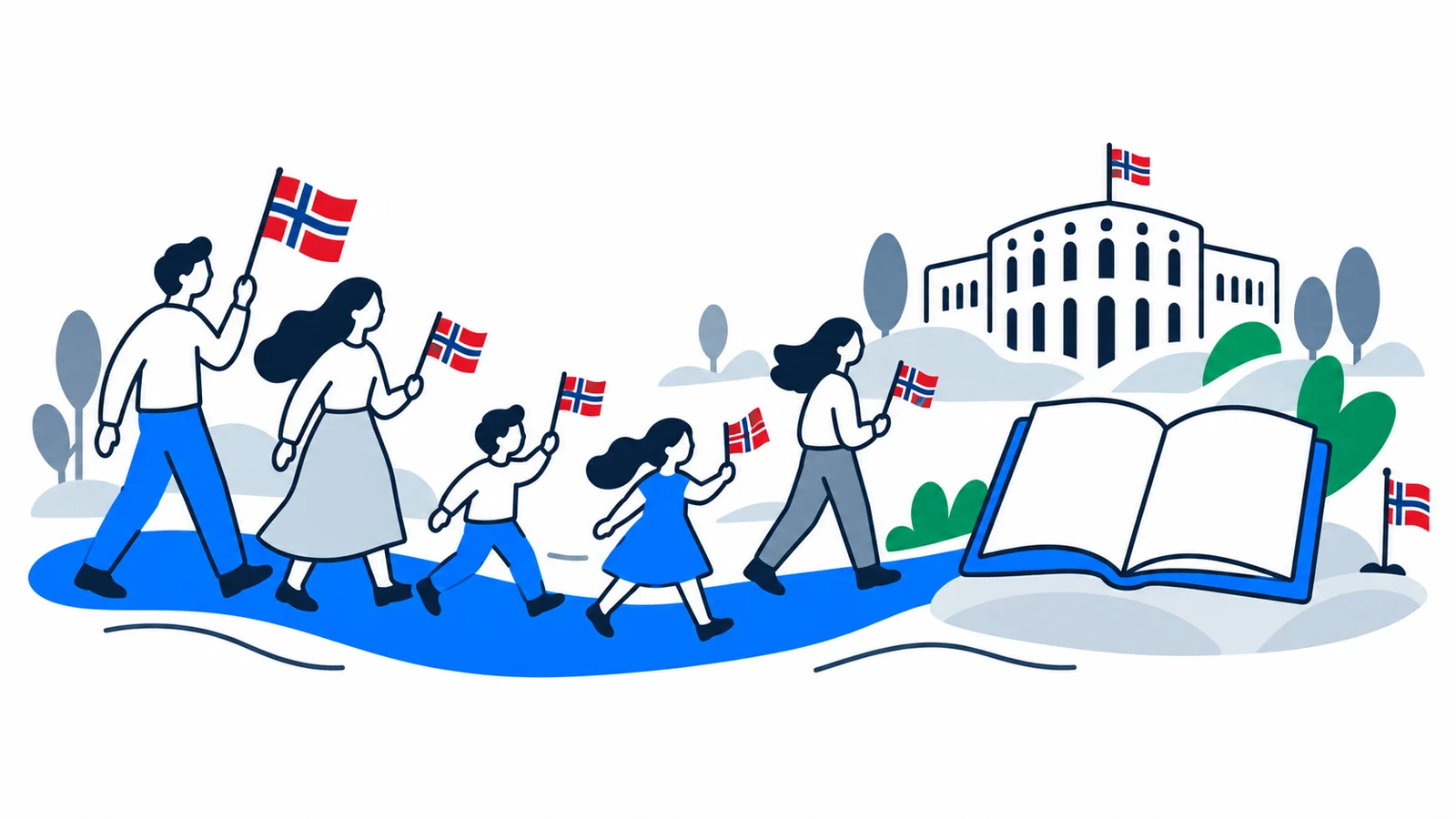
The King also has an important role outside the purely legal system. He represents Norway on state visits, receives foreign ambassadors, awards honours and takes part in national commemorations. The Royal Family is often visible on 17 May, at openings, memorial events and major national occasions. Many people see the monarchy as a symbol of continuity, community and national identity.
At the same time, there is political debate about the monarchy. Some people want a republic, while others want to keep the monarchy. Both views are allowed. In a democracy, citizens can discuss the form of government, vote for parties with different views and use freedom of expression. The current system is still a monarchy because the Constitution says so, and because the Storting has not changed the form of state.
The King and the Armed Forces
The King has formal roles connected to the Armed Forces. The Constitution gives the King a place in the highest level of the state, and the monarch has military ceremonial functions. In practice, defence and security policy is governed by the Government and the Storting. The Government leads executive power, while the Storting passes laws and grants funding. The King's role is therefore mainly constitutional and symbolic, not party-political.
This is a good example of how Norwegian institutions combine old forms with modern democracy. The words in the Constitution may sound as if the King has great personal power, but parliamentarianism and rules of responsibility mean that ministers carry political responsibility.
What should you know for the test?
For the social studies test, you should be able to explain three things. First: Norway is a constitutional monarchy, not a republic. Second: the King is head of state, but democratic power belongs to the people through elections, the Storting and the Government. Third: many of the King's duties are formal, such as the Council of State, the opening of the Storting and the appointment of a government.
It is also useful to compare this with other syllabus topics, such as elections and political parties, the Constitution and the separation of powers. When you see the words "King in Council", think of the Government and formal decisions, not personal royal power. When you see "Speech from the Throne", remember that the Government writes the political content. And when you see "monarchy", remember that Norway is still a democracy where citizens influence politics through elections, parties, organisations and public debate.
Why this role matters
The monarchy may seem old-fashioned, but in Norwegian constitutional law it has a practical function: it separates the state as a lasting institution from the government as political leadership. Governments can change after elections or political crises, while the head of state remains in place and performs the formal acts that hold the system together. This can give calm and continuity, but it does not change the main democratic rule. Laws, taxes, welfare, immigration, schools and health are decided by elected politicians, not by the Royal Family. When you explain the monarchy for the test, you should therefore mention both sides: the King is a visible symbol of the state, and real political power lies with the Storting and the Government.