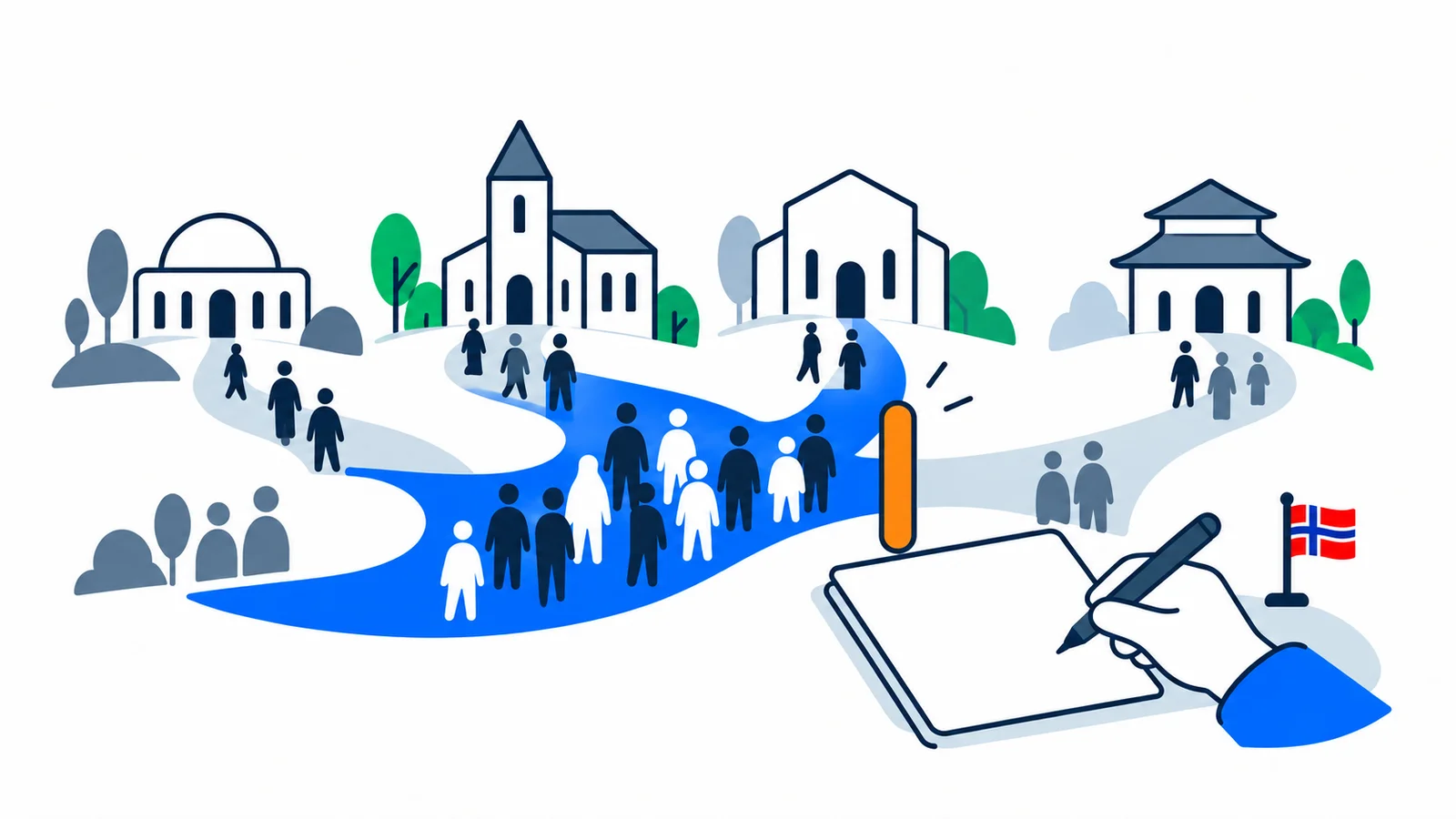
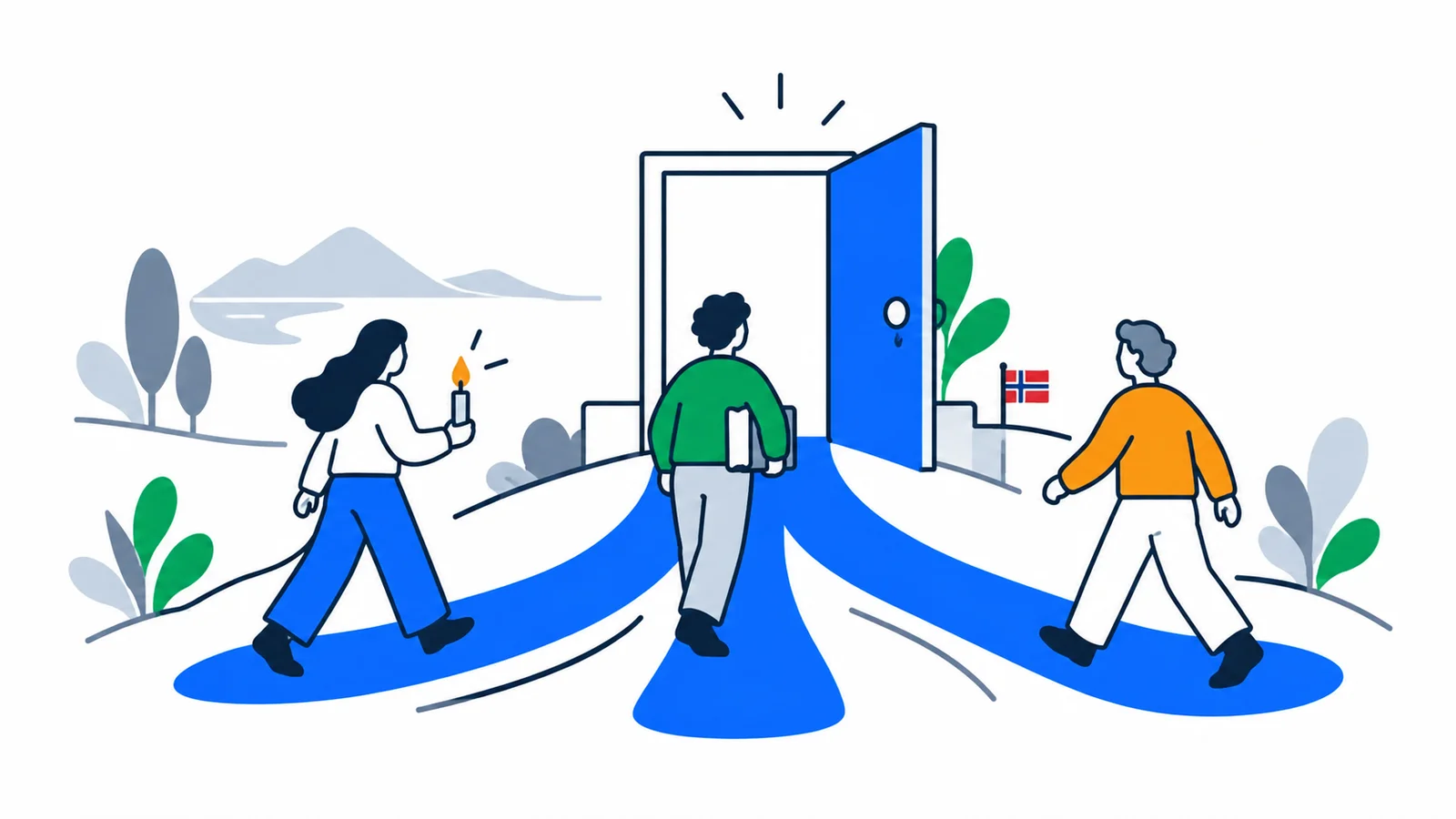

Freedom of religion in Norway means that you have the right to believe, not believe, change religion, leave a religious community and practise a religion or life stance. The right applies within Norwegian law and must be balanced against other people’s rights, the best interests of children, equality and safety.
What does freedom of religion protect?
Section 16 of the Constitution says that all inhabitants have free exercise of religion. The government’s guide to the Religious and Life Stance Communities Act explains that freedom of belief and life stance includes thought, conscience and religion, alone or with others, publicly or privately. It also includes the right to convert, criticise religion and have no religion.
This means the state cannot force you to have a particular belief. You may attend worship, prayer, holidays, humanist ceremonies or other life-stance activities. You may also choose not to. Read more about rights in the article on human rights in Norway.
Norway has freedom of religion and a national church
The Church of Norway is still described in the Constitution as Norway’s national church, but Norway has freedom of religion. This means the state may have historical and legal arrangements for the Church of Norway while other religious and life-stance communities must be treated according to law. Municipalities and the state must not discriminate against residents because they are Christian, Muslim, Jewish, Hindu, Buddhist, humanist, atheist or anything else.
Religious and life-stance communities can register and apply for state grants if they meet legal requirements. From 1 January 2026, the main rule is that a community must have at least 100 grant-counting members to claim a state grant. This is an administrative rule, not a limit on a person’s right to believe or not believe.
Limits: law, children and other people’s rights
Freedom of religion is strong, but it does not mean everything is legal if it is justified by religion. Norwegian laws against violence, coercion, hateful expression, discrimination, negative social control and abuse also apply in religious environments. Children have their own rights. Parents may guide children religiously, but children must be protected from violence, coercion and harmful control.
School should provide knowledge about religions and life stances, not pressure pupils to believe. Pupils and parents may in some situations ask for exemption from parts of teaching or activities, but school also has responsibility for community, knowledge and children’s right to education.
Discrimination and respect in daily life
Discrimination because of religion or life stance is prohibited in many areas of society, including work, education and services. At the same time, freedom of expression protects the right to discuss, criticise and leave religion. There is a difference between factual criticism of religion and unlawful threats or hateful expression against people.
In daily life, freedom of religion can involve food, clothing, days off, funerals, prayer rooms, work uniforms or participation in ceremonies. Often this is solved through dialogue and reasonable accommodation. But a solution must still follow the law and respect other people’s rights. See also democracy in Norway and children’s rights.
What should you remember for the test?
For the social studies test, you should explain that freedom of religion covers belief, non-belief and the right to change or leave religion. You should also remember that the right does not allow violence, coercion or discrimination. Norway protects religious diversity, but all religious and life-stance communities must follow Norwegian law, democracy, equality and children’s rights.
A life-stance open society
Norway is often described as a life-stance open society. This does not mean that religion should be removed from public space. It means rather that people with different religions and life stances should be able to participate in society on equal terms. A Muslim pupil, a Christian nurse, a Jewish family, a Hindu employee, a humanist and an atheist should all be able to meet public services without unjustified differential treatment.
This is closely connected to equality and non-discrimination. Employers, schools and public offices cannot make rules that indirectly exclude particular groups without an objective reason. At the same time, they may set requirements that are necessary for safety, hygiene, communication or work tasks. For example, a hospital may have hygiene rules for work clothing, while an employer should normally consider reasonable accommodation before religious clothing or symbols are banned.
Membership, finances and public systems
Many residents of Norway are members of the Church of Norway or other religious and life-stance communities. Membership is personal. You can join or leave according to the rules of the community and Norwegian law. Children may be registered through their parents’ choices, but children’s participation increases with age and maturity. This is connected to children’s rights and self-determination.
State grants to religious and life-stance communities are not payment because the state likes a particular belief. The purpose is to treat registered communities predictably and support a diversity of belief and life stance. Requirements for registration, membership lists and reporting should also prevent misuse of public funds.
What do you do after discrimination or pressure?
If you experience discrimination because of religion or life stance, first collect facts: what happened, when, who was involved, and are there messages or documents? At work, you can raise the matter with a union representative, safety representative, employer or the Labour Inspection Authority. At school, you can contact a teacher, headteacher or school owner. For public decisions, you can ask for reasons and appeal.
In discrimination cases, the Equality and Anti-Discrimination Ombud can give guidance, and the Discrimination Tribunal can handle some cases. If there are threats, violence or serious coercion, contact the police or other help services. Negative social control may also involve religion, family and honour, but Norwegian law protects the right to choose education, friends, partner, clothing, religion and life stance.
Useful test wording
A good test answer is not only “Norway has freedom of religion”. You should be able to say: Freedom of religion protects both belief and non-belief. The state must not force residents into a religion. People may practise religion as long as they follow Norwegian law. Children have their own rights. Discrimination because of religion and life stance is prohibited. Freedom of expression gives the right to criticise religion, but not to make threats or unlawful hatred against people.
You should also know the difference between private belief, religious organisations and public authority. Private belief is personal. Religious and life-stance communities can organise members and ceremonies. Public authorities must treat residents fairly and follow the law. This balance is what makes freedom of religion practical in a diverse democracy.
Common misunderstandings
A common misunderstanding is that freedom of religion means everyone must agree about religion. It does not. In Norway, religion may be discussed openly. Newspapers, politicians, artists, teachers and private individuals may criticise religious ideas, religious leaders and practices. At the same time, people must be protected against threats, harassment and unlawful hatred. You may criticise an idea strongly, but you may not threaten a person because that person belongs to a religion.
Another misunderstanding is that freedom of religion always gives the right to time off from work or school. Employers and schools should consider accommodation for important holidays or religious needs, but there is no general right to avoid all tasks. The solution must consider operations, teaching, safety and other pupils or employees.
A third misunderstanding concerns the family. Family and religious communities may give advice, traditions and community, but choices about belief, education, marriage and lifestyle cannot be controlled through violence or coercion. For the test, this is a central point: freedom of religion protects the individual’s choice, not only the group’s tradition.