NorwayCounty number 56

Finnmark

Finnmark is a county in Norway with 18 municipalities. Finnmark combines Barents Sea coastal communities with Finnmarksvidda and borders with Finland and Russia. Sámi, Kven and Norwegian histories, seafood, reindeer husbandry and post-war reconstruction explain a county of long distances and strong local identities.

Content updated:

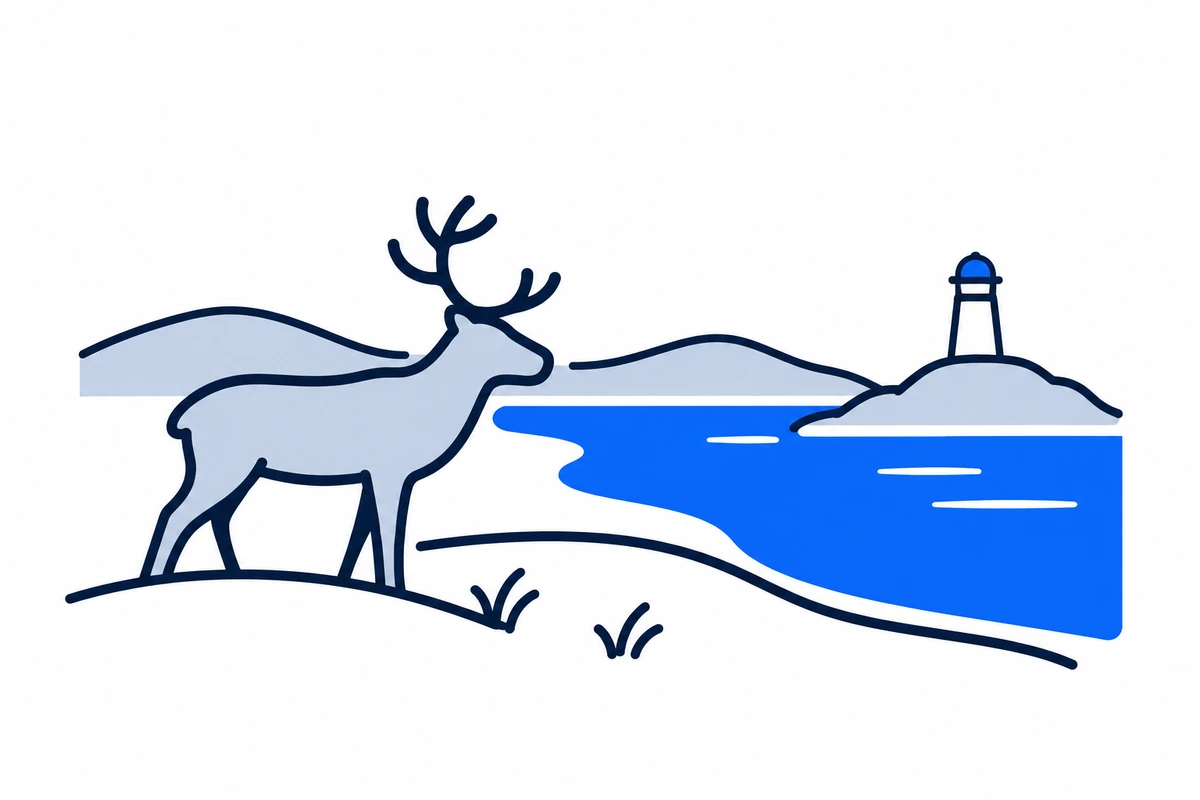
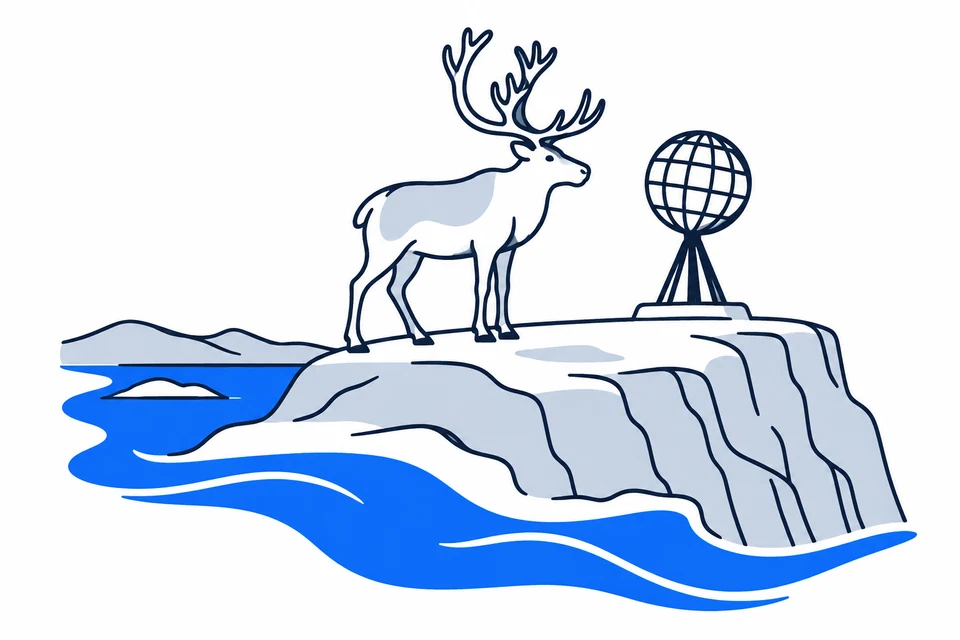
AI-generated illustration: Finnmark (county), Norway
An open plateau, reindeer and a lighthouse on an Arctic coast.Regional illustration
Residents
75,2882026 · SSB
Land area
45,756 km²2026 · SSB
Residents per km² of land
1.62026
Municipalities
1810 Oct 2026

SSB · 2026

The county in numbers

See how many people live in the county, how many homes it has, and which municipalities have the most residents. Figures are from Statistics Norway (SSB).

PopulationLatest available count
75,21830 June 2026
Population change2025–2026
Not available
We can’t calculate the change from the available figures.
Number of homesHouses and flats
42,1582026

The county on the map

Municipalities in the countyFinnmark · 18 municipalities

Choose a municipality to open its profile. Small island municipalities are marked with a dot.

Municipalities in the county · FinnmarkChoose a municipality to open its profile. Small island municipalities are marked with a dot.KautokeinoKarasjokPorsangerTanaSør-VarangerAltaLebesbyHammerfestBåtsfjordNessebyGamvikVadsøMåsøyBerlevågNordkappLoppaVardøHasvikN
Finnmark
Map data: © Kartverket · CC BY 4.0Generalised coastal map (2024) · About the map dataMunicipal structure checked:

Known for

Finnmark

The North Cape and reindeer on Finnmarksvidda

AI-generated illustration: Finnmark. The North Cape and reindeer on Finnmarksvidda.

Coast, plateau and borderlands

Finnmark has extensive coasts, fjords, islands and plateau areas. Alta, Hammerfest, Vadsø and Kirkenes serve different parts of the county; Karasjok and Kautokeino have important inland roles. Borders with Finland and Russia give a distinctive geographical position. Large area does not mean evenly distributed settlement. Consider service distances and connections alongside population density and municipal maps.

Diverse histories and reconstruction

Sámi, Kven and Norwegian communities developed livelihoods through fishing, reindeer husbandry, trade and cross-border contact. Norwegianisation put languages under pressure. Forced evacuation and destruction affected much of Finnmark and Nord-Troms in autumn 1944; reconstruction changed housing, services and everyday life. Finnmark merged with Troms in 2020 and separated on 1 January 2024. Wartime destruction was extensive but uneven.

Stories on the rock

Rock art around Altafjorden depicts hunting, fishing, boats and prehistoric social life. Listed as World Heritage in 1985, its oldest carvings lie highest in the terrain because of post-glacial land uplift.

Seafood, reindeer husbandry and local employment

Fishing, seafood processing and aquaculture are important coastal industries; reindeer husbandry has economic and cultural significance inland. Energy, industry and public services provide other jobs. Finnmark employment statistics classify industries by workplace, which differs from workers’ residence. A business and skills plan is being developed; planning is distinct from completed projects. Research labour markets by municipality and occupation.

Snelandia and travel over long distances

Snelandia provides bus, boat and ferry information in Finnmark. Transport connects coastal settlements, islands and inland areas across long distances; not every journey has one direct departure. Plan education, work and service journeys with all connections and current service alerts. County boundaries help orientation but do not alone describe how accessible two communities are to each other.

Sámi institutions and landscape knowledge

UiT has study sites including Alta, Hammerfest and Kirkenes. Sámi University of Applied Sciences in Kautokeino provides Sámi education and research; the Sámi Parliament in Karasjok is an elected body for Sámi people in Norway. Alta’s rock art and Hammerfest’s Reconstruction Museum offer other historical perspectives. Education, languages and culture illuminate Indigenous peoples, national minorities and Norwegian social development.

Settlement, languages and stable services

Finnmark municipalities have different age profiles, labour markets and recruitment needs. Long distances make local education, housing and services particularly important. Sámi, Kven and Norwegian language and cultural communities are present-day societies, not only historical subjects. Compare municipal population and trends using matching years, considering workplaces and travel alongside residence. Extensive county area can conceal strong local differences.

Planning for community resilience

Finnmark is developing a regional resilience plan focused on cooperation and public preparedness. The source schedules consultation for autumn 2026; final adoption of the plan has not been confirmed.

Places with a story

Landscapes, heritage sites and buildings offer a concrete view of the county’s history. Continue to the guides to these places and their municipalities.

  • Sør-Varanger

    Grenselandmuseet

    Grenselandmuseet in Kirkenes explores Sør-Varanger as a border region and meeting place. Industrial development, war and everyday life appear together, showing how international events affected local communities.

  • Alta

    Hjemmeluft

    Hjemmeluft is the publicly accessible heart of Alta's World Heritage rock art. Carvings around the bay show hunting, fishing and boat journeys while the landscape explains how people used the prehistoric shoreline.

  • Porsanger

    Kväänin institutti – Kvensk institutt

    Kväänin institutti – Kvensk institutt in Pyssyjoki/Børselv is a national centre for Kven language and culture. Its distinctive building combines a place for cultural experiences with the continuing work of documenting and strengthening a living language.

More attractions in the county

Finnmark · 18 municipalities

All municipalities

Find local figures, history, education, housing and public services. Each municipality’s population figure refers to the stated period.

What does a county do?

Norway has three elected levels of government: the state, county authorities and municipalities. A county is both a geographical area and the territory of an elected regional authority.

The county authority

Responsibilities include upper secondary education, county roads, public transport, public dental services and regional development. These tasks connect municipalities.

The municipality

Local responsibilities include primary and lower secondary schools, kindergartens, health and care services and land-use planning. Kommuneportal explains these at municipal level.

The state and the County Governor

The County Governor represents the state regionally. This is a separate institution from the elected county authority. Oslo has both municipal and county responsibilities.

Questions and answers

What is Finnmark known for?
Finnmark combines Barents Sea coastal communities with Finnmarksvidda and borders with Finland and Russia. Sámi, Kven and Norwegian histories, seafood, reindeer husbandry and post-war reconstruction explain a county of long distances and strong local identities.
How many municipalities are there in Finnmark?
Finnmark has 18 municipalities in the dated municipal register used on this page. The complete list links to each municipality with local facts, statistics and services.
What is the difference between a county and a municipality?
A county is a regional division that usually contains several municipalities. The county authority is responsible for areas including upper secondary education, county roads, local public transport, public dental services, regional development and culture. Municipalities provide local services close to residents.
How has Finnmark developed as a county?
Sámi, Kven and Norwegian communities developed livelihoods through fishing, reindeer husbandry, trade and cross-border contact. Norwegianisation put languages under pressure. Forced evacuation and destruction affected much of Finnmark and Nord-Troms in autumn 1944; reconstruction changed housing, services and everyday life. Finnmark merged with Troms in 2020 and separated on 1 January 2024. Wartime destruction was extensive but uneven.
How should I read the statistics on this page?
Read the reference period and source alongside each figure. County figures calculated from municipalities require complete coverage and comparable periods. Municipalities and urban settlements are different geographic units, so the list of large municipalities is not a ranking of cities.

SamfunnPrep

Understand Norway. Keep learning.

Practice social studies with questions, clear explanations and mock exams.

Exam centres in Finnmark

Find a place to take the social studies test, with addresses and contact details.

View exam centres
Sources and illustrations

Sources and methodology

Registry date: · Content updated:

A county total is shown only when every municipality has comparable figures from the same source and period. Land area excludes freshwater and sea. Density uses population and land area from the same year.

The same municipality membership is used; changes across a documented geographical break are withheld.

Statistical evidence

Sources and methodology

About the illustrations

AI-generated illustration: Finnmark (county), Norway

An artistic interpretation, not a photograph or an exact record of the place.

Official code
56 · Finnmark
Dimensions and format
1200 × 800 · WebP
Credit
SamfunnPrep · AI-generated illustration
Original image
Open full-size image

Creation and publication dates are not documented.
Downloading, republishing, adapting and commercial use require written permission. Image use and permission

About the place: Finnmark · Original image