
Being young in Norway means school, friends, and leisure, and you make more decisions yourself as you grow older: from age 15 religion and organizations, from age 16 most health care, and at age 18 you become an adult.
What does it mean to be young in Norway?
Being young in Norway means a daily life with school, leisure, and friends, and a society that gives you more rights as you get older. Young people can have a say in matters that concern them, and they decide more and more as they age.
It is normal that both freedom and boundaries come with growing up. Parents can set ordinary rules, while children and young people have their own rights by law. You can read more about children's rights and self-determination in a separate article.
For many new families, this is different from their home country. This article explains what daily life looks like, which age limits apply, and where you can get help. This topic is also part of the Norwegian Citizenship Test, and you can practice it for free on SamfunnPrep.
A typical day: school, leisure, and work on the side
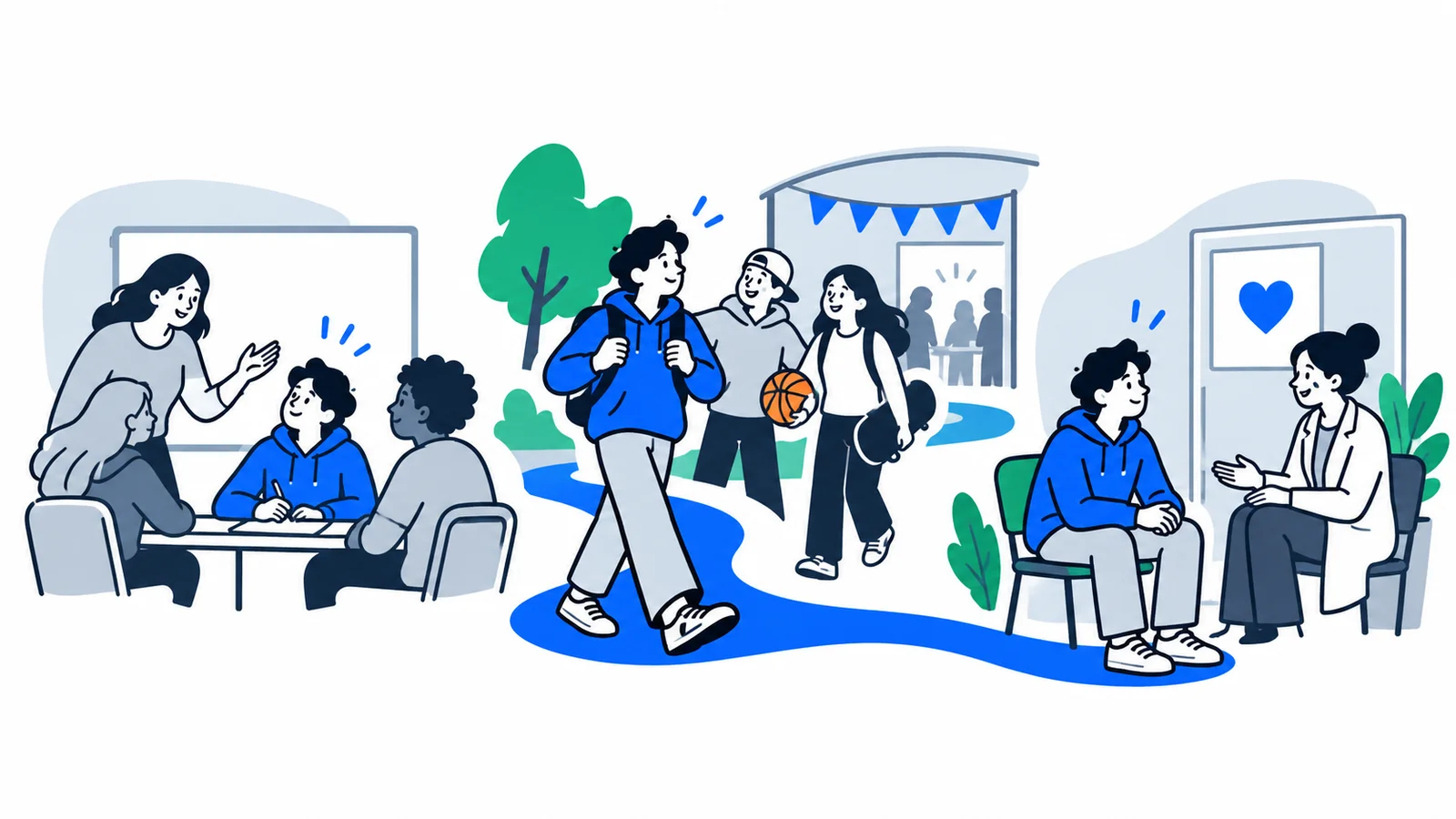
A typical youth day in Norway is school during the day and leisure in the afternoon. Primary school is compulsory until year 10, and almost everyone goes on to secondary school. You can read more about this in the article on the Norwegian school system.
During leisure time, friends, sports, gaming, and social media are common. Many young people also have a small part-time job alongside school, for example in a shop or café. This gives their own money and work experience.
Social media is a big part of life for most young people. It is both fun and demanding, and parents and schools often talk with young people about digital literacy and screen time.
When do young people decide for themselves in Norway?
Young people in Norway gradually decide more for themselves, and the law has fixed age limits. Children should be heard in matters concerning them, and from age 12 their opinion should be given great weight.
Here are the most important milestones:
| Age | What you can decide yourself |
|---|---|
| 12 years | Your opinion should have great weight in matters about you |
| 15 years | Choose religion and values, and join or leave clubs and organizations |
| 16 years | Consent to most health care yourself; age of sexual consent |
| 18 years | Adult – full self-determination in money and personal choices |
This is stated in the Children Act and in the law on patient and user rights. The right to be heard and decide more as you age is also based on the Convention on the Rights of the Child, which Norway follows.
Youth health clinic and school health service
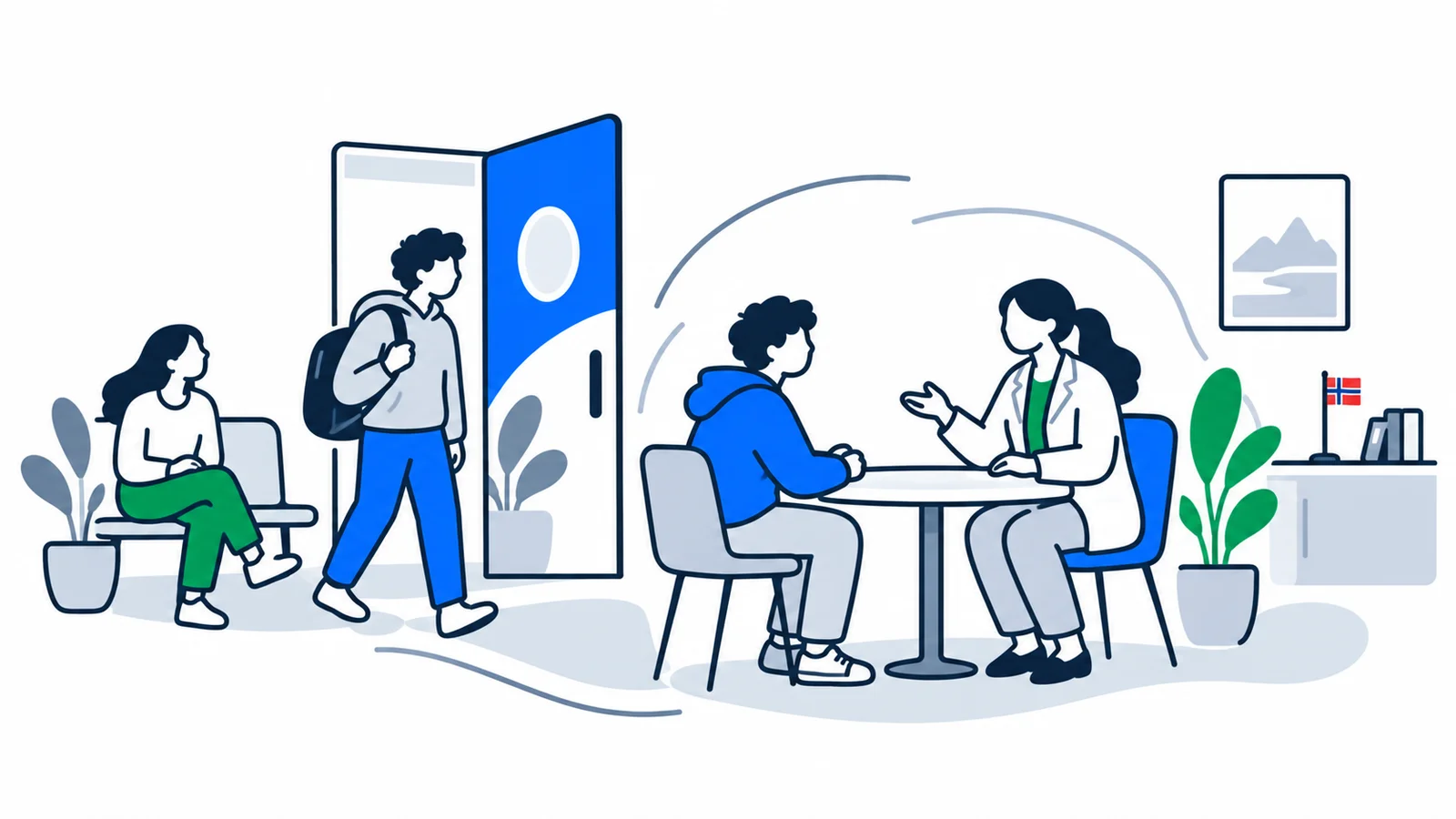
A youth health clinic is a free service where young people can talk to a health nurse, doctor, or midwife. The service is usually for young people from around 12 to 20 years old, and in some places up to 25 years old.
Here you can discuss physical health, mental health, and questions about your body and feelings. You can also get contraception and get tested for sexually transmitted infections.
Everyone who works there has a duty of confidentiality. This means they do not tell others what you say, except for a few exceptions to protect life and health. The service is free, and you do not need an appointment.
The school health service is a similar service at school. There students can talk to a health nurse about health, well-being, and difficulties. This is also free and confidential.
If a young person is having a hard time, there is lots of help available. See the article on mental health and help for more places to contact.
Youth club, sports, and organizational life
Youth clubs, sports clubs, and organizations are important meeting places for young people in Norway. A youth club or youth center is a free or cheap place where young people can be together, play, and do activities.
Sports and organizational life are a good way into the local community. Here young people meet peers, make friends, and practice Norwegian in real life. For newcomers to Norway, this is often the quickest way to get to know people.
There are clubs and organizations for almost everything: football, dance, music, outdoor life, and much more. Many municipalities also have support that allows children to take part even if the family has little money.
Freedom and boundaries: what is allowed?
In Norwegian families, both freedom and boundaries are normal. Parents can set ordinary rules, such as curfews, agreements about screen time, and demands for homework and help at home.
At the same time, the law sets a clear boundary: violence is forbidden. According to the Children Act, children should not be subjected to violence or treatment that harms their physical or mental health. This also applies to discipline, and physical punishment is not allowed, not even a light slap.
Boundaries and love go together. Good parenting is about safety, clear rules, and respect, not punishment through violence. You can read more about this in the article on child-rearing and boundaries.
If something is wrong at home, both young people and adults can ask for help. Child protective services is a public service that should help children and families who need support. Reaching out is allowed, and the goal is to help the family.
Children, family, and upbringing are part of the curriculum for the Norwegian Citizenship Test – practice for free on SamfunnPrep.
In short
Being young in Norway is a balance between freedom and responsibility. You decide more for yourself as you age, you have free health care with confidentiality, and you are protected from violence. If you want to practice this topic, you can find tasks on SamfunnPrep.