
Mental health in Norway is about both how people manage everyday life and how society helps when someone has anxiety, depression, sleep problems, trauma, substance-use problems or suicidal thoughts. For the Samfunnskunnskapsprøven, remember the main rule: help exists at several levels. In acute danger, call 113. For urgent but not life-threatening help, call the out-of-hours medical service at 116 117. For ordinary mental health problems, many people start with the GP, the municipality, the health clinic, the school health service or a helpline.
Why mental health is a social topic
In Norway, mental health is treated as part of public health, not only as a private problem. The authorities emphasise that work, school, finances, housing, family, leisure and safety affect health. FHI describes mental distress as common among young people and adults, and figures show that many people experience symptoms of anxiety and depression at some point in life. This does not mean that everyone has a diagnosis, but it means that society needs services that are easy to contact.
This connects directly with other exam topics: the welfare state, municipal responsibility, children’s rights, equality and trust in public services. Norway wants people to seek help early, before problems become severe. That is also why many municipalities have low-threshold services, and why schools, health clinics and GPs have an important role.
First step: talk to someone
A practical rule in Norway is to speak up early. You can talk to your GP, a public health nurse, a teacher, a NAV adviser, an employer, family or an organisation. If you do not know who is right, the GP is often a good starting point. In the article about GP, emergency clinic and hospital we explain how to use the health service in the right order.
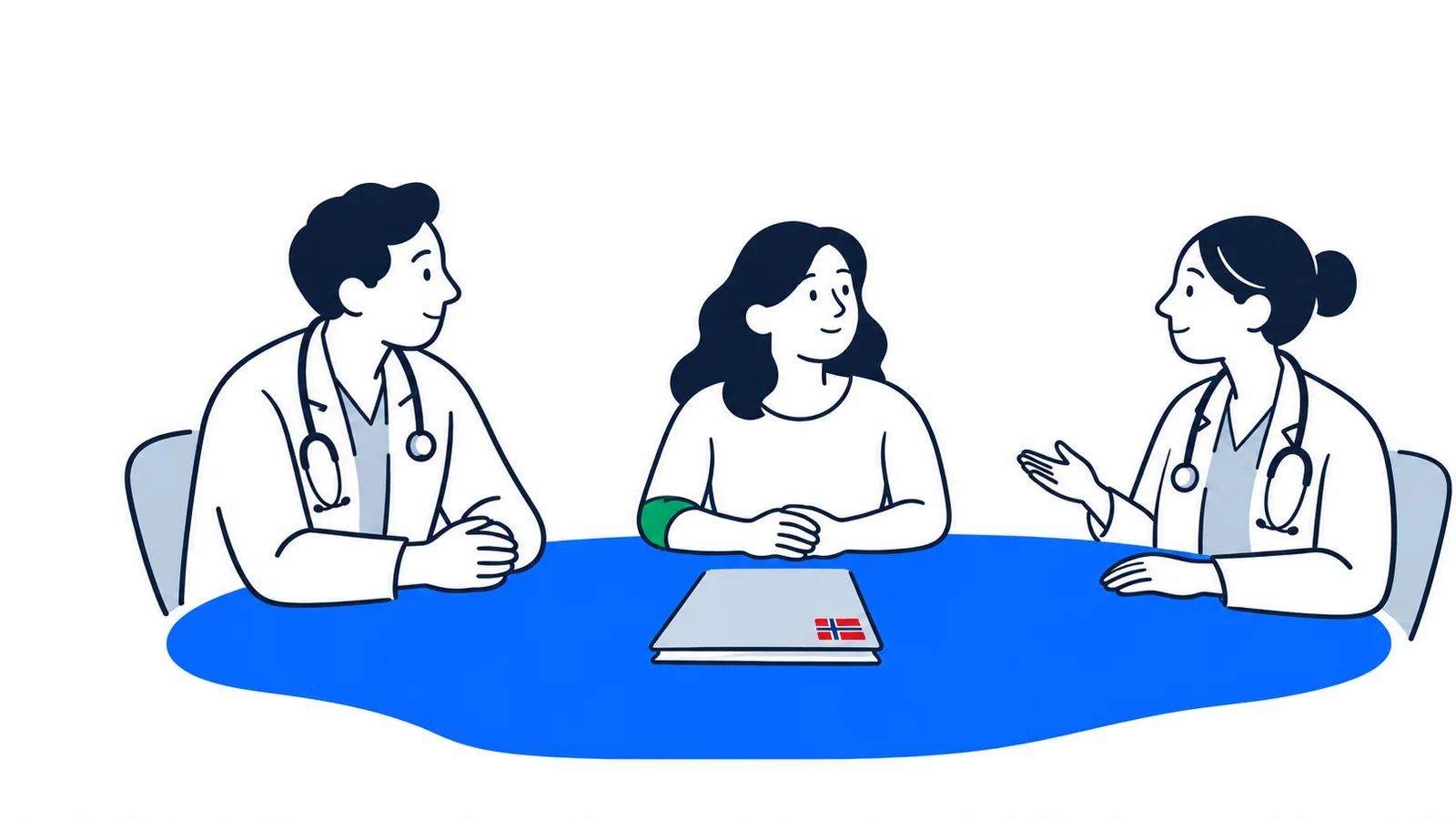
The GP can assess the situation, give advice, issue sick leave if there is a medical basis, suggest self-management, medication or counselling, and refer you further if you need more specialised treatment. You can ask for an interpreter if language makes it hard to explain how you feel. Health personnel have a duty of confidentiality, so information about your health must normally not be shared without your consent.
Municipal low-threshold services
The municipality is responsible for health and care services for residents. Many municipalities offer mental health and substance-use services that you can contact directly. One well-known service is Rask psykisk helsehjelp, rapid mental health help. The Directorate of Health describes it as an evidence-based municipal model for people over 16 with anxiety, mild or moderate depression, sleep problems or early substance-use problems. Helsenorge states that the service is free and can be used without a doctor’s referral where the municipality offers it.
Low-threshold means that it should be easy to make contact: you should not have to be very ill before asking for help. Services differ between municipalities. Some offer courses for coping with depression and anxiety, conversations with a mental health worker, group programmes, follow-up at home or cooperation with NAV and the GP. Check the municipality website, call the service centre or ask your GP what is available where you live. For more on roles in the system, see the health system in Norway.
Psychologist, DPS and specialist health services
Some people need help from a psychologist, psychiatrist or district psychiatric centre, usually called DPS. The main rule is that you need a referral for public specialist health services. The GP assesses whether the problems are so serious or complex that municipal services are not enough. The referral is assessed by the specialist health service, which decides whether you have a right to necessary health care and how quickly you should receive it.
Private psychologists also exist. Some have public agreements; others must be paid fully by the patient. For the exam, the principle is more important than price details: public health care is based on need, prioritisation and referral. As a patient you also have rights, including information, participation in decisions and the possibility to complain if you believe you are not receiving necessary health care.
Children, young people and the school health service
Children and young people have their own ways into help. The school health service and youth health clinics provide advice, guidance and support, including on mental health. A public health nurse can talk to the pupil alone, help with further contact and assess whether parents, the GP or other services should be involved. Many municipalities also have mental health services for children and adolescents.
For children, parents are usually important supporters, but children also have the right to be heard. In cases of violence, abuse, serious control or insecurity at home, adults and public services must act. Mental health can therefore be connected to topics such as negative social control, coercion and children’s right to protection. Read negative social control in Norway to understand this connection.
Acute help and suicidal thoughts
If there is danger to life or health, call 113 immediately. This also applies to serious suicidal thoughts, suicide attempts, overdose, psychosis, violence or situations where the person cannot take care of themselves. If it is urgent but not life-threatening, call the out-of-hours medical service on 116 117. You can also contact your GP during the day.
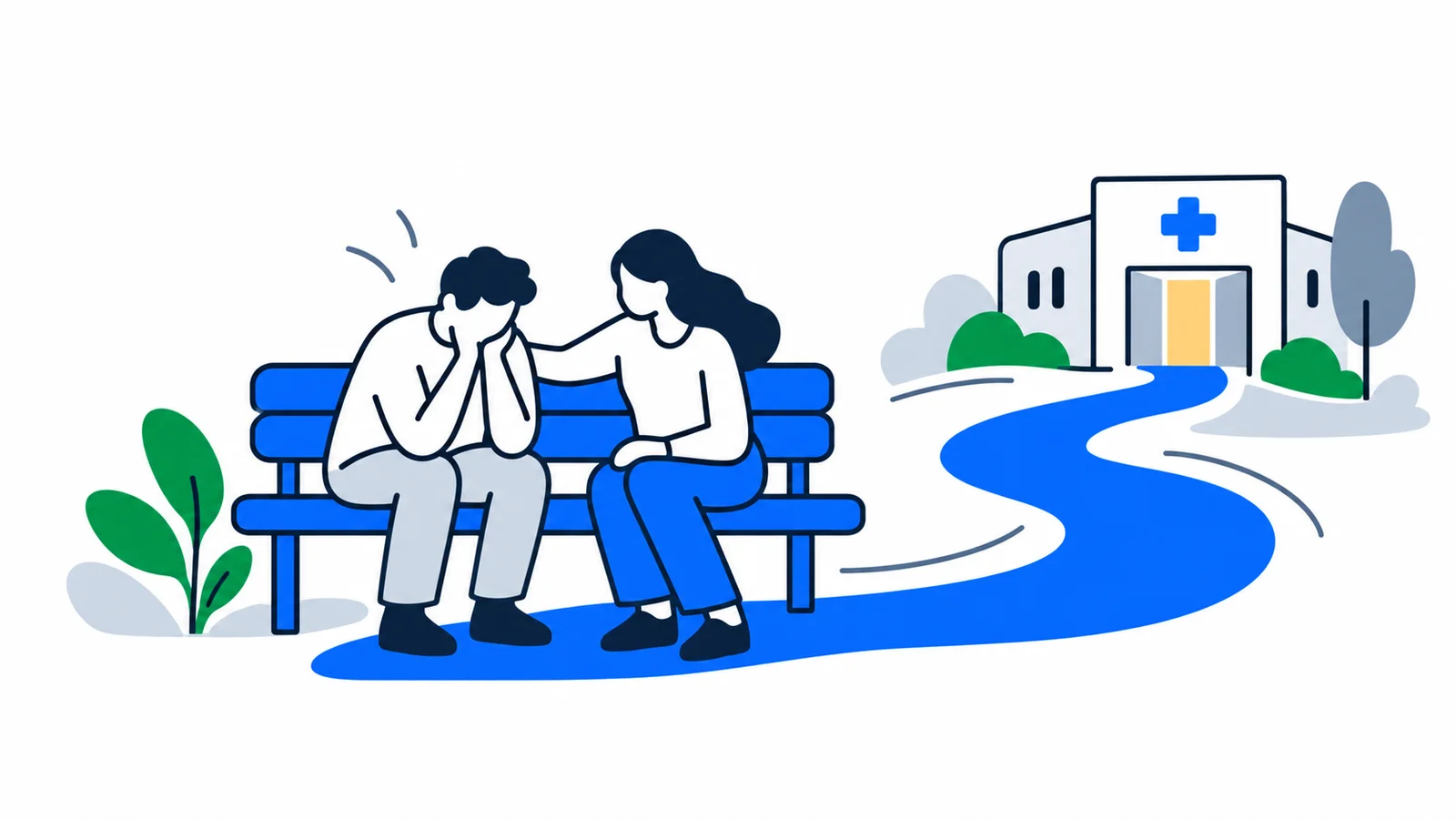
If you have suicidal thoughts, it is important to tell someone. Many people are afraid to say the words out loud, but Helsenorge stresses that there are people who can and want to help. If you are worried about another person, you can ask directly whether they are thinking about taking their own life. Asking does not make the situation more dangerous; it can make it easier to get help quickly.
Helplines and voluntary services
Norway has several helplines and online services. Mental Helse runs the helpline 116 123, which is open all day and night, free and anonymous. Helsenorge also lists chat and phone services for different groups, such as parents, students, people with anxiety and people who need someone to talk to. Such services do not replace a doctor in serious illness, but they can be an important first place to speak up.
Voluntary organisations are part of Norwegian civil society. They can provide support, information, conversation groups and community. In social studies this is a useful example of welfare being more than the state: municipalities, specialist services, voluntary organisations, family and the local community can all contribute.
Confidentiality, interpreter and trust
Many new residents are unsure whether it is safe to talk about mental health problems. The main rule is that health personnel have a duty of confidentiality. This means that GPs, psychologists, public health nurses and others cannot tell your employer, neighbours or family about your health without a legal basis. There are exceptions, for example if children are in danger or there is serious danger to life or health.
You can ask for a qualified interpreter when language is necessary for proper health care. Do not use children as interpreters in health matters. Explaining mental symptoms requires precise words: sleep, anxiety, panic, grief, trauma, concentration, appetite, thoughts of self-harm and how everyday life functions. It is often useful to write down points before the appointment.
What should you remember for the exam?
For the Samfunnskunnskapsprøven, remember that mental health is part of the health service and public health work. The municipality has low-threshold services and school health services. The GP is often the first contact and can refer further. Specialist health services treat more serious or complex problems. In acute danger you call 113, and for out-of-hours medical help you call 116 117. Helplines such as 116 123 can be used when you need someone to talk to.
The most important practical message is simple: do not wait until everything becomes acute. In Norway, it is normal to ask for help for mental health problems, and early contact can prevent problems from growing.