
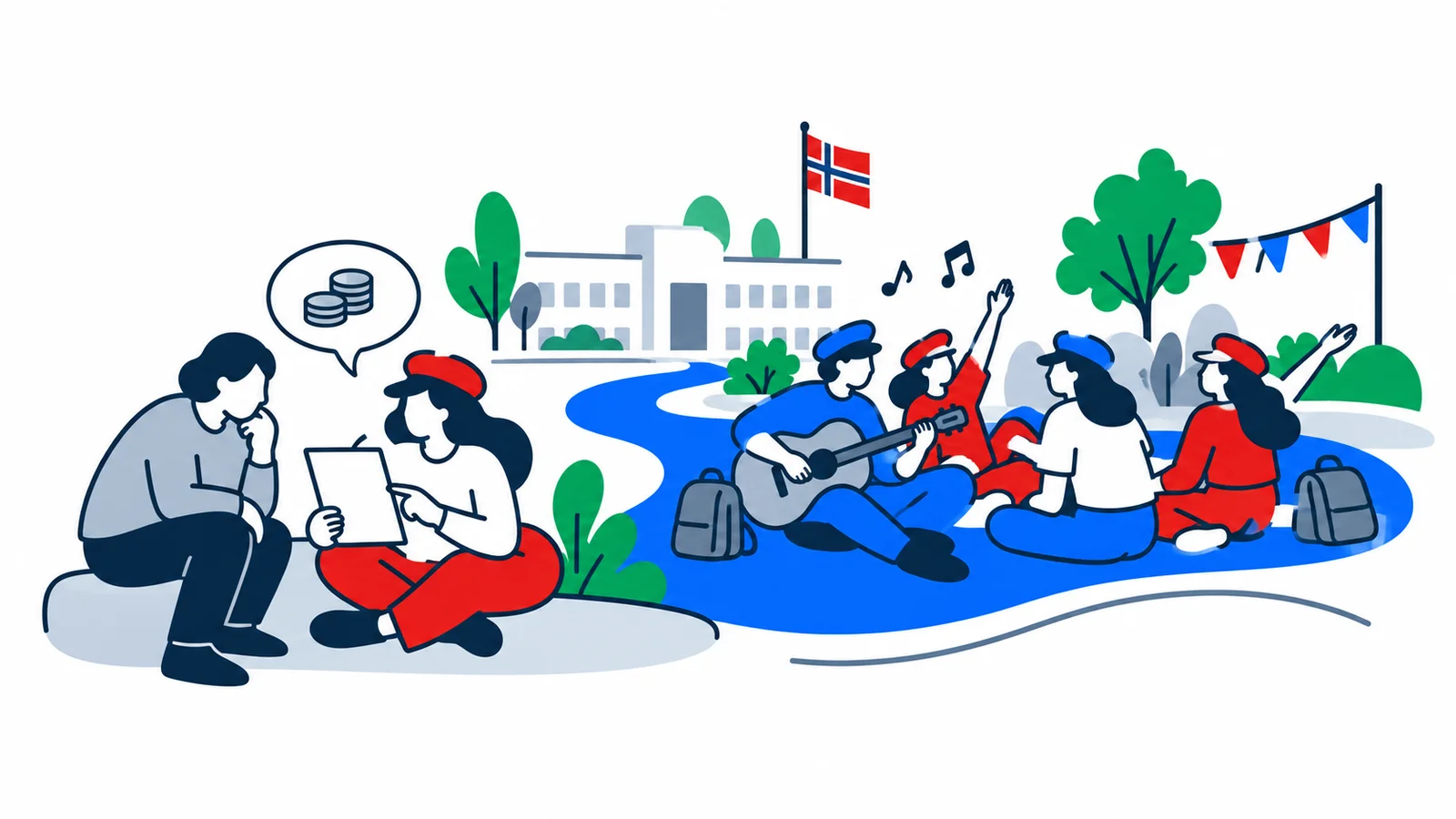

Russetiden is the Norwegian celebration at the end of upper secondary school. Students wear colored russeklær, celebrate with friends and hand out russekort. The celebration can be expensive, and from 2026 the rules have changed. Here's what parents should know.
What is russetiden?
Russetiden is an old tradition where students in their final year of upper secondary school, the graduating class, celebrate that they are soon finished with school. Most russ are 18 or 19 years old. Russ are characterized by:
- Russeklær: a colored coverall. Red russ is most common (college prep), blue is economics and black is vocational.
- Russelue with a tassel, and russeknuter: small knots you get for completing various tasks.
- Russekort: a card with a picture and funny text, which is handed out, often to children.
The celebration takes place in the final weeks before May 17. Many celebrate together in groups, some with a russebuss or russ car that they fix up.
What happens during russetiden?
Russetiden is a few weeks of parties, events and traditions. Common features are russ gatherings and concerts, driving around in a russebuss with music, and tasks to collect russeknuter. Many schools also have a russerevy. On May 17, the russ walk at the front of the parade and greet children with russekort.
From 2026, the celebration is divided into two parts for many: one part around May 17, and a new part in June after exams are finished. This means young people can celebrate without it affecting exam results. Not all russ celebrating is about alcohol and buses – many good memories come from being together with the class.
What does russetiden cost?
Russetiden can be very expensive, especially if young people participate in a russebuss. Costs vary greatly:
- Being a russ often costs 25,000–40,000 kroner in russeklær, russekort, events and other things.
- A seat on a russebuss can cost from 25,000 to 70,000 kroner per person, or more.
- In total, a full russetiden on a bus can add up to 100,000–300,000 kroner.
These are approximate figures – prices vary from group to group. The most important thing to know is that no one has to participate in an expensive bus. Talk with young people about what the family can afford. Creating a budget together is good practice; read more about personal finance in Norway.
New rules from 2026
From 2026, the russ celebration is changed in two important ways.
First, the celebration is moved to after exams. Previously, russ celebrated before exams, which affected results. Now schools hold exams earlier, so the actual celebration happens during exam-free periods – around May 17 and after the oral exams in June. The goal is a safer and more inclusive celebration.
Second, there are stricter safety rules for russebusser. From January 1, 2026, side-facing seats and standing room are prohibited while the bus is driving, and it is mandatory to wear a seatbelt. Seats must face forward or backward. The rules are intended to make buses safer following several serious incidents.
What should parents think about?
Russetiden can be fun, but it also has a downside: peer pressure, exclusion, lots of alcohol and little sleep. Groups and bus seats are often determined years in advance, and expensive seats can exclude those who can't afford it.
As a parent, you can:
- Talk early with young people about money, alcohol and safety.
- Say no to the expensive bus if it doesn't fit your family's budget. You can celebrate with the class without a bus.
- Remind that exams come first – the new arrangement places the celebration after exams precisely for this reason.
- Get to know other parents, for example at parent meetings, so you can work together.
Alcohol rules also apply during russetiden. The age limit for buying alcohol is 18 and 20 years. Read more about alcohol rules in Norway.
Part of youth life
Russetiden is a big part of youth life in Norway. For many, it's a nice ending to school, with good memories. With a little planning and open discussion in the family, the celebration can be both safe and fun – without costing too much.
School, exams and Norwegian society are also topics on the Citizenship Exam. On SamfunnPrep you can learn more about how Norway works. Ready to practice? Try SamfunnPrep for free.