

Inheritance and settlement in Norway follows the Inheritance Act from 2021. Spouse, cohabitant and children (lineal heirs) inherit first. Children have mandatory inheritance share of 2/3, but at most 15 G each. There is no inheritance tax, and the estate is settled by private or public settlement.
Inheritance and settlement in Norway is about who gets the assets when a person dies, and how the estate is divided. The rules are in the Inheritance Act. The law provides security: close family is guaranteed part of the inheritance, and you can plan ahead. If you are married or cohabiting, inheritance is closely connected to marriage and cohabitation.
What do inheritance and settlement mean in Norway?
Inheritance and settlement in Norway means distributing the deceased's assets according to the Inheritance Act, which has been in effect since 1 January 2021. Inheritance is what you receive. Settlement is the actual settlement: debts are paid, and the remainder is divided among the heirs. The Tax Authority is notified of the death, and the district court (the local court) is the settlement authority.
Who inherits? Inheritance classes
Closest family inherits first. The Inheritance Act divides relatives into three groups called inheritance classes. Class 1 inherits before class 2, and class 2 before class 3.
| Class | Who inherits |
|---|---|
| 1 | Children and grandchildren (lineal heirs) |
| 2 | Parents, siblings and their children |
| 3 | Grandparents, uncles and aunts |
A lineal heir is the deceased's child or grandchild. If one of the children is already deceased, that share passes to the child's own children. This is called representation, and means that the inheritance follows the bloodline downward. Spouse and cohabitant inherit according to their own rules alongside these classes. If the deceased has neither family nor a will, the inheritance goes to the state.
What is mandatory inheritance share, and how much do the children inherit?
Children are guaranteed a fixed share of the inheritance. Mandatory inheritance share is the share lineal heirs always have the right to: 2/3 of the inheritance. But the amount has a limit. Each child is entitled to at least 15 G (15 times the National Insurance basic amount) in inheritance from each parent. As of 8 July 2026, 1 G is 136 549 kroner, so 15 G is around 2 million kroner per child. If the estate is larger than this, the parents can freely decide over the remainder.
The limit of 15 G came with the new Inheritance Act in 2021. Previously, the mandatory share was limited to 1 million kroner per child.
What do spouse and cohabitant inherit?
The spouse inherits 1/4 when there are lineal heirs, but in any case has the right to a minimum inheritance of 4 G – around 546 000 kroner as of 8 July 2026. If the deceased has no children, but has parents or siblings in class 2, the spouse inherits half, and at least 6 G (around 819 000 kroner). If the entire estate is less than the minimum inheritance, the spouse inherits everything.
Cohabitants do not inherit automatically like spouses do. If you have, have had, or are expecting a common child, the cohabitant has the right to a minimum inheritance of 4 G, and this right comes before the children's inheritance.
Unsettled estate means that the surviving spouse can postpone the settlement and keep the assets together, instead of dividing with the children immediately. A cohabitant with a common child can remain in unsettled estate with shared residence, car, furnishings and holiday home. In case of a relationship breakdown while alive, entirely different rules apply; see divorce and separation.
Can you decide yourself? Will
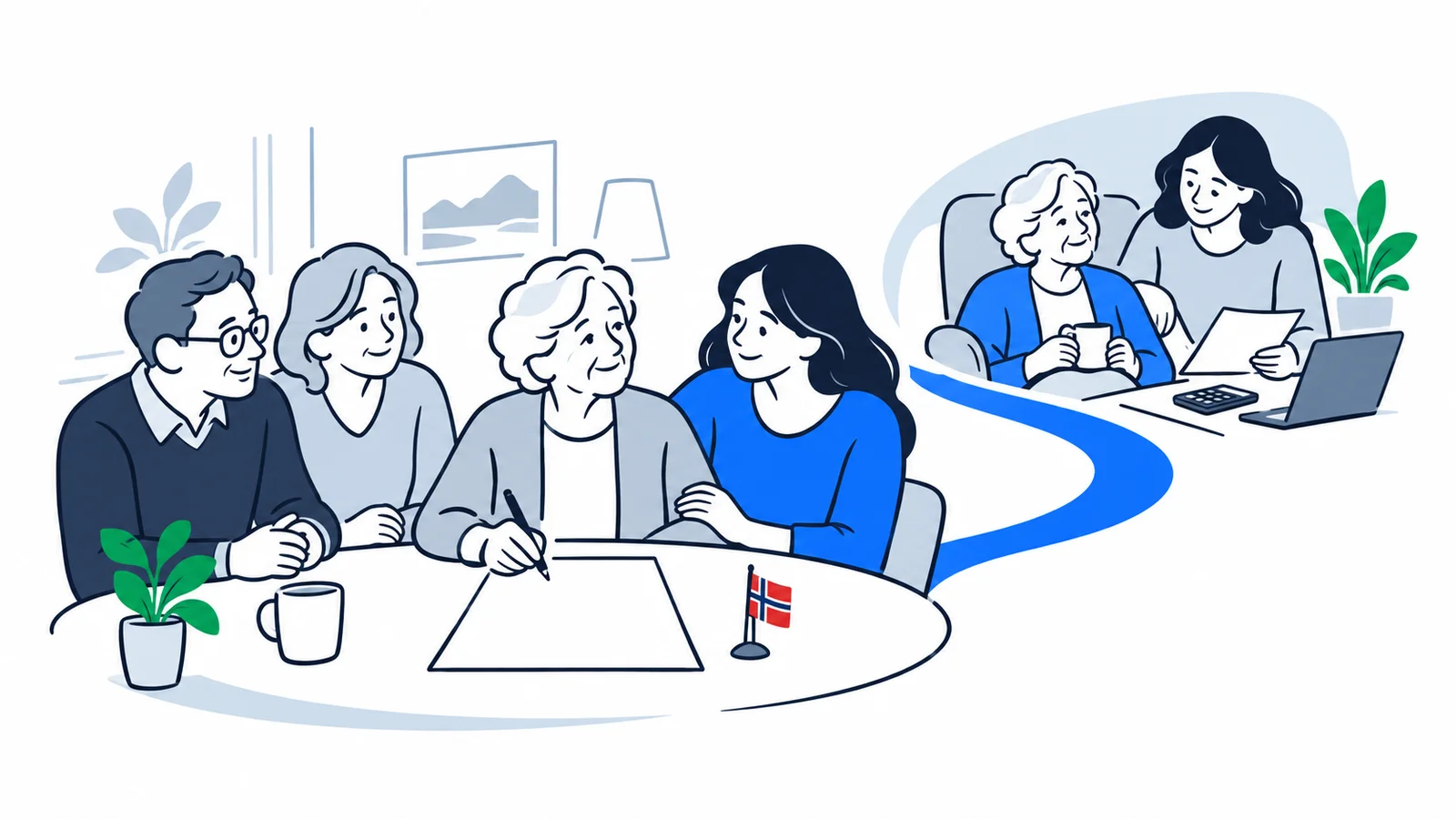
Yes, within the limits above. A will is a written document where you decide who shall inherit the part the law allows you to control. For the will to be valid, you must:
- write it down and sign it yourself
- have two witnesses who are at least 18 years old
- make sure the witnesses are present at the same time, know that it is a will, and sign while you are watching
If you do not follow these rules, the will is invalid. A child inherits from a parent only when paternity or maternity is established; read more about paternity and parental responsibility. On SamfunnPrep you will encounter questions about family, inheritance and rights.
Is there inheritance tax in Norway?
No. Inheritance tax was abolished as of 1 January 2014. You do not pay tax when you receive an inheritance or gift. But you take over the deceased's tax positions (the continuity principle), so tax may come later – for example when you sell something you have inherited. Remember to check the figures in your tax return.
How does settlement proceed?
There are two forms of settlement:
- Private settlement: The heirs settle the estate themselves. This is most common. At least one adult heir must take responsibility for the deceased's debts. Then you receive a settlement certificate from the district court – proof that you can control the estate. The certificate is issued at the earliest 60 days after death.
- Public settlement: The district court manages the settlement, often with an estate administrator (attorney). Used when heirs disagree, or when the debt is unclear. The costs are covered by the estate.
Be aware: If you assume responsibility for the debt in a private settlement, you become personally responsible for the deceased's debts. If you are unsure how much debt exists, you can ask the district court for a proclamation – a public notice where creditors have six weeks to file claims. This way you avoid surprises later.
Especially for those who have moved to Norway
If you live in Norway, Norwegian inheritance law generally applies to your estate. If you have assets or heirs abroad, the rules of several countries may apply, and the settlement may become more complicated. Norway is not part of the EU's succession regulation, so a choice of law to your home country's law is not automatically valid here. If you have property in two countries, it is advisable to write a will and get legal advice. Good sources are domstol.no for settlement and snl.no for explanation of inheritance terms.
Family and rights are part of the curriculum for the Test of Norwegian Society – practice free on SamfunnPrep.