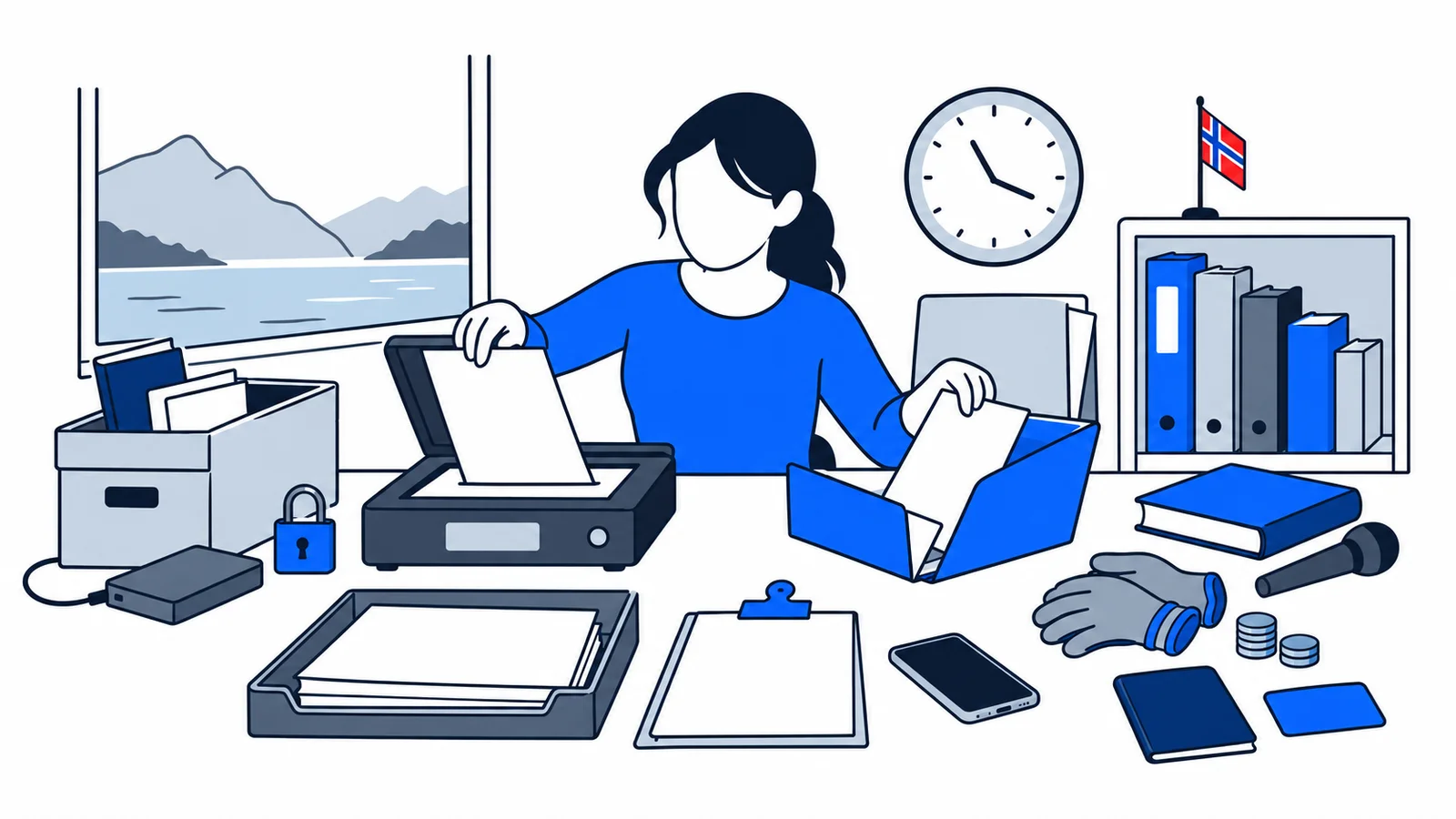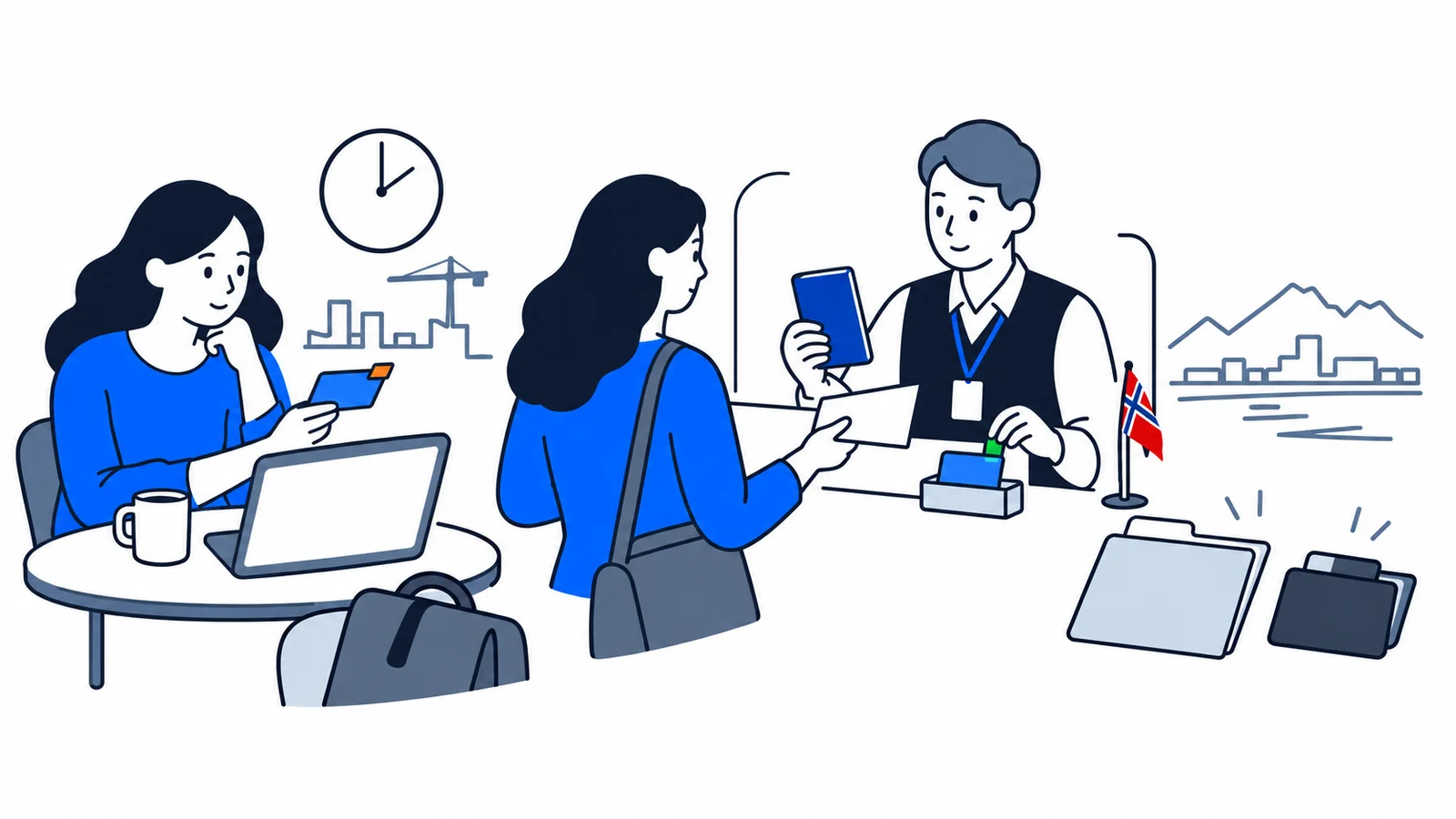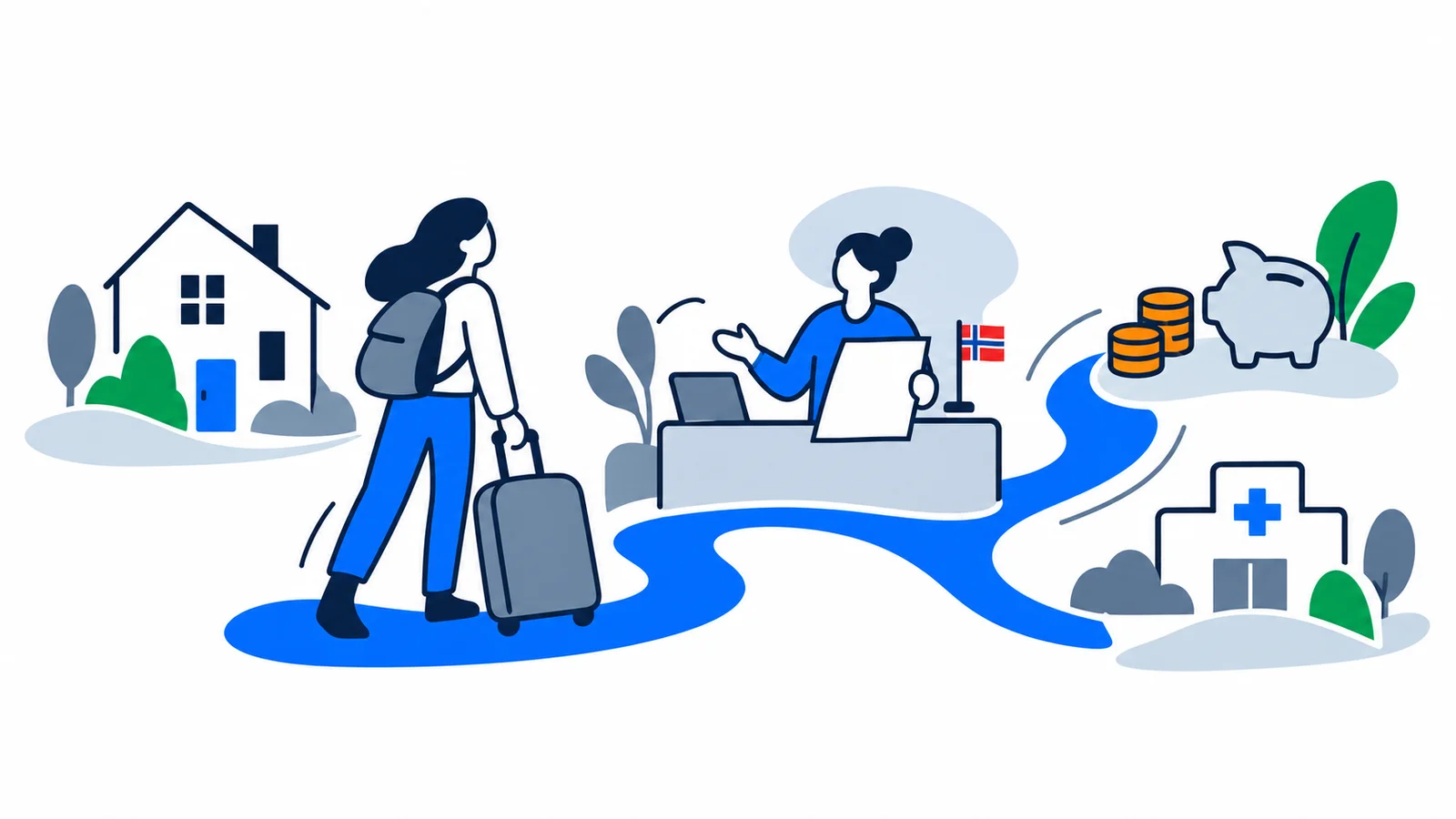


When you move to Norway, you should, in the right order, register with the police or UDI, get an ID number, report your move to the National Population Register, open a bank account with BankID, and order a tax deduction card.
Most newcomers sort out the same things in the same order, whether they come for work, family, or studies:
- Register your stay with the police or UDI.
- Get a D number or national identity number (fødselsnummer).
- Report your move to the National Population Register.
- Open a bank account and get BankID.
- Order a tax deduction card.
- Find a regular GP (fastlege).
- Sort out a phone plan, internet, and a kindergarten or school place.
Register with the police or UDI
The first thing you need to do is register your stay. The rules differ for EU/EEA citizens and for others.
If you are a citizen of an EU/EEA country (the European Economic Area) and plan to live in Norway for more than three months, you must register with the police no later than three months after you arrived in the country. You book an appointment in advance, show up in person with your passport and documentation of a job, a place of study, or your own funds, and receive a registration certificate. If you wait too long to register, you risk a fine from the police, even though your right of residence itself is lawful from day one. Read more about the registration certificate for EU/EEA citizens, including a full overview of the documents you need.
If you come from a country outside the EU/EEA, you usually need to apply for a residence permit with UDI (the Norwegian Directorate of Immigration) before you travel, or right after you arrive. Once your application is approved, you must meet with the police for an ID check and receive a residence card. If you have children with you, you usually apply for a residence permit for each child separately. You book an appointment with the police through UDI's digital self-service portal, whether you are registering as an EU/EEA citizen or submitting documents for a residence case.
SamfunnPrep has made a free checklist for your first week in Norway that shows which agencies you need to visit and in what order.
Get a D number or national identity number
Everyone who will be in contact with Norwegian authorities needs a personal ID number.
If you are going to live in Norway for more than six months and have a lawful stay, you will receive a national identity number (fødselsnummer). If you are going to live there for less than six months, or you are still waiting for a decision on your application, you will instead receive a temporary D number. Some employers can also apply for a D number on your behalf before you have had a chance to show up in person. Read more about the difference between a D number and a national identity number at SamfunnPrep.
This number is the key to almost everything that follows: a bank account, a tax deduction card, a regular GP, and BankID.
Report your move to the National Population Register
Once you have received an ID number, you must report your address to the National Population Register (folkeregisteret) with Skatteetaten (the Norwegian Tax Administration). If you are moving to Norway to live there for more than six months, you usually do this by showing up in person at a tax office, where you present your passport and residence documents.
If you move again later within Norway, you can report the change of address digitally. A deadline then applies: at the earliest 31 days before the move and at the latest 8 days after. The address must be a real place where you live, not just a post box. Having the correct address in the National Population Register is important, because it determines which municipality provides you with services such as a regular GP, a school place, and a kindergarten place.
Open a bank account and get BankID
With an ID number and a registered address, you can open a bank account. Most banks require you to show up in person with your passport or another approved ID document, since you do not yet have BankID.
Once the account has been set up, the bank can help you get BankID, the most common login solution for public services in Norway. Without BankID, it becomes difficult to log in to Skatteetaten, NAV (the Labour and Welfare Administration), or Helsenorge, and you also cannot sign agreements digitally. See the full process for opening a bank account in Norway step by step, including which banks accept newcomers fastest.
Order a tax deduction card from Skatteetaten
If you are going to work in Norway, you must have a valid tax deduction card. Without it, your employer will deduct 50 percent tax from your salary until the card is in place. If you earn 100,000 kroner or less a year, you do not need to pay tax, and you will then automatically receive an exemption card (frikort).
You order a tax deduction card digitally from Skatteetaten as soon as you have received your ID number and BankID. If you do not have BankID yet, you can order your first card by showing up at a tax office. Later, once you have been working for a while, you will also need to submit a tax return (skattemelding) every year. See how the tax return works for newcomers.
Find a regular GP and other health services
Everyone who is registered as resident in a Norwegian municipality has the right to a regular GP (fastlege). Your regular GP is your fixed doctor for most healthcare that does not require emergency treatment.
You find and change your regular GP digitally on Helsenorge, and you can change your regular GP up to twice per calendar year. If there is no available spot with the doctors you want, you can put yourself on a waiting list and get a spot when one becomes available. Until you have a regular GP, you can use the emergency room (legevakten) if you have an urgent need.
Phone, internet, and kindergarten or school
Finally, most people need a Norwegian mobile subscription to use their banking app, BankID, and other services. Most telecom companies require an ID number for a fixed subscription, but several offer prepaid SIM cards without one, which is useful during the very first days. Fixed broadband often takes one to two weeks to install, so many people get by on mobile data at the start.
If you have children, you should apply for a place in kindergarten (barnehage) or enroll them at the local school as early as possible. In most municipalities, the application deadline for the main kindergarten intake is March 1, but you can apply for an available place all year round. The municipality where you are registered as resident determines which kindergarten and school apply, and children have the right to a school place regardless of their parents' residence status.
Many of the topics in this checklist – rights, duties, and Norwegian social systems – are also part of the curriculum for the Norwegian citizenship test (samfunnskunnskapsprøven). Practice for free with SamfunnPrep while you wait to hear back from the police or Skatteetaten.