Opening a bank account in Norway usually needs a valid passport and a Norwegian ID number (a d-number or a national identity number). The bank must ask questions under the anti-money-laundering rules. If you live legally in Norway, you have a right to basic banking services.
A bank account is often the first thing you need when you are new in Norway. Your salary, rent, bills and most other things go through an account. But this first step can be hard. This guide explains why, which papers you need, which questions you will get, and what rights you have.
Why is it so hard to open a bank account in Norway?
Many newcomers are surprised. Your papers are in order, but the bank still says no or "wait". It feels unfair, but it is usually not personal. The bank follows strict rules it has to follow.
Much of the problem is a chain effect, a bit like the chicken and the egg:
- You often need a Norwegian ID number to get an account.
- You often need a job or a fixed address to get the ID number quickly.
- You need an account and BankID to live digitally in Norway, to pay bills, log in to public services and sign papers.
Everything is linked, and it can take time before the pieces fall into place. How long it takes varies from bank to bank and from person to person, so it is wise to expect a few days. The good news is that most people get there. The most important advice is simple: start early, and have all your papers ready. The more you bring the first time, the fewer rounds you will have.
Which ID must the bank accept?
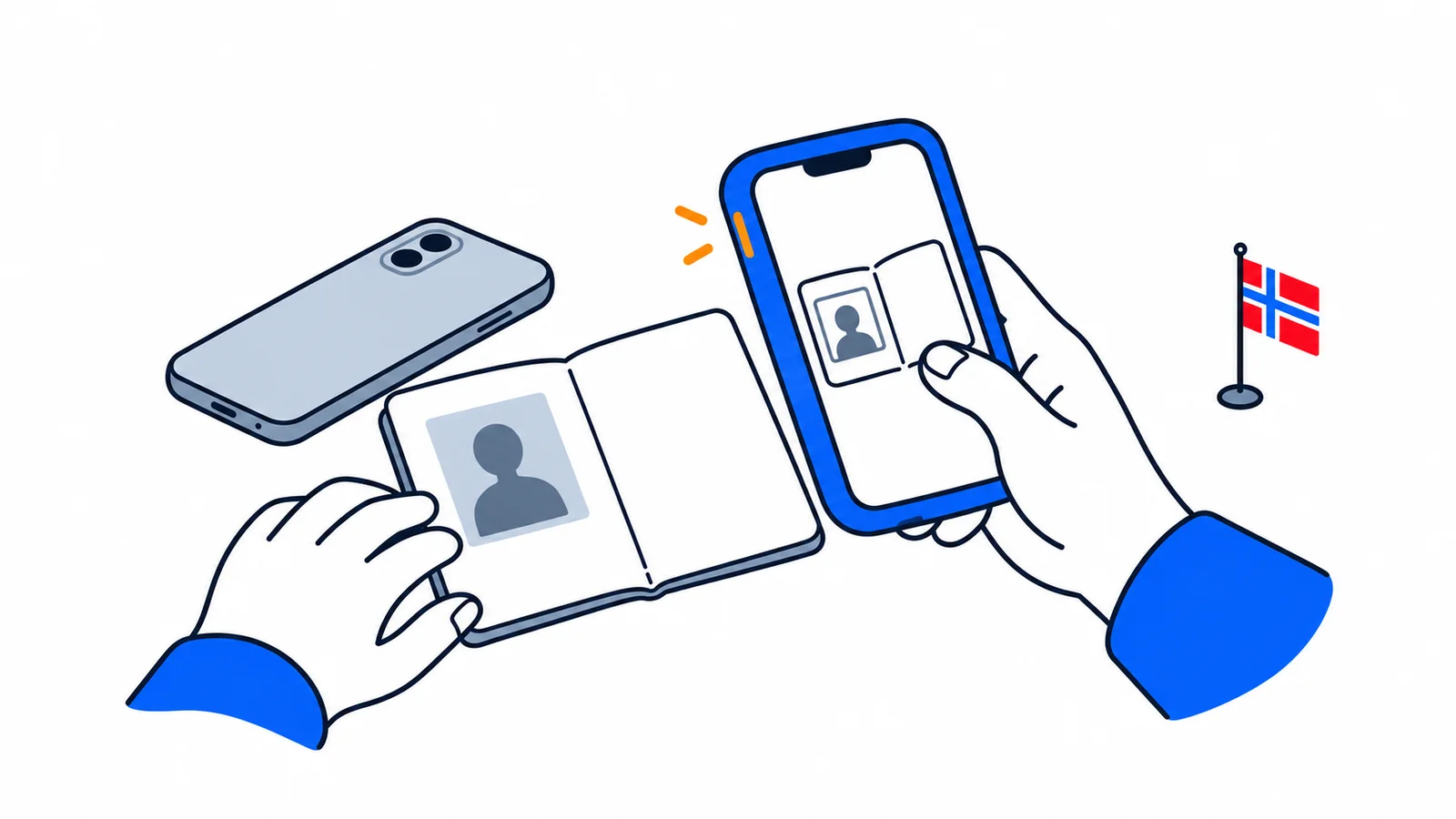
The bank must be sure who you are. Finanstilsynet (the Financial Supervisory Authority of Norway) says the bank must confirm your identity with valid ID under the anti-money-laundering rules. That means your ID must show your name, photo and date of birth.
These documents are usually accepted as valid ID:
- A valid passport (Norwegian or foreign)
- A foreigner's passport or a travel document for refugees
- A national ID card from Norway or an EEA country
Note: the bank chooses which ID it requires based on a risk assessment. This means different banks can ask for slightly different things, and there is no single fixed list that fits everyone. A valid passport is almost always safe to bring, and it is the most important document for most newcomers.
You must also be able to give a residential address in Norway. If you do not have a permanent home yet, ask the bank what they accept, for example a temporary address or a confirmation from your employer.
A bank account with a d-number or national identity number
Most banks ask for a Norwegian ID number to open an account. There are two types, and it is easy to mix them up:
- A national identity number (fødselsnummer) is for you if you are registered as a resident in Norway. That usually happens when you will live here for more than six months.
- A d-number is a temporary number for you if you do not meet the requirements for a national identity number but still need contact with Norwegian authorities, for example to work or pay tax.
You can often open an account with a d-number, so you do not have to wait for a national identity number to get started. Skatteetaten (the Norwegian Tax Administration) assigns both numbers. To understand the difference better, read about the difference between a national identity number and a d-number.
If you come from a country outside the EU/EEA, you usually also have to show a residence permit. Think about the order: you often get a d-number together with a tax card or a job, and with a d-number and passport in hand you can go to the bank. A good place to prepare for all the practical steps is the guide on your first week in Norway.
What is the customer check, and which questions will come?
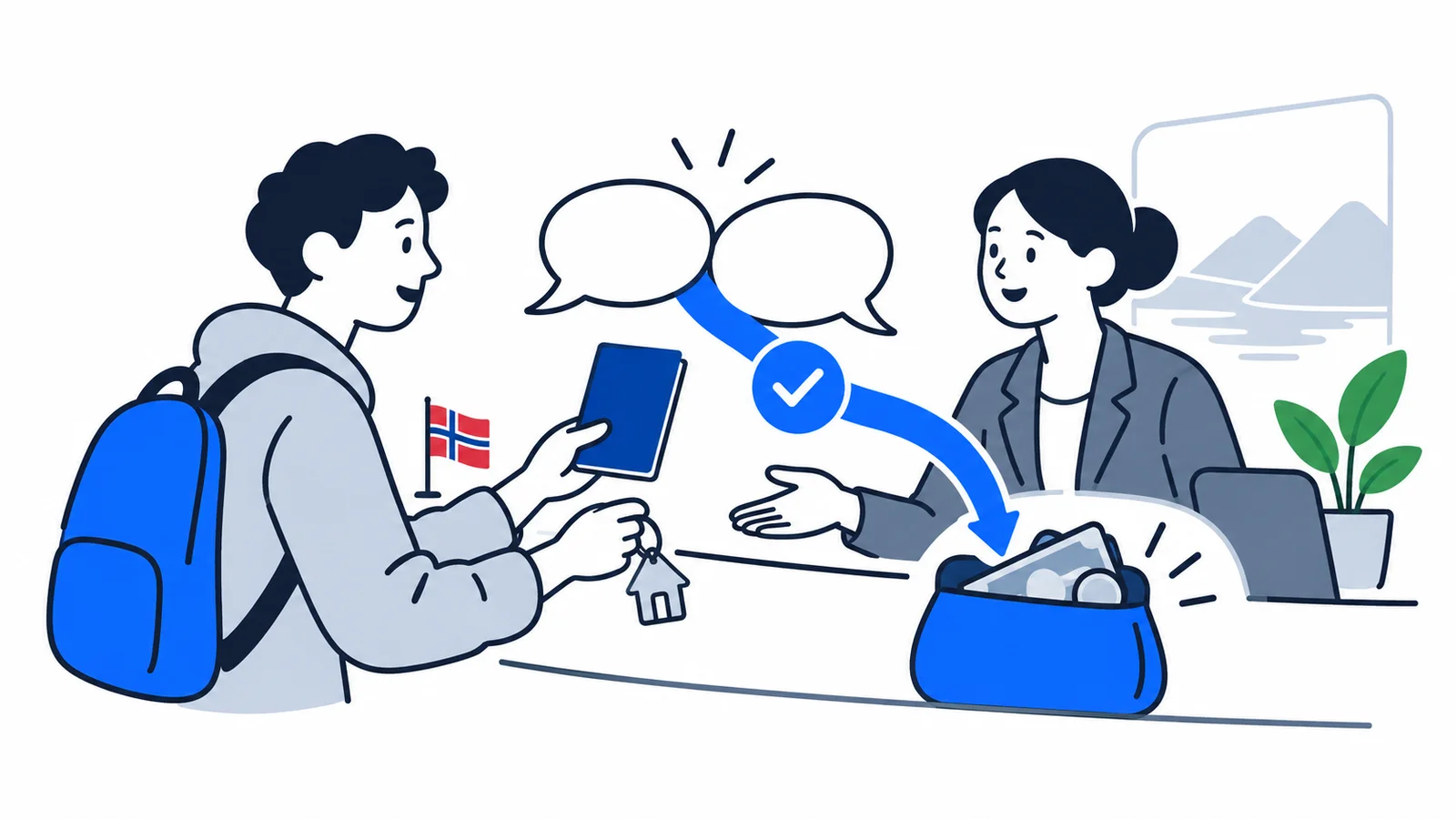
The customer check (kundekontroll) means the bank must understand who you are and why you want to become a customer. This is required by law to stop money laundering, that is, when criminals try to hide where money really comes from. The rules apply to all banks, and all new customers get these questions, not only foreigners.
Be ready for questions like these:
- Why do you need an account? For example for salary, rent or saving.
- How will you use the account? How often, and roughly how large the amounts will be.
- Where does the money come from? For example a job, a student loan, a pension or family.
Answer calmly and honestly, and bring documents that support your answers, such as an employment contract or a job offer. These are completely normal questions, and they do not mean the bank suspects you of anything. If the bank cannot complete the customer check, it may have to say no by law. Then the solution is usually simple: get what is missing, and try again.
Your right to basic banking services
This is perhaps the most important thing to know: you have a legal right to an account. Under the Financial Contracts Act (finansavtaleloven), a bank cannot refuse you ordinary banking services on ordinary terms without objective grounds (saklig grunn). The bar for saying no is high.
According to Finans Norge (Finance Norway), basic banking services are in principle for everyone living in Norway, regardless of citizenship. This means you have a right to:
- a bank account for deposits and withdrawals
- a payment card without a photo (a debit card)
- access to online banking
The right applies if you live legally in Norway or another EEA country, and if you give the bank what it needs for the customer check. So a bank cannot turn you down just because you are new in the country or a foreigner. If you get a no, you have some options:
- Ask for a written refusal with a reason.
- Ask exactly what is missing, and provide it.
- Try another bank, most banks offer these services, but their routines can differ.
A bank account, BankID and a safe digital life
Once the account is in place, BankID often follows. BankID is an electronic ID you use to log in to public services, sign documents and pay safely online. It is the key to digital Norway, and without it many things become difficult.
Be careful from day one: scammers may try to trick BankID codes out of you. Never give codes or passwords to anyone, not even to someone who calls and says they are from "the bank", "the police" or a public agency. A real bank will never ask you to enter codes to "stop fraud". Read how to protect yourself from BankID fraud and fake contact attempts, and see how to log in safely with BankID, ID-porten and MinID.
In short
- Bring a valid passport and a Norwegian ID number (a d-number or national identity number), and a residential address.
- Be ready for the customer check: why you want an account, how you will use it, and where the money comes from.
- Remember that you have a right to basic banking services if you live legally in Norway.
It can take a little time, but most people get there. Start early, have your papers ready, be honest in the conversation, and ask the bank what is missing if you get a no.