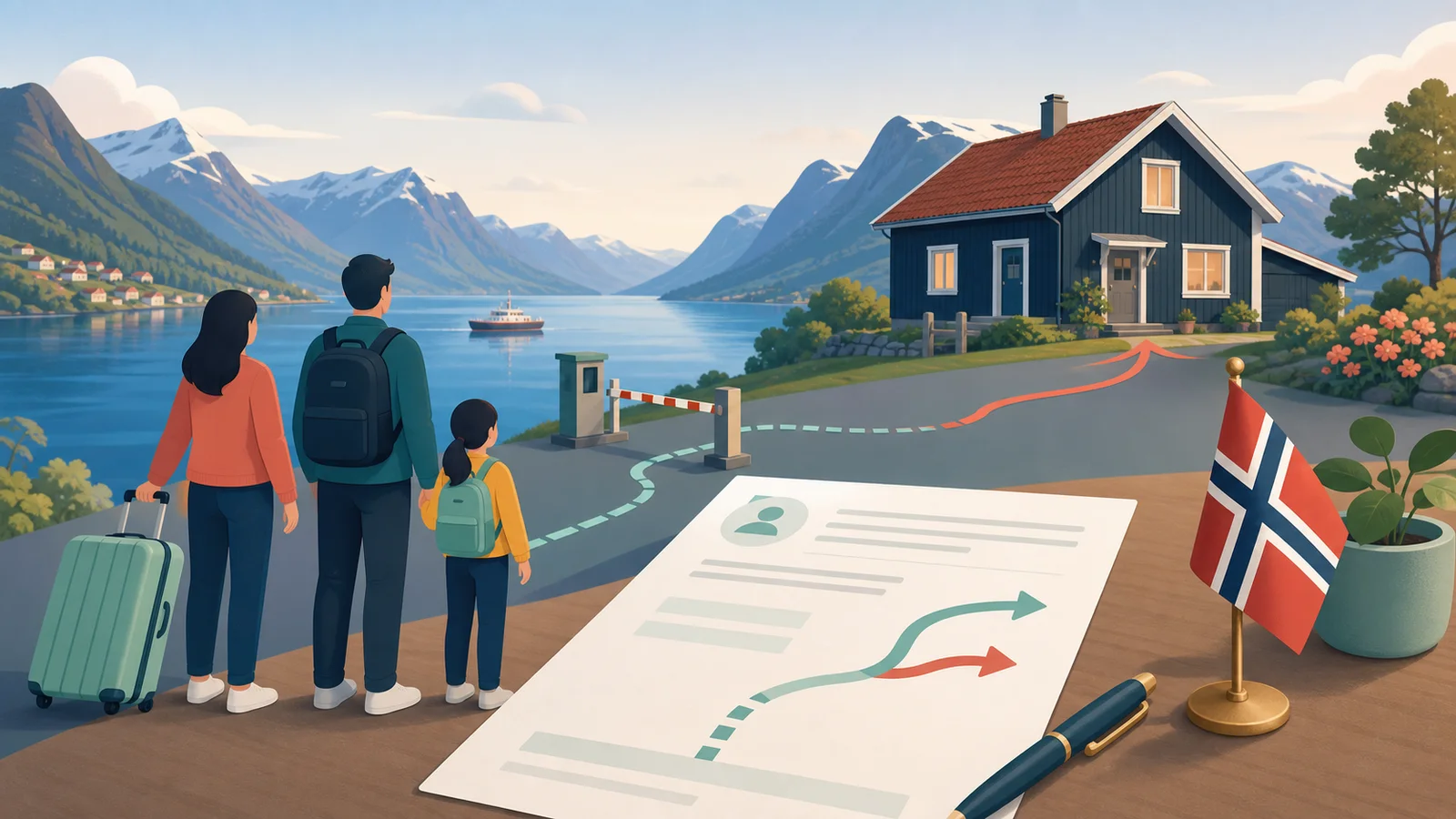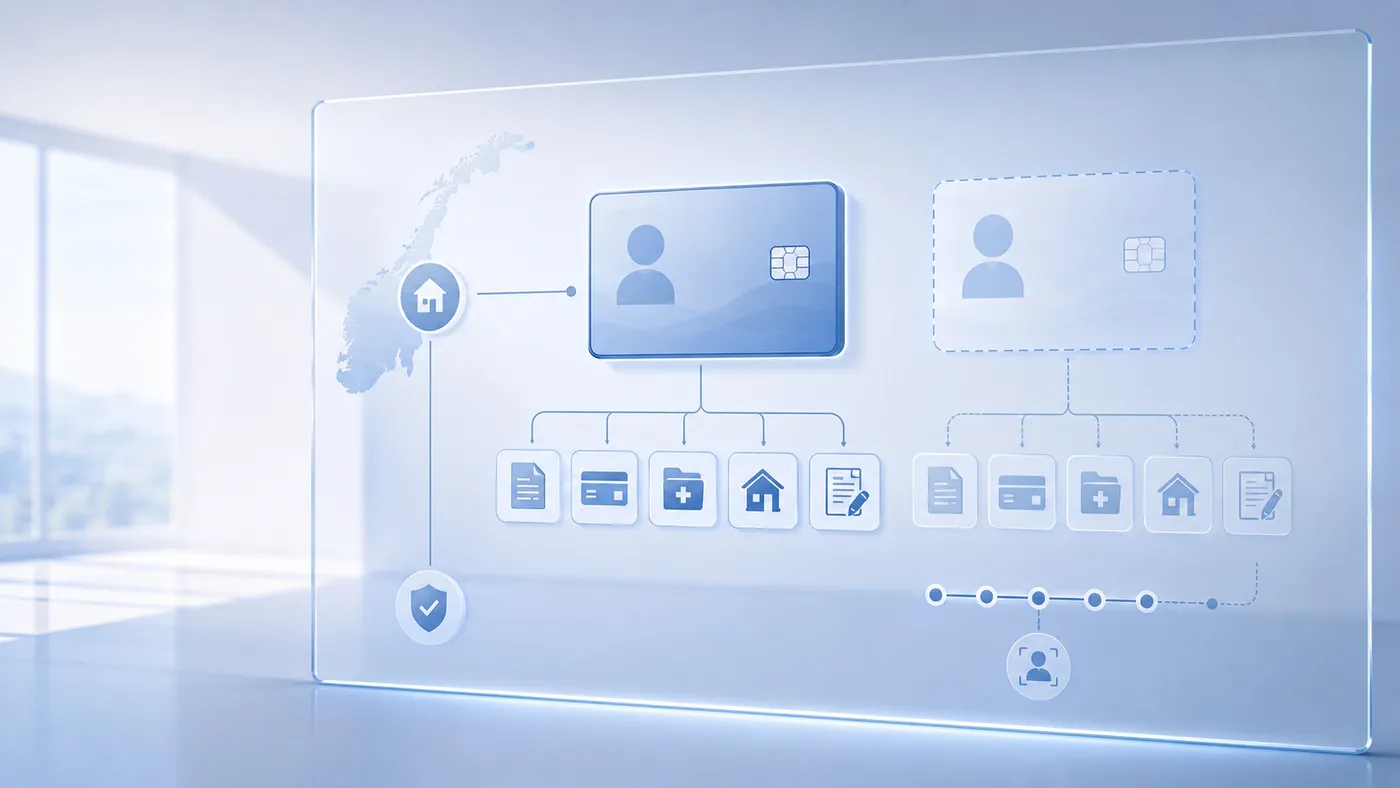

The fødselsnummer (Norwegian national ID number) is the permanent personal identification number you receive when you are registered as a resident in Norway. Before that, many immigrants receive a d-nummer — a temporary identity number that covers you during your first months in the country. The difference sounds technical, but it governs everything from tax and salary to BankID, your assigned GP, and the health card.
The practical consequences are felt quickly. A d-nummer does not give access to ordinary BankID, and several banks require a permanent personal number for a full account agreement. The transition between the numbers follows fixed rules at Skatteetaten (the Norwegian Tax Administration), but waiting times and typical mistakes can delay the process by several weeks. With the right documentation and the right sequence of steps, you avoid most of the pitfalls that catch out new immigrants in their first year.
What is a d-nummer and a temporary identity number?
A d-nummer is a temporary 11-digit identity number assigned to people staying in Norway for shorter periods. You receive a d-nummer if you are going to work, pay tax, or receive services here, but will not be registered as a permanent resident. The number starts with a digit between 4 and 7, while a fødselsnummer starts with 0 to 3.
Typical groups that receive a d-nummer are seasonal workers, foreign students on short programmes, asylum seekers before a decision, and people who work in Norway from abroad. The number is assigned by Skatteetaten (the Norwegian Tax Administration) on application, and you must show a valid passport and documentation of work or residence. Processing normally takes 1–2 weeks. You can check the status and view the number itself via altinn.no or directly with Skatteetaten.
Although a d-nummer functions as an identity number in many systems, it has clear limitations. You cannot always use it for BankID, and several banks require a permanent personal number for an ordinary current account with a card. Health services through an assigned GP are also not available with only a d-nummer, and you fall outside the health card system.
The d-nummer is linked to temporary status, not to permanent residence in the National Registry. Many people believe the number is permanent because it consists of 11 digits, just like the fødselsnummer. This is a common misunderstanding that creates problems during the transition to longer residence, especially if your employer or bank does not have the correct information.
Practical tip: Note down your d-nummer along with the date it was assigned. The transition to a personal number becomes easier when your stay is extended.
Fødselsnummer: the permanent personal number for life
The fødselsnummer is the 11-digit personal number assigned to people registered as residents in Norway. The number consists of six digits from your date of birth, followed by a personal number of five digits. The first three digits of the personal number indicate gender and year of birth, while the last two are check digits.
You receive a fødselsnummer when you move to Norway to stay for more than six months with legal residence. The application is made through Skatteetaten (the Norwegian Tax Administration), and you must appear in person with a passport and documentation of your residence permit or EEA registration. EEA citizens use the registration certificate from the police instead of a residence permit from UDI. If you have a permanent residence permit, the process is usually faster — read more about the requirements in our guide on permanent residence permit.
The fødselsnummer is the key to the entire Norwegian system. With it you gain access to BankID, MinID, the health card, your assigned GP, NAV benefits, the tax deduction card, salary payments, and the National Registry. Banks process applications more quickly when you have the permanent number, and employers can report wages correctly from day one.
Unlike the d-nummer, your fødselsnummer is for life. Even if you move out of Norway later, you keep the number. It will reappear in all systems if you move back. The number cannot be changed, except in special cases such as identity theft or gender change.
Practical tip: Memorise your fødselsnummer. You will be asked for it daily at the doctor, NAV (welfare office), the bank, and at work.
How to switch from a d-nummer to a fødselsnummer at Skatteetaten
The transition from d-nummer to fødselsnummer happens at Skatteetaten (the Norwegian Tax Administration) once you have a residential address in Norway and legal residence of more than six months. You must appear in person at a tax office — it is not yet possible to do this entirely digitally.
Here is the process step by step:
- Book an appointment with Skatteetaten via skatteetaten.no or by phone
- Show up with a valid passport or national ID card from the EEA
- Bring your residence permit from UDI or registration certificate from the police
- Show documentation of your residential address, such as a lease or property transfer deed
- Fill in the form "Notification of move to Norway"
Processing takes 3–5 weeks in normal cases, but can be longer in summer or if documents are missing. You will receive a letter in the post with the new personal number once the application is approved. In the meantime, you can continue to use your d-nummer with your employer and bank. Check your inbox daily, as Skatteetaten may request additional documents along the way.
After the transition you can register fully in the National Registry and order BankID. Many banks require an in-person visit to a branch the first time. Set aside a morning to handle these tasks together. Also read our guide on permanent residence permit to see how registration ties in with your residence status.
Practical tip: Book an appointment with Skatteetaten several weeks before you expect to need the fødselsnummer. Waiting times grow from August to November.
What the fødselsnummer gives you: tax deduction card, BankID, and MinID
The fødselsnummer unlocks a long list of services you need to function in Norway. Daily life in Norway hinges on this single number — from salary and banking to your GP and digital login.
The skattekort (tax deduction card) is one of the most important. With a fødselsnummer you receive an electronic skattekort that your employer retrieves directly from Skatteetaten (the Norwegian Tax Administration). The deduction percentage is correct from your first paycheque, and you avoid paying too much tax while waiting for adjustments.
BankID is a digital identification required to log in to online banking, helsenorge.no, NAV, and altinn.no. You order BankID through your bank once your fødselsnummer is active. The process takes 2–3 days, and you must verify your identity at a bank branch. Without BankID, you have to do most things on paper, which delays everything from tax settlements to GP appointments.
MinID is a simpler login service that covers many public sites. It works with your personal number, a PIN code, and one-time codes by SMS. MinID requires residence registration and can be activated once the permanent number has been assigned. The service is suitable if you do not yet have BankID, but is limited to a lower security level for certain services.
The healthcare system also opens up with a fødselsnummer. You are assigned a GP, receive a health card, and can log in to helsenorge.no for prescriptions and medical appointments. The health card arrives in the post 2–4 weeks after registration.
Practical tip: Order BankID the same day you receive the letter from Skatteetaten. That way everything is up and running before your first paycheque.
Common mistakes and deadlines with personal numbers in Norway
The most common mistakes during the transition between d-nummer and fødselsnummer are easy to fix — once you know about them. These mistakes cost time, money, or delayed benefits from NAV (welfare office) and Skatteetaten (the Norwegian Tax Administration).
The most common mistake is waiting too long to apply for a fødselsnummer. Once you have a residential address and residence permit, you should apply immediately. Skatteetaten's processing time can stretch from 3 to 8 weeks, and the waiting time affects when you receive your first payslip with the correct tax.
Another mistake is forgetting to update your employer. Once the new number is ready, you must give it in writing to HR or the payroll department. If your payslip still shows the d-nummer, the tax settlement becomes messy. The same applies to your bank: ask for your account number to be linked to the fødselsnummer, not the d-nummer.
A third typical mistake: using both numbers in parallel. After the transition, the d-nummer is formally deactivated, but old systems may still display it. Always use the fødselsnummer after assignment, even if an old app or employer asks for the old one.
Deadlines you must meet include: notifying about a change of address within 8 days of arrival, and applying for a tax deduction card before your first paycheque. A change notification to NAV (welfare office) must also be sent if your address or status changes. Skatteetaten (the Norwegian Tax Administration) updates the National Registry more quickly with an early application, according to skatteetaten.no.
Practical tip: Make a checklist with your employer, bank, NAV (welfare office), and GP. Tick off each institution once it has registered the new fødselsnummer.