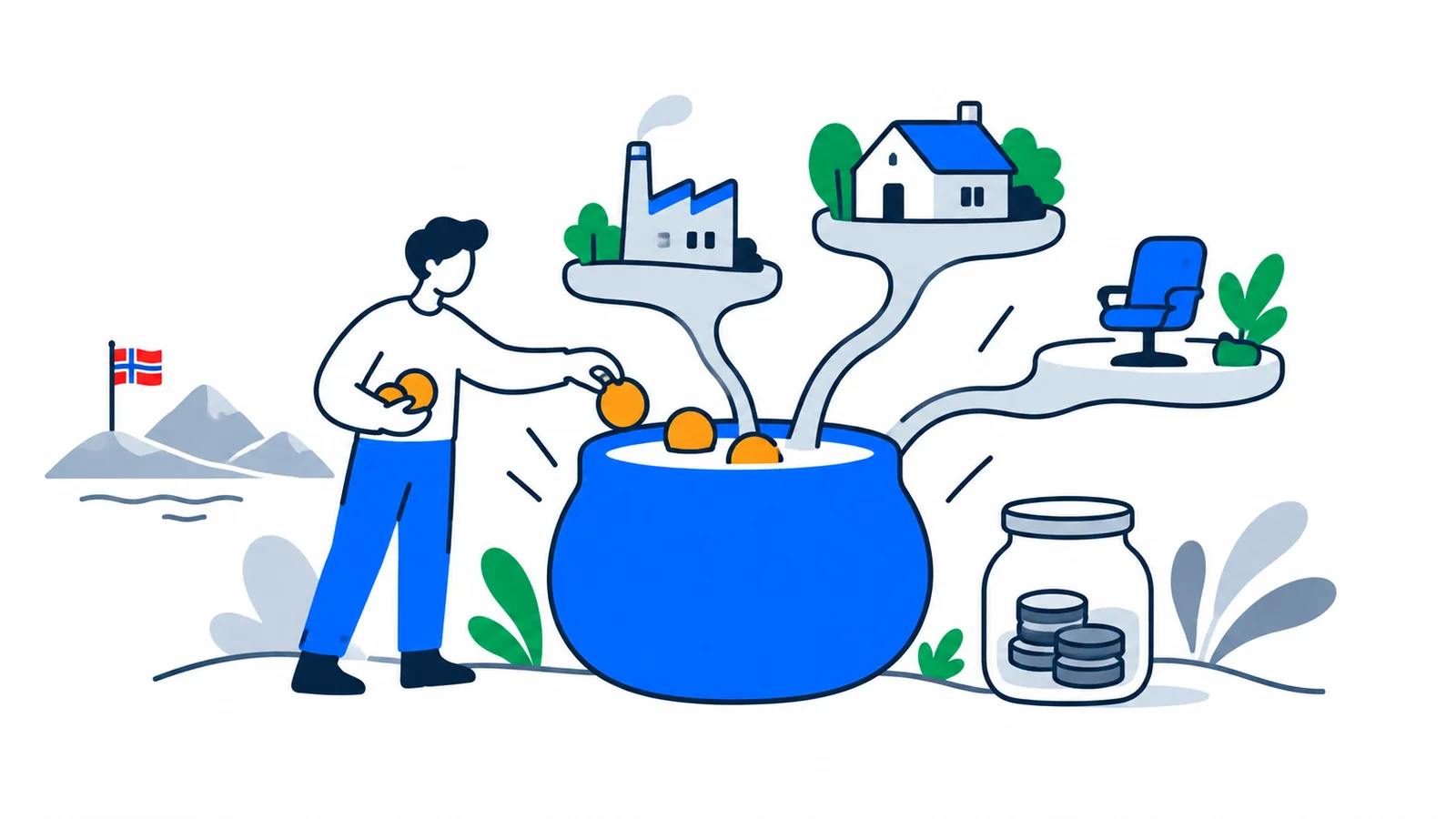


Personal finance in Norway is about knowing what things cost, setting up a budget, separating fixed and variable expenses, keeping a buffer and avoiding expensive credit. Use SIFO’s reference budget as a template, save in BSU if you are under 34, and aim for at least one to two months’ expenses in reserve.
What does it cost to live in Norway?
A good starting point is SIFO’s reference budget, which is produced by the consumer research institute SIFO at OsloMet. It shows what it costs to live at a reasonable consumption level for different households, and you can calculate your own situation using the calculator at oslomet.no.
For 2026, SIFO estimates that an example family of two adults and two children spends around 38 538 kroner per month (approximately 462 456 kroner per year) on everyday consumption. Important: this covers food, clothing, hygiene, transport, leisure and furniture – but not housing and electricity. Rent and electricity come on top and are often the largest expense. Read more about the electricity bill in electricity in Norway and electricity support 2026.
Use the reference budget as a realistic template, not a definitive answer. Your own spending depends on city, family size and habits.
Create a budget: fixed and variable expenses
A budget is simply an overview of money in and money out over the course of a month. Divide expenses into two categories:
- Fixed expenses are the same amount every month: rent, electricity, insurance, mobile and internet, nursery, any loans.
- Variable expenses fluctuate: food, clothing, transport, leisure, gifts.
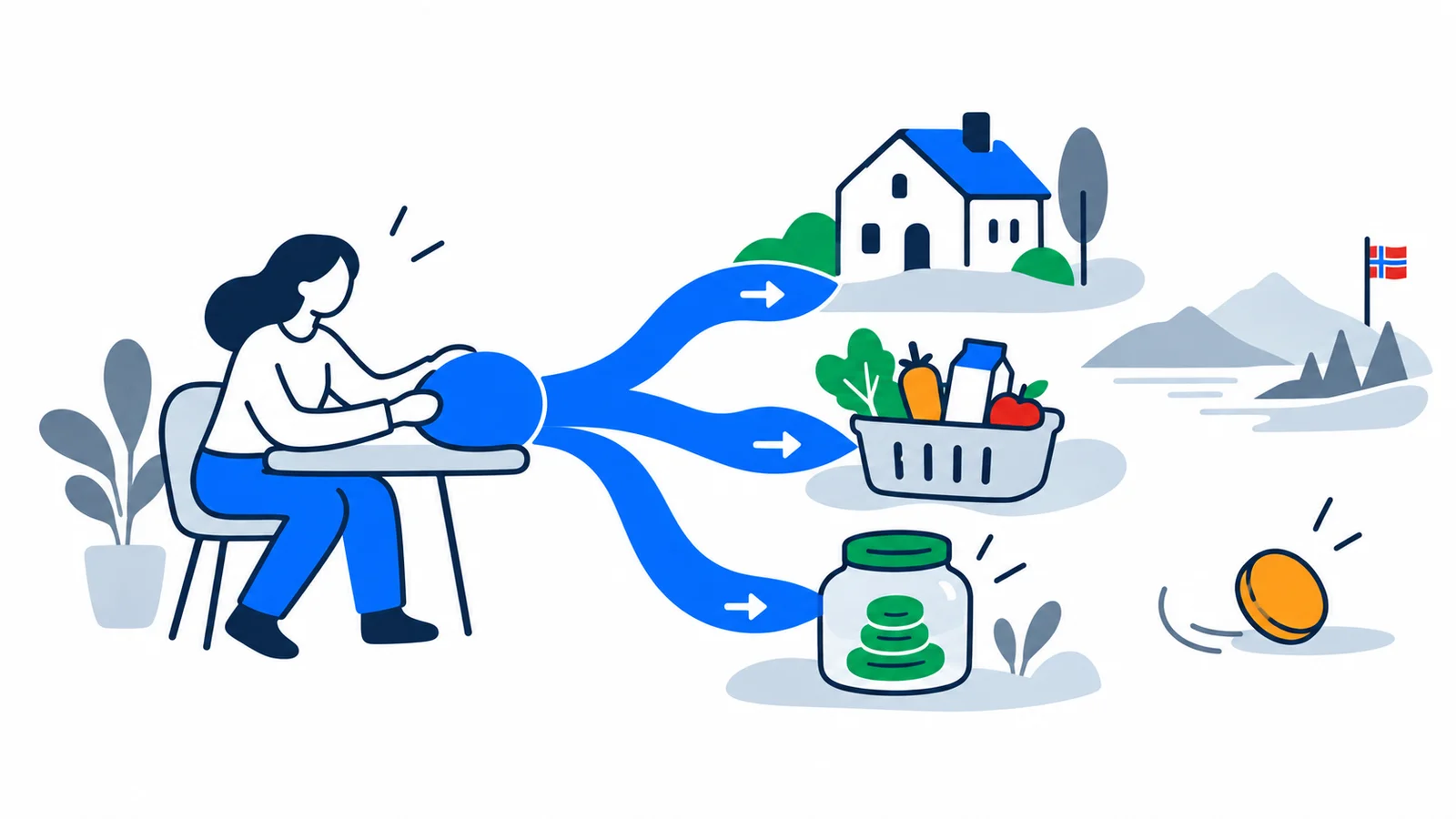
A simple rule is: income − fixed expenses − savings = what you have left for variable expenses. Set aside savings before you spend the rest, not afterwards. Many banks have free budgeting tools in their online banking that sort expenses automatically.
Set up the budget for a full month, and check it against your bank statement after a few weeks. That way you quickly see where the money actually goes.
Current account and savings account
Most people in Norway have at least two accounts:
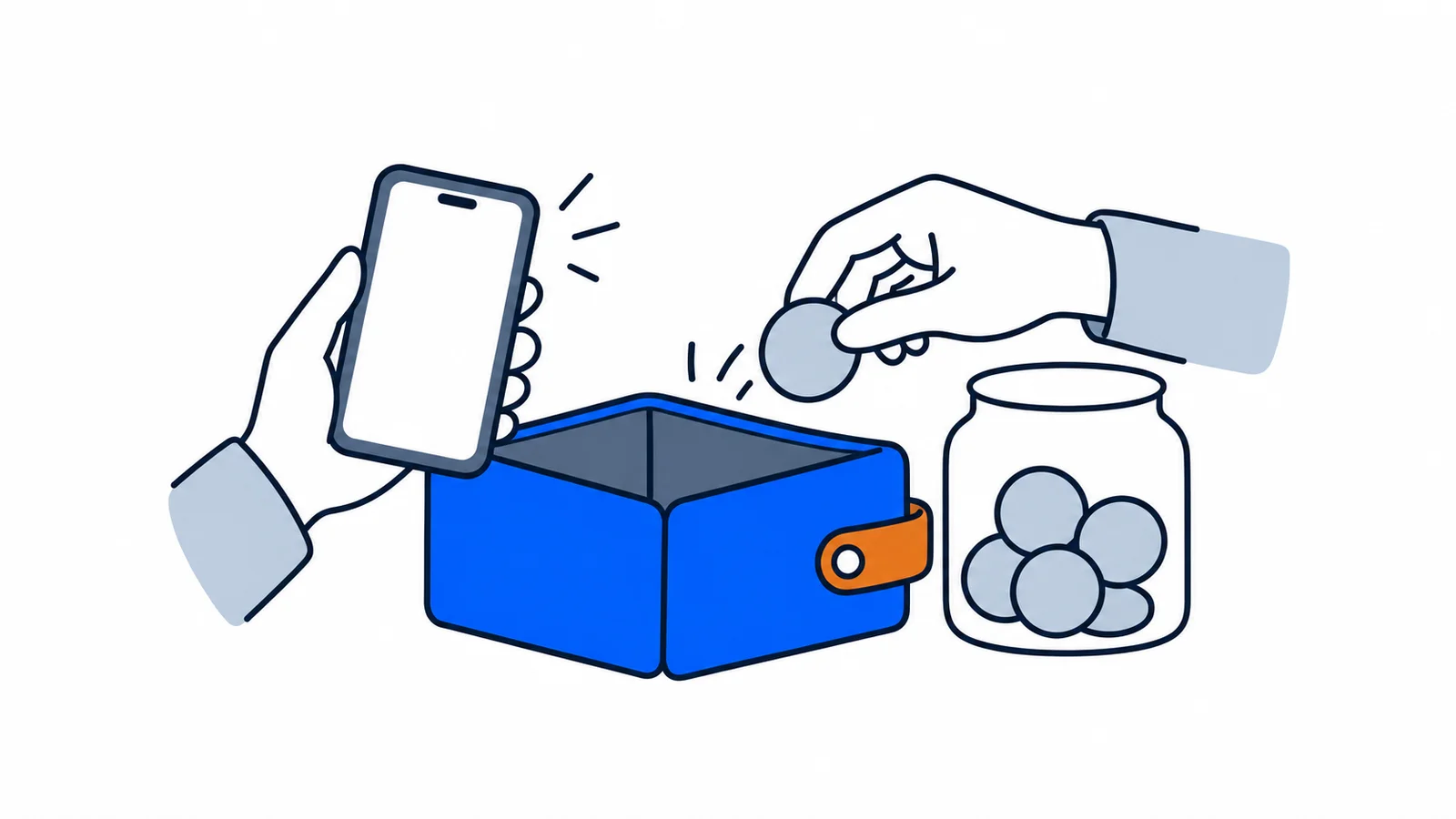
- A current account (brukskonto) is used for everyday transactions: your salary comes in, bills and card payments go out. The interest rate is close to zero, so don’t leave large sums sitting here.
- A savings account (sparekonto) offers a higher interest rate and is the place for your buffer and savings goals. The money is still accessible, but kept a little apart from everyday use.
Once you have a Norwegian fødselsnummer (national ID number) or d-nummer and BankID, you can open both accounts online. See how to open a bank account in Norway. Compare interest rates and fees between banks – the difference can amount to thousands of kroner per year.
BSU: the best savings option if you are under 34
BSU (Boligsparing for ungdom) is a special savings account for young people who plan to buy a home. It is often the most profitable thing you can do with your savings, as you get both a high interest rate and a tax deduction. For 2026, the following rules from Skatteetaten apply:
- You can save up to 27 500 kroner per year.
- You can save up to 300 000 kroner in total.
- You receive a tax deduction of 10 percent of what you save each year – up to 2 750 kroner less in tax per year.
- You can save and receive the deduction up to and including the year you turn 33.
Two important conditions: you only get the tax deduction if you have taxable income and do not already own a home, and the money is tied to the purchase of your own home (or repayment of a mortgage). If you withdraw it for something else, you lose the tax benefit. If you plan to buy a home later, BSU can be a great starting point alongside understanding home buying in Norway.
Avoid expensive credit
The fastest way to ruin a tight budget is expensive credit. Be especially careful with:
- Credit cards – fine as a payment method if you pay the full bill every month, but expensive if you let the debt stand. The effective interest rate is often over 20 percent.
- Consumer loans (forbrukslån) – unsecured loans with high interest rates. Should be avoided for everyday spending.
- “Buy now, pay later” – services like Klarna split the payment, but fees and interest add up quickly if you don’t pay on time.
Always look at the effective interest rate (total cost), not just the monthly amount. If you don’t pay a bill, it can end up with a debt collection agency and become much more expensive. Read what happens in debt collection in Norway, and pay or contact your creditor before the deadline passes.
Build a buffer
A buffer is money you have saved for the unexpected: a dentist visit, a broken phone, a month with lower income. A common piece of advice is to have at least one to two months’ expenses in a savings account before saving for other goals.
Start small. Set up a fixed, automatic transfer to your savings account on the day your salary arrives – even 500 kroner a month builds security over time. To see how most Norwegians think about saving, the guide to Norwegian saving culture offers several concrete tips.
Personal finance in Norway is not difficult once you have the system in place: know what things cost, create a budget, keep a buffer in your savings account, use BSU while you are young, and stay away from expensive credit.