
Saving in funds means your money buys small shares in many companies, and a share savings account (ASK) lets you buy and sell stock funds without paying tax before you withdraw the money. This guide explains how to get started, the difference between fund types, and how tax works per 2026.
Many newcomers leave their savings in an ordinary bank account with low interest. Over many years they lose purchasing power to inflation. Saving some in funds is a way to let your money grow. Remember that all stock savings can also fall in value – that's why funds work best for money you won't need in the next few years.
What is a fund, and what types exist?
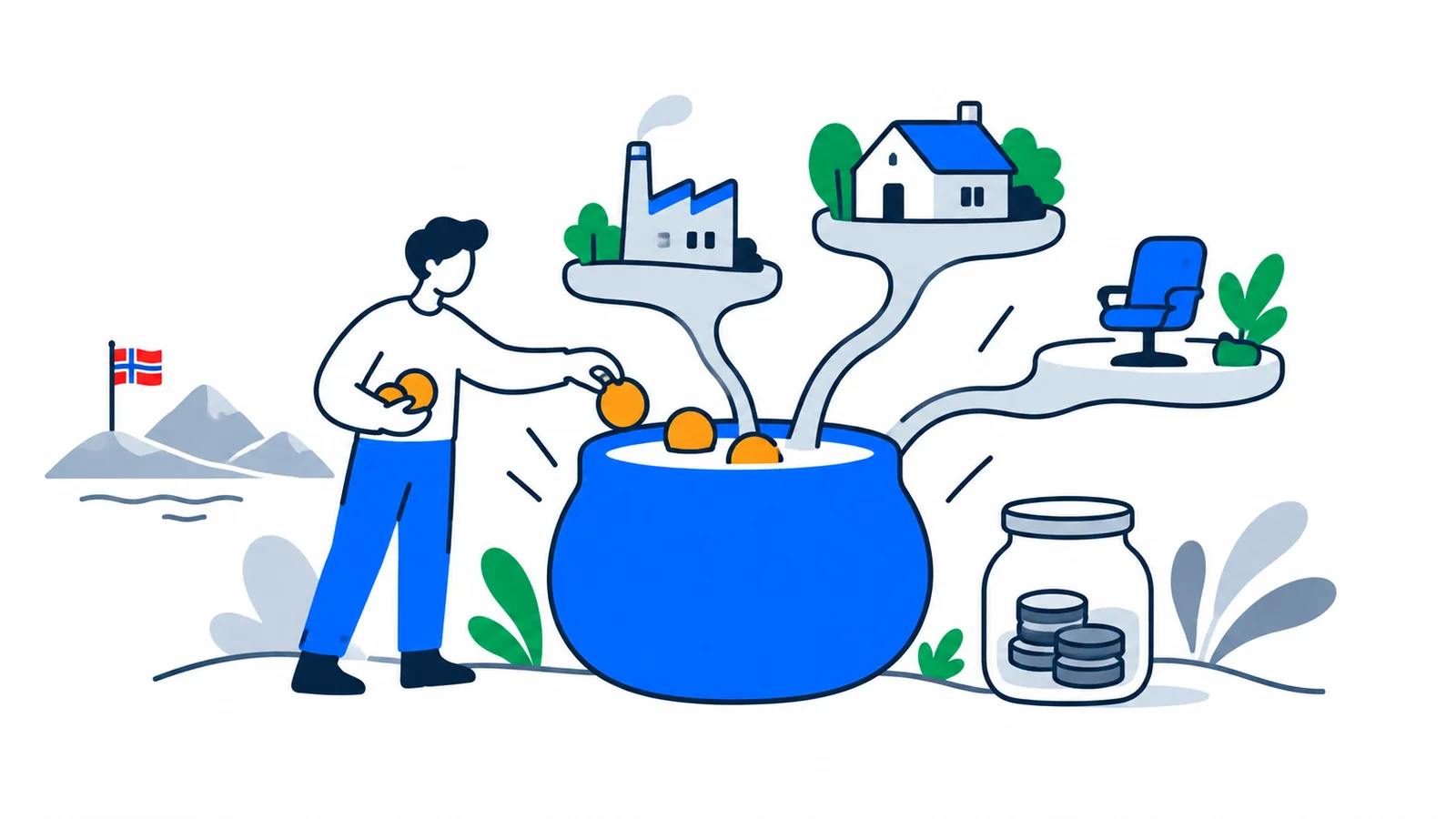
A fund is a shared money pool where many savers put money together, and a manager buys securities for the entire pool. This way you spread your risk across many companies even with a small amount. The two main types are:
- Stock funds invest in shares in companies. They fluctuate the most, but historically give the highest returns over time. Suitable for saving for at least five years.
- Bond funds lend money to governments and companies. They fluctuate little and give lower, but more stable returns. Suitable for shorter-term saving.
An index fund is a stock fund that simply follows the market instead of a manager picking shares. It provides low costs – often under 0.3 percent per year – versus 1–2 percent in an actively managed fund. Over many years, low fees matter a lot for the final result. The Financial Supervisory Authority supervises fund companies, so your money is safely held even if the company goes bankrupt.
What is a share savings account (ASK)?
A share savings account (ASK) is a free account at a bank or fund provider where you can collect listed shares and stock funds. The big advantage is tax: you can buy and sell within the account as much as you want without paying tax on gains until you withdraw money beyond what you have put in. Dividends also accumulate tax-free within the account.
This means you can switch between funds or take gains along the way without a tax bill every year. Tax comes only on the day you withdraw more than you have contributed. Note that ASK is only for stock funds and shares – bond funds do not fit on an ASK. For bond funds and mixed funds, a regular fund account is used instead.
How gains are taxed in 2026
Gains and dividends on shares and stock funds are taxed the same way. Per 2026 the effective tax rate is 37.84 percent. The figure comes from the gain first being multiplied by a factor of 1.72 and then taxed at 22 percent ordinary tax.
You get a small deduction called tax exemption allowance. It is subtracted from the gain before tax is calculated, and lowers your tax. For the income year 2025, the exemption rate is 3.6 percent of what you have saved. If you have saved 100,000 kroner for example, the exemption allowance is 3,600 kroner that year. Unused exemption carries forward to later years. Bond funds are taxed differently: gains there count as ordinary income and are taxed at 22 percent, without the multiplication.
How to get started, step by step
- Get the basics in order. You need a Norwegian birth or d-number, BankID and digital identity, and a Norwegian bank account.
- Set up a budget. Only save money you won't need for several years. See our guide on personal finances in Norway for how to make a budget.
- Open a share savings account with a bank or fund provider. It's free and takes a few minutes with BankID.
- Choose a broad index fund with low costs if you're a beginner, and set up regular monthly saving. This way you buy steadily, both when the market is expensive and cheap.
- Let the money sit. Funds fluctuate in the short term. Historically it pays to save steadily over many years and not sell in panic when the market falls.
Remember that funds are not the same as credit cards and consumer loans – always pay off expensive debt before you save in shares. You report gains and funds in the regular tax return, but the amounts are usually already filled in. At SamfunnPrep we gather practical money and tax guides in our tools so you find the answers quickly.
Common pitfalls for beginners
It's easy to make small mistakes when you start. Here are the most common ones:
- Don't sell when the market falls. Value fluctuates, but historically broad stock funds have risen over time. The one who sells in panic locks in the loss.
- Look at the costs. A fund that charges 2 percent per year eats a lot of your returns over 20 years. Choose broad index funds with low fees.
- Don't borrow money to save in funds. The interest on a consumer loan is almost always higher than expected returns.
- Set up automatic transfers. Monthly automatic saving means you save steadily without thinking about it.
You don't need much money to get started. Many funds let you start with a few hundred kroner per month.
In short
Stock funds spread your risk across many companies, index funds keep costs low, and a share savings account delays tax until you withdraw the money. Effective tax on stock gains is 37.84 percent per 2026, but the tax exemption allowance lowers it slightly. Start small, save regularly and think long-term.
Personal finances and tax are also part of the curriculum for the civic knowledge test – practice for free on SamfunnPrep.