
Want to save money on food in Norway? Shop at discount stores (Rema 1000, Kiwi, Coop Extra), choose store brands (EMV) like First Price and Xtra, make a shopping list and meal plan, and buy frozen and seasonal items. Use apps like Too Good To Go for cheap surplus food. An adult spends around 4,000–4,800 kroner per month on food (SIFO's reference budget, 2025 figures). With simple steps, you can cut thousands of kroner a year.
Food is one of the largest fixed expenses in a Norwegian household. This guide gives you practical tips as of 8 July 2026. All figures are dated so you know where they come from.
Save money on food in Norway: how to cut your food budget
The good news: you can save money on food in Norway without eating worse. A food budget is a plan for how much you want to spend on food each month. When you have a budget, you quickly see where your money goes – and where you can cut back.
The biggest steps are simple: choose the right store, choose the right products, and plan before you shop. The next sections take you through this step by step.
How much does a typical person spend on food?
SIFO is the research institute at OsloMet that creates the reference budget – an estimate of what typical spending costs in Norway. The figures are used by banks and NAV, among others. For food and beverages, the budget (2025 figures) shows roughly this per month:
| Person | Food and beverage per month |
|---|---|
| Adult woman | approx. 4,040 kr |
| Adult man | approx. 4,780 kr |
| Child (5 years old) | approx. 3,440 kr |
| Child (11 years old) | approx. 2,210 kr |
These figures apply to a healthy and varied diet made at home. SIFO updated the budget on 18 May 2026, and prices continued to rise. See your own figure in SIFO's calculator at oslomet.no. If you spend much more than this, there is usually room to save.
A food budget does not need to be complicated. Write down what you spend on food in one month, compare it with the figures above, and set yourself a realistic goal. Then you know when a shopping trip is expensive and when it is within your budget.
Where do you shop for food most cheaply in Norway?
Start with the store. A discount chain (budget supermarket) has lower prices than a regular supermarket with a broad selection. The largest discount chains are Rema 1000, Kiwi and Coop Extra. Here you get most basic items cheaper.
The next step is EMV – store brands. These are the store's own products, such as First Price, Xtra and Prima. They usually cost much less than known brands, even if the item may come from the same factory. Consumer tests have shown that a well-known brand can cost much more – in some tests 30 to over 60 percent more – than a store brand item with nearly the same ingredient list. Check the contents on the back. Often they are the same.
Prices change from week to week. That is why it pays to compare. Online stores like Oda show the price of each item clearly, and there are special apps and websites that compare prices between chains. Spend a few minutes to see where your basic items are cheapest before you shop.
What is Too Good To Go, and how does it save you money?
Too Good To Go is an app that sells surplus food cheaply. Stores, bakeries and restaurants post food that would otherwise be thrown away, and you buy it at a heavily reduced price. In Norway, the app has over 4,200 partners and more than 2 million users. A bag has an average value of around 140 kroner but costs on average only 47 kroner. That saves you nearly 75 percent.
Rescuing food is also good for the environment. Food waste is edible food that gets thrown away. In Norway, we throw away a lot: a typical family can save over 11,000 kroner a year just by throwing away less food, according to matvett.no. Plan your meals, store your food properly, and use the leftovers.
Ten practical tips for saving money on food
Here are practical steps that work right away:
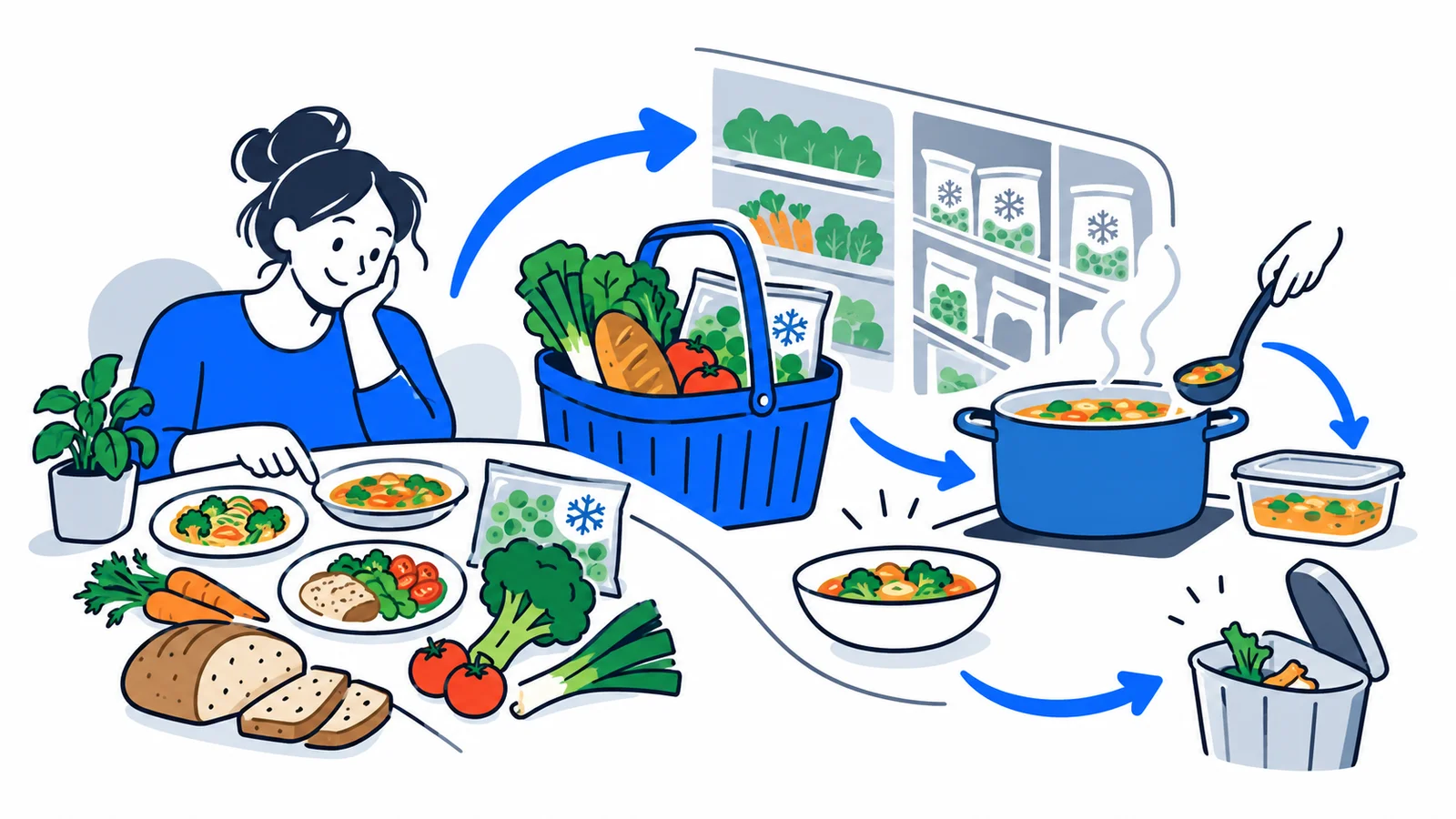
- Make a shopping list and stick to it. Impulse buying is expensive.
- Plan a weekly menu, so you only buy what you need.
- Shop when full. If you are hungry, you buy more than you need.
- Choose store brands (First Price, Xtra, Prima) for basic items.
- Buy frozen. Frozen vegetables and fish are cheaper and last long.
- Buy seasonal produce. Norwegian fruit and vegetables in season are cheapest.
- Check the price per kilo, not just the package price. Large packages are often cheaper per kilo.
- Use Too Good To Go and the stores' own app offers.
- Bring your bottles back. Bottles and cans give you 2–3 kroner each back.
- Use leftovers and freeze what you do not get to eat.
Each step is small, but the sum becomes large over a year.
Why has food become more expensive?
Many notice that food costs more than before. That is true. According to SSB (Statistics Norway), prices for food and beverages rose 5.7 percent from 2024 to 2025. In 2026, the growth has calmed down a bit, but in the first five months, food prices were still around 3.8 percent higher than the same time the year before. That is why a conscious food budget is more important than before. Higher electricity prices also affect stores – read more about electricity and power support.
Where do you get more help with your finances?
If you want neutral advice, Forbrukerrådet (forbrukerradet.no) is a good starting point. They help you with consumer rights and give tips on personal finance. If you need an explanation of a difficult word, you can find simple entries at snl.no (Store norske leksikon).
Food is only one part of your finances. Learn how you get an overview in our guide to personal finance in Norway, see how Norwegians save money, and find out how deposits and waste sorting give you a little money back.
Understanding personal finance and consumption is also part of the curriculum for the Samfunnskunnskapsprøven. At SamfunnPrep, you can practice for free on real exam questions about economics, consumption and rights. Sign up and try SamfunnPrep – then you learn both how to save money and pass the exam.