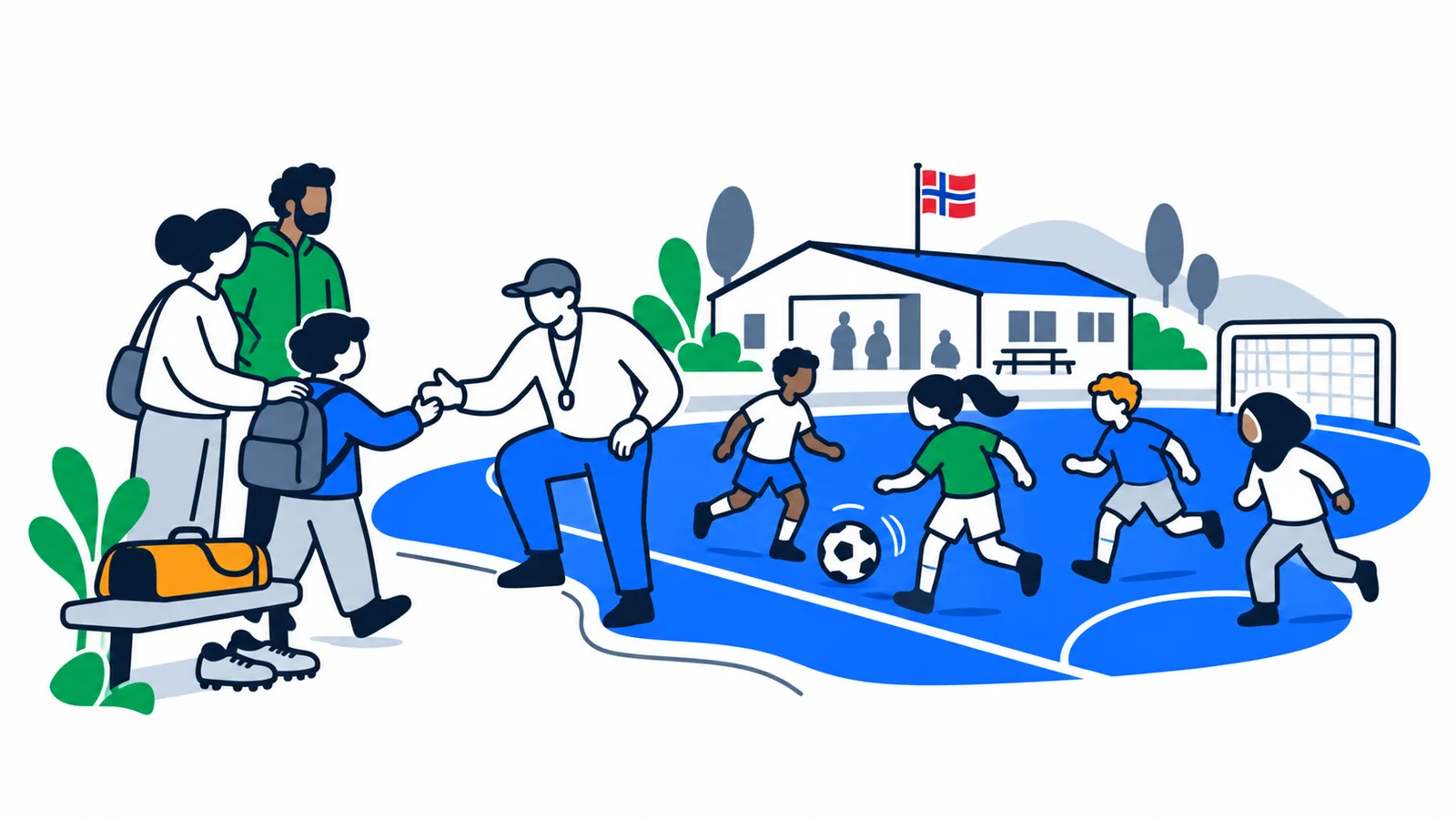

To register your child for sports in Norway, you register them in a local sports club. You pay a membership fee and a training fee, and help out with volunteering. No child should be excluded because the family's finances are tight.
What is a sports club?
A sports club is a local club run by volunteers – usually parents. It is not the school and not a business. Members own the club themselves and decide at the annual meeting. In Norway, the sports club is the most common meeting place where children make friends and feel they belong.
A sports club can offer one sport, for example a football team, or many sports in the same club: football, handball, skiing and gymnastics. All sports clubs are members of Norges idrettsforbund (NIF), which is the umbrella organization for all organized sports in the country.
How to register your child
You register your child directly with the sports club where you live. Here's how to do it:
- Find a local club. Look up the club in your neighborhood, or use «Min idrett» (minidrett.no), the NIF's own membership system, to find sports clubs nearby.
- Create a user account. A child under 15 years old must be registered by a parent. Young people from 15 years old can register themselves.
- Register your child. You fill in name, date of birth, address and contact information in the club's membership register.
- Pay. Membership takes effect only when both registration and payment are complete.
Many clubs also use an app, for example Spond, for training times, messages and payment. You don't need any experience. Most teams accept new children throughout the year, and often there is extra space before a new season starts. Many clubs also let your child try some free training first – a trial session – before you register.
Which sports can your child choose?
Football is the biggest youth sport in Norway, but there are many others. Common choices are handball, skiing and cross-country skiing, gymnastics, swimming, athletics and martial arts. Some sports follow the season: football is played mostly from spring to autumn, while skiing and skating are in winter. Your child can try several sports before deciding. In youth sports, playing and having fun is more important than winning, and the youngest children compete without scoresheets and league tables.
What does it cost? Membership fee and training fee
Sports in Norway have two fees: a membership fee and a training fee.
- Membership fee you pay to the main club. It makes your child a member, with insurance and the right to play matches. According to sports laws, it should be at least 50 kroner per year.
- Training fee you pay to the individual sport, for example the football group. It covers equipment, field rental, referees and entry to league and tournaments.
For most children, sports are affordable. Norges Fotballforbund has shown that a majority of youth teams cost less than 1000 kroner per year to play on. But the price varies a lot between clubs and cities – in big cities it is often higher. Personal equipment, such as football shoes, costs extra. Always ask the club about the total price before you say yes.
No child should be excluded due to finances
If the family's finances are tight, your child should still be able to participate. It's a right. Sports children's rights state that all children have the right to participate in sports regardless of the family's finances. The club can reduce or remove the fee, or make a payment agreement – you just have to ask. Many clubs have their own support schemes, and some can lend equipment for free.
There is also public help. Through Fritidserklæringen the state, municipalities and voluntary organizations have agreed that all children should be able to participate in at least one leisure activity, regardless of their parents' finances. Many municipalities have an activity card or an equipment center. In many places there is also BUA, a free lending service where you can borrow skis, skates, bicycles and other sports and outdoor equipment (bua.no). Ask at the club, at NAV (the Norwegian Labour and Welfare Administration) or in the municipality about what is available where you live.
Volunteering and car pool: the parents' role
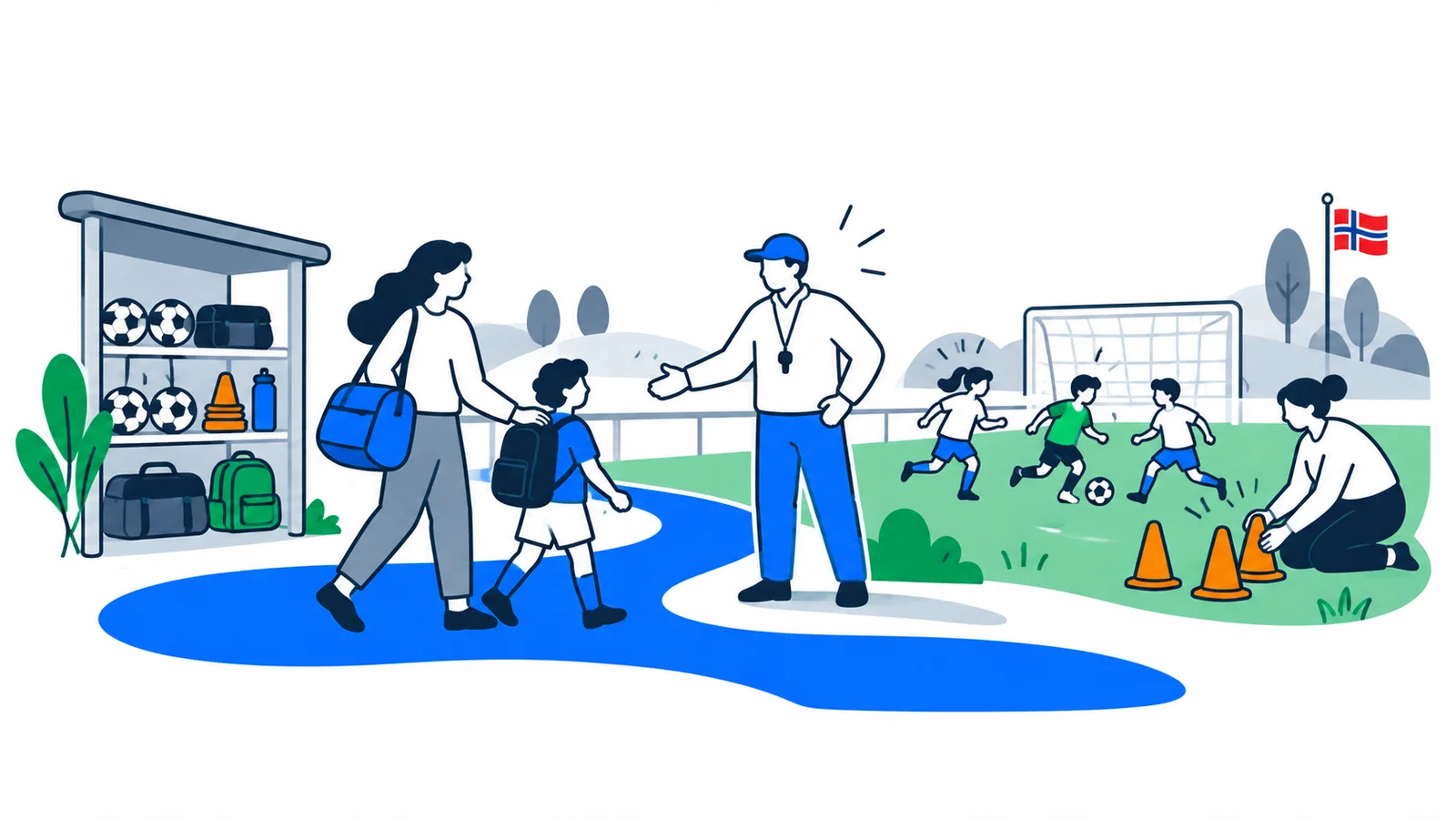
When your child joins a sports club, you as a parent also become part of the team. Two things often surprise newcomers to Norway:
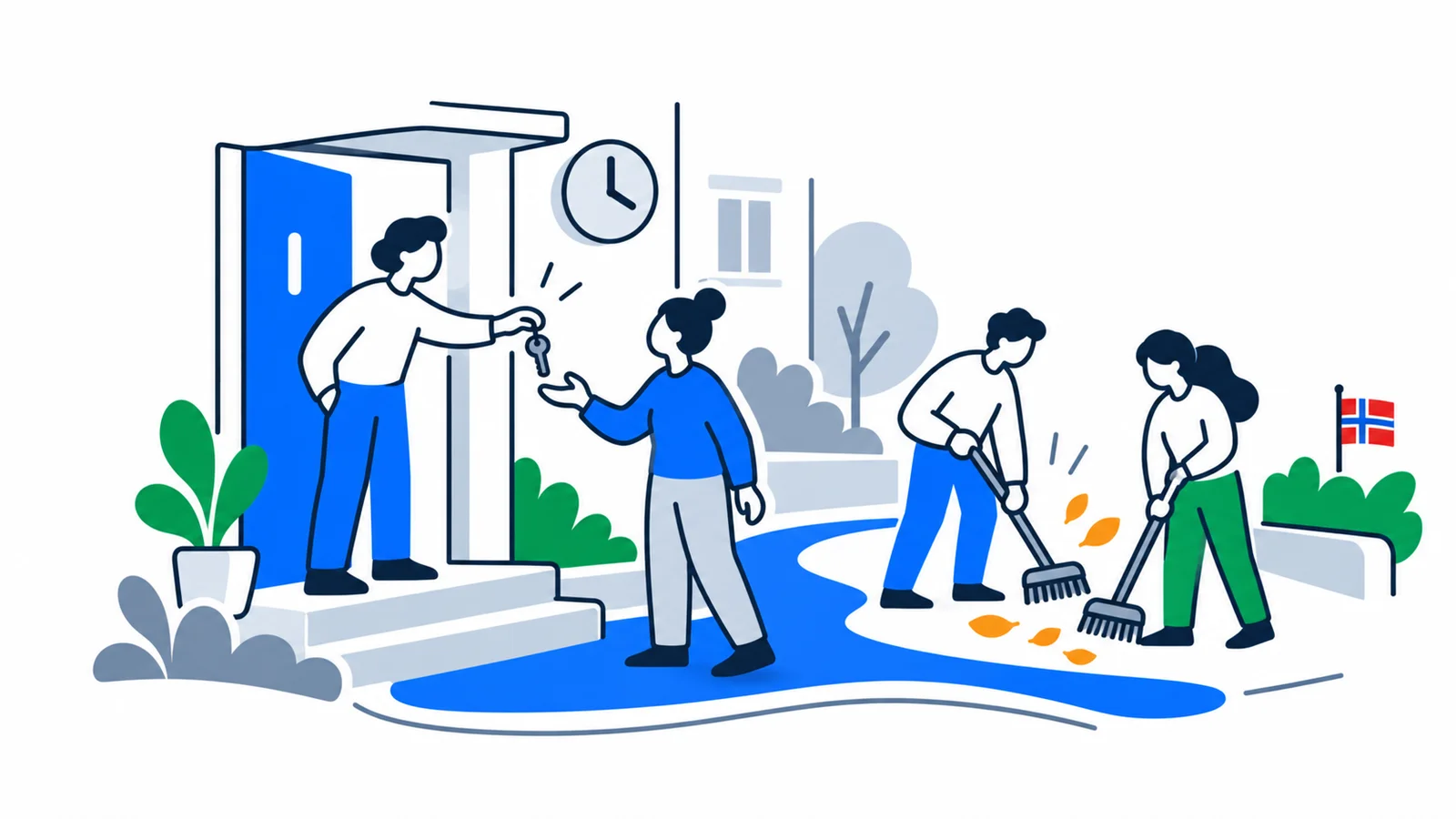
- Volunteering. Parents help for free. They work the stand, bake cakes, wash kit or are parking attendants at tournaments. Volunteering keeps costs down and is an important part of the culture. Read more about volunteering and community service in Norway.
- Car pool. Parents take turns driving children to away matches. Often a list is made so everyone drives about the same amount.
These are expectations, not law. The club cannot force you or demand a "fine" if you don't participate. But taking part in volunteering and driving is a nice way to get to know other parents – and an easy way to make Norwegian friends.
Sports is a way into society
For a child, the sports club is one of the best ways to learn Norwegian, make friends and feel a sense of belonging. Your child trains with others every week, regardless of background. For parents, volunteering and matches provide a network in the local community. Sports is also a big part of youth life in Norway.
On SamfunnPrep we explain how Norwegian society works – from volunteering to rights. Sports, volunteering and community service are also topics on the citizenship exam. Ready to practice? Try SamfunnPrep for free.