
Norwegian values are mostly about trust, equality and the dugnad spirit (collective volunteering). You don't have to change who you are, but understanding a few unwritten rules — like punctuality, personal space and flat hierarchy — makes daily life easier when you're new in Norway. This is a warm guide to the culture, not a rulebook you must follow.
The high-trust society: why Norwegians trust each other
Norway is a high-trust society, and you notice it everywhere. In SSB's living conditions survey for 2025, people gave on average 6.0 out of 10 for trust in people they don't know, and as much as 7.8 for the police. Together with the other Nordic countries, Norway sits right at the top of Europe for trust.
What does that mean in practice? Neighbours lend out tools without a contract, small children walk to school alone, and in the countryside you find unstaffed farm stalls where you weigh the vegetables and put money in a box yourself. People assume you are honest until proven otherwise — if someone finds your wallet, there's a good chance you'll get it back.
Trust goes both ways, and as a newcomer you build it step by step: keep your promises, show up when you've said yes, pay bills on time and don't exploit shared schemes. The same trust shapes how the public sector meets you — you fill in a lot yourself, and the system trusts that the information is correct. To understand how this openness connects to the form of government, you can read how democracy works in Norway.
Equality, flat hierarchy and the Jante Law (janteloven)
Equality is perhaps the most fundamental Norwegian value. People address each other by first name — including the boss, the teacher and the doctor — and the informal 'du' (you) is normal regardless of age or position. The hierarchy is flat: a leader is expected to listen, not to command, and an employee can safely disagree with the boss in a meeting.
The flip side of this equality is often called the Jante Law (janteloven). The term comes from the author Aksel Sandemose and his novel En flyktning krysser sitt spor (A Refugee Crosses His Tracks) from 1933 (source: Store norske leksikon). The ten 'commandments' start with 'You shall not believe you are anything', and were actually meant as satire and criticism of petty social control in a small community. Today Norwegians use the word to describe a mild tendency not to brag or place oneself above others.
For a newcomer, this is most useful to know as a tone: it is perfectly fine to be proud of what you achieve, but many prefer that you stay a little modest about it. The idea of equality also applies between the sexes — read more in gender equality in Norway.
Dugnad and volunteering: contributing to the community
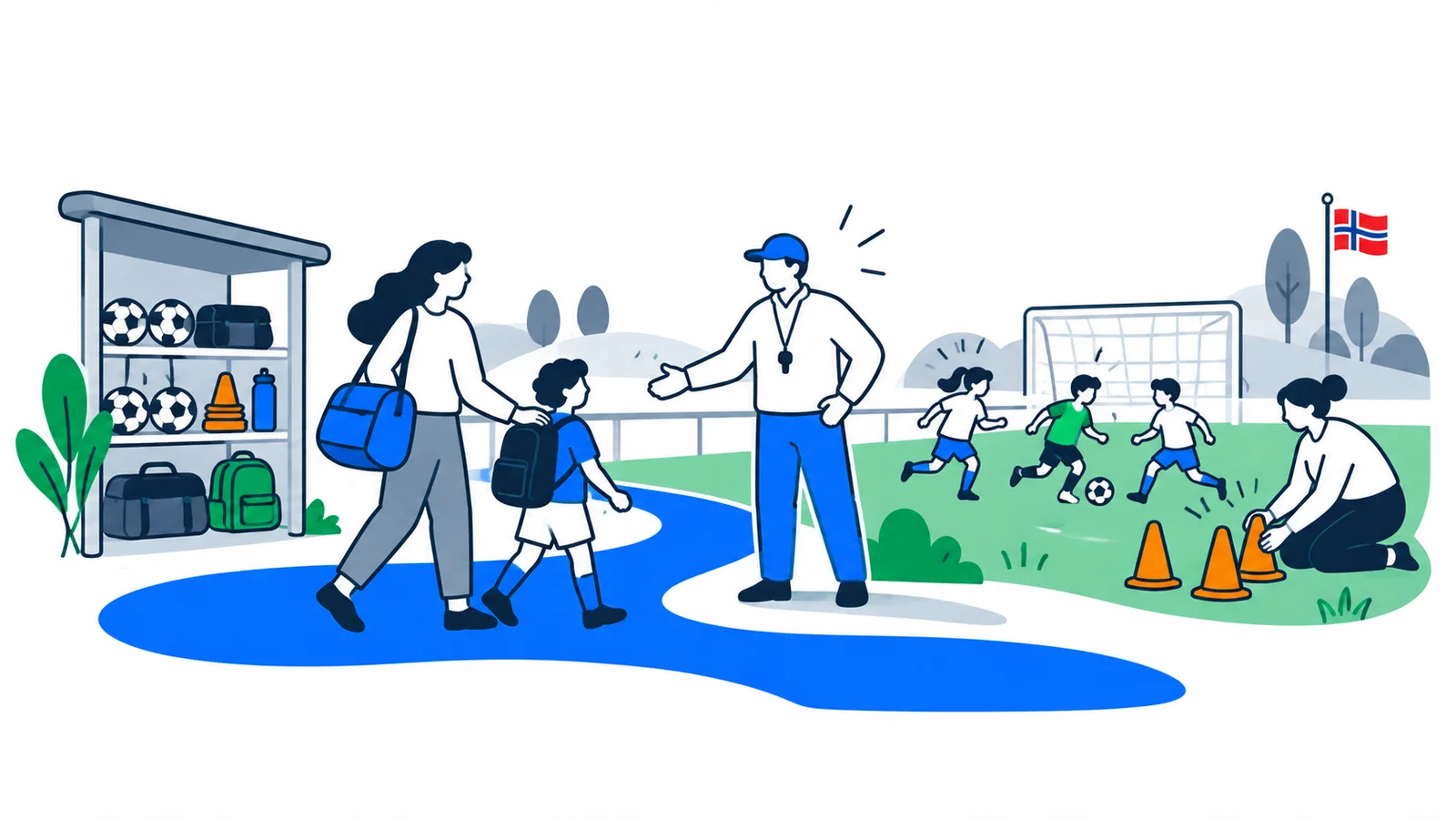
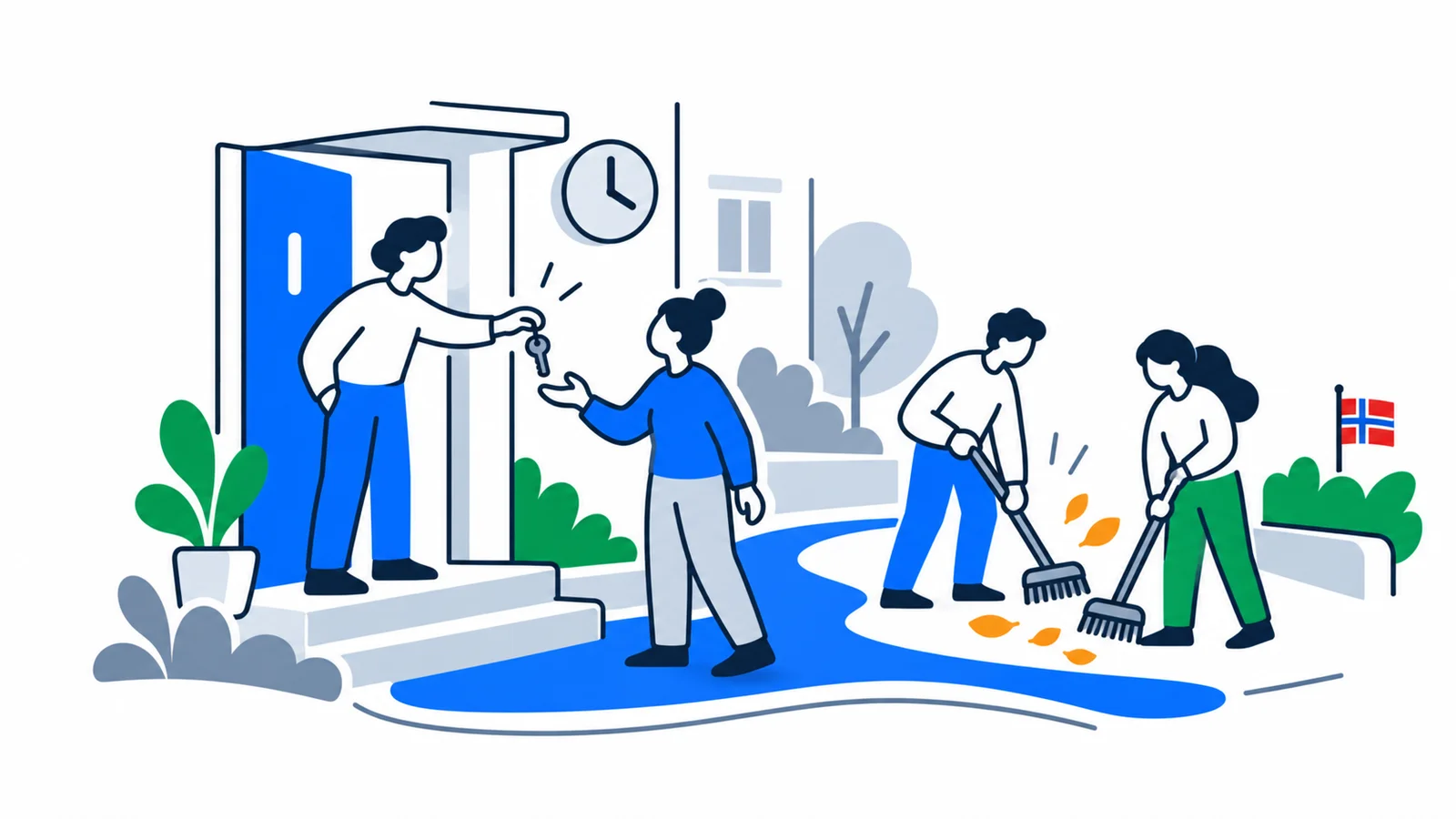
Dugnad is unpaid collective work for a common good, and it is one of the most typical Norwegian traditions. It might be painting the kindergarten, raking leaves in the housing cooperative, setting up a flea market, or selling cakes and waffles at a sports event. Often the board or the parents' group sends out a list, and most people are expected to put in a couple of hours.
The scale is large. Around 61 percent of the population did voluntary work in the past year (the Volunteering Barometer 2024), and SSB estimated the value of all voluntary work at over 107 billion kroner in 2023. Sport, culture and local communities rely heavily on this effort.
For a newcomer, dugnad is one of the easiest ways into the local community. You meet neighbours in a relaxed setting, practise Norwegian, and show that you contribute. You don't need to be a craftsman or speak perfectly — the most important thing is that you show up and do a little.
Unwritten rules in daily life: time, space and quiet
Some habits can surprise you at first. They are rarely written down, but most people follow them:
| Unwritten rule | What it means |
|---|---|
| Punctuality | '14:00' means 14:00. If you're late, send a short message. |
| Shoes off | Many people take off their shoes just inside the door at someone's home. |
| Personal space | On a half-empty bus, people tend to sit with a seat between them. |
| Queue culture | Take a number ticket or stand at the back — never push in. |
| Quiet and 'leave others be' | People let each other be in peace; little small talk with strangers. |
Little small talk with strangers is not unfriendliness, just a different norm — if you ask for help, you'll usually get it. Work and free time are also kept clearly separate: many work around 8–16, free time is sacred, and it's unusual to call a colleague about work in the evening. Holidays are respected, and it's completely normal to take paternity leave and to pick children up early from kindergarten.
Friluftsliv: outdoors is best, whatever the weather
Friluftsliv (open-air life) is absolutely central to Norwegian identity. Thanks to allemannsretten (the right to roam), you can go hiking, pitch a tent for a night, and pick berries and mushrooms in uncultivated land almost anywhere, as long as you clean up after yourself and show consideration. A well-known saying goes: 'There's no such thing as bad weather, only bad clothing.'
A Sunday hike in the woods with a packed lunch and a thermos, a weekend at the cabin, or just some fresh air after work — for many this is the best way to unwind. It is also a cheap and informal arena for getting to know people, whether on a walk with neighbours or through an organised hiking club.
How to use the unwritten rules as a newcomer
You don't have to become 'Norwegian' to thrive in Norway. But it helps to be punctual, keep your appointments, join a dugnad now and then, and understand that quiet and personal space are usually a sign of respect — not rejection. See the rules as useful tools, not as a demand to give up your own culture.
The first few weeks hold a lot of new things at once. You'll find a practical checklist to get started in your first week in Norway. Take it step by step — most Norwegians really appreciate that you're trying.
What should you be able to use in the test?
In the test it is important to show that values are not only big words. You should be able to give concrete examples: trust means that people expect honesty in queues, payment, tax and shared systems. Equality means that the boss is often addressed by first name, and that children, women and men should be taken seriously. Dugnad means that people contribute a little so that the team, housing cooperative or local community works. The Jante Law can explain why too much boasting may feel unusual. Punctuality shows respect for other people's time, and friluftsliv shows how nature is used as a social arena. At the same time, these are not rules for losing your own identity. The point is to understand expectations, ask questions when you are unsure, and find a good balance between your own background and life in Norway.