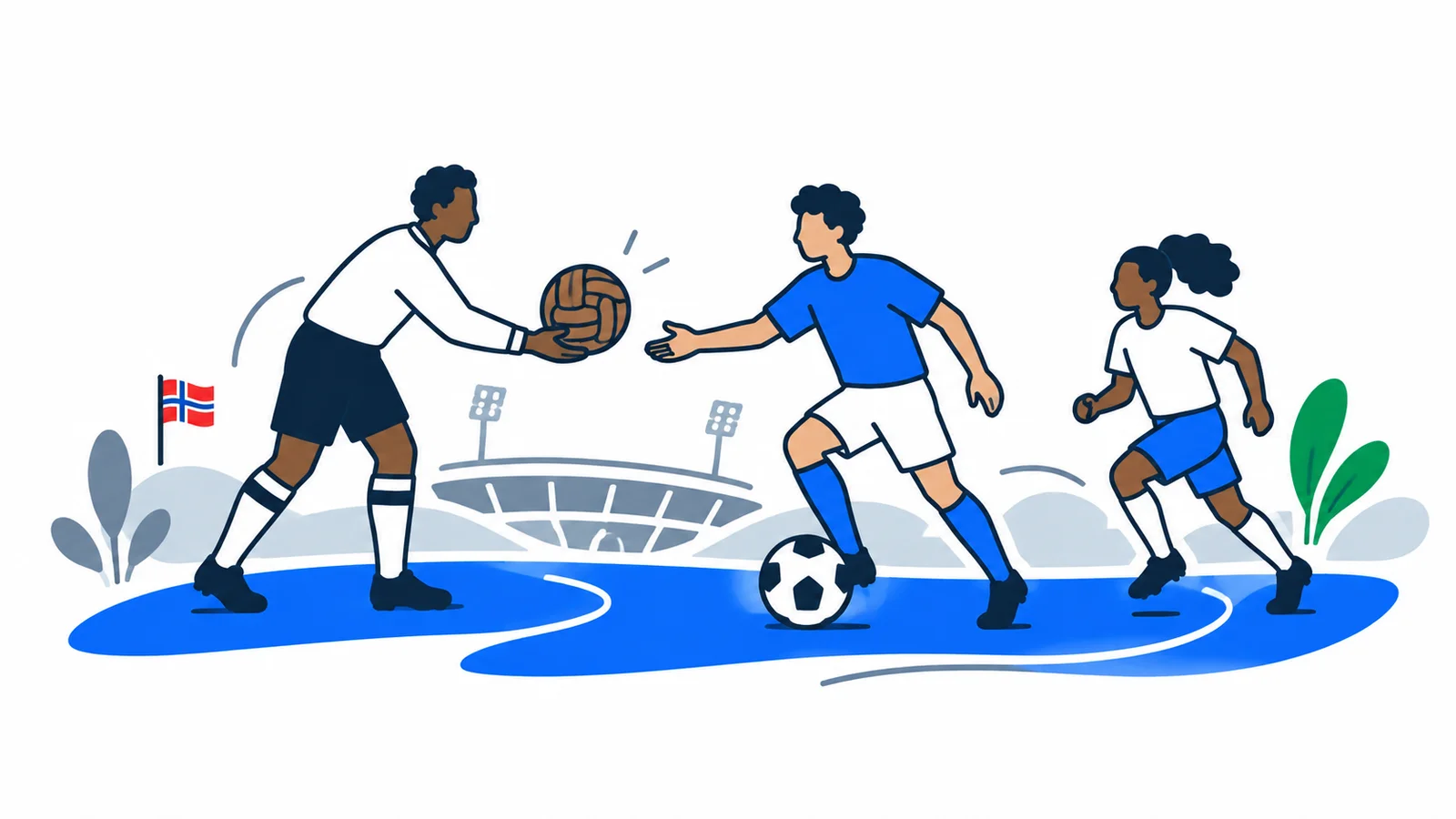

Football and integration are closely linked in Norway. While the national team plays the World Cup quarter-finals in summer 2026, children with backgrounds from around the world train in Norwegian sports clubs every week. The NFF's vision is « Football for everyone » – but participation remains uneven, and cost can be a barrier.
Why is football called an integration arena?
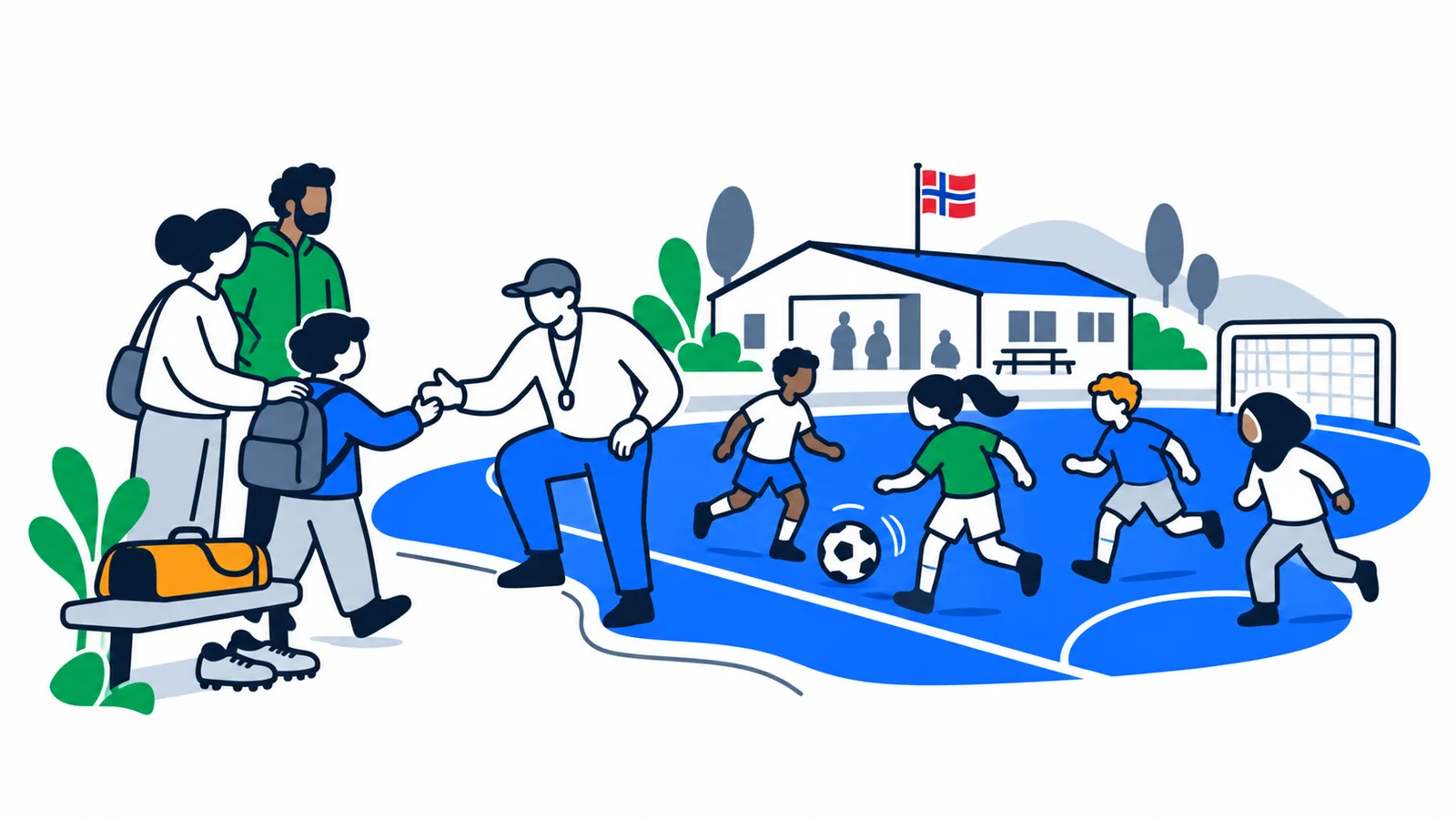
Because football is the place where the most children in Norway meet – regardless of language and background. Norway's Football Federation (NFF) has the vision « Football for everyone – joy, dreams and community » and its own programme for multicultural inclusion, with guides for including refugees and children from low-income families.
At the same time, the federation is honest about the challenges. The NFF itself writes that children, young people and parents with minority backgrounds are underrepresented in football, and that girls are especially underrepresented. The federation therefore prioritizes, among other things:
- targeted information about Norwegian sport to new families
- cooperation between clubs and asylum reception centres, with low-threshold offers for refugees
- more people with minority backgrounds in coach, referee and leadership roles
Are you new in Norway and want to get started? SamfunnPrep has a separate guide on registering your child for football and sport.
Which World Cup stars started in ordinary neighbourhood clubs?
Almost all – and several of them in clubs run by volunteers. Joshua King started at Romsås IL on Oslo's east side before his path led to Manchester United and the national team. Omar Elabdellaoui played for Sagene IF and Skeid, and Haitam Aleesami started at Holmlia. In today's World Cup squad, Oscar Bobb started at Lyn, and Antonio Nusa at Langhus IL. King later started a free football camp for children on the east side of Oslo.
Norwegian sports clubs are largely run by parents who volunteer for free. This volunteering effort is the very engine of Norwegian children's sport – and a good way to get to know your neighbours.
What does it cost to play football in Norway?
The cost varies from club to club – and it can exclude children. One of the NFF's stated goals is to balance quality and cost so that finances don't exclude anyone. The football magazine Josimar has nevertheless documented that expensive academies, training camps and private extra courses can filter out talent from low-income families.
There is help available:
- Ask the club about reduced membership fees – most clubs have their own schemes.
- The municipality can cover leisure activities for low-income families.
- Equipment centres like BUA loan out football shoes and equipment for free.
How your family can get started
You don't need to wait until the next World Cup. Find the nearest club at fotball.no, get in touch and ask about a trial training – most clubs have open doors all year. Volunteer on work days when you can, and ask for support if the membership fee is too high.
Volunteering, sports clubs and work days are also topics you may encounter on the civic knowledge exam. On SamfunnPrep you can practise free questions about Norwegian society – maybe while you wait for kickoff.