
To make Norwegian friends, you need one thing more than luck: a shared activity. Norwegians can seem reserved at first, but become loyal friends through work, sports, volunteering, and neighborhood. Start at a free place this week.
Coming to a new country and being without friends is heavy. Many newcomers to Norway feel lonely in their first year. But that does not mean Norwegians do not want to get to know you. They will – just in a somewhat different way than you might be used to. This article shows you where and how, with concrete, free places to start. You can read it together with our guide on Norwegian values and unwritten rules, which explains much of the social interaction.
Why is it difficult to make Norwegian friends at first?
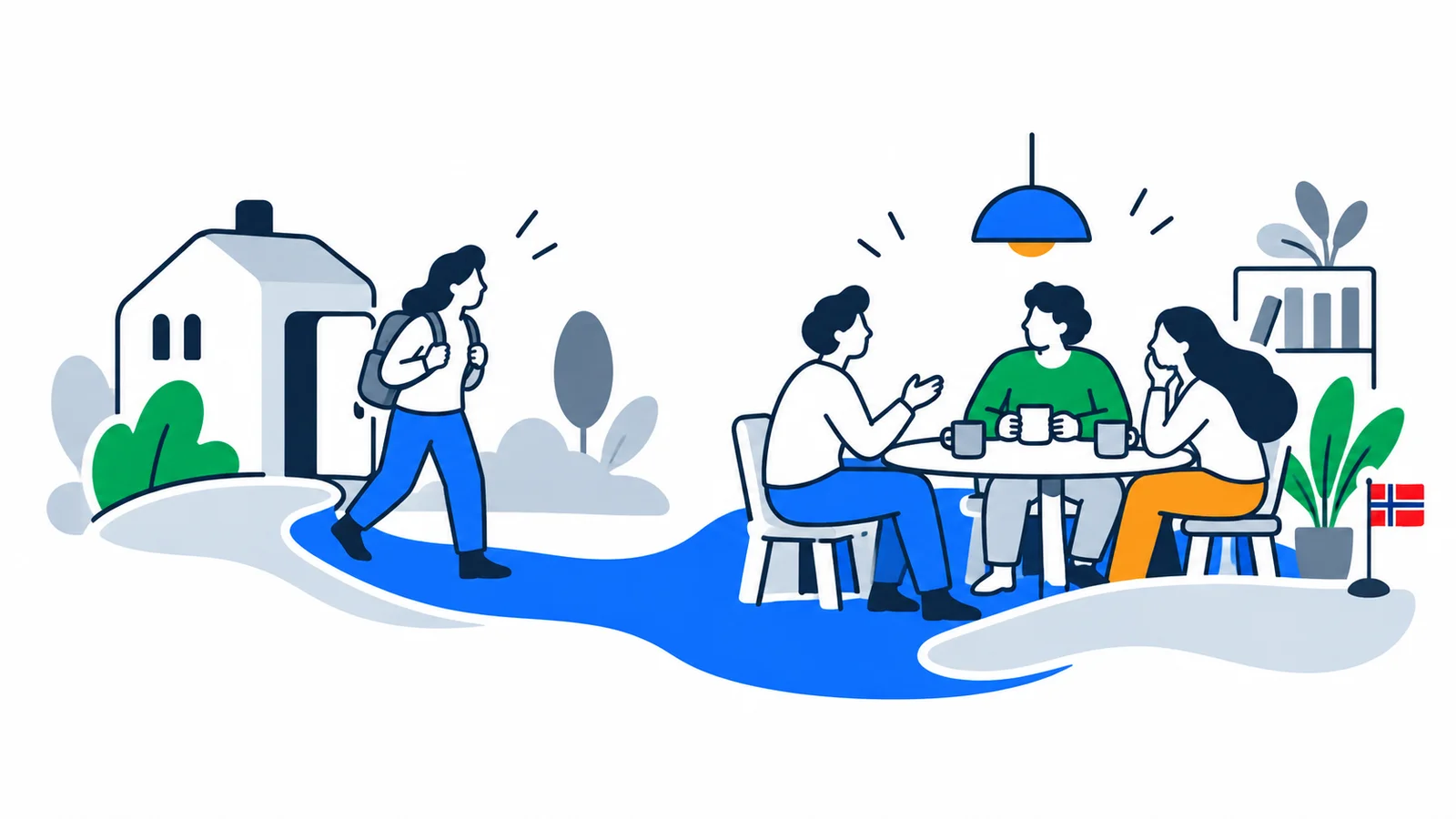
It is difficult because friendship in Norway rarely starts with chat on the street. Norwegians can seem reserved toward strangers. They do not chat as easily with strangers on the bus or in the store. This does not mean they dislike you – it is a cultural habit. Many Norwegians grew up with the idea that you do not "push yourself on" others.
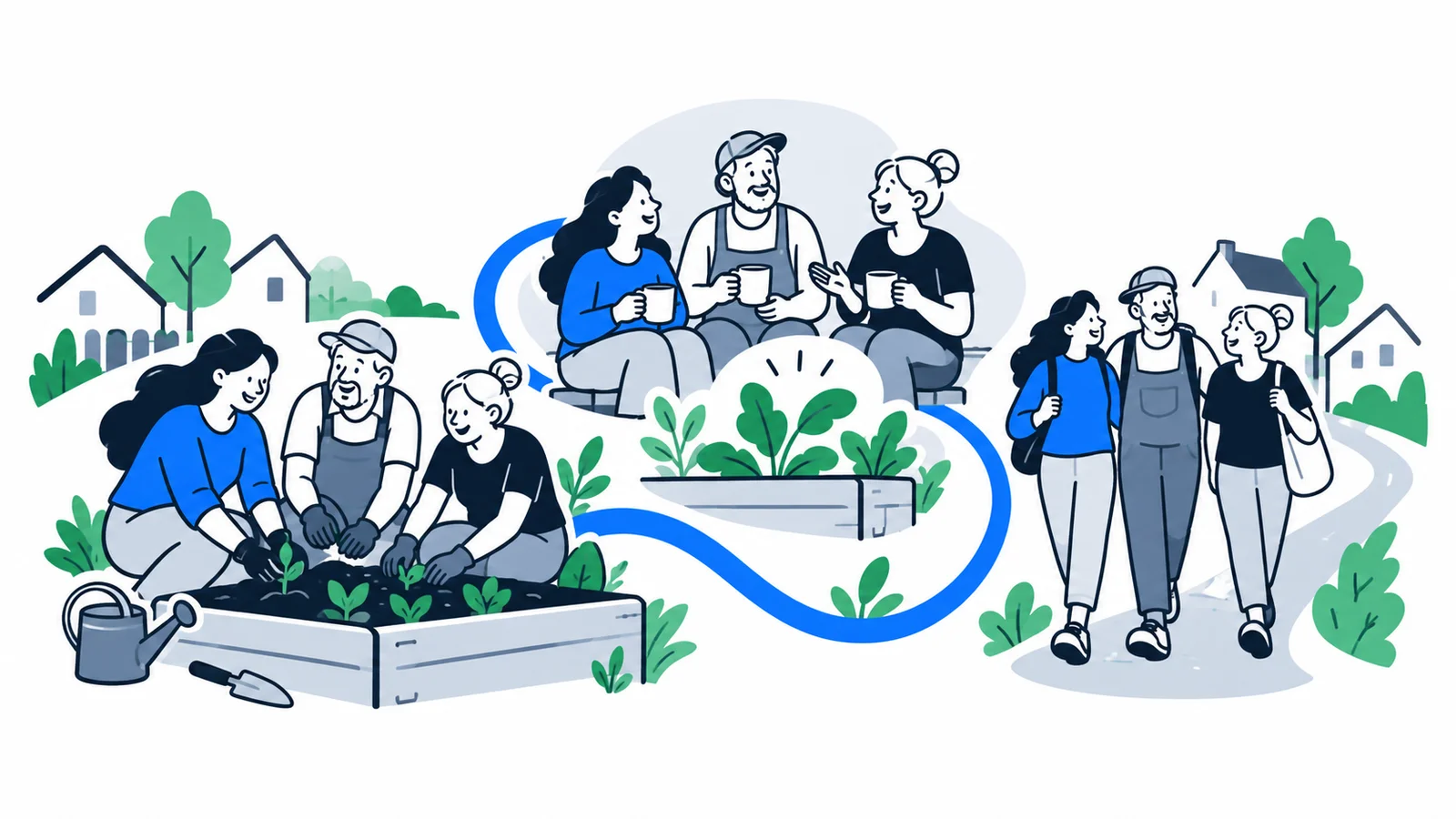
But the picture changes when you do something together. Through a shared activity – training, a dugnad, a job – Norwegians often become warm and loyal friends. A dugnad is shared, unpaid work for the team or neighborhood, for example cleaning the outdoor area in spring. The key is therefore not to talk more, but to participate in something regular over time.
Where do Norwegians make new friends?
Norwegians make friends through fixed arenas, not random meetings. If you want to get to know Norwegians, you should seek out the same places they use themselves. Here are the ones that work best:
- Work and colleagues. The workplace is one of the most important social arenas in Norway. Say yes to lunch, coffee, and summer parties.
- Sports clubs. A sports club is a local club for football, handball, cross-country skiing, or gymnastics. Around 1 in 4 Norwegians are members of a sports club, and sports account for the most volunteer work of all (SSB). You do not need to be good – you need to show up.
- Volunteering and dugnad. Showing up for your team or neighborhood gives you friends and belonging. Read more in our article on volunteering and dugnad.
- Neighbors. Greet, say thanks, and join your neighborhood's dugnad.
- Parent networks. If you have children, daycare and school give you a ready-made network. Birthday parties, parent meetings, and practice create contact. Many municipalities also offer fritidskortet (activity card), an arrangement that covers participation fees for children's activities.
- Language café. A language café is a free, informal meeting place where you practice Norwegian with others. Perfect for both language and friendship.
Which free places can I start at?
You can start completely free, and you can do it this week. These channels are found all over the country:
- Volunteer center. A volunteer center is a local meeting place that connects people with activities and volunteer work. There are 571 volunteer centers in 337 municipalities (Norges Frivilligsentraler, 2026). Find your nearest one.
- frivillig.no. On this website you find volunteer assignments nearby. Over 1400 organizations use it to find people.
- Red Cross Refugee Guide. Through the Refugee Guide, the Red Cross connects you with a local volunteer. You meet a few hours a week for 9–12 months and do things you both like – go hiking, cook, or watch football. It gives Norwegian practice and a real network.
- Red Cross homework help. Free help with schoolwork for children and young people, and a good arena for parents.
- Hiking groups and DNT. The Norwegian Mountain Touring Association (DNT) arranges group hikes in almost every municipality. Going hiking is perhaps the most Norwegian way to get to know people.
Norway is a country with high trust between people and high participation in organizations – almost 8 in 10 are members of at least one organization (SSB). That means the doors to these communities are actually open to you.
How important is Norwegian language?
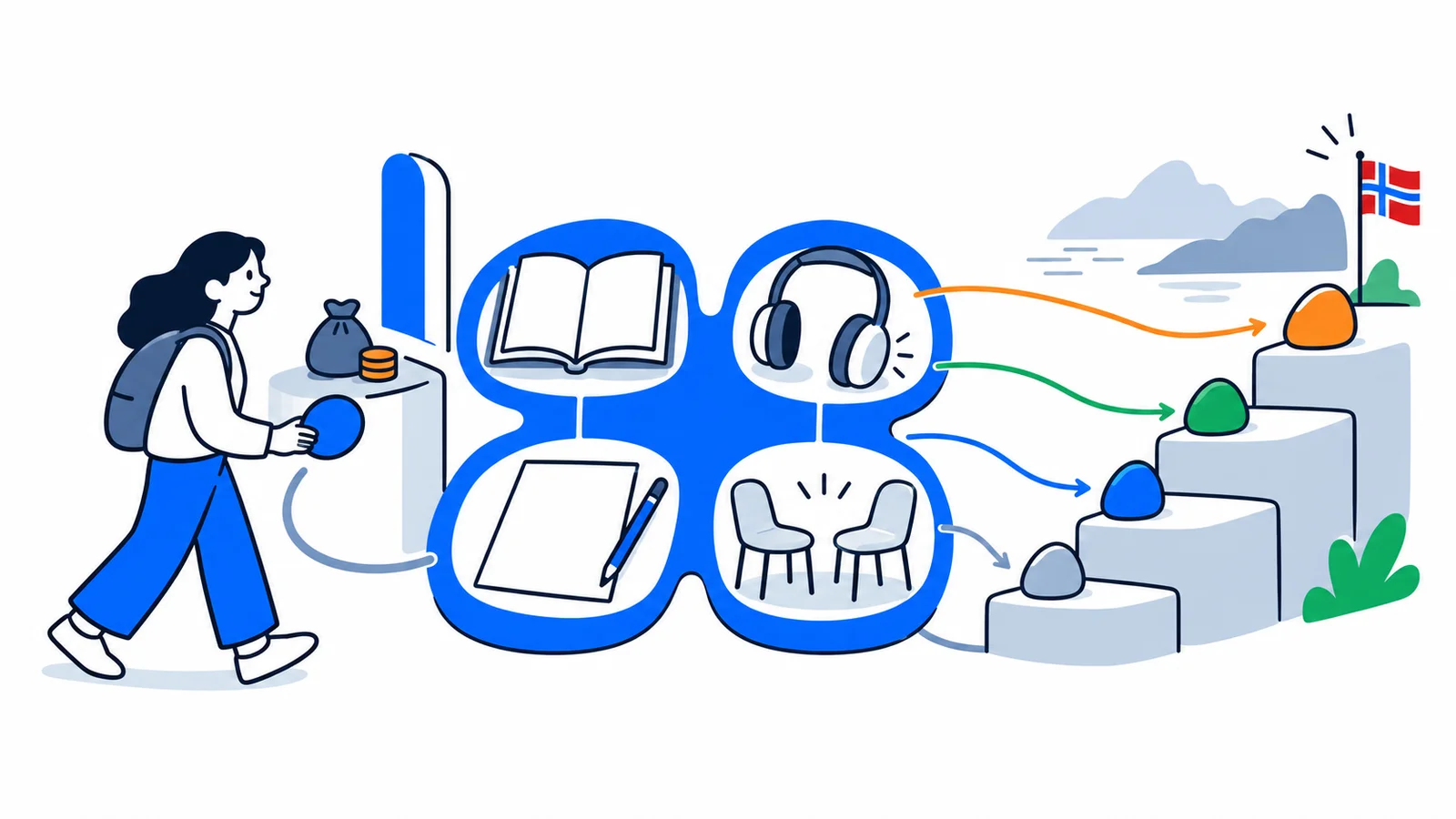
Language is very important, but you do not need to be perfect. A little Norwegian opens many doors, because it shows you are making an effort. Small talk – short, pleasant conversations about the weather, the weekend, or work – is the glue in Norwegian everyday life. You can start with simple sentences.
Therefore it pays to practice Norwegian and build a network at the same time. A language café provides both. If you have not started with language yet, see our overview of free Norwegian courses. If you are a newly arrived refugee or immigrant, you may be entitled to the introduction program, which combines Norwegian instruction with the path into society.
What can you do yourself?
The most important thing you can do yourself is to take initiative. Friendship in Norway grows slowly, so you must show up again and again. Do not wait for others to invite first.
- Show up regularly. Choose one activity and go every week. Trust is built through repetition.
- Invite. Ask a colleague to coffee or a hike. A small "shall we have coffee?" means a lot.
- Be patient. Count on months, not days. That is normal.
- Say yes. Say yes to invitations, even when you are tired.
Making friends is not only nice – it makes integration faster and everyday life safer. You learn the language faster, you understand society better, and you have someone to call when something is difficult.
Getting to know Norwegian society is also curriculum for the citizenship test – practice free on SamfunnPrep. With SamfunnPrep you practice the same topics you encounter in your neighborhood, at work, and in volunteering. This is how friendship, language, and the test connect: the more you participate, the more you understand – and SamfunnPrep helps you tie it together.