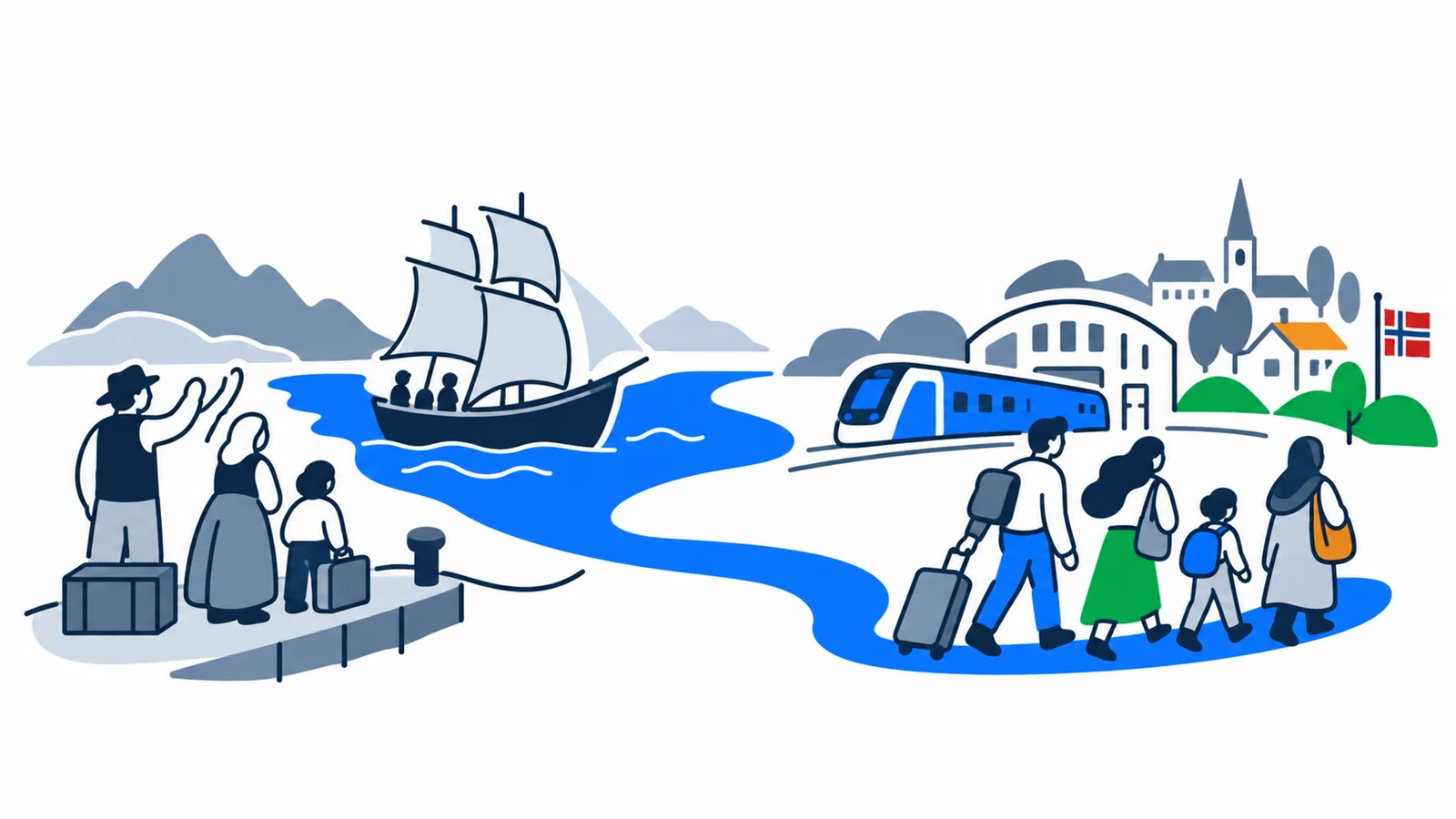
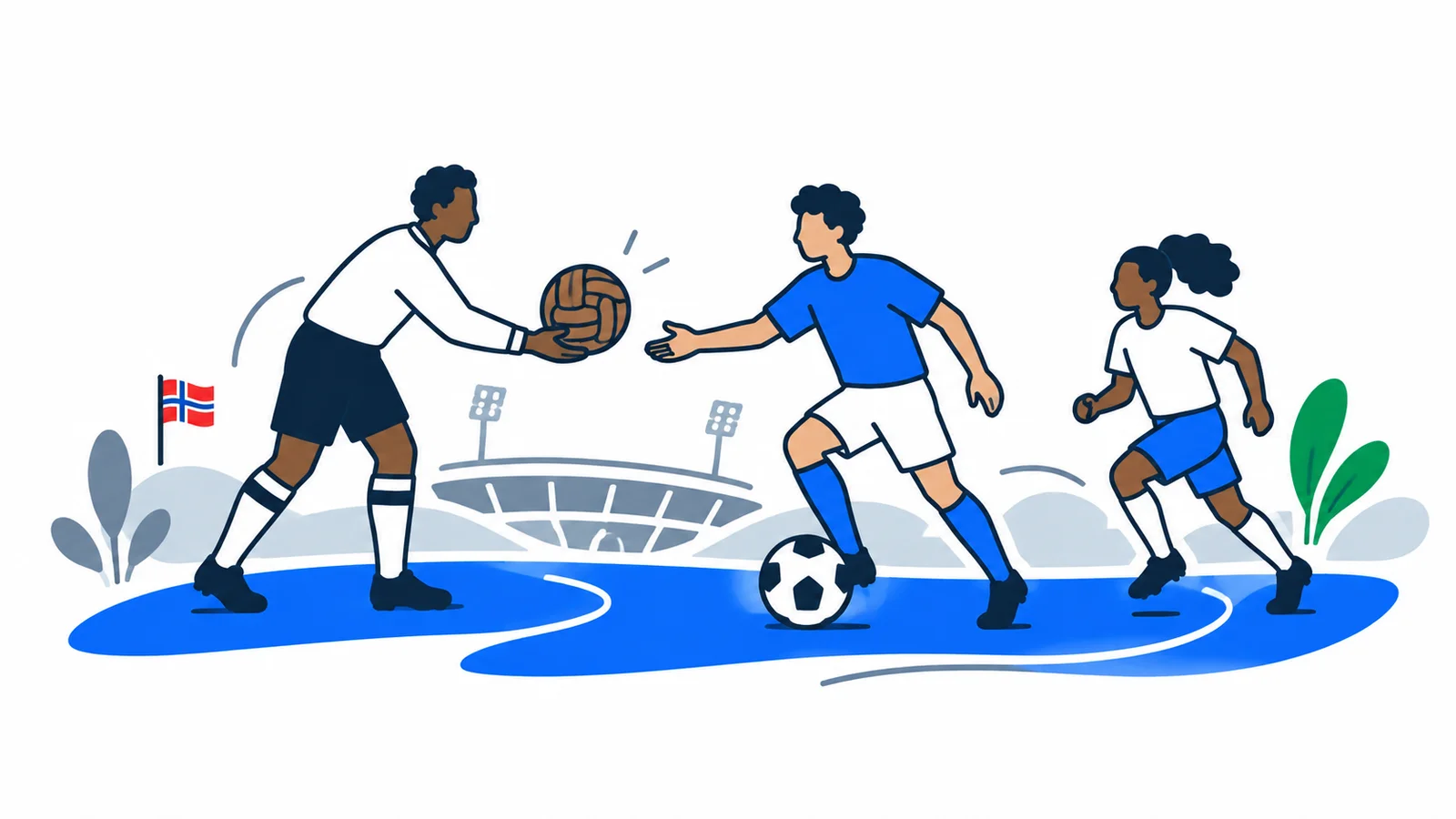

Immigrants on the national team have written Norwegian football history for nearly 30 years. When Norway played in the 1998 World Cup, no one in the squad had a minority background. John Carew became the first that same autumn. In the 2026 World Cup, Antonio Nusa and Oscar Bobb follow in his footsteps.
John Carew was first
When Norway played in the World Cup in France in the summer of 1998, the team had no players with a minority background. Just a few months later, on 18. november 1998, 19-year-old John Carew made his debut in a friendly against Egypt – as the first Black player on the Norwegian A national team.
Carew was born in Lørenskog with a father from Gambia and a Norwegian mother. He ended up with 91 international caps and 24 goals, and at Euro 2000 he became the first player with an immigrant background to play a tournament for Norway. Everyone who represents Norway must have Norwegian citizenship – you can find the requirements in the guide on becoming a Norwegian citizen.
Who were the pioneers in the 2000s?
A small group of players followed Carew and opened the door for the rest. Pa-Modou Kah came from Gambia to Norway as an eight-year-old and made his debut in 2001. He has later said that he is proud to have shown the way for a new generation with an immigrant background. Hassan El Fakiri, born in Morocco and developed in the Oslo club Lyn, turned down Morocco several times to play for Norway. Alexander Tettey moved from Ghana to Norway at age 13 and became a mainstay on the midfield for nearly ten years.
| Player | Background | International caps (goals) |
|---|---|---|
| John Carew | father from Gambia | 91 (24) |
| Pa-Modou Kah | born in Gambia | 10 (1) |
| Daniel Braaten | father from Nigeria | 52 (4) |
| Hassan El Fakiri | born in Morocco | 8 (0) |
| Alexander Tettey | born in Ghana | 34 (3) |
| Tarik Elyounoussi | born in Morocco | 60 (10) |
| Mohammed Abdellaoue | parents from Morocco | 33 (7) |
| Joshua King | father from Gambia | 62 (20) |
| Omar Elabdellaoui | parents from Morocco | 49 (0) |
| Mohamed Elyounoussi | born in Morocco | 55 (10) |
The figures apply to completed international careers; for Mohamed Elyounoussi as of March 2024.
The generation that changed the national team
From 2008, diversity on the team became markedly greater. Tarik Elyounoussi, who came from Morocco to Norway at age 11, scored just four minutes after he came on in his debut against Uruguay in 2008. In January 2013, he was captain in two friendly matches. His cousin Mohamed Elyounoussi scored a hat-trick against San Marino in 2017.
Mohammed «Moa» Abdellaoue from Vålerenga became a prolific striker at German Hannover 96. Harmeet Singh, with an Indian Sikh background, made his national team debut in 2012. Omar Elabdellaoui, raised in Oslo with Moroccan parents, was vice-captain and wore the armband in several matches. And Joshua King, raised in Romsås with a father from Gambia, scored one of the national team's most important goals ever: the equalizing penalty in extra time against Spain at Ullevaal in October 2019.
In November 2020, a historic footnote was added. When the entire regular squad was in coronavirus quarantine, Norway fielded an «emergency national team» against Austria – and Ghayas Zahid, with parents from Pakistan, became the first player with a South Asian background to score for Norway. In autumn 2018, the newspaper Utrop counted six players with a minority background in the squad – «almost half the team», as the newspaper wrote.
Where does the national team stand in 2026?
In the 2026 World Cup squad, two of 26 players have an immigrant background in the broad sense: Antonio Nusa, with a father from Nigeria, and Oscar Bobb, with a father from Gambia. Nusa scored when Norway beat Ivory Coast 2–1 on 30. juni – the country's first victory in a World Cup knockout round ever.
It is fewer than in the squads around 2018, and the debate about why fewer talents from minority communities reach the highest levels continues. At the same time, Statistics Norway figures show that 21.7 prosent of the population had an immigrant background as of 1. januar 2026 – tomorrow's national team players are training today in ordinary sports clubs across the country. Do you want your child to try? Read the guide on registering your child for football and sports. Football is also an important part of youth life in Norway.
Norwegian immigration history is a central topic on the civics test, and on SamfunnPrep you can practise for free on such questions. SamfunnPrep also has several articles about life in Norway – from sports to citizenship.