
Buying and selling secondhand is completely normal and well-regarded in Norway, with no stigma. You can find plenty on FINN.no, Tise and Facebook Marketplace, in secondhand shops like Fretex and at flea markets. If you sell your own private items, the profit is tax-free. Meet up, check the goods and pay when you pick it up.
Secondhand culture in Norway: normal and respected
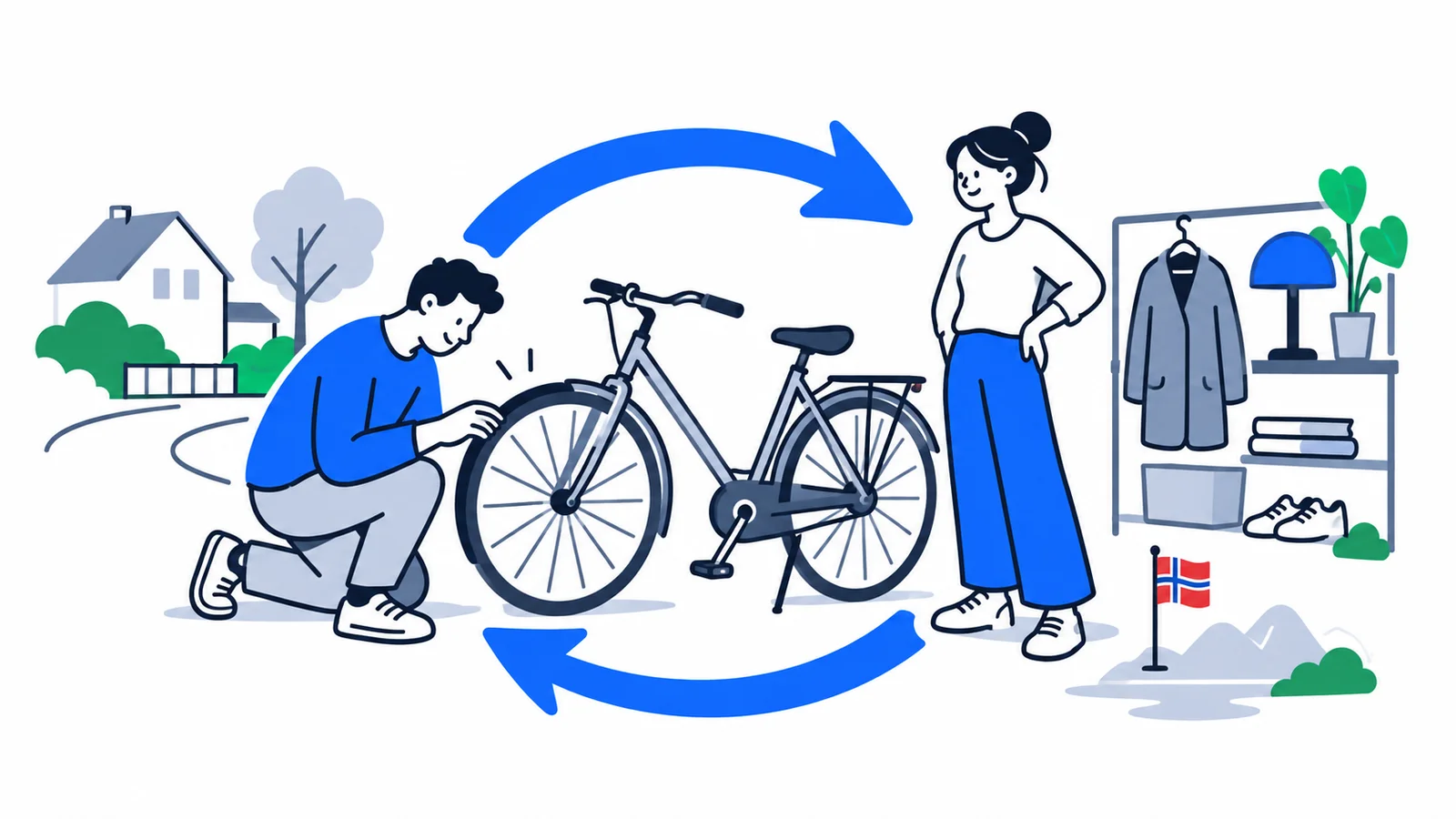
In Norway it is completely normal to buy and sell secondhand, and there is no shame in it. Students, families with children and older adults all buy and sell secondhand to save money and be more environmentally friendly. Giving things a new life (reuse) is seen as smart and responsible, not as a sign of financial difficulty.
For someone new to the country, secondhand shopping is one of the easiest ways to save money. Furniture, clothes, bicycles, winter tyres and baby equipment often cost a fraction of the new price. Many Norwegians buy and sell secondhand throughout their lives, and the threshold for posting an ad is low.
Where can you buy and sell secondhand?
You can shop secondhand on online marketplaces, in physical secondhand shops and at flea markets. FINN.no is the largest and most used marketplace for secondhand goods in Norway, where private individuals list everything from sofas to bicycles, often in your own neighbourhood.
| Place | Best for |
|---|---|
| FINN.no | Most things: furniture, electronics, car, bicycle |
| Tise | Clothes, shoes and fashion (app) |
| Facebook Marketplace | Local bargains and large furniture |
| Fretex and other secondhand shops | Clothes, books and household items |
| Flea markets | Cheap finds, often to support local associations |
Fretex is a chain of secondhand shops run by the Salvation Army. Flea markets are often organised by sports clubs and school bands, where the money goes to a good cause. If you are going to buy something large, like a car, you should first read the guide on buying a secondhand car in Norway.
How to buy and sell secondhand safely
The safest rule is simple: meet the seller, check the goods, and pay only when you have it in hand. The Consumer Council advises against advance payment — paying in advance is a gamble where you risk the goods never arriving.
Use this checklist when buying secondhand:
- Meet in person and inspect the goods before you pay.
- Test that things work (charge the phone, try the bicycle).
- Pay when you pick it up, preferably with Vipps or cash. See the guide to Vipps in Norway.
- Ask for the seller's full name and phone number.
- If the price is too good to be true, it usually is.
- Never share BankID, one-time codes, passwords or banking information with a seller.
Be extra careful against fraud. The most common trick is that the seller asks for advance payment and promises to send the goods — which never arrive. Real buying and selling of secondhand happens face-to-face or with buyer protection on the platform. No legitimate seller needs your BankID code — if you share it, the scammer can empty your account.
Do I have to pay tax when I sell secondhand?
No. When you sell your own used private items, the profit is tax-free. This is stated in the Tax Act § 9-3: profit from the sale of «household goods or other movable property that has been used in the owner's or that person's family home or household» is exempt from tax liability (as of 10 July 2026).
This means you can sell your sofa, phone, clothes or bicycle without paying tax — even if you get more for it than you once paid. There is no time limit and no money limit on ownership. The rule applies to things you have personally used at home, not things you have bought to resell. Skatteetaten is the agency that manages the tax rules in Norway.
When does secondhand selling become taxable business?
If you sell privately occasionally, it is tax-free. But if you systematically buy goods to resell them for profit, it can be considered taxable business (enterprise). Then you must report the income to Skatteetaten.
Skatteetaten assesses four things to determine if something is a business: the activity must be suitable to make a profit over time, have a certain duration, have a certain scope, and be conducted for your own account and risk. A hobby you make some money from, but which never makes a profit, is not a business. However, if you regularly buy in many goods to make money, you are approaching the limit. If you are unsure where the limit is, read about the difference between freelancer and sole proprietor (ENK).
Do I have a right of withdrawal when I buy secondhand privately?
No. The right of withdrawal (the right to change your mind within 14 days) does not apply when you buy from a private person. The Distance Selling Act only applies when you buy from a business, that is a shop or company, according to the Consumer Council.
If you buy secondhand from a shop, you still have full consumer rights. Purchases between two private persons follow the Sale of Goods Act instead. The goods are often sold «as is», but the seller still cannot lie or withhold important information. If the goods are in substantially worse condition than you had reason to expect based on the price, you may be entitled to a price reduction or your money back (Sale of Goods Act § 19). You can complain (claim) about hidden defects for up to two years. For more information, see the guide on consumer rights, withdrawal rights and complaints.
Practice the rules — and save money
Secondhand shopping is a safe and smart part of everyday Norwegian economics when you know the rules. On SamfunnPrep you can find several guides about personal finance and consumer rights, and many of these rules are also part of the curriculum for the Samfunnskunnskapsprøven. Do you want to understand how tax, consumption and economics fit together in Norway? Practice for free with SamfunnPrep and read more about Samfunnskunnskapsprøven.