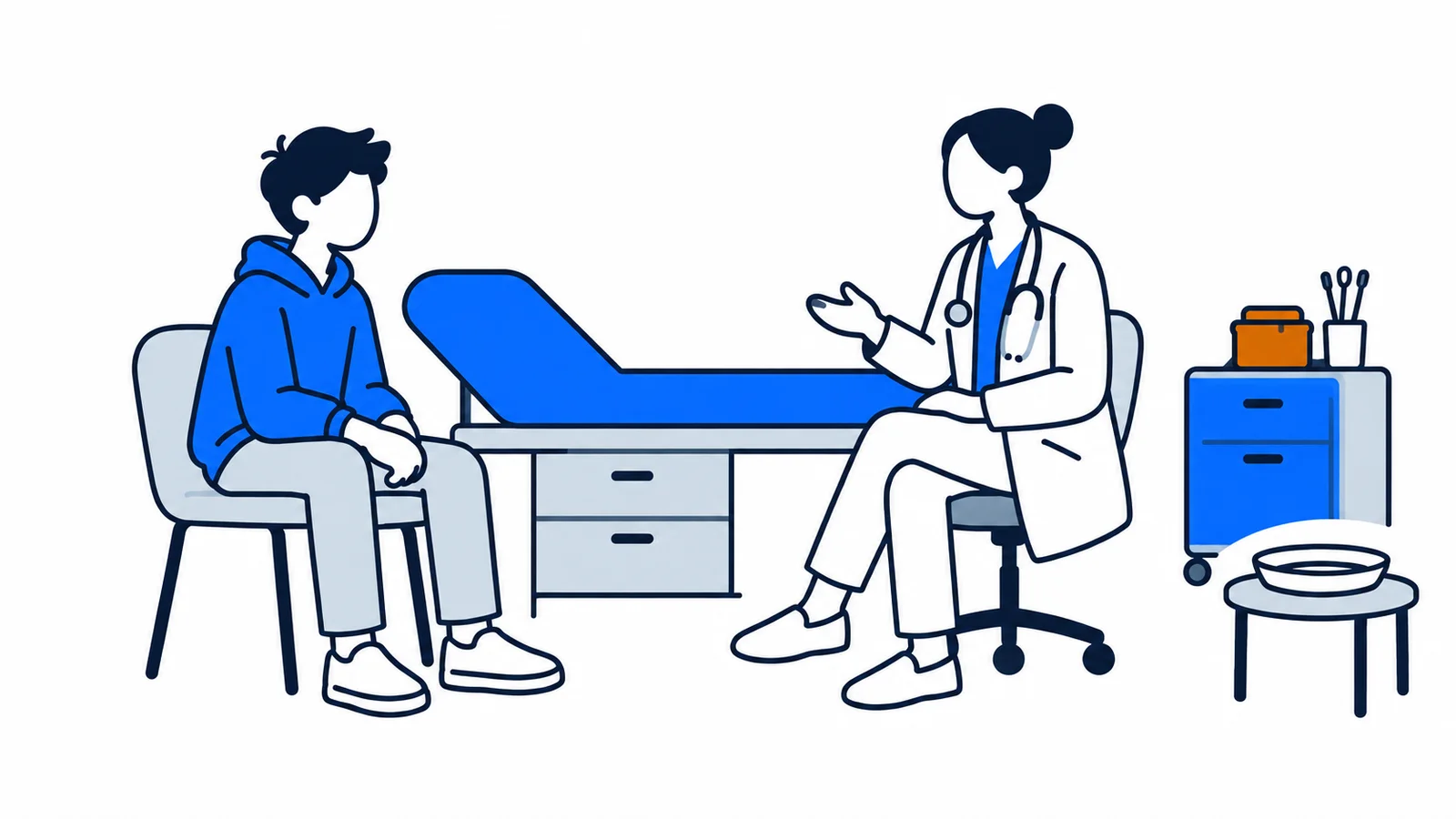
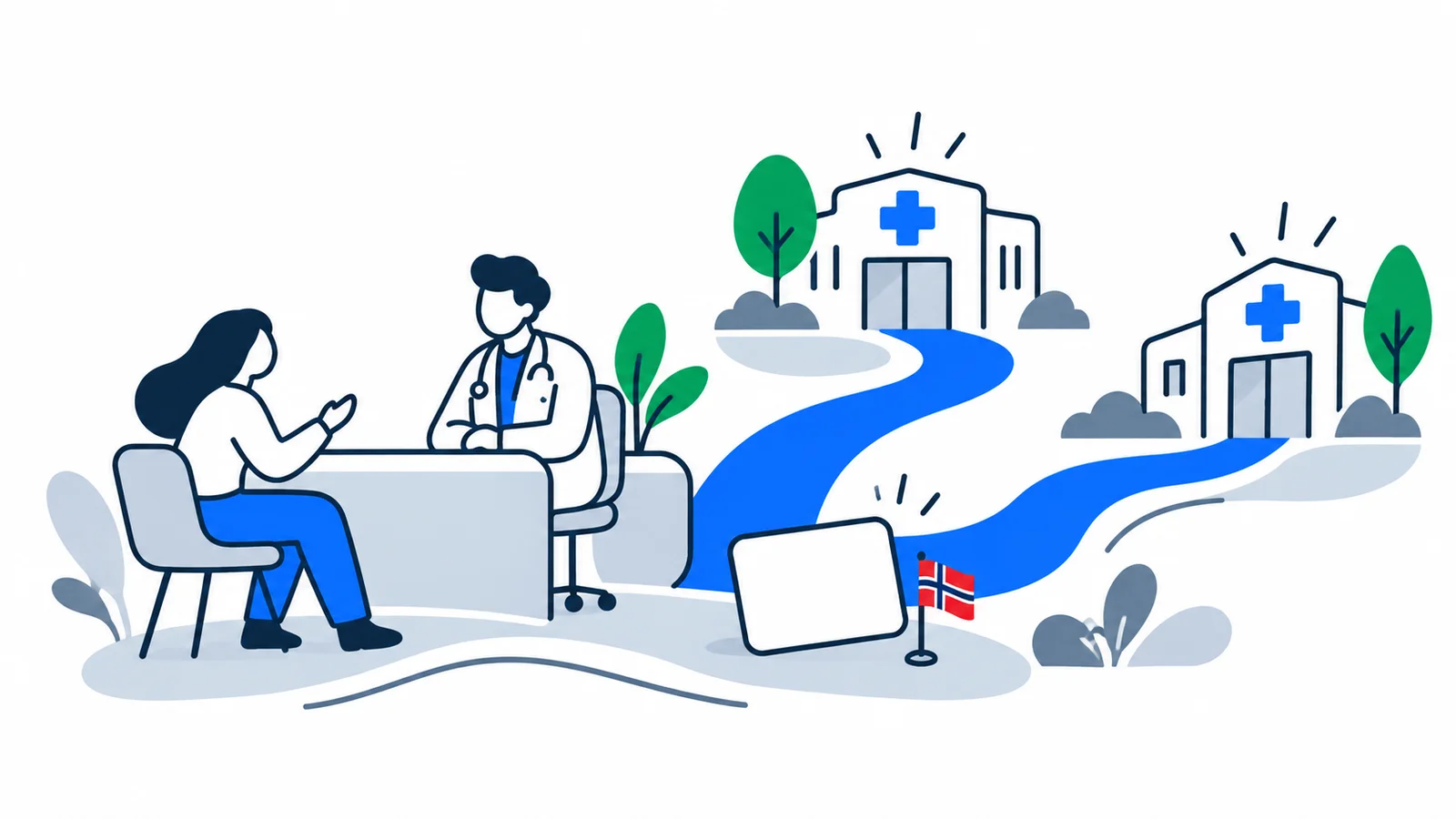

A GP is your regular doctor in Norway, and everyone with a national ID number or D number in the National Population Register has the right to one. Here you will learn how to get and change your GP.
What is the GP scheme?
The GP scheme is the system where all residents in Norway have one regular doctor to go to for most of their healthcare. Your GP knows your medical history, writes prescriptions, refers you to a specialist when needed, and follows your health over time, often for many years.
The scheme is run by the municipality where you live, while HELFO (The Norwegian Health Economics Administration) is the state body that, among other things, maintains an overview of the GP lists and your copayments. For you as someone new to Norway, your GP is often the first and most important contact point in the healthcare system.
Do you have the right to a GP?
Yes. Everyone who is registered in the National Population Register with a national ID number or D number, and who lives permanently in a Norwegian municipality, has the right to a GP. This applies regardless of citizenship, as long as you are lawfully resident and registered at an address.
If you have just received residence permission or moved to Norway, it may take some time before your registration in the National Population Register is complete. Your right to a GP applies from the moment that registration is in place.
Your right to a GP is closely linked to your other health entitlements in the national insurance system, including the right to hospital treatment and a European health insurance card. You can read more about this in our guide to health rights and the national insurance system.
How do you get a GP when you are new to Norway?
When you register your address in a municipality in the National Population Register, you are usually automatically assigned a GP with available capacity near you. You will be notified of who they are, usually by mail or digitally, and you can change if you want a different doctor.
You can also choose a GP yourself right away, instead of waiting for automatic assignment. You do this on Helsenorge.no, Norway's official health portal, where you log in with electronic ID such as BankID. There you can see an overview of GPs in your area, how many patients they have, and whether they have available space right now.
If you have not used the portal before, our guide to the Helsenorge app can help you get started quickly, so you find the right menu and understand what you can do there.
How do you change your GP?
You change your GP easily on Helsenorge.no, under the menu item "Change GP". There you can see a list of doctors with available capacity in or near your municipality, and you complete the change with a few clicks, without having to call or visit anywhere.
Some practical rules are good to remember:
- You can change your GP up to two times per calendar year completely free of charge.
- A third change in the same year is possible, but the municipality can then charge a small copayment for the change.
- The change usually takes effect from the beginning of the next month, not immediately when you register it.
- If you move to a new municipality, you usually get an extra change right that does not count towards your two normal changes.
This makes it easy to try out a GP you are satisfied with, without binding yourself forever to the first choice.
What do you do if the GP list is full or you are on a waiting list?
Many GPs have full lists, especially in the large cities. If the doctor you prefer does not have available space right now, you can put yourself on a waiting list with exactly that doctor via Helsenorge.no.
While you wait, you are still not without a GP. You keep the doctor you already have, or you are assigned another doctor with available capacity, so you always have someone to contact if needed. The system is designed so that no one should be completely without a GP over time.
If you find no available spaces at all where you live, you can contact your municipality's GP office, service centre or citizens' office for help finding a solution. The municipality has a duty to ensure that all residents are offered a GP.
What does it cost to visit your GP?
Most adults pay a copayment each time they visit their GP, that is, a direct payment for the consultation. A standard daytime consultation costs around 180 kroner (check the current copayment on helsenorge.no), and the amount can vary slightly depending on what you are examined for, such as blood tests or simple procedures.
Some groups do not have to pay a copayment:
- Children under 16 years pay nothing at their GP.
- Pregnant women do not pay a copayment for antenatal checks with their GP.
If you pay a lot in copayments over a year, you automatically get a free pass when you reach a set limit for the calendar year, and then you do not have to pay copayments for the rest of the year. If you need medication after your visit to your GP, our guide to pharmacies and prescriptions in Norway can help you understand how to collect medication and how prices work.
GP or out-of-hours clinic – what is the difference?
Your GP is where you go for most things: common illnesses, follow-up of disease, prescriptions and referrals to a specialist. The out-of-hours clinic is for acute problems that cannot wait until your GP's office opens again, for example in the evening, at night, at weekends or on public holidays.
Call the out-of-hours clinic on 116 117 when you need acute help outside your GP's opening hours, but it is not a directly life-threatening situation. In life-threatening situations, you always call the emergency number 113 immediately.
Knowing the difference between your GP and the out-of-hours clinic saves you both time and worry, and ensures that you contact the right place the first time.
Your GP as part of life in Norway
Having a GP is one of the most important rights you have as a resident in Norway, and it is wise to arrange it early after you have moved here or moved to a new municipality. Knowledge about such rights and social systems is also useful if you later take the citizenship test or the Norwegian civics test, as the healthcare system is often part of the syllabus.
At SamfunnPrep you practice precisely this kind of civic knowledge, with questions that resemble the real tests. Many who prepare with SamfunnPrep discover that topics such as GPs and health rights come up again both in everyday life and on the test. Try for free and see how well you know your rights and responsibilities in Norway.