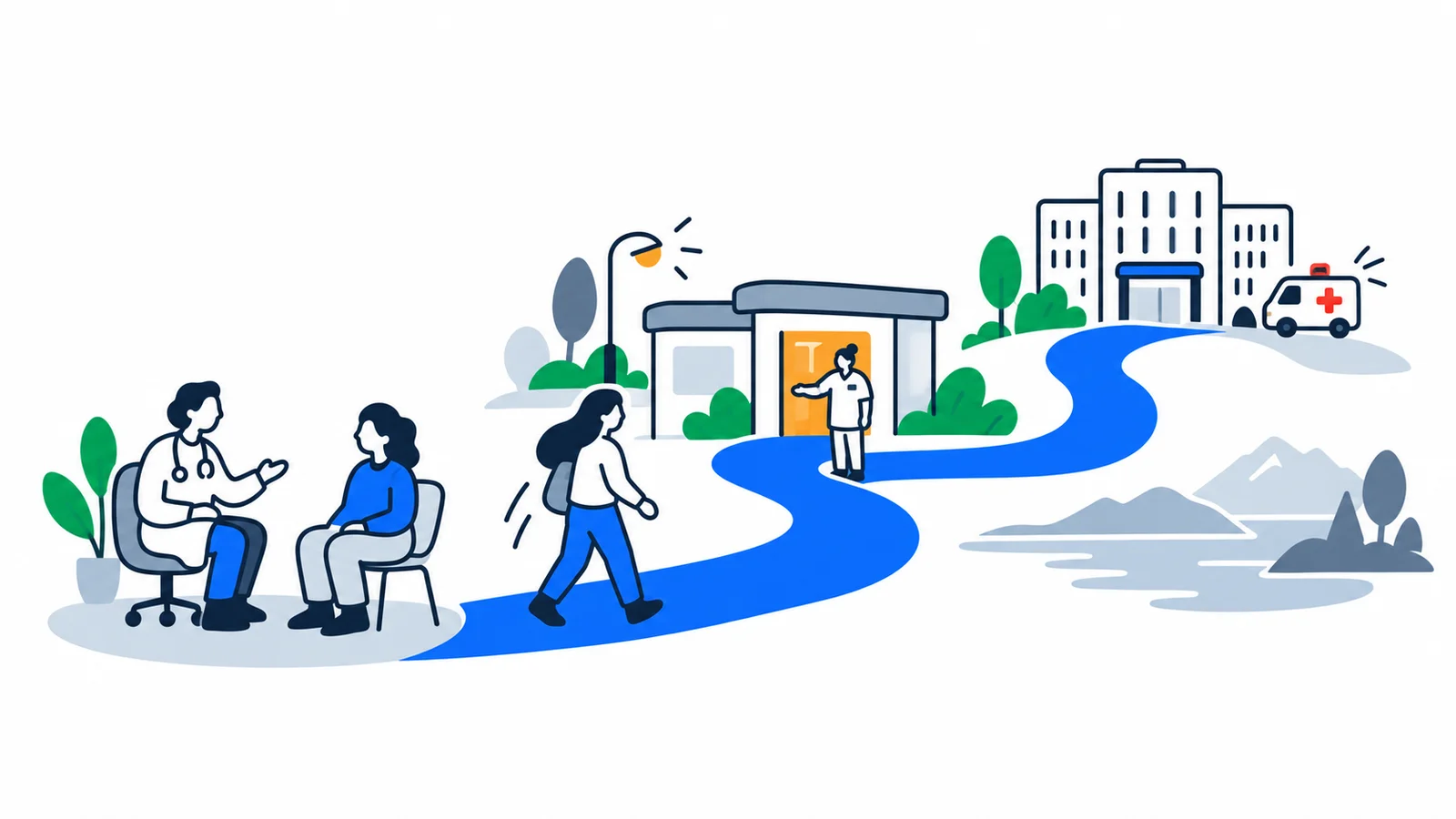

An emergency clinic is where you contact when you need urgent health care, but there is no danger to life. Call 116117 for an emergency clinic, and call 113 only in a life-threatening emergency. Here you will learn the difference, and what a visit to the emergency clinic costs.
What is an emergency clinic?
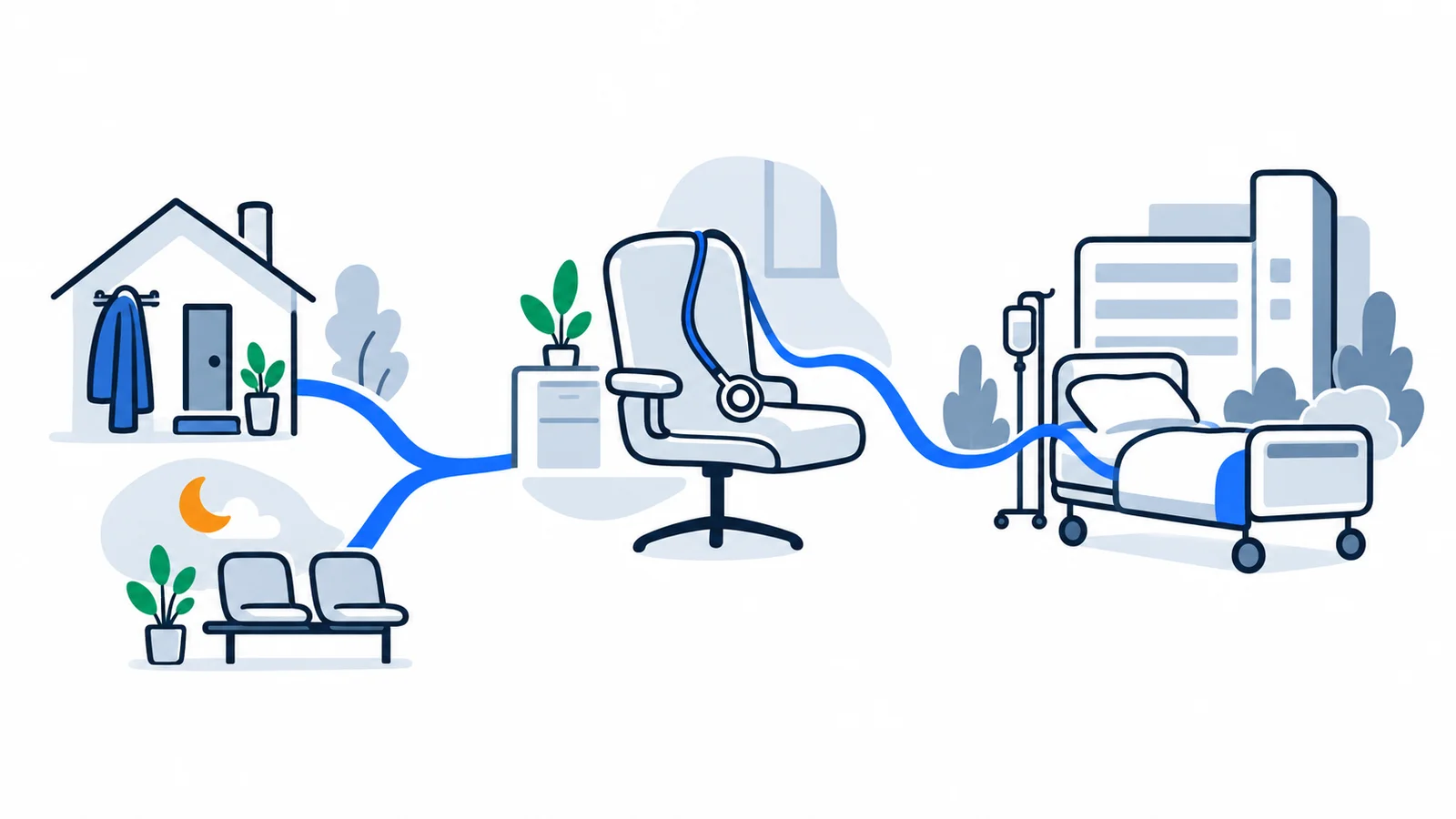
Emergency clinic (legevakt) is the municipal health service you use when your regular doctor is closed, but you need help quickly. It receives patients in the evenings, at night, on weekends and public holidays, in all municipalities in Norway. An emergency clinic is not the same as your regular doctor, but the two work closely together, and the emergency clinic can refer you to a hospital if needed.
Each municipality has its own emergency clinic, often with a separate meeting place. The national telephone number 116117 always connects you to the right emergency clinic where you live. You can also log in to the Helsenorge app to find contact information, see appointment times and read your medical records.
The emergency clinic helps with many types of acute complaints: high fever in children, severe stomach pain, suspected broken bones, deep cuts, or mental crisis that cannot wait until the regular doctor opens again. A nurse often receives the phone call first, and assesses how serious the situation is, before connecting you to a doctor if needed.
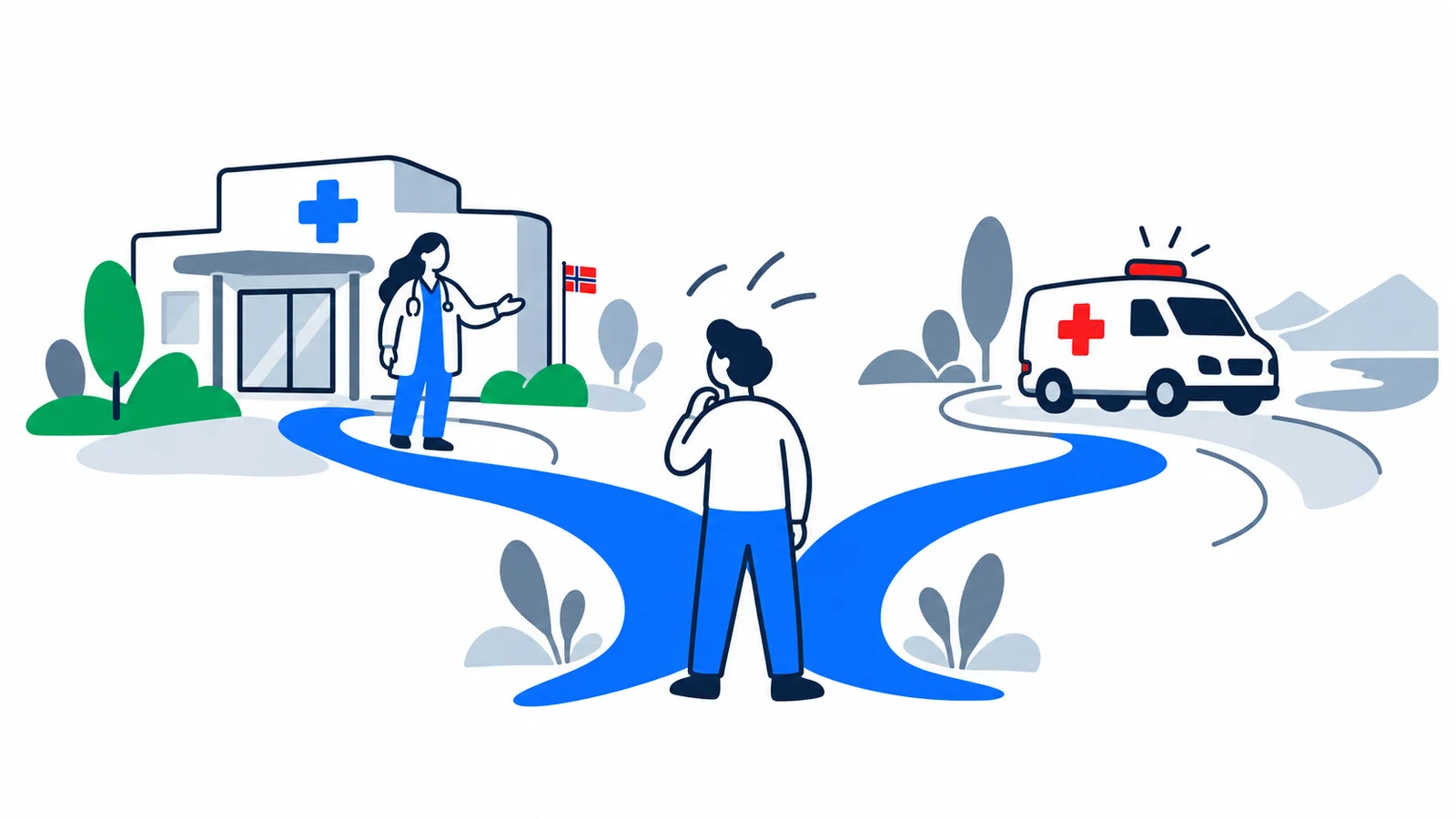
When do you call 113, and when do you call 116117?
Use 113 when life or health is in acute danger. Use 116117 when you need medical help quickly, but the situation is not life-threatening.
| Number | When you use it |
|---|---|
| 113 | Life-threatening illness or injury – you need an ambulance |
| 116117 | Emergency clinic – urgent help that is not life-threatening, when the regular doctor is closed |
| 110 | Fire or dangerous smoke/gas |
| 112 | Police – danger, crime or accident |
Call 113 if someone:
- has severe chest pain or severe breathing difficulties
- is unconscious or not responding
- is bleeding heavily and it does not stop
- has swallowed poison or taken an overdose
- shows signs of stroke, such as paralysis or slurred speech
Call 116117 if you or someone you are with:
- has high fever and is very ill
- has got a wound that may need stitches
- suspects a broken bone
- needs medical help quickly, but it is not urgent by the second
If you are unsure which number to call, it is better to call once too many than once too few. The operator will help you to the right service if you have called the wrong number.
Contact your regular doctor first during the day
During the day, you should always call your regular doctor first, not the emergency clinic. Your regular doctor knows you and your medical history, and can often help you the same day or the next day.
The emergency clinic is designed for times when the regular doctor's offices are closed: evenings, nights, weekends and public holidays. If you call the emergency clinic during the day without a good reason, they may ask you to contact your regular doctor instead. This is because the emergency clinic should prioritize the most acute cases first.
What does a visit to the emergency clinic cost?
A visit to the emergency clinic costs a copay (out-of-pocket fee), which is a payment you make yourself. The price is often higher than at your regular doctor, and it usually increases in the evening, night and on weekends (check the current copay, as rates change annually). Children under 16 and some other groups usually do not have to pay.
If you pay a lot in copays during the year, you eventually get a free care card. Then you do not have to pay any more copays for the rest of the calendar year. The phone call to 116117 itself is free, regardless of how long you talk.
After the visit, you may receive a prescription. Read more about how prescriptions and pharmacies work in Norway if you are unsure how to get your medicine.
You pay the copay with a debit card or Vipps right after the consultation, or you will receive an invoice afterwards. If you do not have the ability to pay right away, you can usually ask for an invoice, so that you are not turned away because of money.
How to describe the situation when you call
Speak calmly and clearly when you call 113 or 116117. Tell what has happened, where you are, and who it concerns.
Be ready to answer:
- What has happened, and when did it start?
- Where are you – address or place name?
- Who needs help – age and gender?
- Is the person conscious, and are they breathing normally?
- Does the person have any known illnesses or regular medicines?
You can speak Norwegian or English. If you need it, you can ask for an interpreter. Do not hang up until the person who answered says it is okay.
Other emergency numbers: fire and police
Norway has four main numbers for emergencies and urgent help. 110 goes to the fire department, and you call this in case of fire or dangerous events involving smoke or gas. 112 goes to the police, and you call this in case of danger to life, crime or accidents that require police.
You can save all four numbers in your phone: 113, 116117, 110 and 112. Then you have them ready if something happens, and you do not have to search for them in the middle of a stressful situation. All four numbers are free to call, both from mobile and landline, and you do not need a Norwegian phone subscription for them to work.
Knowing such practical details about Norway makes you safer in everyday life. At SamfunnPrep, we collect this kind of knowledge in simple articles, in addition to practising for the civics exam.
If your doctor thinks you need more investigation than an emergency clinic or regular doctor can provide, you can be referred further to a hospital or specialist. Read more about how referral to specialist health care works.
Safety in everyday life is also about knowledge
Understanding the Norwegian health system makes everyday life safer for you and your family. The same applies to Norwegian civics knowledge in general: the more you know about the systems around you, the easier it is to manage yourself.
SamfunnPrep helps you practice civics questions and prepare for the exam, while you learn practical things about life in Norway, such as the health system. Try for free and see how well prepared you are, both for the exam and for everyday life in Norway.