
Divorce in Norway usually requires one year of separation. In cases of violence or coercion, you may claim direct divorce. If you have children, the child’s best interests, parental responsibility, contact and mediation are central.
Separation and divorce: how the process works in Norway
In Norway, one spouse can request separation even if the other does not want it. The application is sent to the County Governor, Statsforvalteren, which handles separation and divorce. Applying is free, and you usually do not need a lawyer for the application itself.
The main rule is simple: if you still live together, or have lived apart for less than two years, you must first apply for separation. After the separation licence has been granted, you normally have to be separated for one year before one or both of you can apply for a divorce licence.
Separation means that the relationship has ended. You are still formally married during the separation period, but you live legally apart. Many move out. Some have to stay in the same home for a while for practical or financial reasons. The key point is that the marital life has actually ended.
After the separation year, divorce is not automatic. You must apply for it. Statsforvalteren also states that spouses who have lived apart for at least two years without formal separation may apply for divorce after cohabitation has ended.
Statistics show that divorce is common, but not the most common outcome of marriage. SSB reported in May 2026 that 21,574 marriages were entered into in 2025, while 8,583 couples divorced and 9,772 couples separated. For rules before a break-up, read about marriage and cohabitation in Norway.
Exception: direct divorce in cases of violence or coercion
Some people should not have to wait one year. Under section 23 of the Marriage Act, a spouse may demand divorce without prior separation if the other spouse has intentionally tried to kill them, subjected the spouse or children to serious abuse, or acted in a way that creates serious fear of such behaviour. Direct divorce can also be claimed if the marriage was forced.
For a person like “Lene”, who has been exposed to violence in the marriage, the answer is: No, she does not have to wait one year just because separation first is the main rule. She can apply for direct divorce if the conditions are met.
This is not a criminal case in itself, but a family-law safety valve. Violence, threats and coercion may also be criminal offences. In immediate danger, call 112. For advice, contact the police on 02800, a crisis centre, GP, family counselling office or lawyer. Many people may have a right to free legal aid in cases involving violence, coercion or serious control.
In cases involving children, it is important to separate help from blame. Parents can ask for support without that meaning they “lose the children”. If you fear what public services do, this guide on child welfare and help in vulnerable situations may be useful.
Children and divorce: care, residence and contact
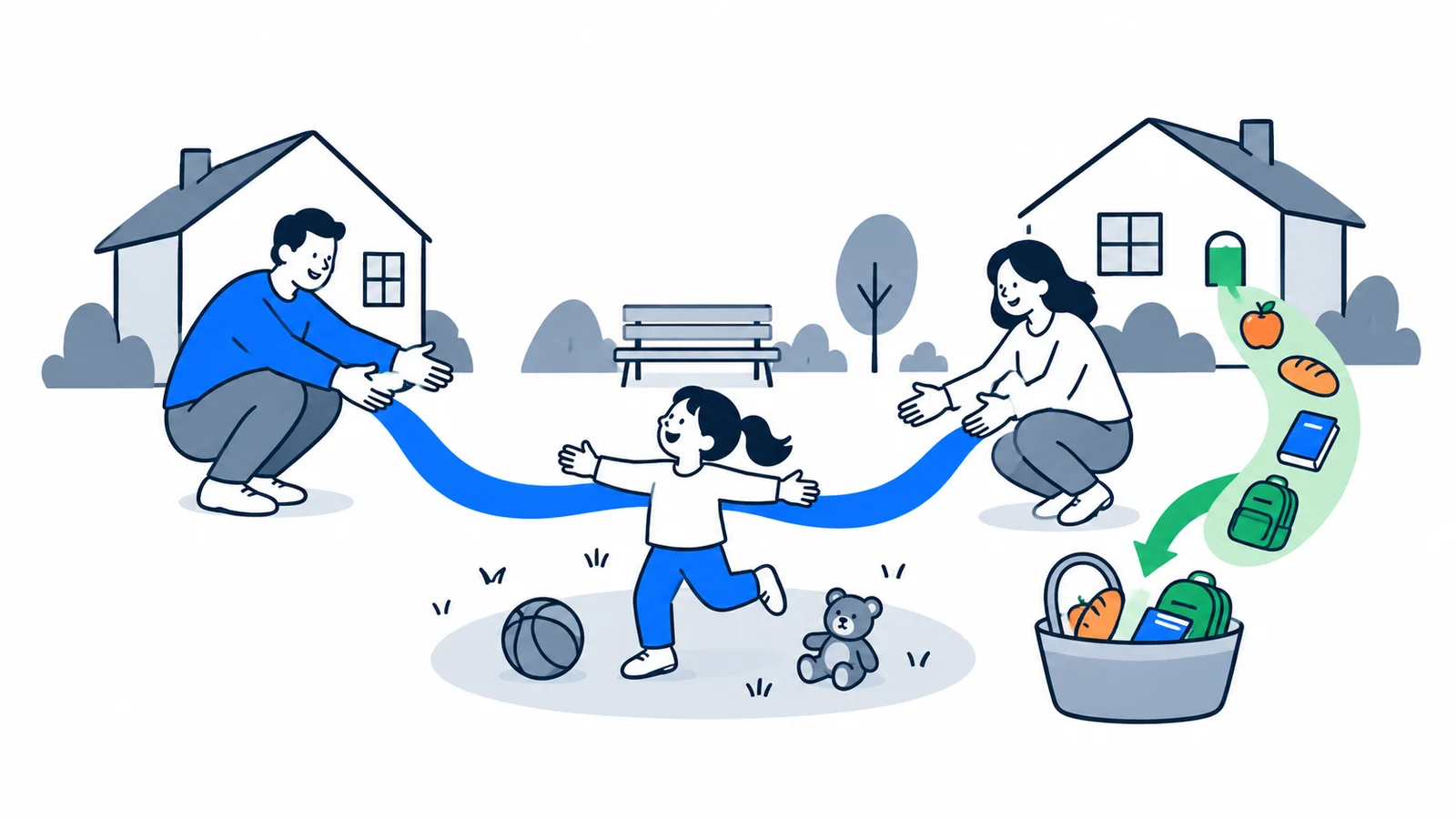
When parents separate, the starting point is not that one parent “wins” the child. The Children Act is based on the child’s best interests. Both parents are responsible for the child receiving care, safety and contact with important people.
SSB wrote in 2025 that at the start of 2025 there were 445,000 families with children where the children lived with both parents. This was 70.8 percent of all families with children. The figure describes families, not every individual child, but it shows that most children in Norway live with both parents before any break-up.
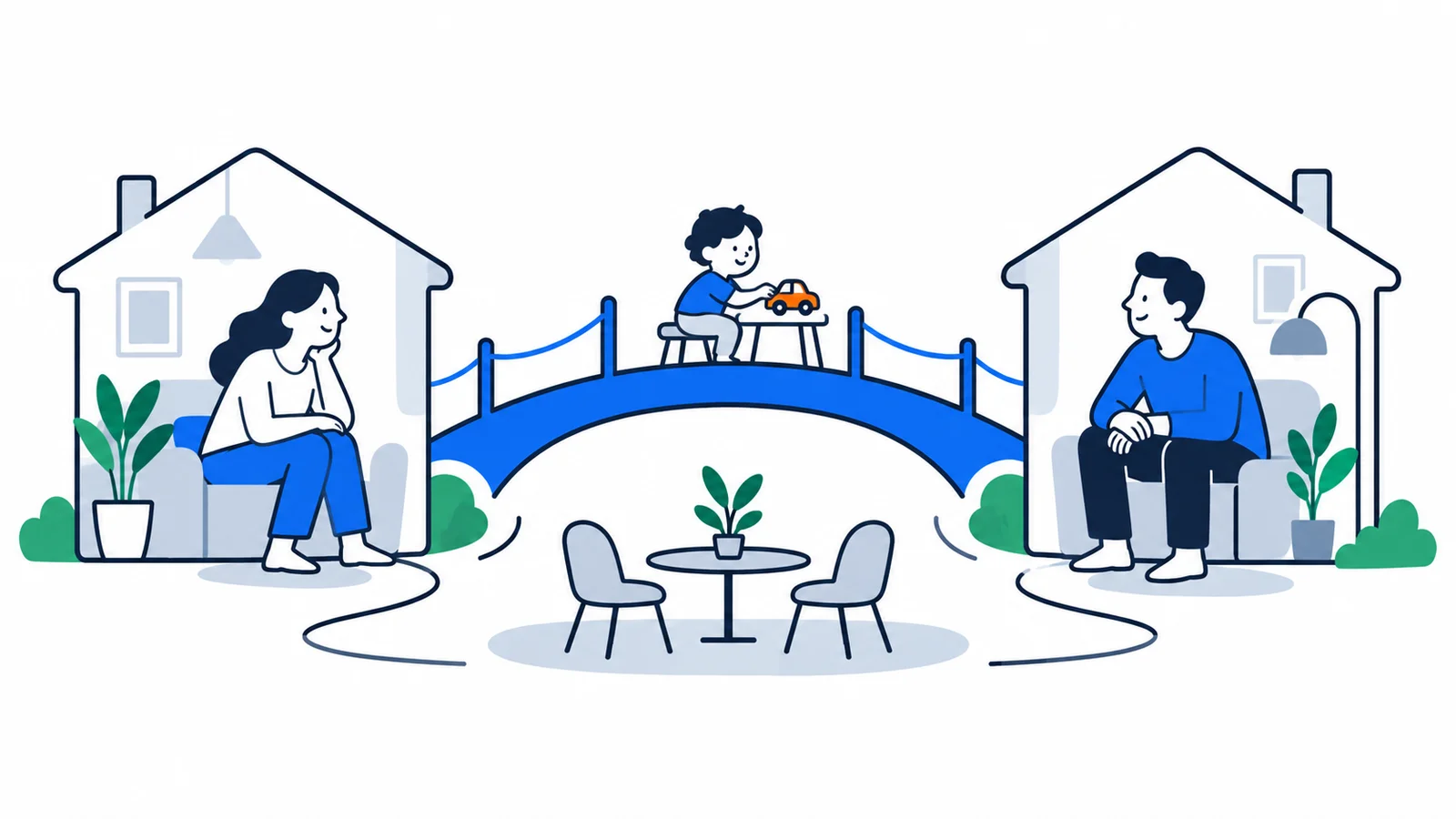
After divorce or separation, parents can agree where the child will have permanent residence. The child may live with one parent, or the parents can agree on shared permanent residence. Residence is about the child’s daily framework. It is not the same as parental responsibility.
Children have a right to contact with both parents, even if the parents live separately. Contact can be extensive or limited, with overnight stays or daytime visits, and must fit the child’s age, distance, safety and needs. If there is violence, substance abuse, serious conflict or danger, contact may need to be limited, supervised or stopped. The child’s best interests are decisive.
Children must also be allowed to express their views in matters affecting them. The weight given to the child’s view depends on age and maturity. Read more about children’s rights and self-determination.
Shared parental responsibility after the break-up
Parental responsibility means the right and duty to make decisions about the child’s personal matters. This can include name, passport, moving abroad, school choice and some forms of health care. Parental responsibility is not the same as where the child lives day to day.
Parents with shared parental responsibility do not lose it automatically upon separation or divorce. Parents can therefore have shared parental responsibility even if the child lives permanently with one of them. This matters because words such as care, residence, contact and parental responsibility are often mixed in everyday speech.
For children born after 1 January 2020, the main rule is that parents have shared parental responsibility, also when they do not live together at birth. There are options to notify or have the matter decided, but it does not change automatically just because the parents later separate.
If parents cannot agree on parental responsibility, permanent residence or contact, the case can be brought before the court. The court decides based on the child’s best interests. In serious situations, such as violence or serious neglect, the court may give one parent parental responsibility alone.
Mediation and practical help during a break-up
Parents with joint children under 16 must attend mediation in cases of break-up, separation and parental disputes. Mediation usually takes place at the family counselling office and is free. Bufdir states that the aim is to help parents make a cooperation agreement on parental responsibility, permanent residence and contact.
You must attend one mandatory mediation session. After the first session you receive a mediation certificate. The certificate is valid for six months and is needed by spouses applying for separation and by parents who want to bring a case on parental responsibility, residence or contact to court.
Mediation does not mean you must agree on everything, and it does not mean you must sit in the same room as a violent or threatening partner. Bufdir states that in violence cases it is possible to apply for separate mediation. Contact the family counselling office early and say clearly if meeting together is unsafe.
Family counselling services can also offer advice, parent talks and help with cooperation after the break-up. Read more in the guide to family counselling offices and mediation.
Finances after a break-up: division, support and NAV
In divorce, spouses must complete a financial settlement, often called division. The main rule for community property is equal division of values created during the marriage, but there are important exceptions, including separate property and unequal division. If you have significant assets, debt, housing or conflict, legal advice may be wise.
Cohabitants do not have the same statutory equal division as spouses. When cohabitants separate, each person generally keeps their own property and debt, unless an agreement, co-ownership or other rules give a different result.
Child support is the child’s right. Parents can make a private written agreement. If you cannot agree, NAV can set the support. NAV considers the child’s costs, parents’ incomes, ability to pay, contact and whether the child has shared permanent residence. In 2026, the fee for NAV setting or changing child support is 1,345 kroner for each party, but people with gross income below 354,600 kroner do not pay the fee.
NAV also states that transition benefit rules for single mothers or fathers change for new cases from 1 July 2026. The main group is being phased out, but some groups may still have rights, including people with sole care for children under 14 months or children with special supervision needs. For practical overview, read about NAV rights for immigrants.