
Have you recently become a parent outside of marriage, or are you unsure what 'parental responsibility' actually means in practice? This guide gives you a full overview of paternity declaration, co-maternity and parental responsibility in Norway.
Unmarried fathers must actively acknowledge paternity - it does not happen automatically. Digital acknowledgement via the Norwegian Tax Administration has been available since January 2024. Since 2020, acknowledged paternity automatically gives joint parental responsibility. Co-maternity works the same way for two mothers.
Automatic Paternity vs. Declaration: What Applies to You?
Norwegian law makes a clear distinction between two situations. If the parents are married when the child is born, paternity is established automatically under the Latin principle 'pater est' - the husband is automatically the legal father without any registration or signature required. This applies even if the child was conceived before the marriage.
If you are not married, paternity must be actively acknowledged. Without such acknowledgement, the child has no legal father, which has consequences for inheritance rights, citizenship, maintenance obligations and parental responsibility. There is no deadline for acknowledgement, but the sooner it is done, the better for the child's legal standing.
For two mothers, the rules on co-maternity apply. The mother who did not give birth must acknowledge co-maternity in the same way a father would acknowledge paternity. If the couple uses donor sperm from an approved clinic in Norway, co-maternity can be established during pregnancy.
Practical overview: If you are married, you do not need to do anything. If you are cohabiting or not living together, the father (or co-mother) must actively acknowledge paternity.
How to Acknowledge Paternity in 2026
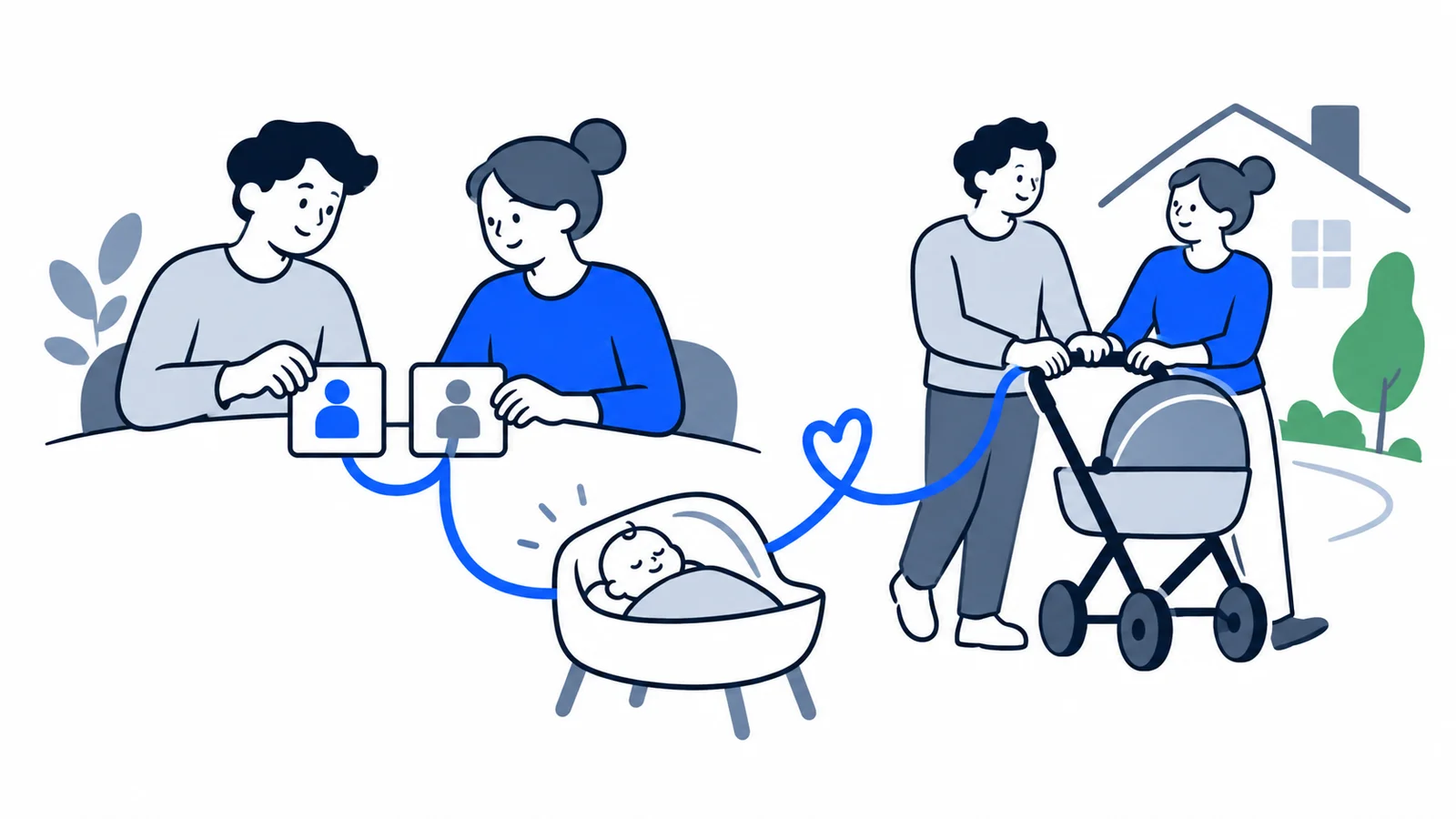
Since January 2024, digital paternity acknowledgement via the Norwegian Tax Administration (Skatteetaten) is the simplest method. Both parents log in to skatteetaten.no with BankID and sign electronically. The process takes under ten minutes and is free. Paternity is registered directly in the National Population Register.
Alternative 1 - At the hospital at birth: Most Norwegian maternity wards offer acknowledgement immediately after birth. The father or co-mother signs a paper form which the hospital forwards to the Population Register. This remains the most common method for cohabiting couples.
Alternative 2 - The County Governor (Statsforvalteren): If acknowledgement was not done at the hospital, it can be done at the County Governor's office in your county. This can also be done for older children or in more complex cases where there is doubt about who the father is.
International cases: If one of the parents lives abroad, paternity can still be acknowledged digitally via Skatteetaten, provided both agree and both have Norwegian BankID. If this is not possible, contact the County Governor for guidance on alternative procedures.
Important: Acknowledgement can be withdrawn within one year if it was made on incorrect grounds. After one year, the matter must be brought before a court.
Joint Parental Responsibility: What Does It Mean in Practice?
Since January 2020, automatically acknowledged paternity results in joint parental responsibility, even for parents who do not live together. Previously, cohabiting couples and single parents had to actively register joint parental responsibility; now it happens automatically.
Parental responsibility is about the right and duty to make decisions on behalf of the child. With joint parental responsibility, both parents must agree on a number of important decisions:
- Changing school or nursery
- Non-emergency medical procedures and operations
- International travel with the child (the child cannot get a passport without both parents' consent)
- Change of name
- Choice of religious community
- Moving abroad
The parent with whom the child lives permanently (the residential parent) can make everyday decisions alone. This includes: choosing a doctor and dentist for routine check-ups, leisure activities, clothing and food, friends and social activities, and shorter holidays within Norway.
If you disagree about major decisions, neither of you can act unilaterally - the matter must be resolved through mediation or court.
What Happens if We Disagree?
Disagreement between parents is common, and the Norwegian system has clear procedures for this. The first step is the Family Counselling Office (Familievernkontoret), which offers free mediation. Mediation is voluntary in principle, but is mandatory before a parental dispute can be brought before a court. The mediation session normally lasts two to three hours and is intended to help the parties find solutions by agreement.
If mediation does not lead to agreement, the case can be brought before the District Court. The court always assesses the case based on the principle of the best interests of the child (barnets beste, cf. the Children Act section 48). The court may hear the child itself if it is over seven years old, and will often obtain an expert assessment. An average court process in parental disputes takes three to six months.
The court can decide: who the child will live with (permanent residence), the extent of visitation rights, and whether one parent should have sole parental responsibility.
How to Change Parental Responsibility
Joint parental responsibility can be changed in three ways:
-
Agreement: Both parents can sign a written agreement on changed parental responsibility. Form Q-0020 from Bufdir is used. The agreement is sent to the County Governor for registration.
-
Mediation and agreement: With help from the Family Counselling Office, you can draw up a binding agreement.
-
Court: If you cannot agree, the matter must go to the District Court. Bring: documentation of the child's situation, any reports from nursery or school, and information about the child's wishes.
Sole parental responsibility is rarely granted. It is relevant where one parent is documented to be unable to look after the child's interests, for example due to serious substance abuse, violence or prolonged unavailability.
Special Rules for Immigrants
Immigrants who wish to acknowledge paternity from abroad can use the digital solution at skatteetaten.no if both parties have Norwegian BankID. Otherwise the County Governor must be contacted.
Foreign paternity judgements are generally recognised in Norway via the County Governor, provided the judgement is final and does not violate Norwegian public policy.
Children of immigrants can obtain dual citizenship where the laws of both countries permit it. Inheritance rights apply equally to Norwegian children once paternity is acknowledged.
Important for immigrants: You need written consent from the other parent to take the child out of Norway. Without such consent, it can be considered international child abduction, which is a criminal offence.
What Is Co-Maternity and Who Has the Right?
Lesbian couples have the same rights as heterosexual couples. The mother who did not give birth can acknowledge co-maternity. The process is identical to paternity acknowledgement: digitally via Skatteetaten, at the hospital, or at the County Governor's office.
For couples using donor sperm from a Norwegian approved clinic, co-maternity can be established during pregnancy (prenatal acknowledgement). This ensures the child has two legal parents from the moment of birth.
Co-maternity confers the same rights and obligations as paternity: parental responsibility, inheritance rights, maintenance obligations and right of access.
Practical Tips and Common Questions
| Situation | What to do |
|---|---|
| Cohabiting, child just born | Acknowledge paternity digitally at skatteetaten.no or at the hospital |
| Forgot to acknowledge at hospital | Go to skatteetaten.no or the County Governor |
| Uncertain who the father is | Contact the County Governor - DNA test can be ordered |
| Want sole parental responsibility | Seek mediation first, then court if necessary |
| Planning to travel abroad with the child | Get written consent from the other parent |
| Living abroad and want to acknowledge | Use digital solution at skatteetaten.no with BankID |
| Two mothers | Acknowledge co-maternity - same process as paternity |
For more on visitation rights and child maintenance after separation, see /no/articles/samvaersrett-barnebidrag-etter-brudd
Sources: The Children Act (lovdata.no), statsforvalteren.no, skatteetaten.no