
Adopting a child is a serious legal process that transfers all parental rights and responsibilities to the adoptive parents. In Norway there are three forms of adoption, and all are handled by Bufdir (Norwegian Directorate for Children, Youth and Family Affairs).
Three forms of adoption in Norway
1. Domestic adoption (national adoption) Adoption of a Norwegian child who is voluntarily given up by the parents, or where the parents have been stripped of custody by the authorities. Extremely rare in Norway – only a few cases per year.
2. International adoption Adoption of a child from abroad via one of three Bufdir-approved organisations: Adopsjonsforum, InorAdopt and SAGA. You cannot adopt internationally on your own without these organisations.
3. Stepchild adoption (stepfamily adoption) A person adopts their spouse's or cohabiting partner's biological child. The most common form of adoption in Norway.
Requirements for adoptive parents: age, health, finances
For all forms of adoption, general requirements apply (the adoption regulations):
Age:
- Minimum 25 years (for stepchild adoption: 18 years)
- For international adoption: normally maximum 45 years at the time of application (some countries have stricter requirements)
- Age difference between adoptive parent and child: normally maximum 45 years
Marital status:
- Married couples and registered partners may adopt
- Since 1 January 2021: cohabitants may apply for international adoption if they have lived together for at least 2 years
- Single persons may apply for stepchild adoption and in some cases national adoption
Health:
- Both applicants must be in sufficient physical and mental health to meet a child's needs
- Serious chronic illness may disqualify applicants
- Medical certificate from a doctor is required
Finance:
- Stable income and housing suitable for a child
- No specific income threshold, but Bufdir makes a discretionary assessment
International adoption: approved countries and waiting times
Norway cooperates with very few countries on international adoption. Following the UN Hague Convention on Intercountry Adoption, cooperation is restricted and carefully monitored.
As of 2026, active countries for international adoption through Norwegian organisations are: China, South Korea, Colombia, India (limited) and a few others. The list changes – check Bufdir.no for updated information.
Waiting time: International adoption normally takes 3–8 years from application until the child comes home. Waiting time varies considerably between countries.
Costs: International adoption normally costs 200,000–400,000 kr in total (including organisation fees, travel and public fees). The state provides adoption support (one-off allowance) of 97,254 kr (2026) for international adoption.
Stepchild adoption: how to apply
Stepchild adoption requires:
- That you are married to or have cohabited for at least 2 years with the child's biological parent
- That the biological child is under 18 years (children over 12 years must consent themselves)
- That the other biological parent either is deceased, has consented to the adoption, or has lost parental responsibility
- That the adoption is in the best interest of the child (Bufdir assesses this)
Application process:
- Apply to the Statsforvalteren (not Bufdir) in your county
- Attachments: certificate from the population register, marriage certificate/cohabitation certificate, consent from biological parent
- Processing time: 3–9 months
Adoption as an immigrant in Norway
-
Norwegian citizenship not required: There is no requirement for Norwegian citizenship to apply for adoption in Norway. Permanent residence permit (PMO) is however normally necessary for international adoption.
-
International adoption and residence status: To adopt internationally through Norwegian organisations you normally need to have permanent residence in Norway and stable connection to Norway.
-
Foreign adoption: If you have adopted a child abroad, the adoption can be recognised in Norway via the Statsforvalteren. Bufdir assesses whether the adoption is in accordance with the Hague Convention.
-
Child's citizenship: A child adopted by a Norwegian citizen normally receives Norwegian citizenship. For immigrants, the child's right to residence permit applies.
See also fatherhood declaration and parental responsibility in Norway and family reunion in Norway 2026.
The adoption process step by step
Adoption in Norway is regulated by the Children Act and administered by Bufetat (Norwegian Directorate for Children, Youth and Family Affairs). The process is thorough and takes time, but it is designed to ensure the child's best interests.
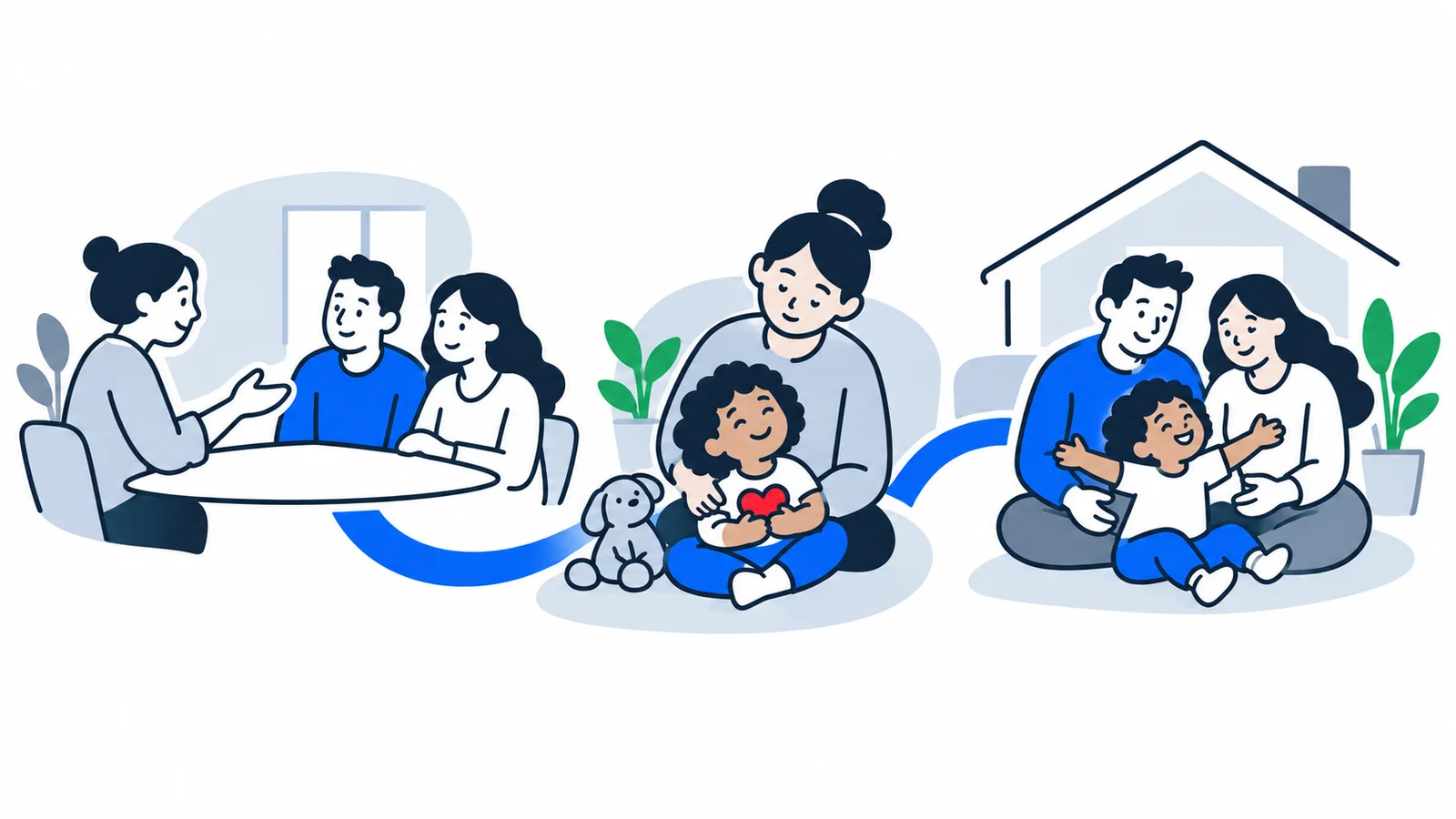
The first step is to apply for formal approval from Bufetat. You must complete an application form and attach documentation showing that you meet the requirements for adoptive parents. Bufetat will then conduct a home assessment to evaluate your circumstances. During the visit, the case handler will talk to you and your possible partner about your motivation for adopting, your values, and how you plan to create a safe and loving home for a child.
Once approval is given, the actual adoption process begins. For national adoption, Bufetat works to find a child that matches well with your family. For international adoption, Bufetat cooperates with authorised organisations in the countries from which children are adopted.
After a child is found, there is an adjustment period during which the child gets to know you and your family. This period varies, but can last from a few months to a year or more, depending on the child's age and experience.
When the adjustment is going well, the case goes to court. You must file for a court order yourself through the district court in your area. The court will evaluate the application based on reports from Bufetat and will focus on the child's best interests. The court order is the final legal basis for the adoption.
Throughout the entire process, Bufetat is your first point of contact. You can find your regional Bufetat on Bufetat's website. Costs for national adoption are low, while international adoption can be more expensive due to organisation staff salaries and travel expenses. However, many counties provide financial support to adoptive parents.
Adoption and citizenship for the child
A child who is adopted by Norwegian parents or parents in Norway automatically has the right to Norwegian citizenship from the adoption date. This applies to both children adopted domestically and internationally.
For internationally adopted children the process is as follows: when the court order on adoption is issued in Norway, the Tax Administration (which handles citizenship) automatically registers the child as a Norwegian citizen. The child receives a Norwegian personal identity number and can get a Norwegian passport. There is no separate application process for citizenship upon adoption.
It is important to know that an internationally adopted child may have dual citizenship for a period. This happens when the child's country of origin does not automatically revoke citizenship upon adoption. Norway permits dual citizenship for children, so this is not a problem. Many children later choose to retain dual citizenship as adults.
From the adoption is completed, the child has the same rights as all other Norwegian children: the right to education, healthcare, kindergarten, and all other welfare benefits. You must register the child in the Population Register as soon as possible after the court order is issued. You do this at your local tax office or digitally via skatteetaten.no.
For international adoption it is important that you ensure the child's original documents are in order before you travel home with the child. Bufetat will alert you to what you need to bring with you, including certified birth certificates and adoption certificates from the receiving country.
Immigrants who wish to adopt
If you are an immigrant or have permanent residence in Norway, you can apply to adopt a child. Bufetat accepts applications from all who meet the legal and practical requirements, regardless of your country of origin.
The most important requirement is that you have permanent residence in Norway (fixed address) and that you can show that you can financially support a child. You must also have a clean criminal record – Bufetat will check police records from both Norway and possibly from your country of origin.
If you are an immigrant, you should be aware that Bufetat will evaluate your connection to Norwegian society and culture. This is not to discriminate, but to ensure that the child has a safe and stable growing environment. If you have been in Norway for a short time (less than 1–2 years), Bufetat may be more cautious, but there is no fixed rule.
For international adoption it may be difficult if you wish to adopt from your country of origin. Many countries have rules stating that parents must be citizens or permanent residents of that country to be able to adopt. You must check with the country's adoption authorities or the authorised organisation working there.
Documentation may be more complicated if you are an immigrant. You must be able to present authorised documents and possibly have them translated into Norwegian by an authorised translator. This applies to secondary school education, work history, and other relevant documentation.
It is your full right to adopt if you meet the requirements. Bufetat is a knowledgeable and experienced actor that has handled many cases from immigrants. Contact your local Bufetat now if you are interested.