
The family counselling office is a free public service for couples and families. You need no referral. It helps with relationships, parenting cooperation, conflicts and compulsory mediation after separation when parents have common children under 16.
What is the family counselling office?
The family counselling office is a public service under Bufetat/Bufdir. It is for ordinary family problems before conflicts grow: couples who argue, parents who struggle to cooperate, children who need to be heard after separation, or families in crisis.
Bufdir says family counselling offices offer advice, guidance, courses and conversation groups. You can contact them yourself, and there are offices across Norway. The service works with relationships, parenting and family conflict, not acute child welfare cases.
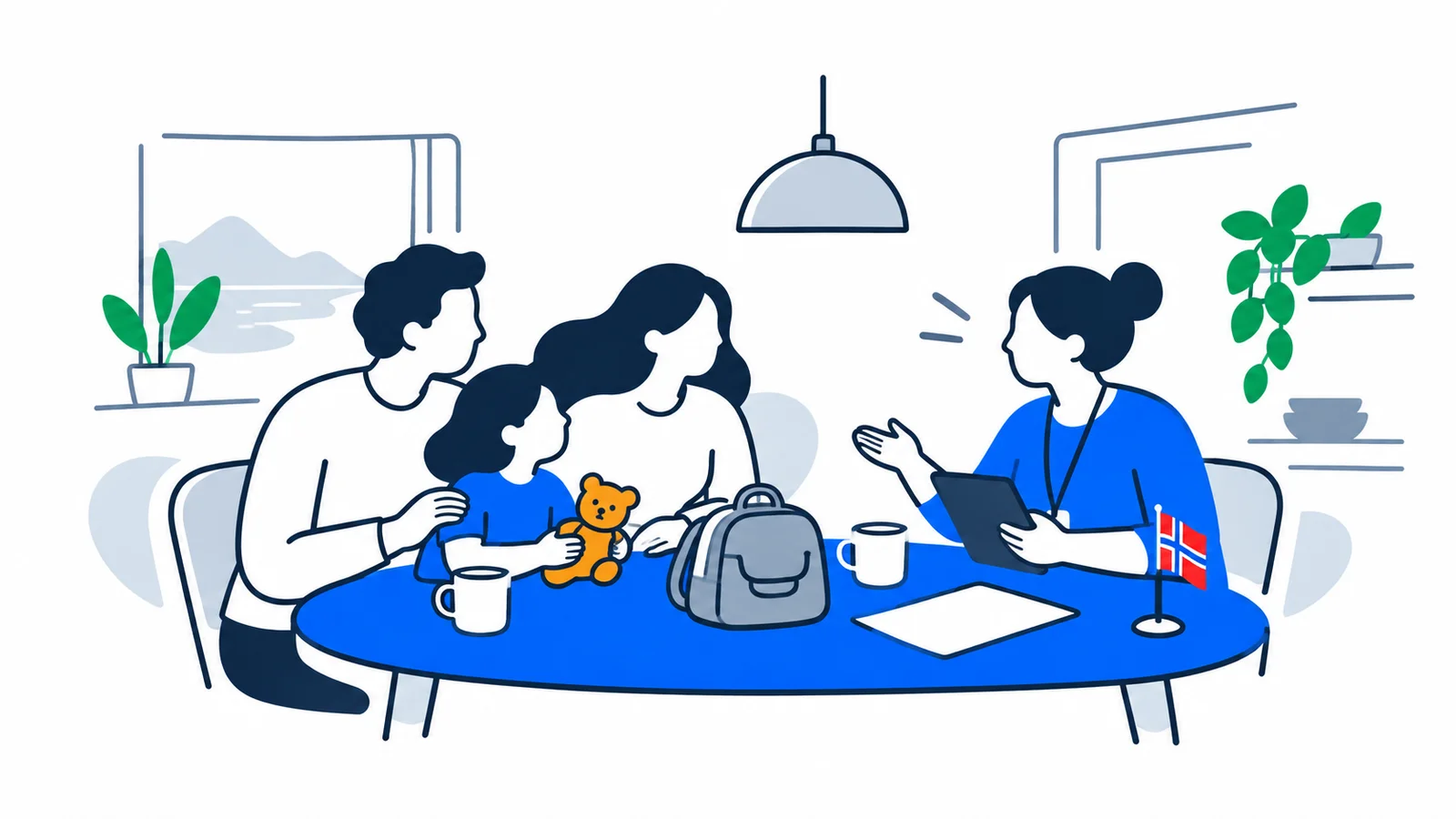
For immigrants it is important to know that this is not a control service. Family counselling is not barnevernet. You can talk about culture, finances, extended family, parenting and expectations in the relationship. Interpreters can be used when language makes participation difficult.
See also marriage and cohabitation in Norway.
Who can use it, and is it free?
All people in a family or couple relationship can contact the office: married people, cohabitants, parents together or apart, recently separated parents, children, young people and grandparents when the matter concerns family life.
The service is free. As of 28 June 2026, Bufdir states that family counselling offices offer advice, guidance, courses and groups without referral, and that services at the office are free. Usually you call the local office directly. Waiting time varies, and Bufdir’s 2025 annual report says high demand means not everyone receives help quickly, especially in large cities.
Say briefly what you need: relationship help, conflict about children, parent guidance, a conversation with a child, mediation, or violence and fear at home. Family counselling is not emergency help. If someone is in immediate danger, call police 112; for urgent health help call legevakt 116 117.
What help does it offer?
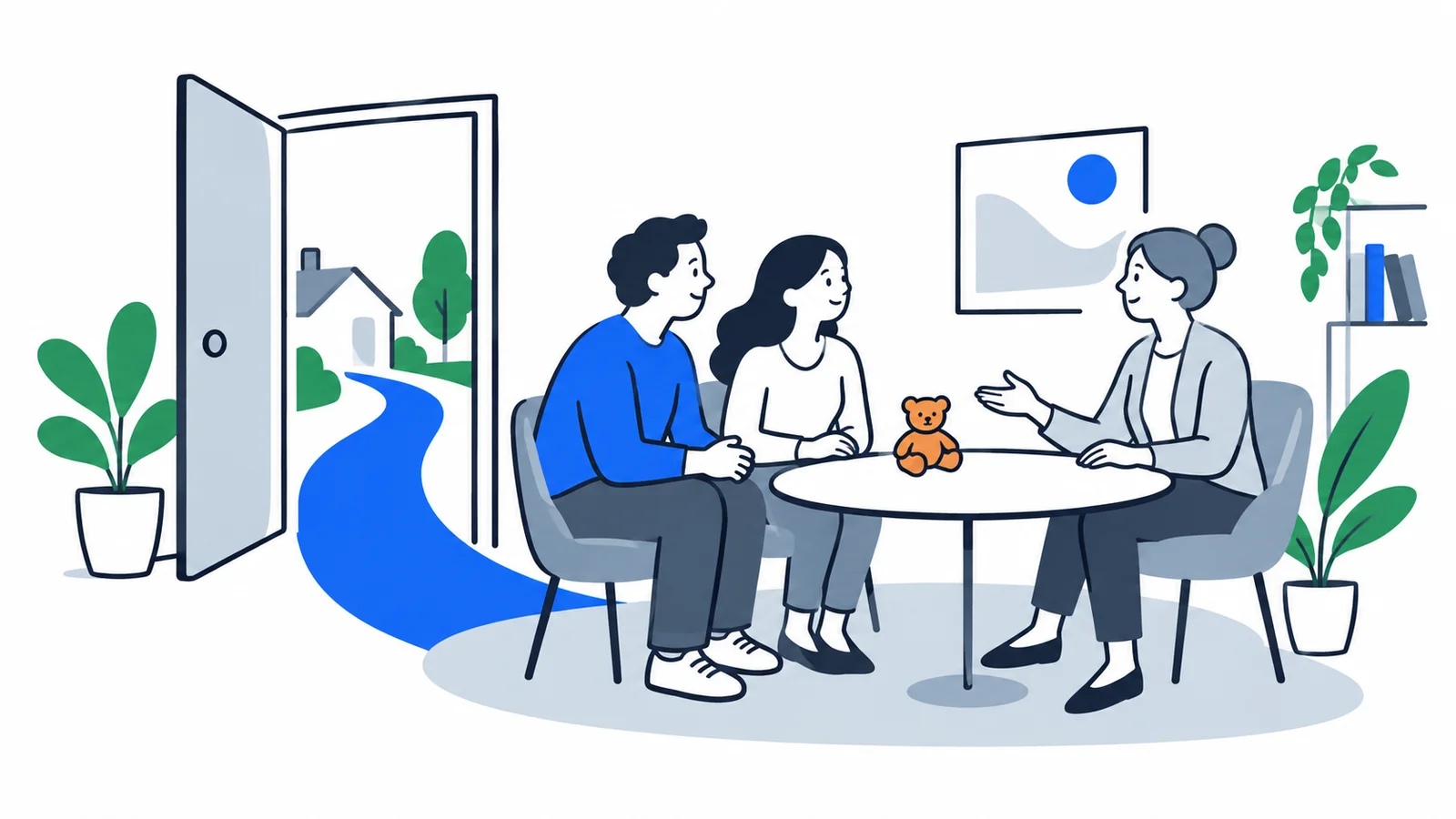
The office offers conversations and courses. Common help includes couples conversations, family conversations, parent guidance and cooperation after separation. Some come once; others attend several sessions.
Couples therapy may cover communication, trust, conflict, finances, sexuality or division of work at home. The therapist does not take sides, but helps you speak more concretely and less harmfully.
Parent conversations may cover boundaries, upbringing, strong reactions from children and disagreement about rules. Bufdir also offers Godt samliv, a course for first-time parents and a digital relationship course focused on the transition from couple to parents.
Courses vary by region and period. Examples are relationship courses, Fortsatt foreldre after separation, courses for parents of children with disabilities, anger management and groups for children living in two homes. NAV, health clinics, schools and doctors may inform you about the service, but you can call yourself. See NAV services for immigrants.
Mediation after separation
Mediation is a separate part of the service. In separation, divorce and parental disputes, parents with common children under 16 must attend mediation. This applies when parents separate and when they consider taking a case about parental responsibility, permanent residence or contact to court.
The goal is not to push parents back together. The goal is a parenting cooperation agreement: where the child will live, contact, holidays, handovers, information between homes and important decisions.
As of 28 June 2026, Bufdir says parents must attend one compulsory mediation hour. They can also receive up to 6 voluntary mediation hours. Mediation is free at the family counselling office and with approved external mediators.
After the first hour, parents receive a mediation certificate. It confirms attendance and is valid for six months. It is needed for separation applications, extended child benefit after cohabitation break-up and court cases about parental responsibility, residence or contact.
See divorce and separation in Norway.
Family counselling vs. child welfare
The short answer: family counselling helps families generally with relationships, parenting and conflict. Child welfare services protect children and young people when there is concern about their care situation.
Family counselling is mainly voluntary. It cannot decide that a child must live somewhere else, and using it is not a punishment. Many families use it to prevent conflicts from harming children.
Barnevernet is a municipal service with a different mandate. Bufdir explains that child welfare services must ensure safe upbringing conditions and necessary help and care at the right time. In serious situations, child welfare can propose measures the family does not want, under the Child Welfare Act and with appeal rights.
The family counselling office does not automatically report to child welfare because you ask for help. Staff still have a duty to act if they become seriously concerned about neglect, violence or abuse. Read more in child welfare in Norway for immigrants.
How to contact the office
Use Bufdir’s page for family counselling offices and find the office for your area. Call directly for an informal conversation or appointment. Say whether the matter concerns a couple, children, separation, mediation or safety.
If you need an interpreter, say so when booking. If you fear meeting the other parent because of violence or control, ask about separate mediation. The most important step is to contact them early.