
Quick answer: If you own a home in Norway, you almost always pay municipal charges (water, sewage, waste and chimney cleaning). Property tax in Norway, on the other hand, is optional for each municipality: 329 of 357 municipalities require it in 2026, while 28 municipalities have no property tax at all. Where it exists, the rate is a maximum of 4 per mille of an assessed value, often with a base deduction that makes the tax lower.
Property tax in Norway – what is it?
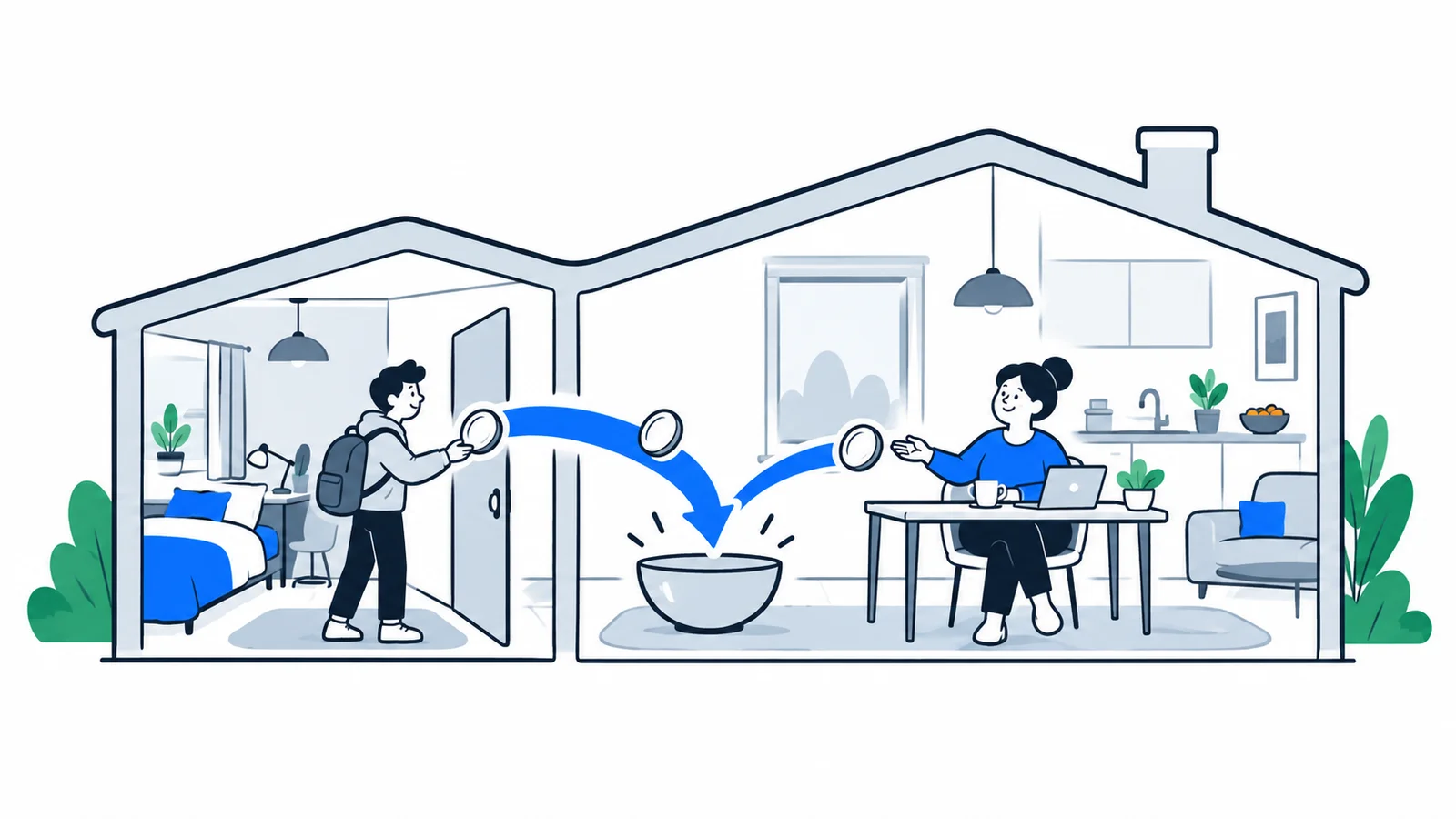
Property tax in Norway is a tax you pay to the municipality to own a property, for example a home, cabin or plot of land. It is paid in addition to ordinary income tax and wealth tax to the state. The rules are found in the property tax act (the law on property tax).
The most important thing to know: property tax is voluntary for the municipality. Each municipality decides for itself in its budget whether it wants property tax, how high the rate should be, and whether there should be a deduction. This is why neighbours in two different municipalities often pay completely different taxes for the same sized house. According to Statistics Norway (SSB), Norwegian municipalities collected almost 18 billion kroner in property tax in 2025.
Which municipalities have property tax?
Most, but not all. In 2026, 329 of 357 municipalities have property tax, while 28 municipalities do not. Not everyone in Norway pays property tax. If you are buying a home, you should check the specific municipality you are moving to. You will always find the rate and rules on the municipality's own website or in the municipal budget.
Want to understand how tax works in general? Read our guide to tax simply explained.
How much is the property tax? Per mille and base deduction
Property tax is calculated as a per mille (one thousandth) of a value the municipality sets on the home. For dwellings and vacation homes, the rate can be maximum 4 per mille of the assessed value (this limit was introduced in 2021). 4 per mille means 4 kroner per 1,000 kroner of value.
Two things usually make the tax lower than you might fear:
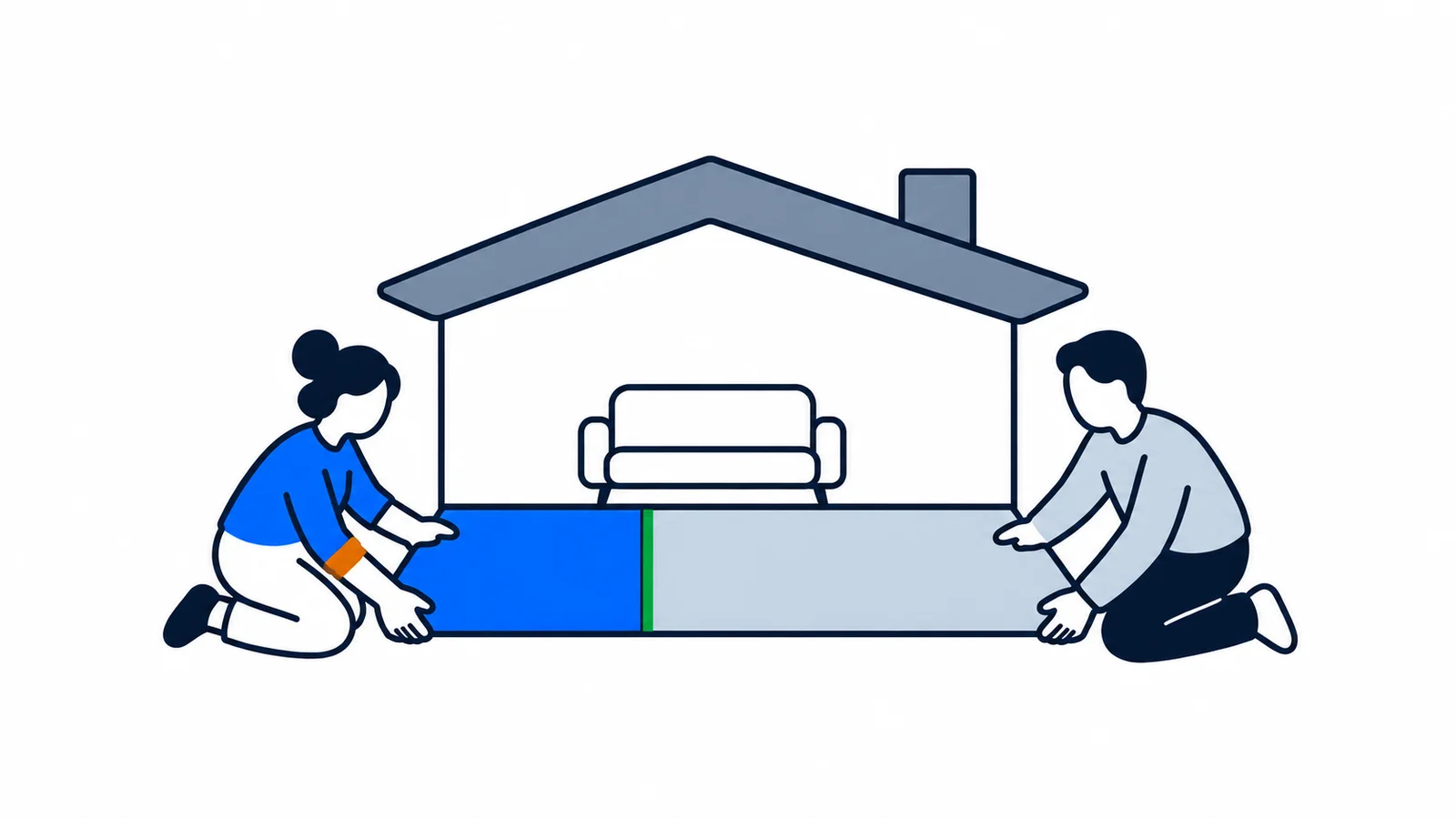
- The assessed value is not the full market price. The municipality should use a maximum of 70 percent of the home's value as the basis. Often they use the figure Statistics Norway (Skatteetaten) already has (the wealth tax basis for your home).
- Base deduction. Many municipalities deduct a fixed amount before calculating tax. In Oslo, the base deduction is up to 4.9 million kroner per dwelling unit in 2026, and in Bergen 750,000 kroner. If the base deduction is higher than the home's value, you pay nothing.
When a municipality introduces property tax, the rate in the first year can be a maximum of 1 per mille, and it can only increase by 1 per mille per year. The tax cannot jump straight to the top.
A simple calculation example: a home worth 3 million kroner gives a basis of 70 percent = 2.1 million. If you subtract a base deduction of 1 million, you are left with 1.1 million. At 3 per mille, the tax becomes 3,300 kroner per year. If you live in a municipality without property tax, you pay 0 kroner.
For commercial property (shops, offices and industry), the rate can be higher – up to 7 per mille – but for your own home, 4 per mille is the limit. If you think the municipality has set your assessed value too high, you can appeal. You usually have six weeks from when you receive the tax bill, and you send the appeal to the municipality.
Municipal charges: water, sewage, waste and chimney cleaning
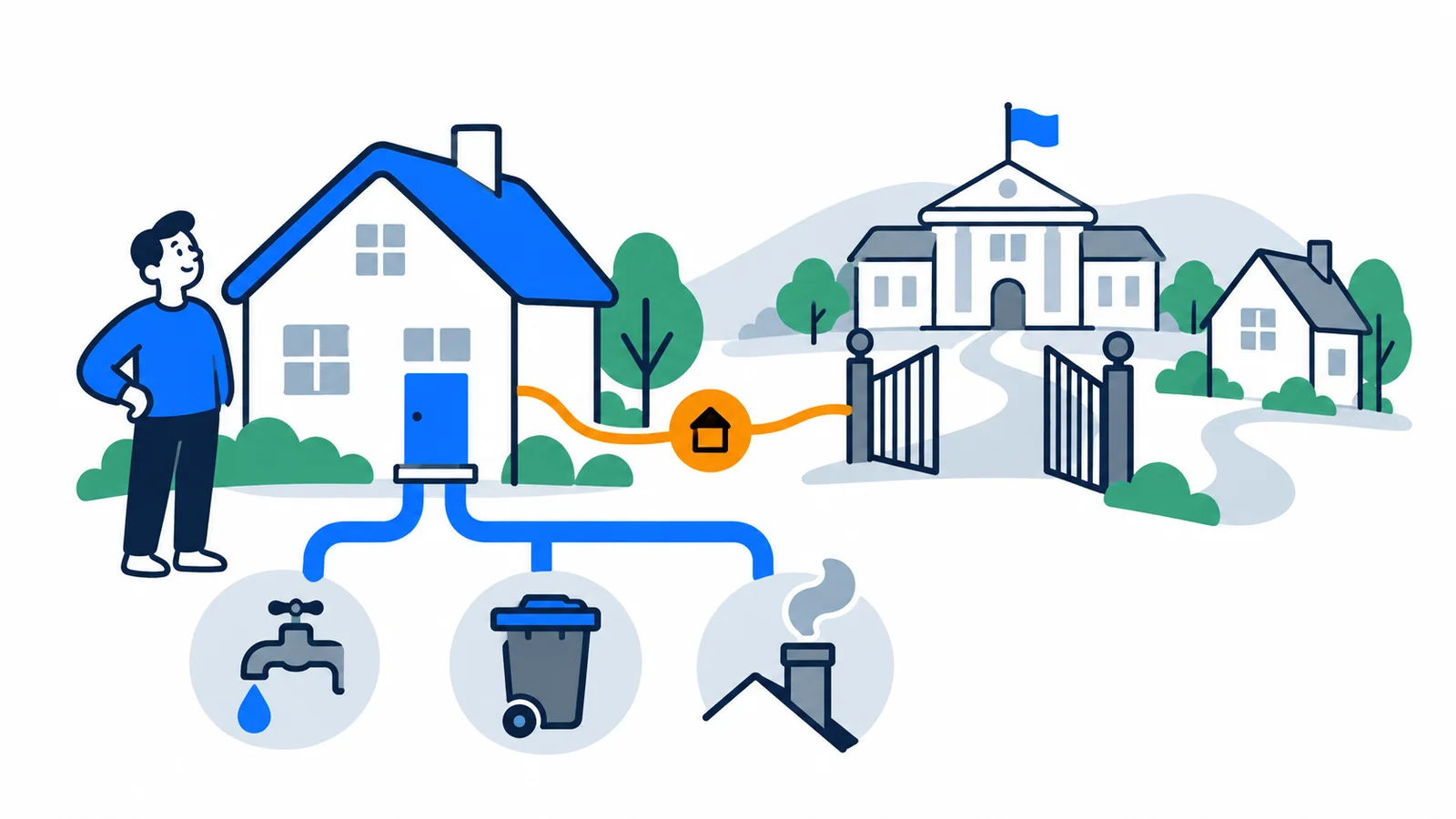
This is the bill (almost) all homeowners receive, regardless of municipality. Municipal charges (also called municipal fees) are payment for services you use, not a tax. The most common ones are:
- Water – clean water into the home.
- Sewage (sewer) – wastewater out.
- Waste – garbage and waste collection.
- Chimney cleaning and inspection – cleaning and inspection of chimney/flue.
The charges follow the cost recovery principle. This means the municipality is not allowed to make a profit from them – you only pay what the service actually costs. The price still varies a lot because costs are different. In 2026, the national average is about 21,361 kroner per year, an increase of 5.6 percent from 2025. In some municipalities you pay under 12,000 kroner, in others over 40,000.
| Item | What it is | Who pays |
|---|---|---|
| Property tax | Tax to the municipality | Only in municipalities with property tax (329 of 357 in 2026) |
| Water and sewage | Fee, cost recovery | Nearly all homeowners |
| Waste | Fee, cost recovery | Nearly all homeowners |
| Chimney cleaning and inspection | Fee, cost recovery | Homes with chimneys |
The bill usually comes 2–4 times a year (quarterly), often together with any property tax on the same invoice from the municipality.
Do you pay this as a tenant?
No, not directly. If you rent a home, it is the owner (landlord) who pays property tax and municipal charges. The cost is usually already included in the rent you pay each month. You should not receive a separate bill from the municipality for water or waste when you rent. If you live in a co-operative or condominium, you pay through the shared costs. Considering buying? Read about co-operatives or ownership in Norway and see how costs differ.
How does this fit into your finances?
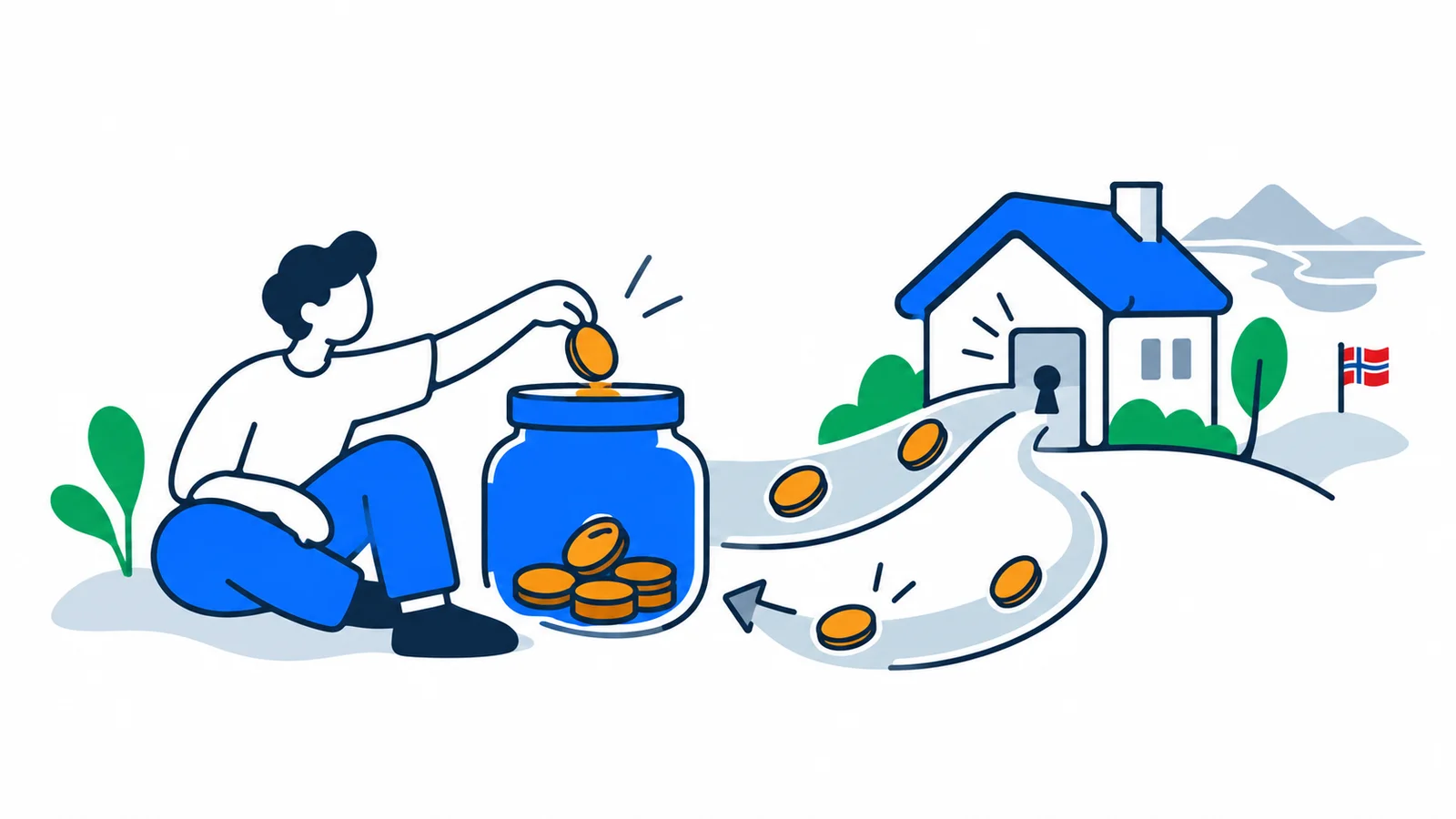
Property tax and municipal charges are fixed costs you should budget for before buying a home. Include them in your budget along with loans, electricity and insurance. A good tip is to ask for an overview of fixed municipal costs before you make an offer on a home – this way you avoid surprises after moving in. The homeowners' organization Huseierne and the reference work Store norske leksikon (snl.no) have more information about the rules if you want to dig deeper. If you are buying for the first time, our guide to buying a home as an immigrant and overview of personal finances in Norway can help.
Understanding tax, charges and housing is also part of the curriculum for the Civic Knowledge Test and citizenship test. On SamfunnPrep you practice exactly these topics about economics and Norwegian society, explained in simple language. Want to become more confident in both the test and everyday finances? Try SamfunnPrep free and get started today.