
Home fire safety is a legal requirement in Norway. You must have at least one smoke alarm on each floor and either a fire extinguisher or a fire hose. Here are the rules and who is responsible – whether you're renting or the landlord.
Smoke Alarms on Each Floor
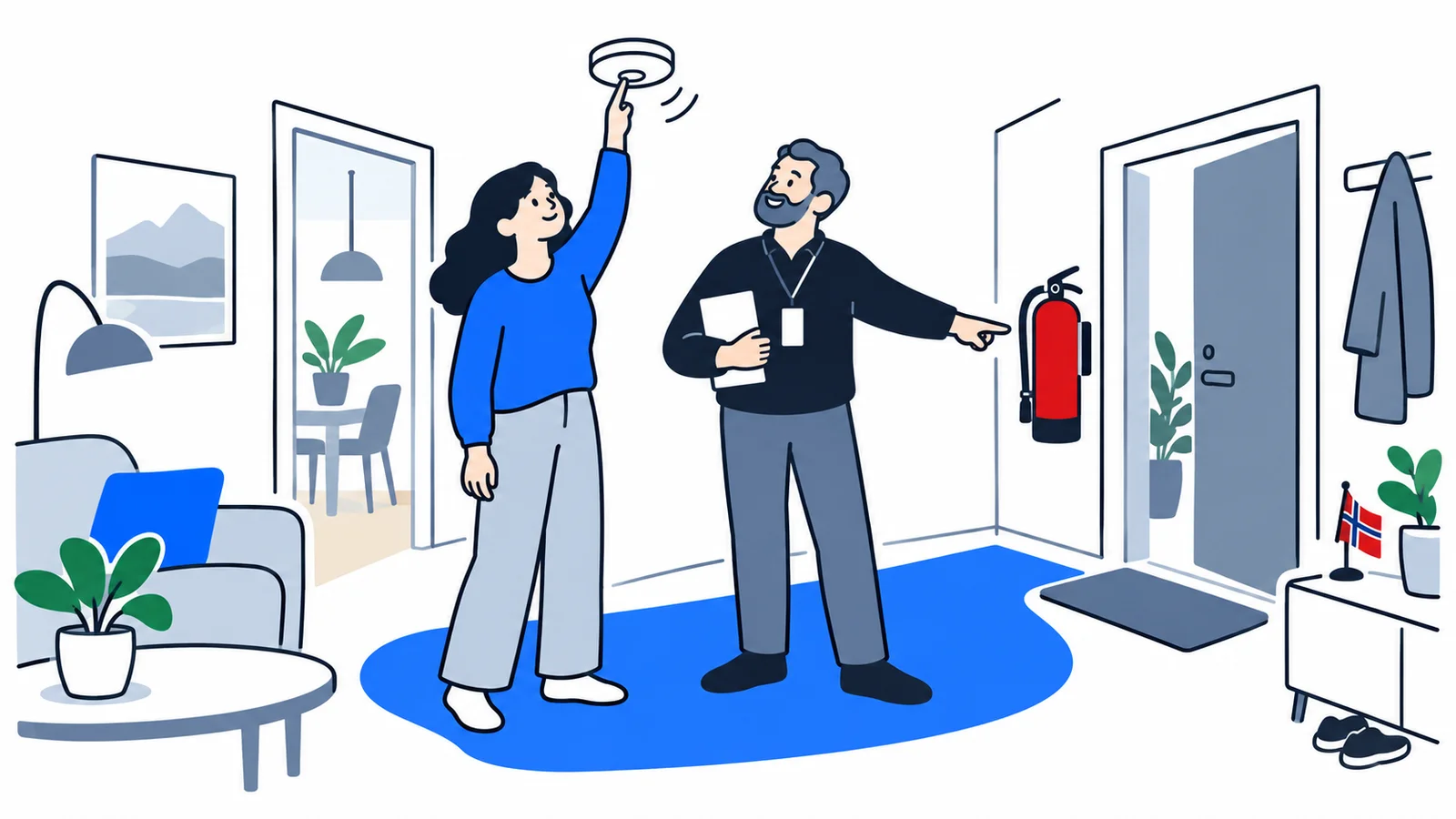
The law requires that each home has at least one smoke alarm on each floor. The alarm must be clearly audible in all bedrooms, even when the doors are closed. The rules are laid out in the fire safety regulations.
Here's how to care for your smoke alarms:
- Test them regularly, ideally once a month by pressing the button.
- Change the battery every year. A good reminder is 1. desember, which is Smoke Alarm Day.
- Replace the smoke alarm itself after 8–10 years.
- If it beeps softly? That means the battery is almost empty – replace it right away.
Fire Extinguishing Equipment at Home
Every home must also have fire extinguishing equipment that reaches all rooms. You can choose between:
- a fire extinguisher with powder of at least 6 kilo, or
- a permanently mounted fire hose that reaches all rooms in the home.
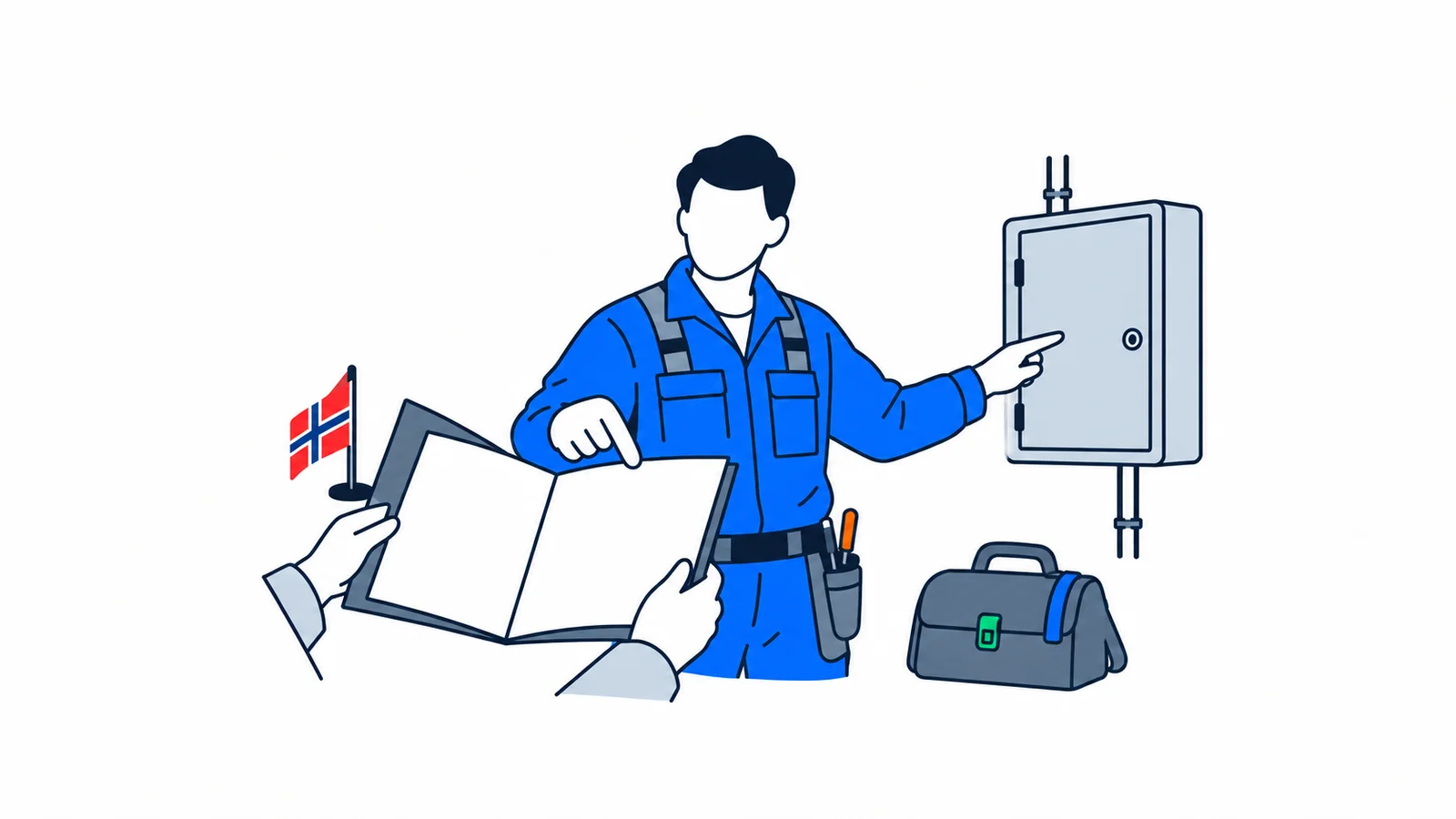
Check the pressure on the extinguisher from time to time, and hang the hose so it's easy to use. If you have a fireplace, you should also know where the main water shut-off and fuse box are.
Who Is Responsible When You Rent?
When you rent a home, the responsibility is shared between the landlord and you as the tenant:
- The landlord must ensure the home has enough smoke alarms and fire extinguishing equipment, and replace any old equipment.
- You as the tenant should test the smoke alarm, change the battery, and tell the landlord if anything is broken.
If you're unsure, ask your landlord when you move in. This should also be covered in your rental agreement.
Chimney Sweeping and Heating
If you have a fireplace (fireplace or wood stove) and a chimney, the municipality's chimney sweep will come and sweep the chimney and inspect the heating system. You pay a chimney sweep fee as part of your municipal taxes. How often the chimney sweep comes depends on your needs.
If you're firing with wood for the first time, read up on safe heating – many fires start in and around fireplaces. The guide about your first winter in Norway has more tips.
What Do You Do If There's a Fire?
If a fire starts, the order is simple: evacuate, alert, extinguish.
- Evacuate: get everyone out of the home first. Close doors behind you to slow down the fire and smoke.
- Alert: call the fire department on emergency number 110 once you're safely outside.
- Extinguish: only try to put out a small fire if you're not putting yourself at risk.
Never go back inside to get things. It's a good idea to agree on a fixed meeting place outside so you know everyone has got out. Smoke is more dangerous than the flames themselves – stay low where the air is best.
Prevent Fire in Daily Life
Most people who die in fires die at home. Common causes are candles, smoking, and problems with electrical devices. Simple steps help a lot:
- Blow out candles when you leave the room.
- Never leave the stove on unattended – dry cooking is a common cause of fire. New kitchens must have a stovetop shutoff that cuts power in an emergency.
- Don't overload electrical outlets, and unplug chargers when you sleep.
Home fire safety is part of being prepared at home; also see emergency preparedness in Norway. Safety, housing, and preparedness are also topics you'll meet in the citizenship exam. On SamfunnPrep you can learn more and practise for free. Want to test your knowledge? Try SamfunnPrep for free.