
Tax in Norway is simpler than it looks. Your employer deducts tax from your pay every month based on your skattekort (tax card), so you do not have to calculate anything yourself. Most wage earners pay around 25–35 % of their income, and many foreign workers can also choose the simple kildeskatt (PAYE — Pay As You Earn) scheme with a flat 25 % tax.
What does your tax pay for?
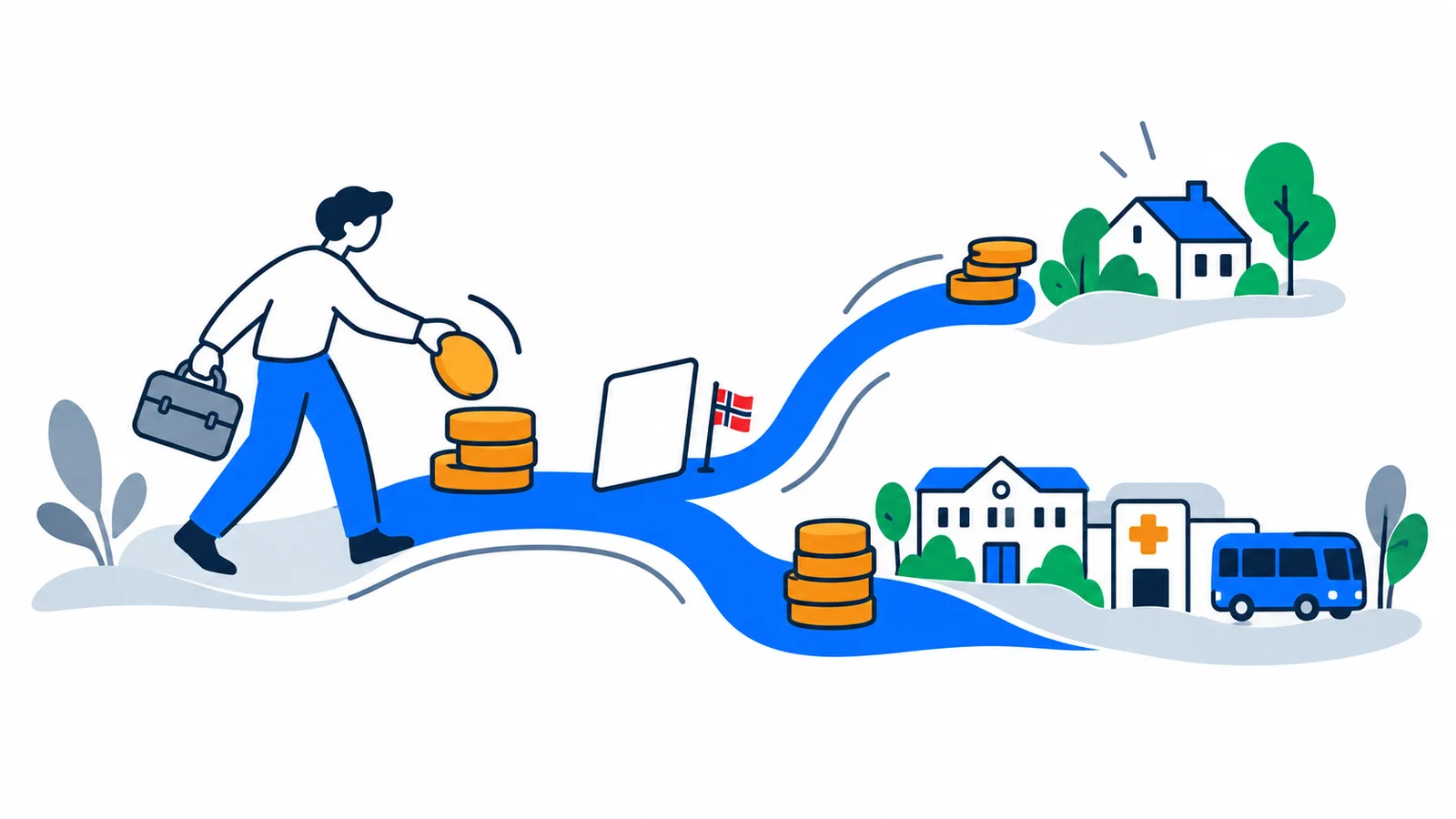
Tax is what we pay together for the welfare state. The money goes, among other things, to:
- free school and subsidised kindergarten
- GP, hospital and health services
- pension, sick pay, unemployment benefit and other NAV benefits
- roads, public transport, police and defence
The more you earn, the more tax you pay — but even those on low incomes have access to the same welfare services. In Norway you pay tax on income (wages, pension and self-employment) and on wealth above a certain level.
Skattekort (tax card) and advance deduction
When you start a job, your employer retrieves your skattekort electronically from Skatteetaten. The skattekort shows the withholding percentage the employer should use. You need a Norwegian national identity number or d-number (d-nummer) to get a skattekort.
Each month the employer withholds tax from your pay and sends it to the state. This is called forskuddstrekk (advance deduction) — you pay your tax a little at a time throughout the year, not as one large bill at the end.
- If you have no skattekort, your employer must deduct 50 %.
- If your income changes significantly, you should update the skattekort yourself at skatteetaten.no. If too little is deducted during the year, you may receive restskatt (a tax bill) the following year.
The building blocks of income tax
For a typical wage earner, tax consists of three parts:
- Tax on ordinary income – 22 %. A flat rate on income minus deductions (for example the standard deduction and mortgage interest deduction).
- Trygdeavgift (National Insurance contribution) – 7,6 % of gross pay in 2026. It funds the national insurance scheme (Folketrygden), covering pension, sick pay and similar benefits.
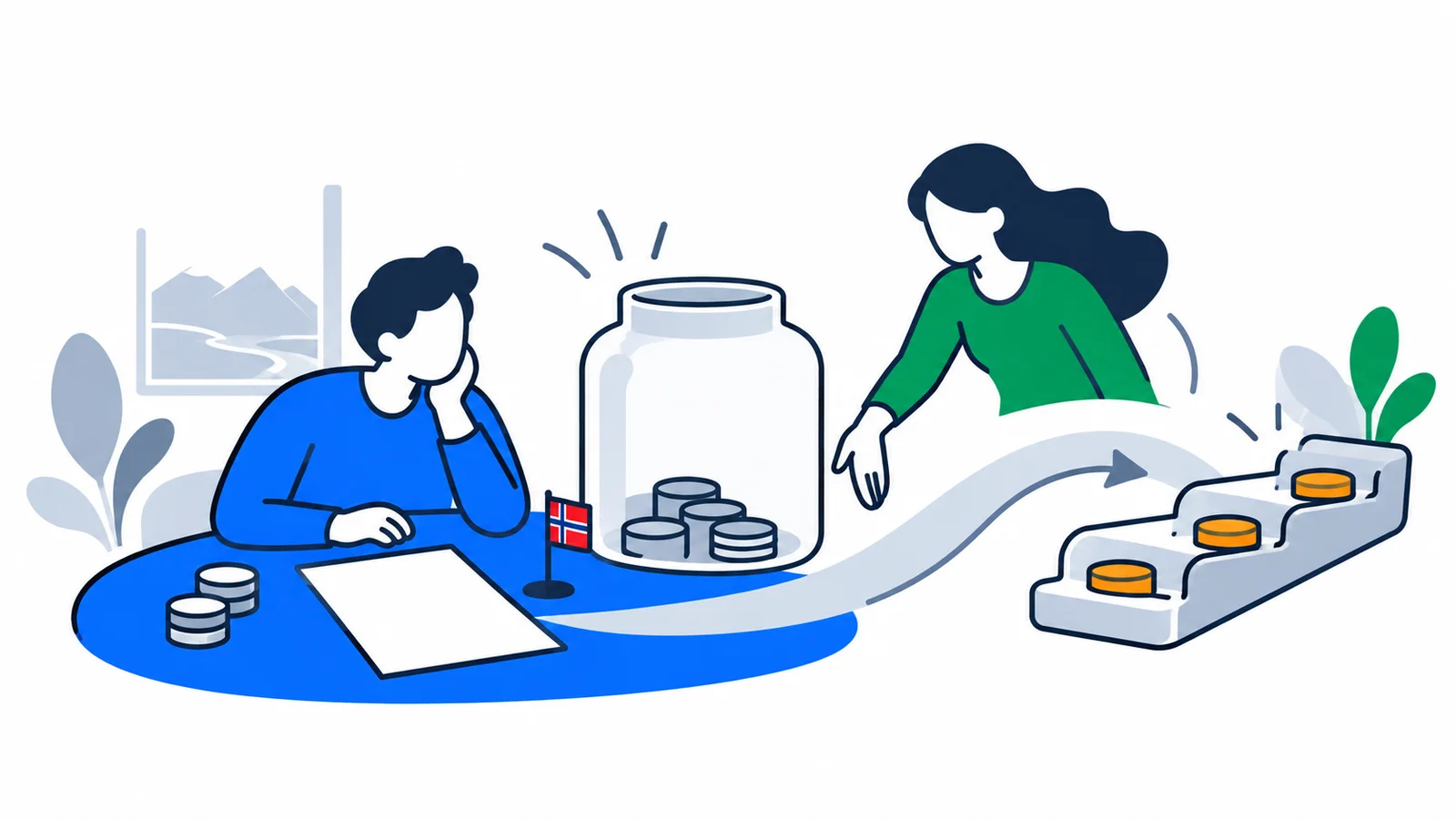
- Trinnskatt (bracket tax) – an additional tax that only kicks in on higher income, step by step.
The trinnskatt rates for 2026 are as follows:
| Income above | Trinnskatt |
|---|---|
| 226 100 kr | 1,7 % |
| 318 300 kr | 4,0 % |
| 725 050 kr | 13,7 % |
| 980 100 kr | 16,8 % |
| 1 467 200 kr | 17,8 % |
You only pay the higher rate on the portion of income above each threshold — not on your entire salary. If you earn less than 226 100 kr, you pay no trinnskatt.
That is why the average tax rate is lower than many people think. If you earn, for example, 500 000 kr in 2026, your average tax will broadly be around 20–25 % after deductions — meaning you keep clearly more than three-quarters of your pay.
Kildeskatt (PAYE): the simple scheme
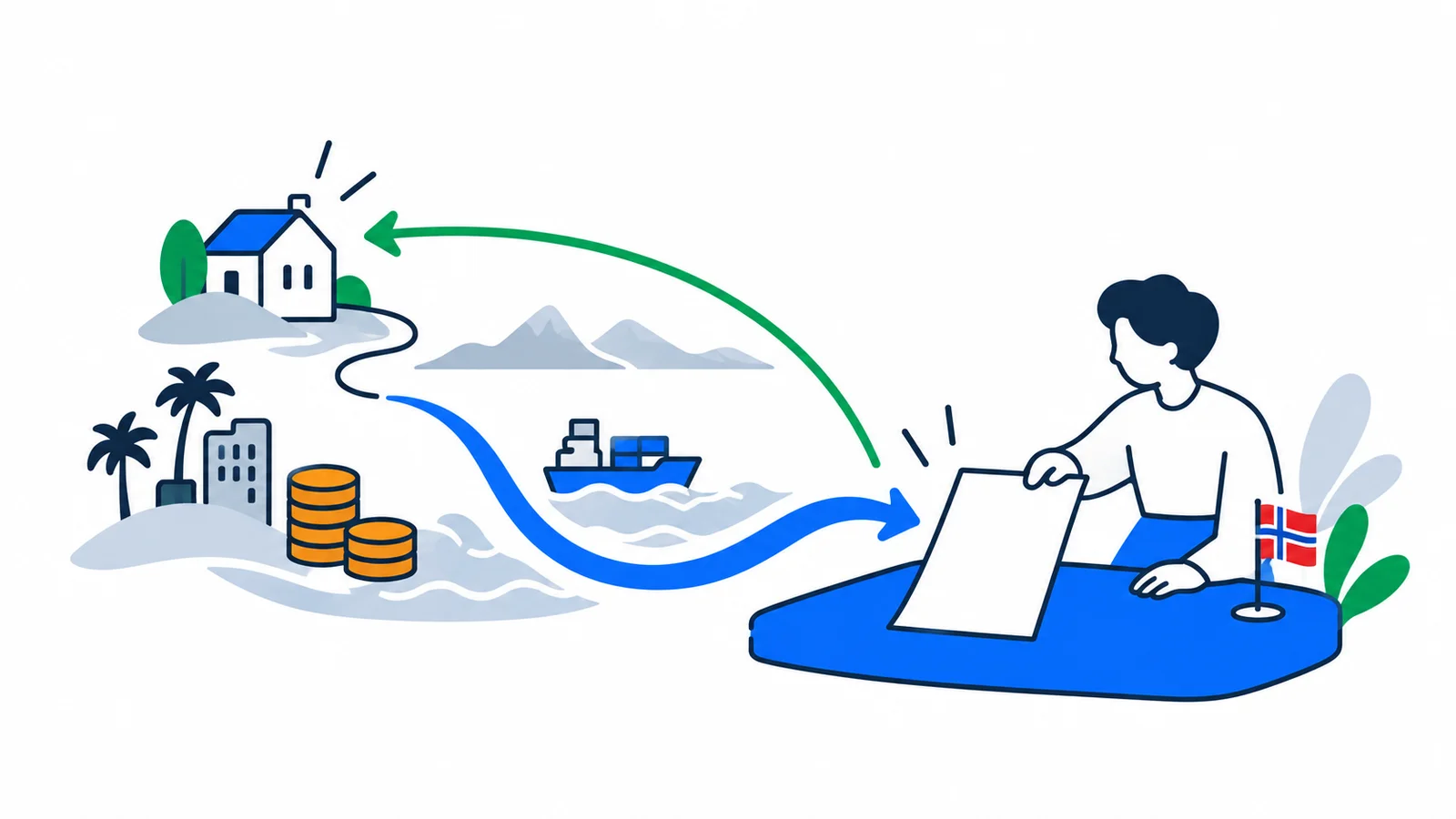
Many people who come to work in Norway for a shorter period are automatically placed in the kildeskatt på lønn (in English, PAYE — "Pay As You Earn") scheme. You then pay a flat rate of 25 % on your pay, and trygdeavgift is already included. If you are exempt from trygdeavgift in Norway, the rate is 17,4 % in 2026.
The advantage is that everything is settled: the tax is paid immediately, you do not receive a skattemelding, and there is no tax settlement.
You can use kildeskatt as long as your income is below 725 050 kr in 2026. If you earn more, or have large deductions (for example mortgage interest, commuting costs or childcare expenses), it may be worth opting out of the scheme and being taxed in the normal way instead. You then file a skattemelding like everyone else.
Skattemelding (tax return) and tax settlement
Every spring, most people receive a pre-filled skattemelding from Skatteetaten with an overview of income, deductions and wealth. You must check that the figures are correct, add any deductions you are entitled to, and submit — usually by 30 April.
Afterwards comes the tax settlement:
- If you have paid too much tax during the year, you get money back.
- If you have paid too little, you must pay restskatt.
There are several deductions immigrants are often entitled to. Read more about how to fill in the skattemelding.
Frikort (tax exemption card) if you earn little
If you earn little during a year, you do not need to pay tax. In 2026 you can earn up to 100 000 kr tax-free with a frikort. This is useful for students, young people and part-time workers.
- You view and order your frikort at skatteetaten.no.
- If you have several employers, you must allocate the amount between them yourself.
- If you earn more than 100 000 kr without a skattekort, your employer deducts 50 % on the amount above the threshold.
Read more about frikort and tax-free income.