
Places with a story
Kylling bru
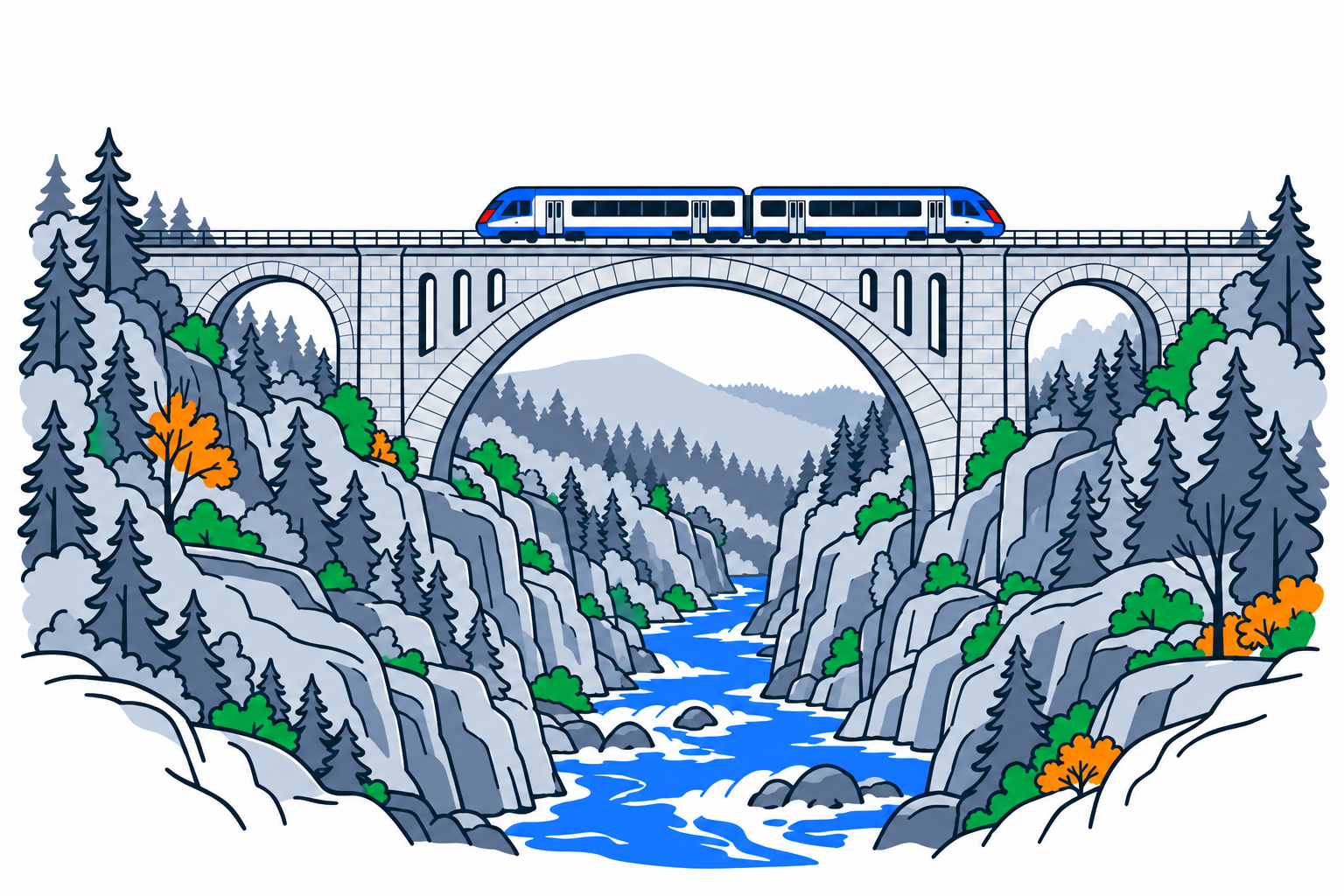
Kylling bru carries the Raumabanen railway high above the River Rauma at Verma. The stone arch is a striking example of how railway engineers negotiated the steep landscape of Romsdalen, and it remains part of a working line rather than an isolated monument.
The place3
Bane NOR's heritage plan describes a granite arch spanning seventy-six metres between the hillsides, approximately fifty-nine metres above the river. Stone-arch bridges and turning tunnels suited the difficult terrain along Raumabanen. At Kylling, the structure and the valley can be read together as a response to the challenge of fitting a railway into the landscape.
History and local connections32
The heritage plan places the start of bridge construction in 1913 and describes a ten-year building period. Raumabanen was completed in 1924. The line connected Dombås and Åndalsnes and became important for passenger and goods traffic into Romsdalen, giving this ambitious crossing a practical purpose beyond its later fame as a photographic subject.
What to look for1
The local visitor guide identifies a signed path below the shop at Verma to a viewpoint with an information board. From a suitable viewing place, compare the dressed stone and broad arch with the scale of the river valley. A passing train reveals the bridge's continuing function; nearby Vermafossen provides another feature of the same dramatic terrain.
Planning a visit12
Use the local visitor guidance to find the viewpoint and consult the train operator for current departures if you hope to see a crossing. Observe from public paths and viewing areas, keeping away from railway tracks and operational infrastructure. Weather and the path surface should guide your choice of footwear and timing.
Sources
Last checked:
More places in Møre og Romsdal


SamfunnPrep
Discover Norway. Prepare for the test.
Practice questions, clear explanations and mock exams.