
Human trafficking and severe labour exploitation are criminal offences in Norway. Warning signs include your employer taking your passport, withholding wages, or controlling where you live. You have rights regardless of immigration status. You can get help – call ROSA 22 33 11 60, open 24 hours, or call the police 02800.
Many people come to Norway to work. Most find a safe workplace. But some are exploited. This guide explains what human trafficking and severe labour exploitation are, how to recognise the warning signs, and where to get help. The aim is to strengthen your rights, not to frighten you.
What is human trafficking and severe labour exploitation?
Human trafficking is exploiting another person for example through work, prostitution, begging or crime. This is set out in the Criminal Code § 257 (the law that determines what is punishable).
The law applies when someone uses force, threats, abuse of a vulnerable situation, or other improper conduct. A 'vulnerable situation' can be being new to the country, not speaking the language, or having debt. Forced labour and forced services are part of this. The punishment is imprisonment for up to 6 years. Serious human trafficking is punished even more severely.
Severe labour exploitation is not always the same as human trafficking. But they are connected. It is about employers who exploit people with very low wages, dangerous work, and threats. This is often called workplace crime (a-krim).
How do you recognise the warning signs?
You recognise the warning signs when your freedom and money are controlled by others. A single sign does not necessarily mean human trafficking. But several signs together are serious.
Be alert if:
- Your employer takes your passport or ID 'for safekeeping'.
- You do not get paid, or your wages are withheld.
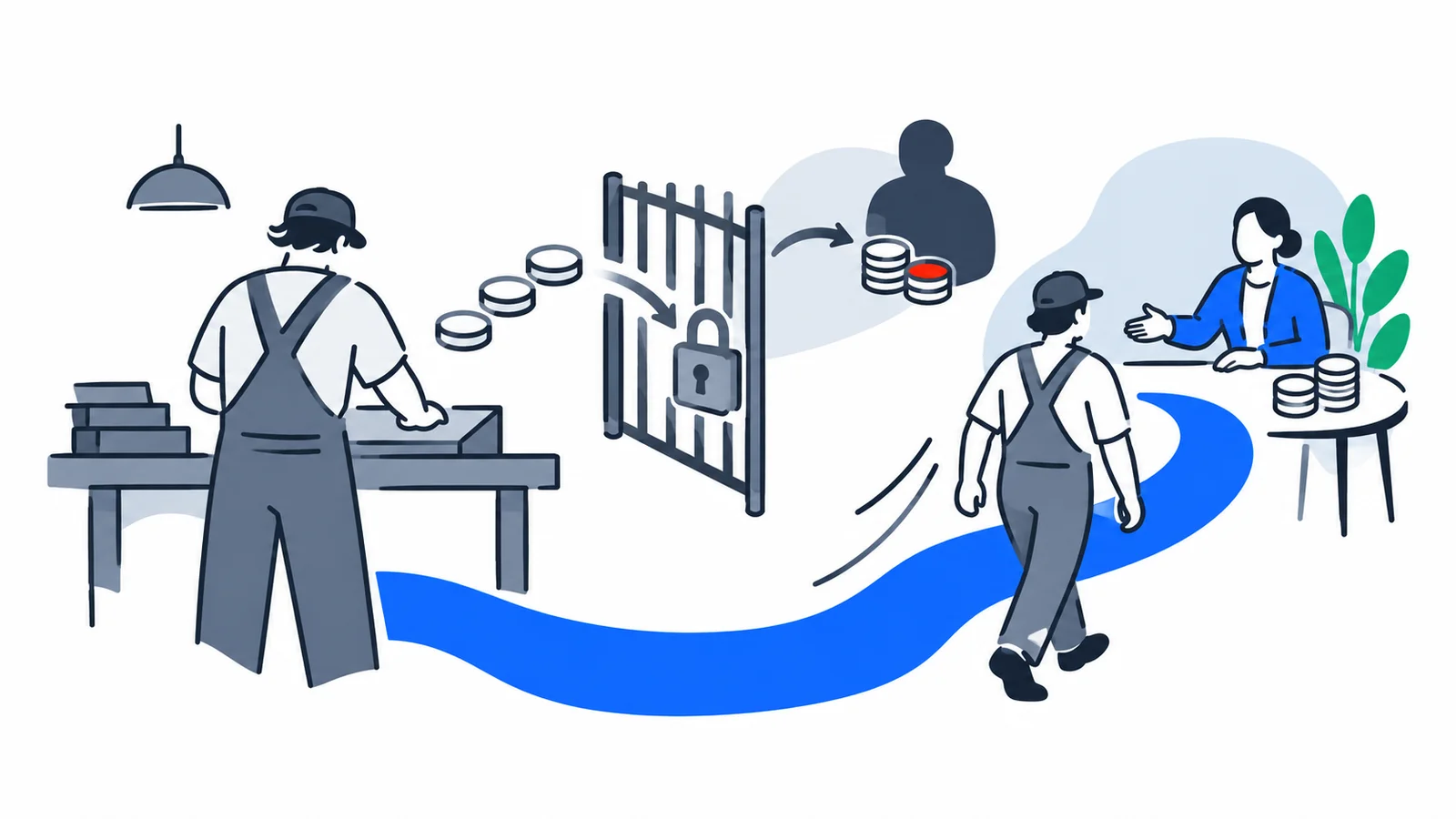
- You must pay off a 'debt' for travel, food or housing, and the debt only grows.
- You have no written employment contract.
- Someone threatens you or your family, or says you will be sent out of the country.
- Your employer decides where you live and who you can talk to.
- You work very long hours, with no time off and no overtime pay.
If you recognise yourself in several of these points, you should seek help. You can read more about your rights as an employee.
Is it illegal for your employer to take your passport and force you to work?
Yes. Taking your passport to force you to work can be human trafficking under the Criminal Code § 257. Your passport is yours. No employer has the right to withhold it.
Withholding wages you are entitled to is also illegal. No one should threaten you into working or into silence. If you are in danger now, call the police on 112.
What rights do you have – regardless of immigration status?
You have rights at work even if you do not have legal residence. Your rights follow your work, not your papers.
You have among other things the right to:
- Wages for the work you have done.
- A written employment contract.
- A safe working environment according to the rules on health, environment and safety (HSE).
An employment contract must always be in writing. It protects you. Learn what it must contain in the guide about employment contracts in Norway. If you are lured into working without papers, also read about undeclared work and why it weakens you.
Can you get help even if you are unlawfully in Norway?
Yes. You can get help and protection from Norwegian authorities even if you are unlawfully in the country. Norway has a system with a low threshold for helping possible victims.
An important tool is the reflection period. It is a temporary residence permit for 6 months. The UDI (Directorate of Immigration) issues it. During this period you can get away from the person exploiting you, and get help. You do not need to report the crime immediately to get a reflection period. Note: the 6-month period cannot be renewed (as of 2026-07-08).
After the reflection period you can get a limited residence permit for up to one year. It can be renewed if it is necessary for the investigation or the court case.
Who can you contact for help?
You can contact several places for free. Many of them have confidentiality obligations. You decide yourself whether you want to report.
| Who | Contact | When |
|---|---|---|
| Police (emergency) | 112 | Always, acute danger |
| Police | 02800 | 24 hours a day |
| ROSA (help for victims) | 22 33 11 60 | 24 hours a day |
| Working Environment Authority advice line | 73 19 97 00 | Mon–Thu 09–11 and 12–14 |
ROSA stands for Rehabilitation, Accommodation, Security and Assistance. ROSA helps people over 18 years old, arranges a safe place to live and provides advice. The Working Environment Authority ensures wages and working conditions. You can tip off anonymously at tips.arbeidstilsynet.no.
The police, the Working Environment Authority, NAV and the Tax Administration work together in eight workplace crime centres (centres against workplace crime): Oslo, Bergen, Trondheim, Stavanger, Kristiansand, Bodø, Tønsberg and Alta. The Coordination Unit for Victims of Human Trafficking (KOM) in the Police Directorate coordinates this work nationally. A trade union can also help members with wages and agreements.
If you want to report the case, you can prepare yourself with the guide about reporting to the police.
How to check the job and employer before you come
Check your employer before you travel to Norway. Good information is the best protection.
- Ask for a written employment contract with wages, working hours and tasks before you start.
- Check that the company exists in the Brønnøysund Register (the public register of companies).
- Be suspicious if someone demands payment to give you a job.
- Keep your passport, bank account number and documents yourself.
- Tell family or friends where you will work and live.
Knowing your rights in the workplace is part of the syllabus for the Citizenship Test. On SamfunnPrep you can practise for free on this and become more confident in meeting Norwegian working life. The tool First week in Norway helps you get off to a good start. Practise for free on SamfunnPrep.