
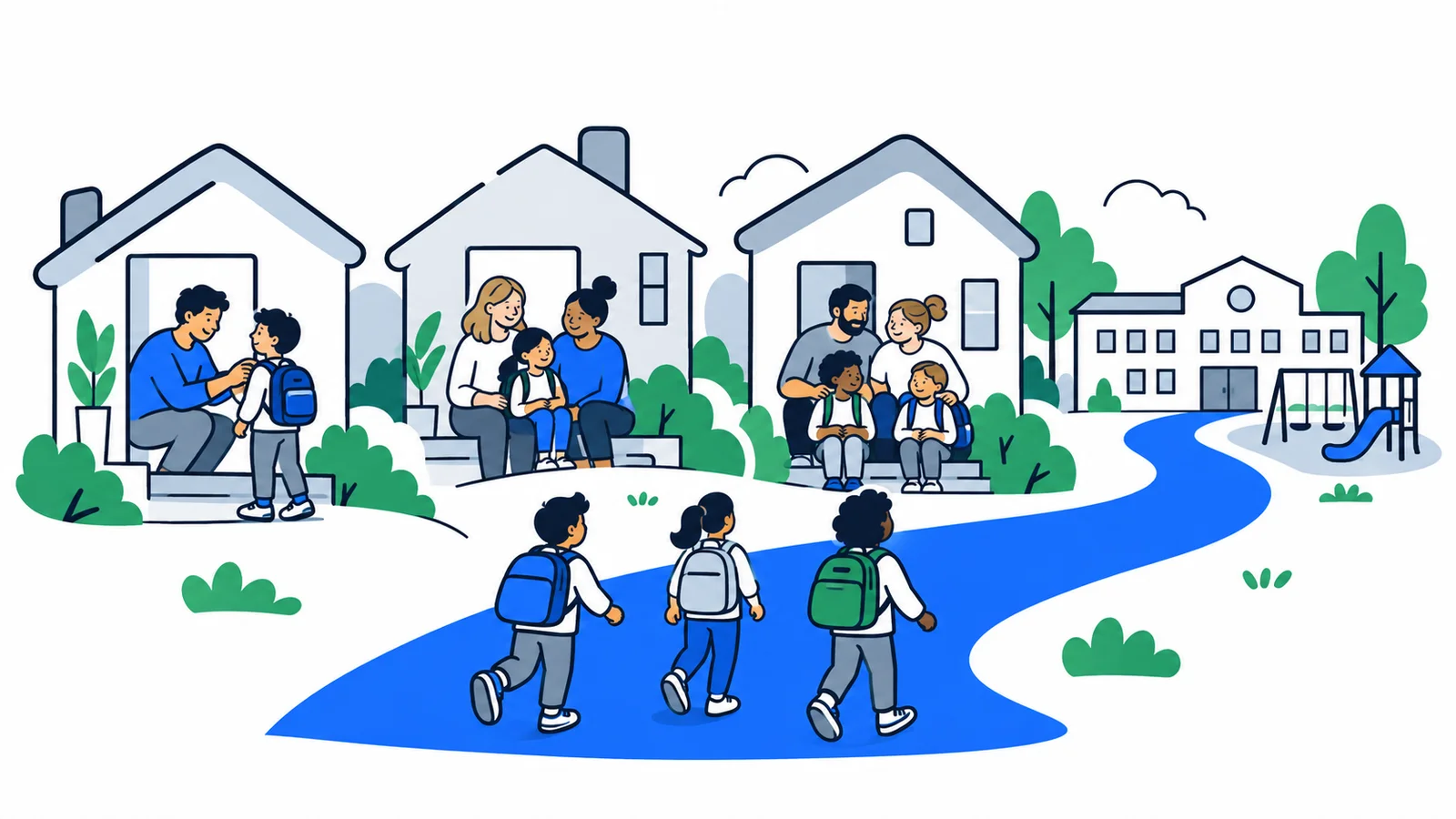

Family forms in Norway are many: nuclear family, cohabiting couples, single parents, blended families and same-sex couples. All are equal under the law, and children have the same rights regardless of which family they grow up in.
What Do We Mean by Family Forms in Norway?
Family forms in Norway are the different ways people live together as a family. There is not just one right way. A nuclear family is two adults and their children. But many families look different, and all are equally valuable.
Norway is a society with great diversity. You can meet married couples, cohabiting couples, parents living alone with children, and families that have been formed anew. This is closely connected to equality in Norway and respect for the individual. The law treats family forms equally.
Families with children are very common. As of January 1, 2025, there were approximately 628,500 families with children in Norway, with a total of around 1,092,900 children under 18 years (SSB, 2025). Approximately 77 percent of children lived with both parents, whether the parents were married or cohabiting.
Here are the most common family forms:
| Family Form | Brief Explanation |
|---|---|
| Nuclear family | Two adults who are married or cohabiting, and their children |
| Cohabiting couple | Two adults living together without being married |
| Single parent | One parent living with a child without a partner |
| Blended family | A new family with children from previous relationships |
| Same-sex couple | Two people of the same gender, married or cohabiting |
| Multi-generational household | Children, parents and grandparents in the same home |
Is Cohabitation More Common Than Marriage?
Marriage is still common, but cohabitation has become much more widespread. A cohabitation is when two adults live together as a couple without getting married.
Statistics from the Central Bureau of Statistics (SSB) show a clear change. Among adults from age 18, 48 percent lived with a spouse in 2005, while the proportion fell to 39 percent in 2025. During the same period, the proportion of cohabiting couples rose from 12 to 19 percent.
Many children are born into a cohabitation. Of the children born in 2025, 53.4 percent had cohabiting parents, while 37.9 percent had married parents (SSB, 2025). Being cohabiting is thus a completely normal way to have a family. If you want to understand the differences, you can read more about marriage and cohabitation.
Single Parents and Blended Families
Living with just one parent or in a blended family is also common in Norway. A single parent is a mother or father who lives with a child without a partner in the home.
As of January 1, 2025, approximately 16 percent of all children under 18 lived with just one parent (SSB, 2025). That is many families. Being a single parent is not uncommon, and society is built to support these families.
A blended family, often called a bonus family, is a new family where adults bring children from previous relationships and form a new home together. Some families also live as a multi-generational household. That means children, parents and grandparents live in the same home. All these forms are common and fully accepted.
Some words you may encounter:
- Single parent: lives alone with the child, but often receives help and support from the public sector.
- Blended family: the child can have a stepmother, stepfather, half-siblings or step-siblings.
- Shared residence: the child lives part of the time with each parent after a relationship breakdown.
Families with children receive financial support regardless of form. Everyone who has care for children can, for example, receive child allowance. In the topic of family and equality, which you practice in SamfunnPrep, this is an important part.
Can Same-Sex Couples Marry and Adopt?
Yes. A same-sex couple is two people of the same gender. In Norway, they can marry and start a family on equal terms with others.
The joint Marriage Act came into force on January 1, 2009 (regjeringen.no). From then on, same-sex couples could marry. The law also gave same-sex married couples the right to be considered as adoptive parents on equal terms with couples of different genders. At the same time, female couples gained the opportunity to be considered for assisted conception on equal terms as other couples. This way, same-sex couples can both marry and have children.
This is part of LGBTQ+ rights in Norway. You can read more about LGBTQ+ rights in a separate article. No one should be discriminated against because of who they love.
Why Are All Family Forms Equal?
All family forms are equal because Norway is built on equality, individual freedom and respect. No family type is "better" than another in the law.
Children have the same rights regardless of family form. A child of cohabiting parents, a single parent or a same-sex couple has the same right to care, school and support. State bodies such as the Directorate for Children, Youth and Family Affairs (Bufdir) work to ensure that all families are treated equally.
Family life in Norway has changed a lot. Previously, the married nuclear family was almost the only form. Today, cohabitation, blended families and same-sex families are a completely normal part of society. This change shows how Norway places individual choice and equality high.
For you who are new to Norway, it is useful to know this. You do not need to fit into one form to have a "right" family. Sources of knowledge such as Store norske leksikon (snl.no) and SSB describe this diversity as completely normal. In SamfunnPrep you practice precisely these values, because family and equality are part of the curriculum for the citizenship test.
Understanding family forms in Norway helps you know your own rights. With SamfunnPrep you can practice the topic at your own pace, one question at a time.
Ready to practice? Try SamfunnPrep for free.