
Customs and VAT on packages from abroad mean that a cheap item from Temu, AliExpress or Shein suddenly costs more. The duties come on top of the price, and the carrier may add a fee. As a rule, you avoid the fee if the online store is registered in the VOEC scheme.
Why do I have to pay extra for the package?
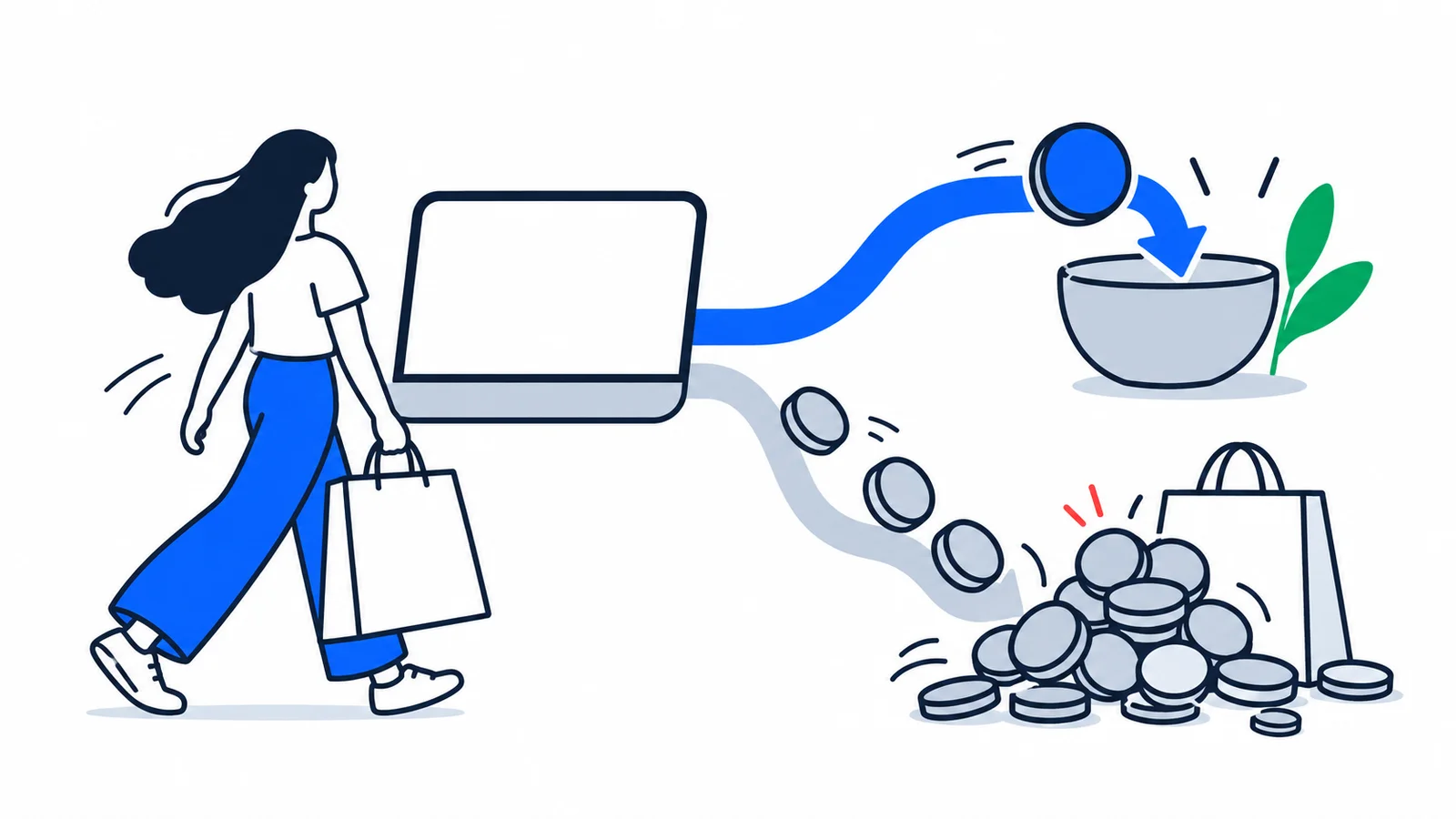
You pay extra because customs and VAT on packages from abroad are not always paid in the online store. Then the duties must be paid before the package can be delivered to you.
Norway has two types of duties on imports. VAT, or value-added tax (VAT), is a duty on almost everything you buy. The standard rate is 25 percent. Customs is an extra duty on some goods, for example clothes and food. Many goods have no customs duty, but all have VAT.
Previously, packages under 350 kroner were duty-free. That limit was removed on 1 January 2024. Now you must pay VAT from the first krone (as of 2026-07-10).
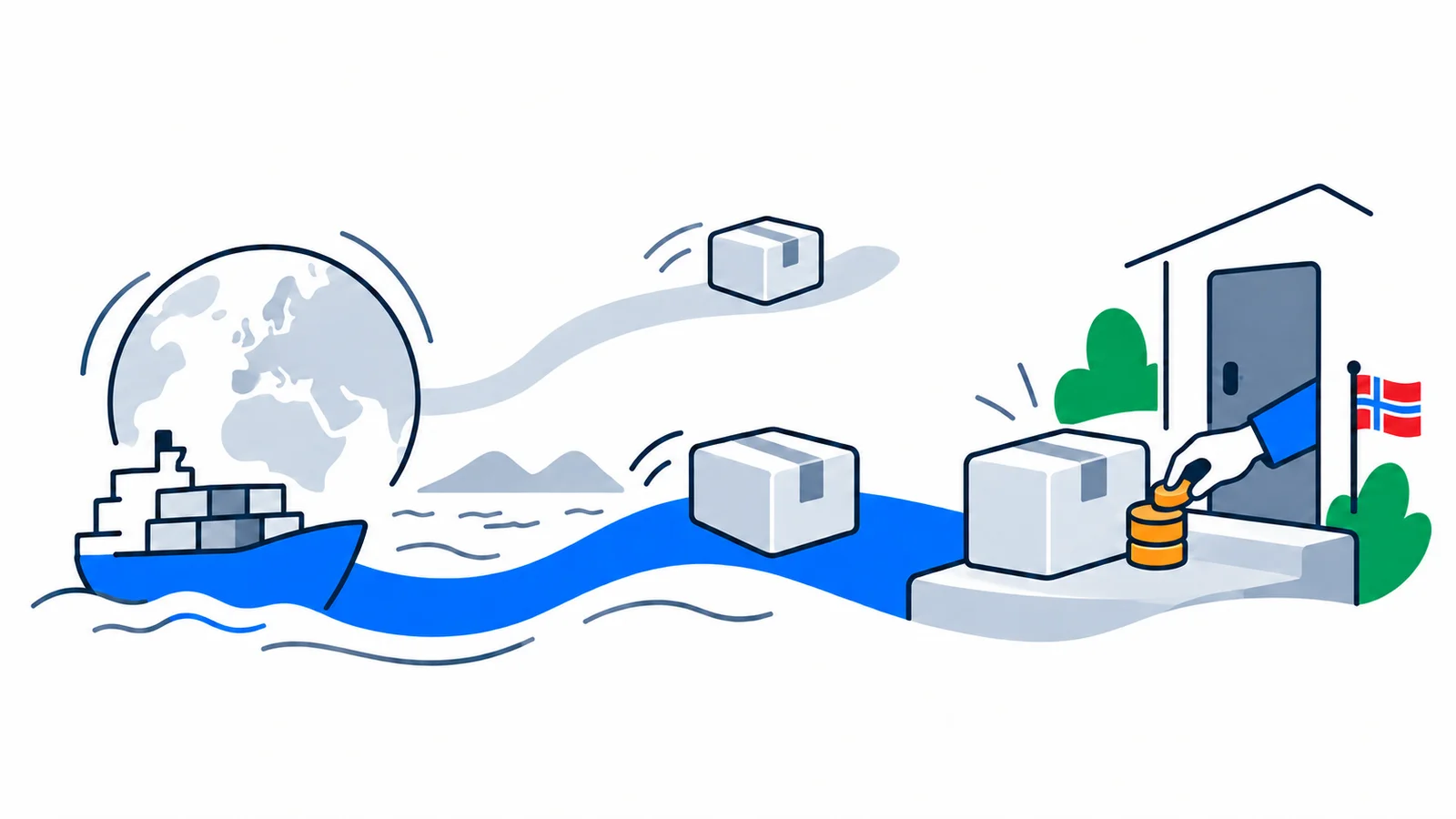
If you buy from a regular foreign online store without Norwegian VAT, the package must be cleared through customs when it arrives in Norway. Clearing through customs means processing the goods for customs. Then the carrier, for example Posten, adds a customs clearance fee for the work. This is the fee many people are surprised about. If you receive an item with a fault or shortage, special consumer rights apply such as the right to cancel and complaint.
What is the VOEC scheme?
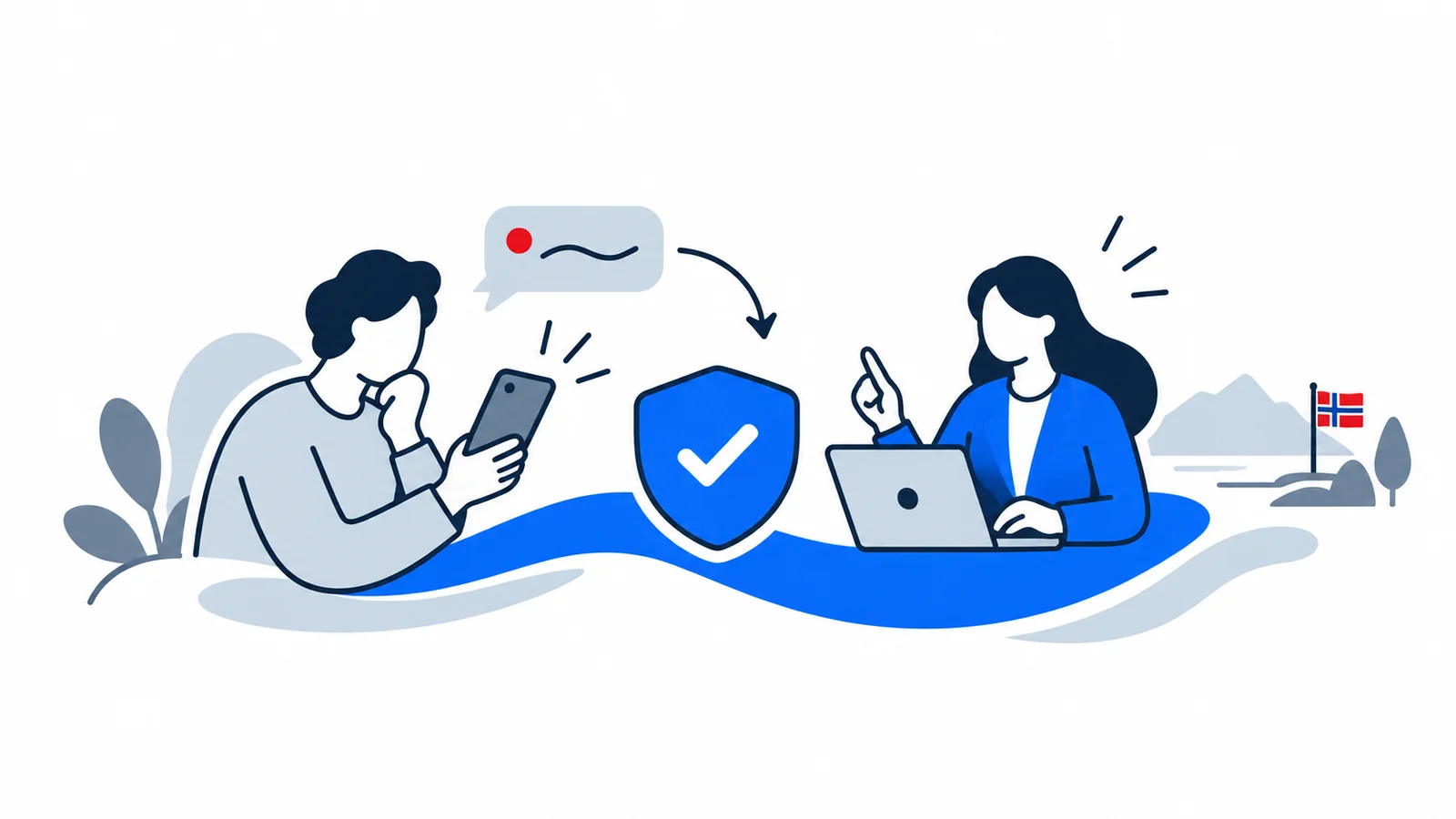
VOEC is a scheme that allows foreign online stores to collect Norwegian VAT as soon as you pay. The abbreviation stands for "VAT On E-Commerce", that is, value-added tax on e-commerce.
When the store is registered in the VOEC scheme, you pay 25 percent VAT at checkout. The price you see is the total price. The package is sent straight home to you without clearing through customs and without a customs clearance fee. This is the easiest and cheapest way to shop online from abroad.
VOEC applies to goods under 3,000 kroner per item – not per order (as of 2026-07-10). If you buy two sweaters for 800 kroner each, both are within the limit, even though the entire order comes to 1,600 kroner. If a single item costs more than 3,000 kroner, it falls outside VOEC and must be cleared through customs in the usual way. VAT is one of many duties in Norway; read more in our guide to taxes simply explained for immigrants.
VOEC or not: what do you pay?
The difference between a VOEC store and a store without VOEC is large for your wallet. Here is a simple overview (as of 2026-07-10):
| Question | VOEC store | Store without VOEC |
|---|---|---|
| When do you pay VAT? | At checkout, 25 % | Afterwards, at customs clearance |
| Customs clearance fee? | No | Yes, to the carrier |
| Delivery | Straight home | After customs processing |
Without VOEC, the package must go through customs clearance. Then you pay VAT, and possibly customs, to the state. In addition, there is a customs clearance fee to the carrier.
At Posten, the fee is graded according to the value of the item (according to Posten, as of 2026-07-10):
- Value 0–500 kroner: 46 kroner
- Value 500–3,000 kroner: 78 kroner
- Value over 3,000 kroner, or goods with restrictions: 278 kroner
Other carriers may have their own rates. On a cheap item, the fee may cost more than the item itself. If you are moving many belongings to Norway, special rules apply for removal goods and customs.
How to check if the store is VOEC-registered
Check this before you pay, not afterwards. Then you know if a fee will be added.
Signs that the store is registered with VOEC:
- You see Norwegian VAT (25 %) added at checkout.
- The price is given as total price delivered to Norway.
- The store has a VOEC number.
You can also look up the store in the Tax Administration's official list of online stores and e-marketplaces registered in the VOEC register. If you shop through a large marketplace, it is often the platform that is registered, not the individual seller. Large players are usually registered, but it is always good to check for yourself.
Keep your receipt. Did you pay VAT in a VOEC store but still get a customs clearance claim when the package arrives? Then the store may have forgotten to mark the package with its VOEC number. Contact the carrier and show your receipt, so you don't pay VAT twice.
Food, alcohol and tobacco: special rules
Some goods fall completely outside VOEC. Then the package must always be cleared through customs, no matter how cheap it is.
Food and beverages have 15 percent VAT. In addition, there may be customs and special duties, including on goods with sugar (as of 2026-07-10). Food supplements may be stopped at customs if they are considered medicines.
Alcohol is permitted to import privately for your own use. You must be over 18 years old for beer and wine, and over 20 years old for spirits. But you pay full VAT, customs and special duties, so it is rarely cheaper than the Vinmonopolet.
Tobacco and nicotine have got a new and strict rule. From 1 January 2026, it is forbidden for private individuals to order cigarettes, snus, vape and other tobacco and nicotine products online from abroad. The goods may be stopped at customs, and you will not get your money back. You can still bring tobacco within the quota when you have been travelling. Note that the ban applies to tobacco and nicotine – not alcohol.
How to avoid fee shock
The short answer: choose a VOEC store, and you avoid the customs clearance fee.
Practical tips (as of 2026-07-10):
- Check that Norwegian VAT is included at checkout before you pay.
- Keep each item under 3,000 kroner to stay within VOEC.
- Avoid ordering food and alcohol from abroad – they must always be cleared through customs.
- Don't order tobacco or nicotine at all. It is forbidden.
SamfunnPrep has free tools and guides that help you understand duties, consumer rules and Norwegian everyday economy. When you understand customs and VAT on packages, online shopping becomes both safer and cheaper.
Taxes, duties and consumer rules are part of the Samfunnskunnskapsprøven – practise for free on SamfunnPrep.