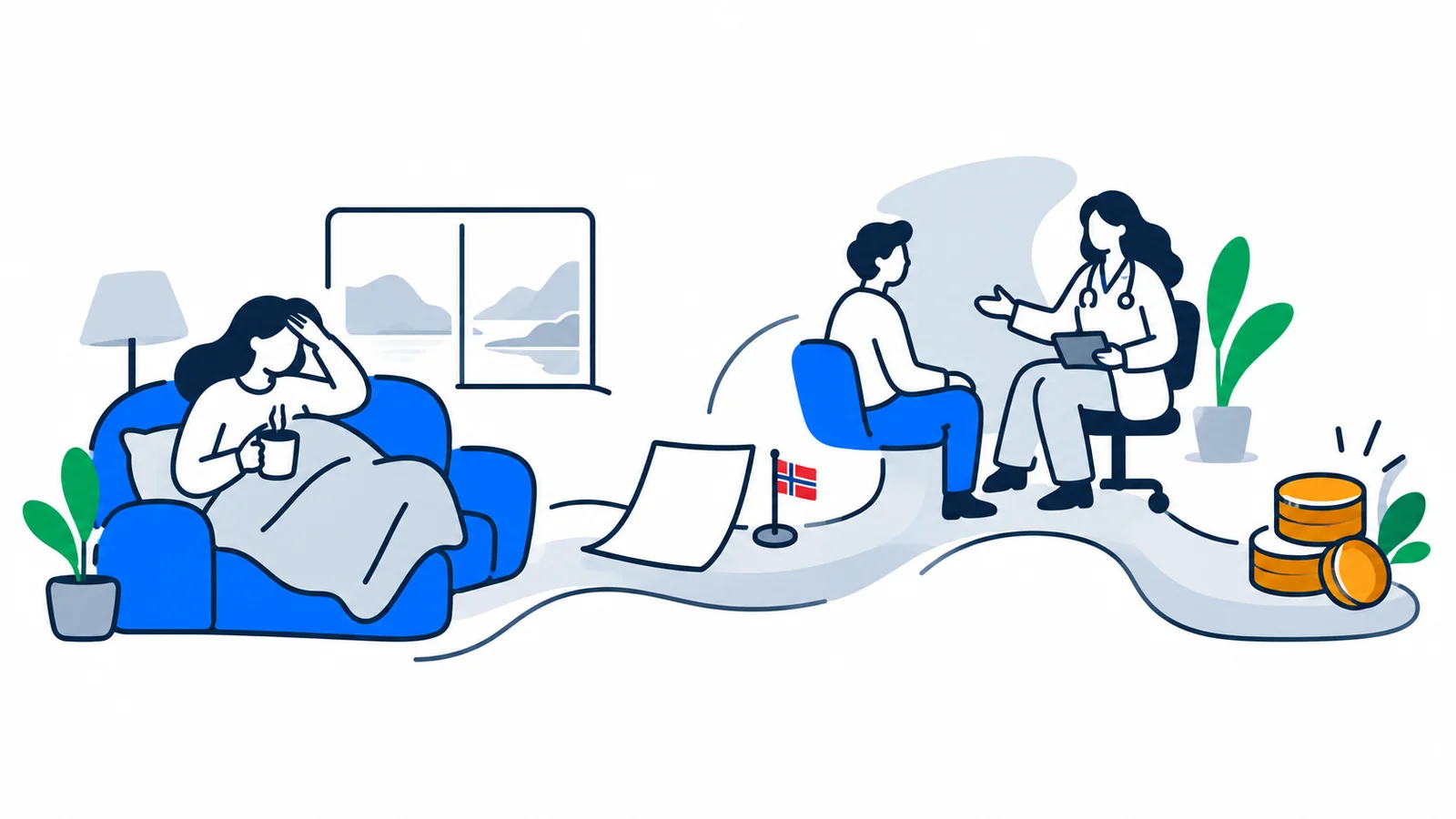

Sickpay is money you get when you are ill and cannot work. Your employer pays for the first 16 days. After that, NAV pays up to 819 294 kroner per year (6G), as of 1 May 2026. You must have worked for at least four weeks to be entitled to sickpay.
This guide explains how sickpay works for you as an employee in Norway: what self-reporting and a doctor's note are, how much you receive, and how you apply. The rules are the same no matter where you come from. These are rights you have as a worker – many of them are also part of the exam for working immigrants in Norway.
What is sickpay?
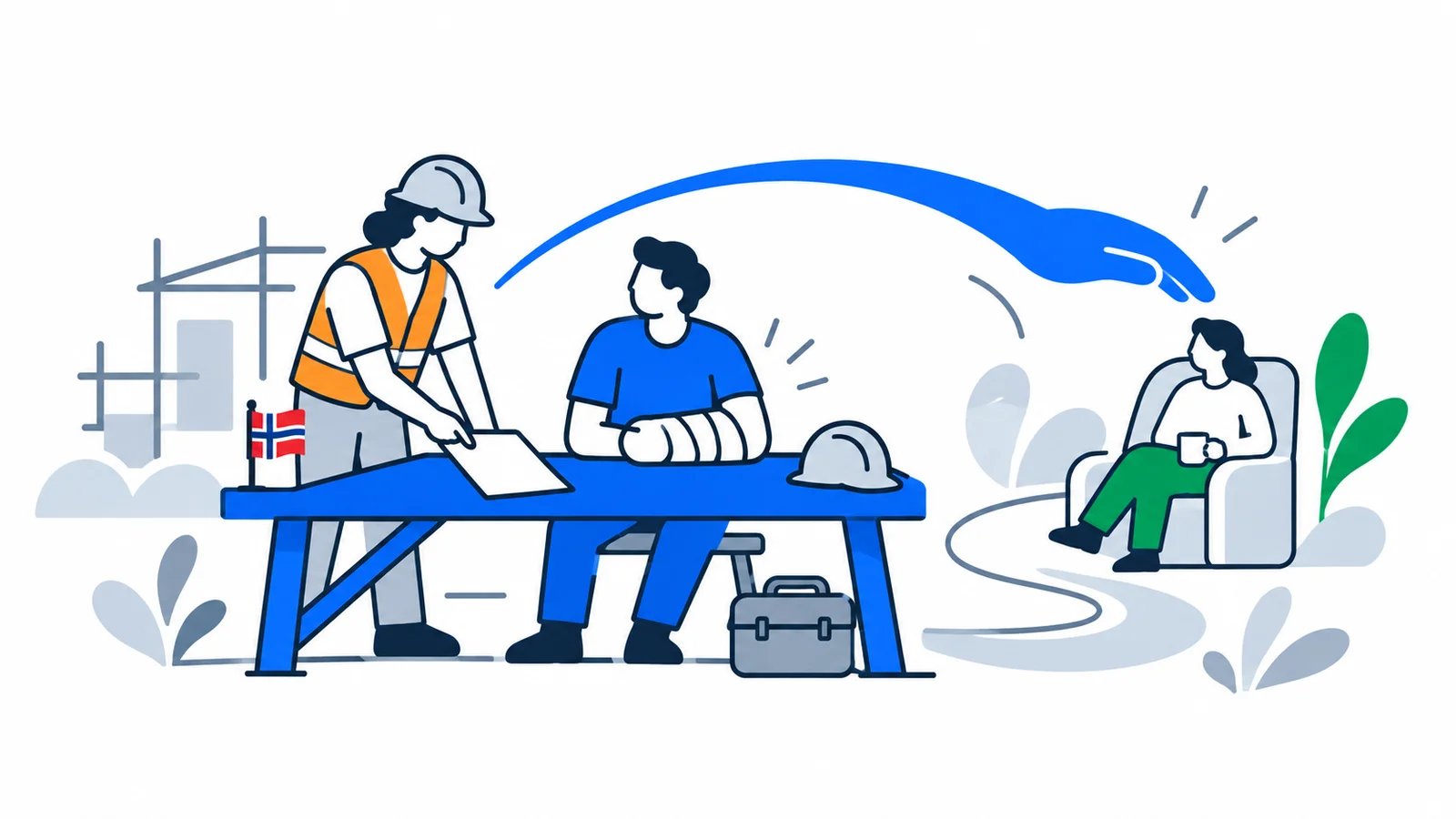
Sickpay replaces your salary when you are too ill to work. As an employee, you normally receive 100 per cent of your salary, up to a ceiling. Both NAV (Norwegian Labour and Welfare Administration) and your employer pay for this.
You do not have any waiting days. Sickpay starts from the first full day you are absent from work because of illness. This is one of the strongest rights in Norwegian working life, and it applies even if you have just moved to Norway. You can find more of your rights as an employee gathered in our overview of employee rights in Norway.
Do you have to work for a certain time first?
Yes. You must have been working for at least four weeks before you become ill. This is called the qualifying period. If you are brand new at your job and become ill before four weeks have passed, you usually do not have the right to sickpay for that absence.
The time counts from your first working day. If you change jobs without a break, the time at your previous employer can count towards it.
Self-reporting: telling your employer you are ill
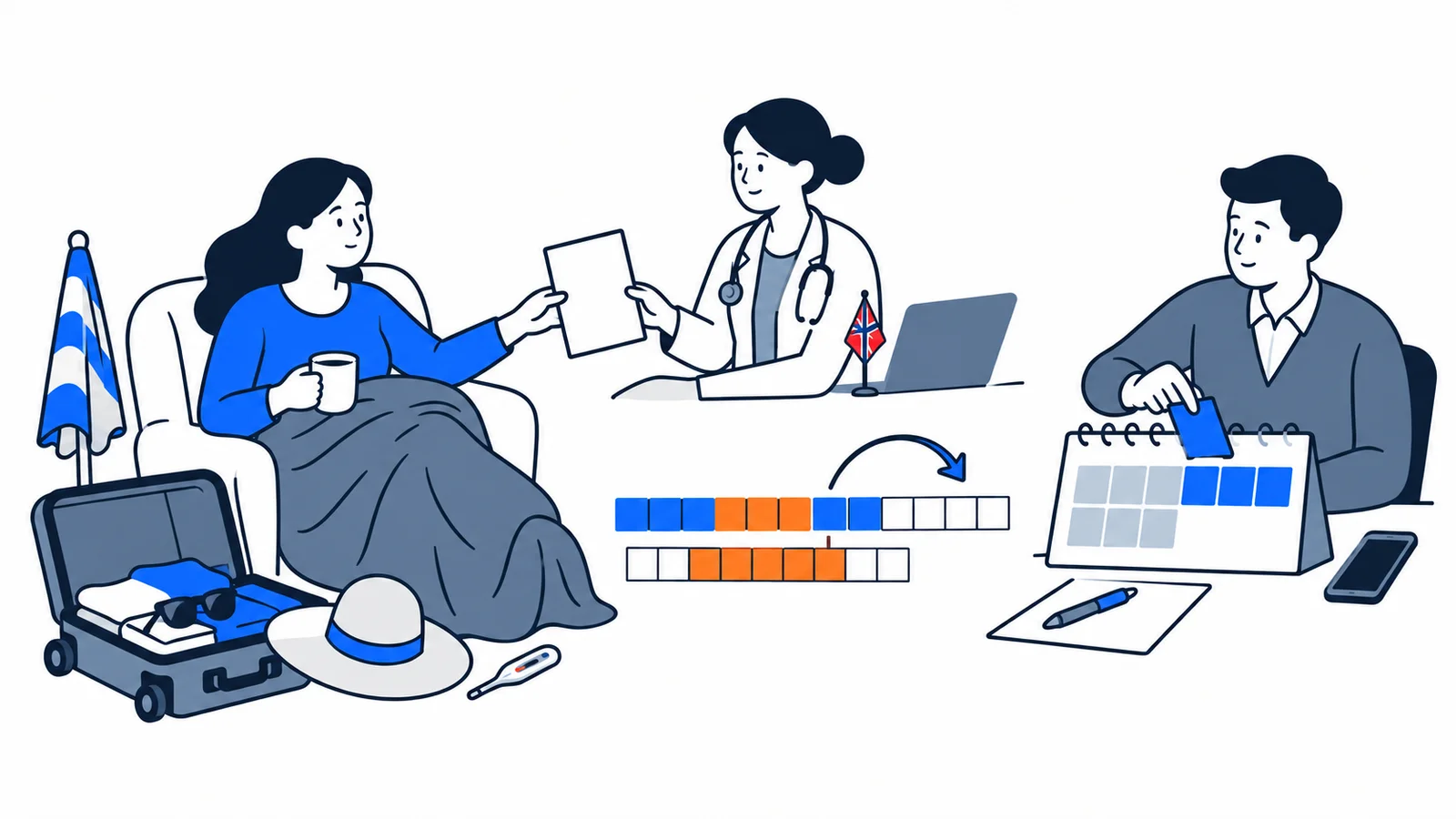
Self-reporting means you tell your employer that you are ill, without going to a doctor. You can only use self-reporting during the employer period – that is, the first 16 days.
Before you can use self-reporting, you must have worked for your employer for at least two months. The rules are:
| Type of workplace | Days at a time | Times per year |
|---|---|---|
| Regular workplace | up to 3 calendar days | up to 4 times |
| IA enterprise (extended agreement) | up to 8 calendar days | up to 24 days, with no limit on the number of times |
If you are absent for more than three days, your employer can require you to submit a doctor's note. Self-reporting is a right, but you must notify your employer as early as possible, ideally on the first day.
Doctor's note from your doctor
After the self-reporting days, you need a doctor's note from your doctor to receive further sickpay. You can get a doctor's note from your GP or urgent care centre. The doctor's note is sent digitally, and you can find it by logging in on nav.no.
Your doctor will assess whether you can work a little (partial sick leave) or not at all. The goal is always for you to return to work when you are well enough.
How much do you get?
As an employee, you receive 100 per cent of your salary as sickpay, but only up to 6G. 6G is 819 294 kroner as of 1 May 2026 (G is the National Insurance Scheme's basic amount, which is adjusted every year on 1 May).
If you earn more than 6G, NAV does not cover anything above the ceiling. Some employers voluntarily pay the full salary, but they do not have to. Check your employment contract. Your employer pays during the first 16 days (the employer period). From day 17, NAV takes over, if you are still ill.
How long can you receive sickpay?
You can receive sickpay for up to 52 weeks (248 days). If you are between 67 and 70 years old, you receive it for up to 60 days.
When sickpay ends and you still cannot work, you can apply for work assessment allowance (AAP). Do not wait until the last day – apply in good time before the period ends.
Activity requirement: you must try to be active
Sickpay requires that you try to be active if your health allows it. By 8 weeks at the latest, you should normally be wholly or partly back at work, unless a medical reason prevents it. If you can work a little, you should have a partial sick leave – for example, work 50 per cent and receive sickpay for the rest.
Your employer must create a follow-up plan within 4 weeks and call you in to a meeting within 7 weeks. This is not to push you back too early, but to plan a safe way back to work. If you do not show up or refuse without a good reason, NAV can stop your sickpay. If you have no employer, NAV will follow you up.
Self-employed and freelancers
The rules are worse if you work for yourself. If you are self-employed, you only receive 80 per cent of your income, and only from day 17. You get nothing for the first 16 days, unless you have bought your own insurance from NAV.
If you are a freelancer, you receive 100 per cent, but also only from day 17. If you are thinking of starting your own business, this is an important difference to know about.
How to apply – step by step
- Go to your doctor and get a doctor's note if you are absent longer than the self-reporting days.
- Send an application for sickpay on nav.no after the period of the doctor's note is over. You will find it under «Your sickness absence».
- Your employer sends an income statement to NAV, so the amount is correct.
NAV usually takes a few weeks to process the application. If you are ill for a long time, your doctor and the cost of personal contributions can become an extra expense – read about exemption card and personal contribution ceiling so you do not pay too much.
On SamfunnPrep, we collect simple guides about NAV, work and health in Norwegian that you understand. Many of these rules are also part of the exam for working immigrants – practise for free on SamfunnPrep.